What does Zinc PCA do?#
Zinc PCA is a gentle, well-tolerated ingredient often used in serums for blemish-prone skin. It pairs the mineral zinc with PCA, a moisture-binding component skin makes naturally, for a comfortable, clearer-looking complexion.
Benefits
- Supports a clearer-looking complexion in blemish-prone skin
- PCA is part of skin's own moisture-binding system, so it feels comfortable rather than stripping
- Gentle enough for daily use, morning or evening
How it works
Zinc PCA combines the mineral zinc with PCA (pyrrolidone carboxylic acid), a naturally occurring moisturizing ingredient used in skincare. PCA is one of the components skin uses to hold on to water, so it contributes to a comfortable, hydrated feel, while the zinc half is used in skincare for its calming character. It is water-soluble and lightweight, so it layers easily under the rest of a routine.
How to use Zinc PCA#
Best time
Zinc PCA suits either, and nothing in the evidence prefers one.
How often
From the start is fine — it needs no easing-in period.
Where it goes
After cleansing, onto clean skin, before anything heavier.
Where to apply
Across the whole face, keeping it out of your eyes, nose and mouth.
How to apply
Pat gently into skin rather than rubbing for even distribution.
Alongside others
It is water-soluble and lightweight, so it layers easily under a moisturizer or sunscreen.
It sits happily alongside almost everything else in a routine, so it does not need a slot of its own.
What to expect
Most people have no adjustment phase to wait out — no purge, no initial dryness. If anything changes for the worse, that is a reason to stop rather than to push through.
Discontinue use if unexpected discomfort occurs.
The form you will see it in
Zinc PCA calming serum
- Where it goes
- Before sunscreen
Using Zinc PCA with other ingredients
Pairs well with Zinc PCA
Niacinamide
Works well togetherFrequently formulated together for a clearer, calmer-looking complexion.
What not to use with Zinc PCA
Nothing flagged. None of the ingredients this wiki covers needs to be kept apart from Zinc PCA — check the label of anything not covered here.
Who should avoid Zinc PCA?#
Six situations change whether Zinc PCA suits your skin right now. Each one is either a reason to skip it, a reason to go slowly, or nothing to watch for.
- Maternity & Nursing
- No caution
- Fragile or Sensitive
- No caution
- Recent Facial or Laser
- No caution
- Prone to Redness
- No caution
- Dry or Itchy Patches
- No caution
- Recent Shave or Wax
- No caution
Cosmetic strength limits for Zinc PCA where you live#
| Region | Most a cosmetic may contain | |
|---|---|---|
 United States United States | No explicit cap | |
The FDA restricts a short list of ingredients and sets no general strength ceiling on the rest. A figure marked "guidance, not law" is the Cosmetic Ingredient Review panel's recommendation. 21 CFR part 700, subpart B — Requirements for Specific Cosmetic Products (FDA) | ||
 Canada Canada | No explicit cap | |
One list does the work — Health Canada's Hotlist of prohibited and restricted cosmetic ingredients. | ||
 European Union European Union | 1% (as zinc) | |
The Cosmetics Regulation's annexes, consolidated to 1 May 2026. A figure marked "guidance, not law" comes from the EU's cosmetic safety committee rather than from the annexes. | ||
 Great Britain Great Britain | 1% (as zinc) | |
Great Britain kept the annexes as its own law and updates them only when it chooses; Northern Ireland follows the live EU Regulation, which is why some rows read differently for each. Regulation (EC) No 1223/2009 as it applies in Great Britain · Regulation (EC) No 1223/2009, Annexes II–VI | ||
 India India | 1% (as zinc) | |
India writes its own standard, aligned to the European rules as they stood in 2012. Mandatory since 9 February 2026. IS 4707 (Part 2):2025 — restricted and prohibited cosmetic ingredients · IS 4707 (Part 3):2025 — preservatives · Cosmetics Rules, 2020, Ninth Schedule | ||
 Brazil Brazil | 1% (as zinc) | |
ANVISA rewrote its restricted list in June 2026, and a companion act amended the prohibited list at the same time. RDC 1.029/2026 — restricted ingredients · RDC 529/2021 — prohibited ingredients, as amended by RDC 1.030/2026 · RDC 528/2021 — preservatives | ||
 Japan Japan | No explicit cap | |
Japan's cosmetics standard keeps drug ingredients out of cosmetics, so most of its figures sit in the ministry's list of the ones a cosmetic may still contain. Cosmetics Standards (化粧品基準), Ministry of Health, Labour and Welfare · Cosmetics Standards — the ministry's own English translation · Drug ingredients permitted in cosmetics — 2007 notification | ||
 South Korea South Korea | 1% (as zinc) | |
One MFDS regulation carries both the prohibited list and the restricted list, in force 18 March 2026. Sunscreens and a few other categories are cleared product by product instead. Regulation on Safety Standards for Cosmetics (MFDS Notification 2026-19) · Regulation on the Review of Functional Cosmetics (MFDS Notification 2025-88) | ||
 Kenya Kenya | 1% (as zinc) | |
Kenya's standard applies the EU annexes as they stand rather than copying them, so its ingredient limits are the EU's — including the 2024 additions. A figure marked "guidance, not law" sits outside the annexes and does not carry over. KS EAS 377-1, -2 and -3:2022 — cosmetics safety requirements, published by KEBS · Regulation (EC) No 1223/2009, Annexes II–VI | ||
 Namibia Namibia | No explicit cap | |
Namibia sets no ingredient limits at all. Its cosmetic rule is a single line requiring a product to be free of any harmful ingredient. Foodstuffs, Cosmetics and Disinfectants Ordinance 18 of 1979, and the regulations under it | ||
 Ukraine Ukraine | 1% (as zinc) | |
Ukraine's own transposition of the EU annexes, as they stood before the 2024 additions, fully in force since 3 August 2026. A further revision is due on 1 February 2027. Technical Regulation on cosmetic products — Cabinet Resolution No. 65 of 20 January 2021 | ||
 Georgia Georgia | No explicit cap | |
Georgia has no cosmetics rulebook — its register of technical regulations carries no cosmetics entry — so only the general product-safety duty applies. | ||
 Australia Australia | No explicit cap | |
Australia writes no cosmetic ingredient list. A figure here is the point at which a substance becomes a medicine or a scheduled substance carrying Caution labeling, so its numbers sit well above other markets'. Poisons Standard — June 2026 · Therapeutic Goods (Excluded Goods) Determination 2018 | ||
 United Arab Emirates United Arab Emirates | 1% (as zinc) | |
The Gulf standard points at the EU annexes as amended, so its ingredient limits are the EU's. A figure marked "guidance, not law" sits outside the annexes and does not carry over. GSO 1943:2024 — Cosmetic products: safety requirements (Gulf technical regulation) · Regulation (EC) No 1223/2009, Annexes II–VI | ||
 Kuwait Kuwait | 1% (as zinc) | |
The Gulf standard points at the EU annexes as amended, so its ingredient limits are the EU's. A figure marked "guidance, not law" sits outside the annexes and does not carry over. GSO 1943:2024 — Cosmetic products: safety requirements (Gulf technical regulation) · Regulation (EC) No 1223/2009, Annexes II–VI | ||
 Hong Kong Hong Kong | No explicit cap | |
Hong Kong writes no cosmetics rulebook. Its Poisons List (Cap. 138A, Schedule 10) decides which substances may be sold only as medicines, and general safety is judged case by case against whichever overseas standard the enforcer considers reasonable. Pharmacy and Poisons Regulations (Cap. 138A), Schedule 10 — the poisons list · Pharmacy and Poisons Board — Guidance Notes on classifying pharmaceutical products, April 2026 | ||
 Singapore Singapore | 1% (as zinc) | |
Singapore writes the ASEAN annexes into its own schedule, and its regulator tells companies to check the current ASEAN release as well — which is why a figure here can read "guidance, not law". Health Products (Cosmetic Products — ASEAN Cosmetic Directive) Regulations 2007, Third Schedule · ASEAN Cosmetic Directive annexes — release 2026-1, 22 June 2026 | ||
 Brunei Brunei | 1% (as zinc) | |
Brunei carries the 2007 ASEAN annexes in its own schedule and has not updated them since, so it reads differently from Singapore on several ingredients. Medicines (Cosmetic Products) Regulations (Cap. 285 Rg 1), Schedule 1 — revised edition 2024 | ||
 Jordan Jordan | No explicit cap | |
Jordan's cosmetic rules defer to "the approved references" and name none of them, so there is no Jordanian figure to read. The only number in the instrument governs the ingredient list on the pack. JFDA instructions on cosmetics and pharmaceutical cosmetics, 2026 | ||
 Trinidad & Tobago Trinidad & Tobago | No explicit cap | |
Trinidad and Tobago has had the power to set cosmetic standards since 1960 and has never used it. The regulations made under the Act cover food and drugs, with no cosmetics part; what binds is the Act's general rule against selling a cosmetic that may injure the user. Food and Drugs Act, Chap. 30:01 · Food and Drugs Regulations | ||
Where a figure appears, that is the maximum strength allowed or advised for zinc pca in that market — some are set in cosmetics regulation, others are the ceiling a cosmetic safety panel recommends. Where no figure appears, the market either sets no cosmetic maximum or handles this ingredient outside its cosmetic rules. These are limits, not targets — the right strength for a formula is the formulator's decision.
Open a market to see the rulebook its figure comes from. Those notes describe each market's own rules as we read them, current to August 24, 2026; the linked documents are the authority, and nothing here is legal advice.
Sample products with Zinc PCA#
A few well-known products, not a full list — product names are each brand's own. We don't sell them — the shop prices them in US dollars and ships from Hong Kong, so delivery and duties come on top. It may not ship everywhere.
We may earn a small commission when you buy through these links.
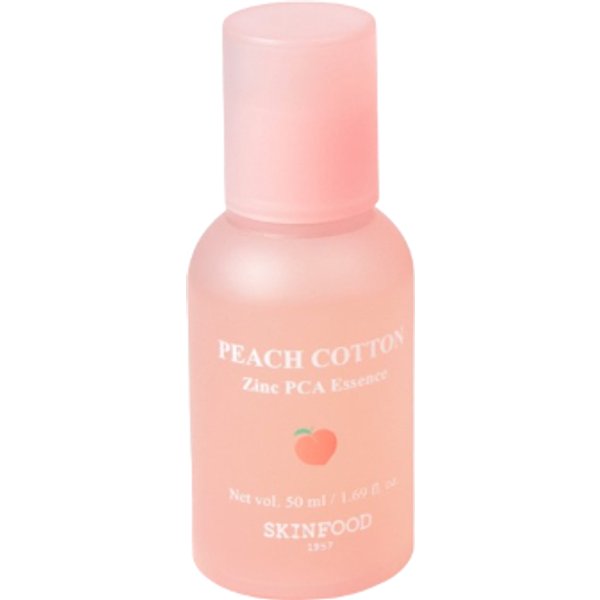
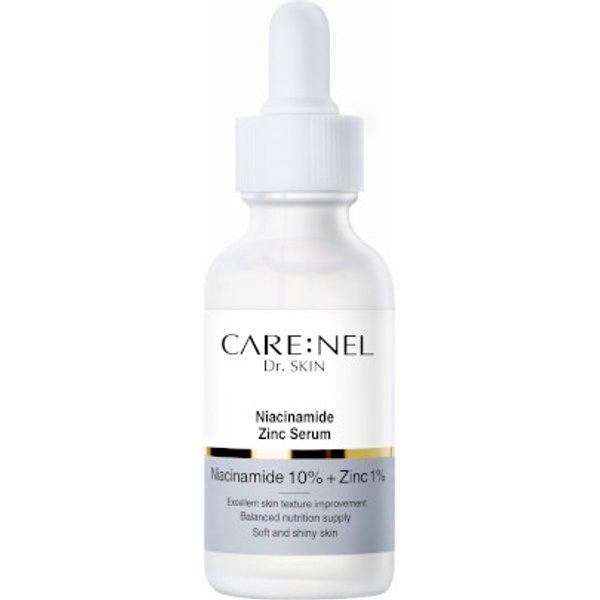
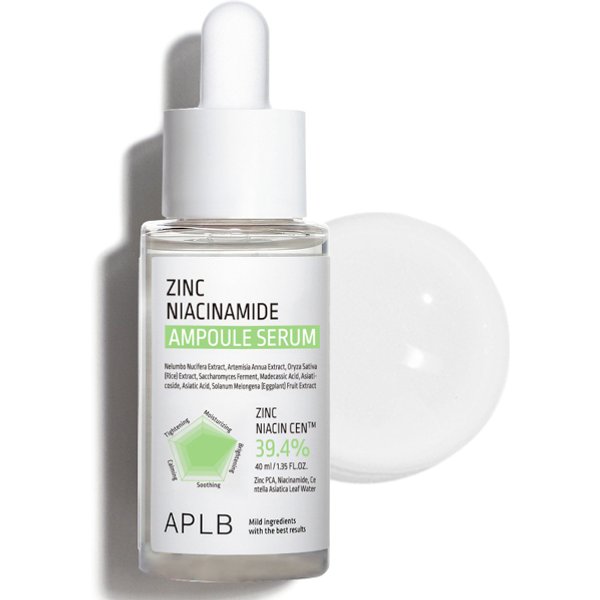
Already have one? Check how it fits your skin with Pick.
Common questions about Zinc PCA#
What is Zinc PCA?
- A gentle, water-soluble ingredient pairing the mineral zinc with PCA, a moisture-binding component skin makes naturally, for a clearer-looking complexion.
What else is Zinc PCA called?
- On a label you may see Zinc pyrrolidone.
When should you apply Zinc PCA?
- Morning or evening. Zinc PCA suits either, and nothing in the evidence prefers one.
How often can you use Zinc PCA?
- Daily.
Where do you apply Zinc PCA?
- All over the face. Keep it away from your eyes and lips.
Can you use Zinc PCA around the eyes?
- Yes. Zinc PCA goes all over the face, the skin around the eyes included — keep it out of your eyes and off your lips.
Does Zinc PCA make skin more sensitive to the sun?
- No. Zinc PCA is not flagged as increasing sun sensitivity.
What should you not use with Zinc PCA?
- Nothing flagged. None of the ingredients this wiki covers needs to be kept apart from Zinc PCA — check the label of anything not covered here.
Is there a cosmetic limit for Zinc PCA?
- Only some regions set one. The maximum strength for Zinc PCA in a cosmetic is 1% (as zinc) in the European Union and 1% (as zinc) in Great Britain. No maximum is set in the United States and Canada. A cap is a limit on the rules, not a signal to use more.
Related ingredients#
How we check this#
Everything on this page traces to the sources listed below — regulators' own publications and published studies. Where the evidence does not answer a question, it is left unanswered.
Some sources below are the official product information for prescription medicines, cited for how they interact with this ingredient. We use them for their safety and handling detail only. A cosmetic product is not one of those medicines and is not intended to treat any condition.
Our review is AI-assisted and is not a named expert's opinion. Last reviewed August 8, 2026.
Think something here is out of date or wrong? Email us at wiki@skinintelligence.ai with your reasoning and where you read it. We read what people send, and we update the page when the sources support it.
Regulators and official bodies · 10
- S13Regulation (EC) No 1223/2009 of the European Parliament and of the Council of 30 November 2009 on cosmetic products (recast), consolidated text, Annex III entry 24 (as amended by Commission Regulation (EU) 2021/1902 of 29 October 2021, OJ L 387); Annex II (zinc pyrithione); Annex VI entries 30/30a (zinc oxide); Annex IV (CI 77947).
- S14Assimilated Regulation (EC) No 1223/2009 on cosmetic products, Annexes as they apply in the UK — Annex 3 entry 24 (amendment F33), Annex 2 entry 1669 (Pyrithione zinc), Annex 6 entries 30/30a (zinc oxide), Annex 4 entry 144 (CI 77947).
- S1521 CFR 358.710 — Active ingredients for the control of dandruff, seborrheic dermatitis, or psoriasis. Lists pyrithione zinc; zinc PCA absent..
- S1621 CFR 347.10 — Skin protectant active ingredients. Lists zinc acetate 0.1–2 % and zinc oxide 1–25 %; zinc PCA absent..
- S17Zineryt 40 mg + 12 mg powder and solvent for cutaneous solution — Summary of Product Characteristics. Erythromycin-zinc complex containing 40 mg/mL erythromycin and 12 mg/mL zinc acetate dihydrate. A different zinc species; POM..
- S18Isotretinoin (Roaccutane) — Summary of Product Characteristics. Names no zinc species; advises a moisturising cream and lip balm from the start of treatment.
- S19Adapalene/benzoyl peroxide gel (Adawell 0.1 %/2.5 %) — Summary of Product Characteristics, §4.5.
- S20Doxycycline capsules — Summary of Product Characteristics, §4.5: gastrointestinal absorption inhibited by bi- or tri-valent ions including zinc; 2–3 hour separation from such medicinal products or foodstuffs. Oral route..
- S21Lymecycline (Tetralysal 300) — Summary of Product Characteristics, §4.5.
- S26Health Canada. Cosmetic Ingredient Hotlist: List of Ingredients that are Prohibited for Use in Cosmetic Products. No entry for zinc PCA, zinc pidolate, or water-soluble zinc salts..
Studies and references · 22
- S1Kezic S, Kammeyer A, Calkoen F, Fluhr JW, Bos JD. Natural moisturizing factor components in the stratum corneum as biomarkers of filaggrin genotype: evaluation of minimally invasive methods. Br J Dermatol 2009;161(5):1098–104. · PMID 19857209 · doi:10.1111/j.1365-2133.2009.09342.x.
- S2Cosmetic Ingredient Review. Safety Assessment of PCA and Its Salts as Used in Cosmetics (Re-Review, release 18 Aug 2014; Panel meeting 8–9 Sep 2014). Prepared by Monice M. Fiume. Covers PCA, sodium PCA, calcium PCA, magnesium PCA, potassium PCA — not zinc PCA..
- S3Takino Y, Okura F, Kitazawa M, Iwasaki K, Tagami H. Zinc l-pyrrolidone carboxylate inhibits the UVA-induced production of matrix metalloproteinase-1 by in vitro cultured skin fibroblasts, whereas it enhances their collagen synthesis. Int J Cosmet Sci 2012;34(1):23–8. · PMID 21834944 · doi:10.1111/j.1468-2494.2011.00676.x.
- S4Jarrousse V, Castex-Rizzi N, Khammari A, Charveron M, Dréno B. Zinc salts inhibit in vitro Toll-like receptor 2 surface expression by keratinocytes. Eur J Dermatol 2007;17(6):492–6. · PMID 17951128 · doi:10.1684/ejd.2007.0263.
- S5Balato A, Caiazzo G, Di Caprio R, Scala E, Fabbrocini G, Granger C. Exploring Anti-Fungal, Anti-Microbial and Anti-Inflammatory Properties of a Topical Non-Steroidal Barrier Cream in Face and Chest Seborrheic Dermatitis. Dermatol Ther (Heidelb) 2020;10(1):87–98. · PMID 31705438 · PMC6994561.
- S6Dall'Oglio F, Lacarrubba F, Luca M, Boscaglia S, Granger C, Micali G. Clinical and instrumental evaluation of a new topical non-corticosteroid antifungal/anti-inflammatory/antiseborrheic combination cream for the treatment of mild-to-moderate facial seborrheic dermatitis. Clin Cosmet Investig Dermatol 2019;12:103–7. · PMID 30774406 · PMC6354683.
- S7Charoenchaipiyakul K, Rujirawan P, Noppakun N, Chongpison Y, Kumtornrut C. A Randomized Controlled Study of the Efficacy of a Topical Antifungal, Antimicrobial, Anti-Inflammatory, and Antiseborrheic Cream in Treating Mild to Moderate Facial Seborrheic Dermatitis. Dermatol Ther 2025. · doi:10.1155/dth/8887280.
- S8Sitohang IBS, Yahya YF, Simanungkalit R, Adi Winarni DR, Madjid A. Efficacy and Tolerability of Topical Nicotinamide Plus Antibacterial Adhesive Agents and Zinc-Pyrrolidone Carboxylic Acid Versus Placebo as an Adjuvant Treatment for Moderate Acne Vulgaris in Indonesia: A Multicenter, Double-blind, Randomized, Controlled Trial. J Clin Aesthet Dermatol 2020;13(7):43–8. · PMID 32983333 · PMC7492018.
- S9Sitohang IBS, Norawati L, Yenny SW, Kusumawardani A, Murlistyarini S, Setiawan SV, Kekalih A, Riany G, Kerob D. Effectiveness and Safety of a Dermocosmetic Cream as an Adjunct to Adapalene for Mild and Moderate Acne in Indonesia: Results of a Multicenter Randomized Controlled Study. Clin Cosmet Investig Dermatol 2024;17:2287–97. Cream contains zinc gluconate per the primary text. · PMID 39430644 · PMC11490241.
- S10Patel MN, Patel NK, Merja AM, Patnaik S. Clinical Evaluation of the Efficacy, Safety, and In-Use Tolerability of a Diacnemide-Containing Acne Kit (Facial Serum and Cleanser) Regimen for the Synergistic Management of Facial Acne in Adults. Cureus 2024. Zinc PCA is in the cleanser (rinse-off); open-label, no control arm, manufacturer-sponsored. · PMID 39445245.
- S11Ge L, Liu Z, Xu S, Li C, Jin M, Luo Y, Kong Y, Meng J, Zheng G, Gao J, Wang P, Bai W, Na H, Zhou X, Jin Z, Pi L. A Cohort Clinical Study on the Efficacy of Topical Salicylic Acid/Piroctone Olamine Dandruff Pre-Gel and Cleanser in Improving Symptoms of Moderate to Severe Seborrheic Dermatitis of the Scalp. J Cosmet Dermatol 2025. · PMID 39778065.
- S12Visser WI, Kannenberg SM, Prevost A, Khoza N, Pillay L, Wiid KJ, Heydenrych IR. Dermocosmetics in Acne Vulgaris: South African Consensus Recommendations With a Focus on Skin of Colour. J Cosmet Dermatol 2026. · PMID 41689191.
- S22Holland KT, Bojar RA, Cunliffe WJ, Cutcliffe AG, Eady EA, Farooq L, Farrell AM, Gribbon EM, Taylor D. The effect of zinc and erythromycin on the growth of erythromycin-resistant and erythromycin-sensitive isolates of Propionibacterium acnes: an in-vitro study. Br J Dermatol 1992;126(5):505–9. · PMID 1610692.
- S23Stamatiadis D, Bulteau-Portois MC, Mowszowicz I. Inhibition of 5 alpha-reductase activity in human skin by zinc and azelaic acid. Br J Dermatol 1988;119(5):627–32. Zinc sulphate, in vitro. · PMID 3207614.
- S24Iinuma K, Noguchi N, Nakaminami H, Sasatsu M, Nishijima S, Tsuboi I. Susceptibility of Propionibacterium acnes isolated from patients with acne vulgaris to zinc ascorbate and antibiotics. Clin Cosmet Investig Dermatol 2011;4:161–5. Zinc ascorbate — a different species, cited only to exclude. · PMID 22087070.
- S25A randomized, double-blind, pilot study on the efficacy and safety of zinc PCA + 4 % nicotinamide-containing cream versus hydrocortisone 1 % cream in the treatment of facial seborrheic dermatitis. Research report, May–June 2015; n=34. Grey literature: no author of record in the index entry, no journal of publication, indexed only by HERDIN, whose host is tier-capped at 3. Cannot back a quantitative claim..
- S27Gallinger J, Kuhn A, Wessel S, Behm P, Heinecke S, Filbry A, Hillemann L, Rippke F. Depth-dependent hydration dynamics in human skin: Vehicle-controlled efficacy assessment of a functional 10 % urea plus NMF moisturizer by near-infrared confocal spectroscopic imaging (KOSIM IR) and capacitance method complemented by volunteer perception. Skin Res Technol 2022;28(2):342–9. Cited as the comparator standard of evidence, not as evidence for zinc PCA. · PMID 35034387.
- S28Piérard GE, Piérard-Franchimont C. Effect of a topical erythromycin-zinc formulation on sebum delivery. Evaluation by combined photometric-multi-step samplings with Sebutape. Clin Exp Dermatol 1993;18(5):410–3. 4 % erythromycin / 1.2 % zinc acetate. · PMID 8252759.
- S29Rostan EF, DeBuys HV, Madey DL, Pinnell SR. Evidence supporting zinc as an important antioxidant for skin. Int J Dermatol 2002;41(9):606–11. Generic zinc review; cited to show what a zinc PCA claim was actually resting on. · PMID 12358835.
- S30Lang C, Murgia C, Leong M, Tan LW, Perozzi G, Knight D, Ruffin R, Zalewski P. Anti-inflammatory effects of zinc and alterations in zinc transporter mRNA in mouse models of allergic inflammation. Am J Physiol Lung Cell Mol Physiol 2007;292(2):L577–84. Mouse airway model; cited to show what a zinc PCA claim was actually resting on. · PMID 17085522.
- S31PubChem compound record, zinc pidolate. CID 11602214, CAS 15454-75-8, EINECS 239-473-5, C₁₀H₁₂N₂O₆Zn, MW 321.6, InChIKey OWVLYQRCCIEOPF-QHTZZOMLSA-L, IUPAC zinc bis((2S)-5-oxopyrrolidine-2-carboxylate); synonyms include Zinc PCA, zinc pyroglutamate, ZINC PIDOLATE [WHO-DD].
- S32See J, Sitohang IBS, Wong SN, Azizan NZ, Noppakun N, Van TT, Dreno B. The Role of Dermocosmetics in Acne Management: Asian Perspective. Clin Cosmet Investig Dermatol 2026. Cited in slot J only, as the source of the zinc gluconate → "Zinc-PCA" mis-attribution. · PMID 41737949.