What does Azelaic Acid do?#
A multi-benefit leave-on formula with azelaic acid that helps improve the appearance of redness, uneven skin tone, and breakout-prone skin.
Benefits
- Helps reduce the visible appearance of redness
- Supports a more even, balanced-looking skin tone
- Helps improve the appearance of breakout-prone skin
How it works
Azelaic acid is a naturally occurring compound found in grains like rye, wheat and barley. It works on multiple visible concerns at once — helping to improve the look of redness, uneven tone, and breakout-prone skin for a clearer, calmer-looking complexion.
What to expect
Expect mild tingling on application during the first few weeks — it usually settles as your skin adjusts. Any change in the look of redness and tone tends to be gradual, so give it several weeks before judging. We file it for the look of the redness that comes with blemishes and bumps, rather than for visible facial veins.
How to use Azelaic Acid#
How often
Twice a day is the usual pattern, and once a day is usually the evening. It is fine from the start — unlike stronger actives, it does not need weeks of easing in.
Where it goes
After cleansing, before moisturizer.
Where to apply
Across the whole face rather than dabbed on individual spots, and keep it away from the eyes and lips. Rinse with plenty of water if any gets in your eyes.
How to apply
On clean, dry skin — use a mild or soap-free cleanser first and pat dry.
Leave it uncovered — do not seal it under a pimple patch or any airtight cover.
Let it dry before makeup, and wash your hands afterwards.
Alongside others
Keep it to a different evening from exfoliating acids, scrubs and alcohol-based toners, which can make the tingling sharper.
What to expect
Mild tingling or warmth is normal when first starting — this typically fades over the first few weeks.
If it doesn't suit
If it stings more than you would like, use less or drop to every other evening until it settles.
Mild stinging or tingling may occur during initial use. Discontinue use if persistent irritation occurs, or if any area starts to look lighter than the skin around it.
The form you will see it in
Azelaic acid serum
- Where it goes
- Before moisturizer
Using Azelaic Acid with other ingredients
Pairs well with Azelaic Acid
Niacinamide
Works well togetherComplementary approaches to a more even-looking, calmer complexion.
What not to use with Azelaic Acid
Exfoliants
Different timesBoth are active on the skin’s surface and combining them can increase the chance of irritation.
Glycolic Acid (AHA) · Lactic Acid (AHA) · LHA · Mandelic Acid (AHA) · Salicylic Acid (BHA)
Eye-area retinol
Different timesAzelaic acid goes all over while the eye cream stays around the eyes — keep them to separate evenings so the eye area has time to settle.
Who should avoid Azelaic Acid?#
Six situations change whether Azelaic Acid suits your skin right now. Each one is either a reason to skip it, a reason to go slowly, or nothing to watch for.
- Fragile or Sensitive
- Skip it
- Recent Facial or Laser
- Skip it
- Maternity & Nursing
- Go slowly
- Dry or Itchy Patches
- Go slowly
- Recent Shave or Wax
- Go slowly
- Prone to Redness
- No caution
Maternity & Nursing — If you are pregnant or nursing, you may prefer to check with your healthcare provider before use.
Dry or Itchy Patches — Keep the rest of your routine well moisturized, and use it less often — or stop — if you notice tightness or itching.
Recent Shave or Wax — Avoid for 24 hours after waxing, threading, or dermaplaning.
Cosmetic strength limits for Azelaic Acid where you live#
| Region | Most a cosmetic may contain | |
|---|---|---|
 United States United States | No explicit cap | |
The FDA restricts a short list of ingredients and sets no general strength ceiling on the rest. A figure marked "guidance, not law" is the Cosmetic Ingredient Review panel's recommendation. 21 CFR part 700, subpart B — Requirements for Specific Cosmetic Products (FDA) | ||
 Canada Canada | 14% | |
One list does the work — Health Canada's Hotlist of prohibited and restricted cosmetic ingredients. | ||
 European Union European Union | No explicit cap | |
The Cosmetics Regulation's annexes, consolidated to 1 May 2026. A figure marked "guidance, not law" comes from the EU's cosmetic safety committee rather than from the annexes. | ||
 Great Britain Great Britain | No explicit cap | |
Great Britain kept the annexes as its own law and updates them only when it chooses; Northern Ireland follows the live EU Regulation, which is why some rows read differently for each. Regulation (EC) No 1223/2009 as it applies in Great Britain · Regulation (EC) No 1223/2009, Annexes II–VI | ||
 India India | No explicit cap | |
India writes its own standard, aligned to the European rules as they stood in 2012. Mandatory since 9 February 2026. IS 4707 (Part 2):2025 — restricted and prohibited cosmetic ingredients · IS 4707 (Part 3):2025 — preservatives · Cosmetics Rules, 2020, Ninth Schedule | ||
 Brazil Brazil | 10% | |
ANVISA rewrote its restricted list in June 2026, and a companion act amended the prohibited list at the same time. RDC 1.029/2026 — restricted ingredients · RDC 529/2021 — prohibited ingredients, as amended by RDC 1.030/2026 · RDC 528/2021 — preservatives | ||
 Japan Japan | No explicit cap | |
Japan's cosmetics standard keeps drug ingredients out of cosmetics, so most of its figures sit in the ministry's list of the ones a cosmetic may still contain. Cosmetics Standards (化粧品基準), Ministry of Health, Labour and Welfare · Cosmetics Standards — the ministry's own English translation · Drug ingredients permitted in cosmetics — 2007 notification | ||
 South Korea South Korea | Not permitted in cosmetics | |
One MFDS regulation carries both the prohibited list and the restricted list, in force 18 March 2026. Sunscreens and a few other categories are cleared product by product instead. Regulation on Safety Standards for Cosmetics (MFDS Notification 2026-19) · Regulation on the Review of Functional Cosmetics (MFDS Notification 2025-88) | ||
 Kenya Kenya | No explicit cap | |
Kenya's standard applies the EU annexes as they stand rather than copying them, so its ingredient limits are the EU's — including the 2024 additions. A figure marked "guidance, not law" sits outside the annexes and does not carry over. KS EAS 377-1, -2 and -3:2022 — cosmetics safety requirements, published by KEBS · Regulation (EC) No 1223/2009, Annexes II–VI | ||
 Namibia Namibia | No explicit cap | |
Namibia sets no ingredient limits at all. Its cosmetic rule is a single line requiring a product to be free of any harmful ingredient. Foodstuffs, Cosmetics and Disinfectants Ordinance 18 of 1979, and the regulations under it | ||
 Ukraine Ukraine | No explicit cap | |
Ukraine's own transposition of the EU annexes, as they stood before the 2024 additions, fully in force since 3 August 2026. A further revision is due on 1 February 2027. Technical Regulation on cosmetic products — Cabinet Resolution No. 65 of 20 January 2021 | ||
 Georgia Georgia | No explicit cap | |
Georgia has no cosmetics rulebook — its register of technical regulations carries no cosmetics entry — so only the general product-safety duty applies. | ||
 Australia Australia | No cap (scheduled substance — Caution labeling required) | |
Australia writes no cosmetic ingredient list. A figure here is the point at which a substance becomes a medicine or a scheduled substance carrying Caution labeling, so its numbers sit well above other markets'. Poisons Standard — June 2026 · Therapeutic Goods (Excluded Goods) Determination 2018 | ||
 United Arab Emirates United Arab Emirates | No explicit cap | |
The Gulf standard points at the EU annexes as amended, so its ingredient limits are the EU's. A figure marked "guidance, not law" sits outside the annexes and does not carry over. GSO 1943:2024 — Cosmetic products: safety requirements (Gulf technical regulation) · Regulation (EC) No 1223/2009, Annexes II–VI | ||
 Kuwait Kuwait | No explicit cap | |
The Gulf standard points at the EU annexes as amended, so its ingredient limits are the EU's. A figure marked "guidance, not law" sits outside the annexes and does not carry over. GSO 1943:2024 — Cosmetic products: safety requirements (Gulf technical regulation) · Regulation (EC) No 1223/2009, Annexes II–VI | ||
 Hong Kong Hong Kong | Not applicable (sold as a medicine, not a cosmetic) | |
Hong Kong writes no cosmetics rulebook. Its Poisons List (Cap. 138A, Schedule 10) decides which substances may be sold only as medicines, and general safety is judged case by case against whichever overseas standard the enforcer considers reasonable. Pharmacy and Poisons Regulations (Cap. 138A), Schedule 10 — the poisons list · Pharmacy and Poisons Board — Guidance Notes on classifying pharmaceutical products, April 2026 | ||
 Singapore Singapore | Not permitted in cosmetics | |
Singapore writes the ASEAN annexes into its own schedule, and its regulator tells companies to check the current ASEAN release as well — which is why a figure here can read "guidance, not law". Health Products (Cosmetic Products — ASEAN Cosmetic Directive) Regulations 2007, Third Schedule · ASEAN Cosmetic Directive annexes — release 2026-1, 22 June 2026 | ||
 Brunei Brunei | No explicit cap | |
Brunei carries the 2007 ASEAN annexes in its own schedule and has not updated them since, so it reads differently from Singapore on several ingredients. Medicines (Cosmetic Products) Regulations (Cap. 285 Rg 1), Schedule 1 — revised edition 2024 | ||
 Jordan Jordan | No explicit cap | |
Jordan's cosmetic rules defer to "the approved references" and name none of them, so there is no Jordanian figure to read. The only number in the instrument governs the ingredient list on the pack. JFDA instructions on cosmetics and pharmaceutical cosmetics, 2026 | ||
 Trinidad & Tobago Trinidad & Tobago | No explicit cap | |
Trinidad and Tobago has had the power to set cosmetic standards since 1960 and has never used it. The regulations made under the Act cover food and drugs, with no cosmetics part; what binds is the Act's general rule against selling a cosmetic that may injure the user. Food and Drugs Act, Chap. 30:01 · Food and Drugs Regulations | ||
Where a figure appears, that is the maximum strength allowed or advised for azelaic acid in that market — some are set in cosmetics regulation, others are the ceiling a cosmetic safety panel recommends. Where no figure appears, the market either sets no cosmetic maximum or handles this ingredient outside its cosmetic rules. These are limits, not targets — the right strength for a formula is the formulator's decision. Some products containing this ingredient at higher strengths are prescription medicines, not cosmetics.
Open a market to see the rulebook its figure comes from. Those notes describe each market's own rules as we read them, current to August 24, 2026; the linked documents are the authority, and nothing here is legal advice.
Sample products with Azelaic Acid#
A few well-known products, not a full list — product names are each brand's own. We don't sell them — the shop prices them in US dollars and ships from Hong Kong, so delivery and duties come on top. It may not ship everywhere.
We may earn a small commission when you buy through these links.
Serums · 10
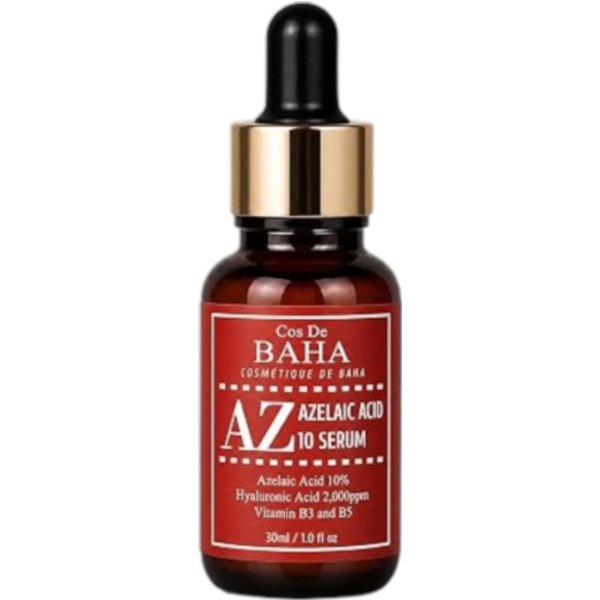 Cos De BAHAAzelaic Acid 10% Serum (AZ) - 30ml$9.19Also on YesStyle
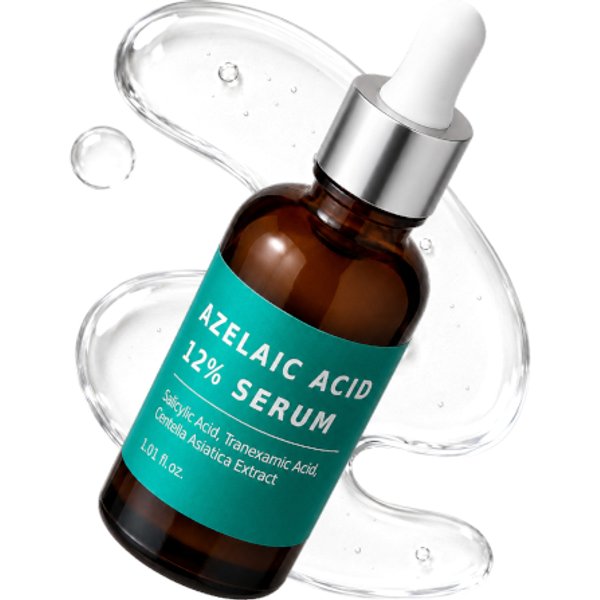 CELDYQUEAzelaic Acid 12% Serum - 30ml$12.00
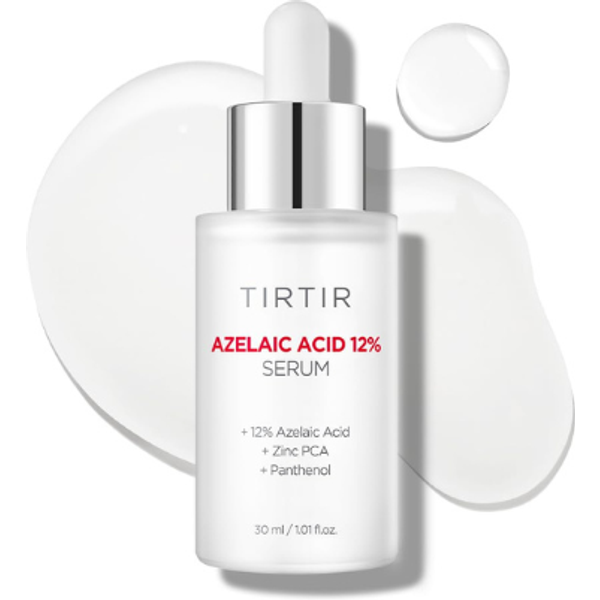 TIRTIRAzelaic Acid 12% Serum - 30ml$12.50Also on Stylevana
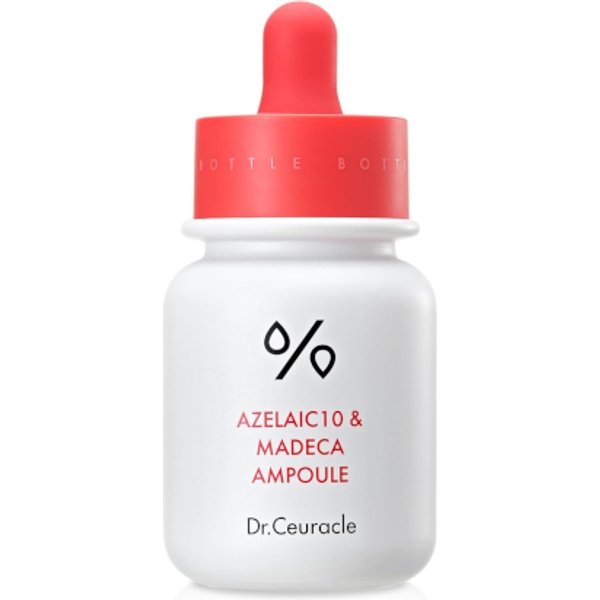 Dr.CeuracleAzelaic 10 & Madeca Ampoule - 30ml$12.89Also on YesStyle
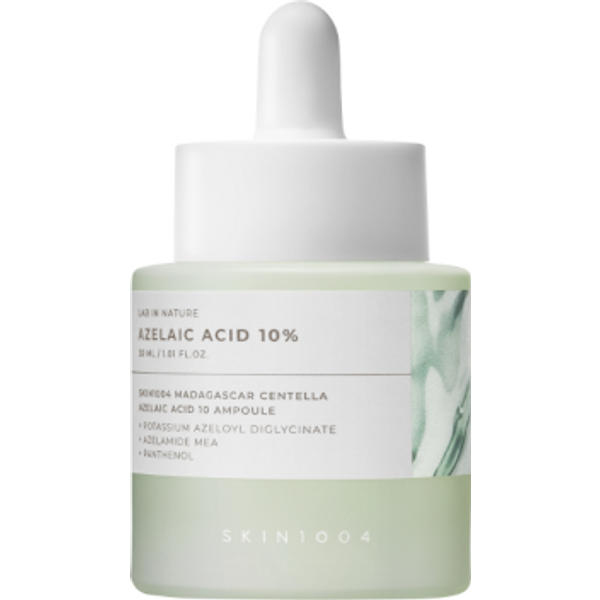 SKIN1004Madagascar Centella Azelaic Acid 10 Ampoule - 30ml$13.99Also on Stylevana
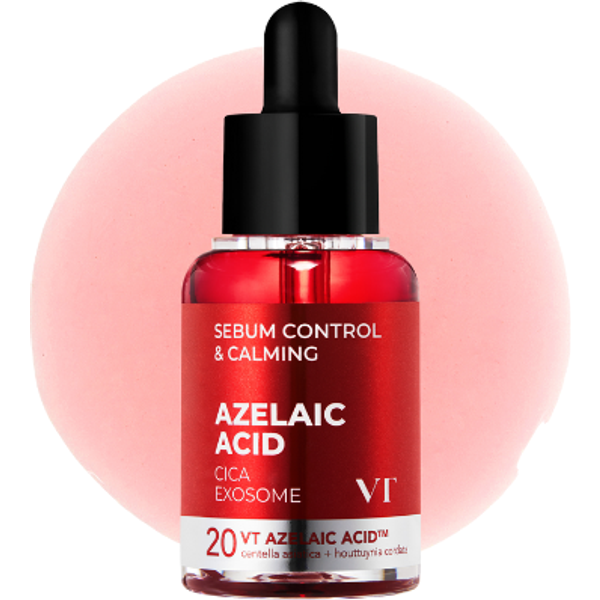 VTAzelaic Acid A1 Calming Ampoule - 30ml$18.00Also on YesStyle
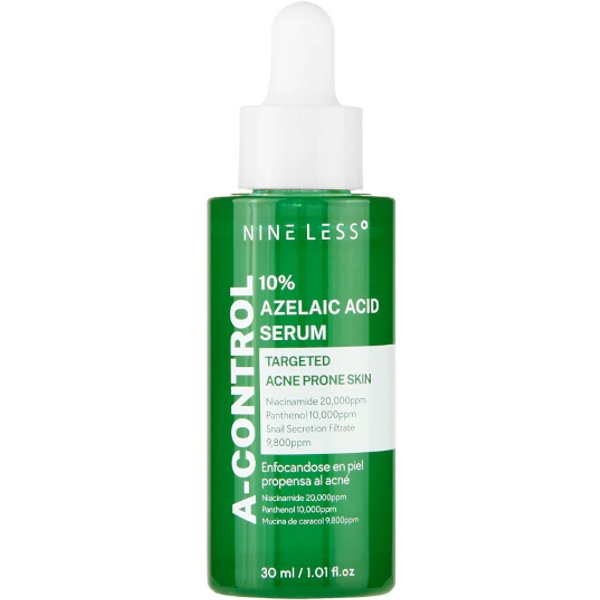 NINELESSA-Control 10% Azelaic Acid Serum - 30ml$18.20
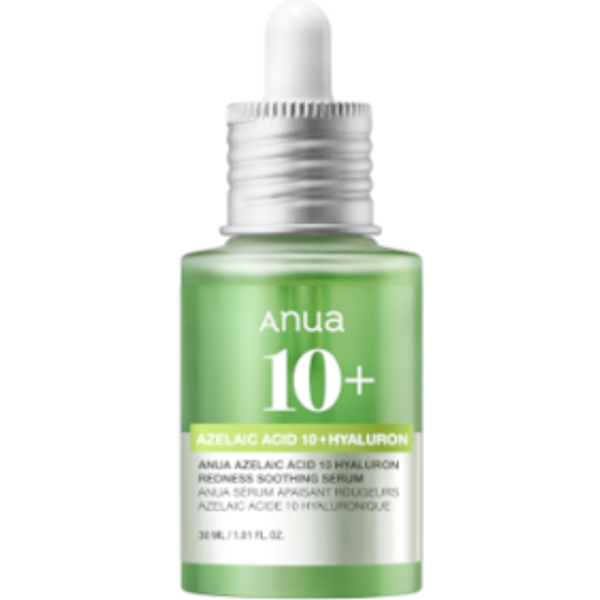 ANUAAzelaic Acid 10 Hyaluron Redness Soothing Serum - 30ml$22.00Also on YesStyle
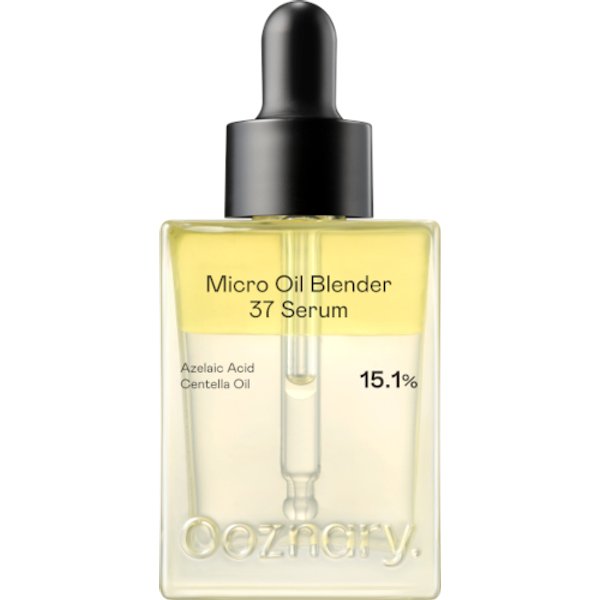 OoznaryAzelaic Micro Oil Blender 37 Serum - 30ml$24.00
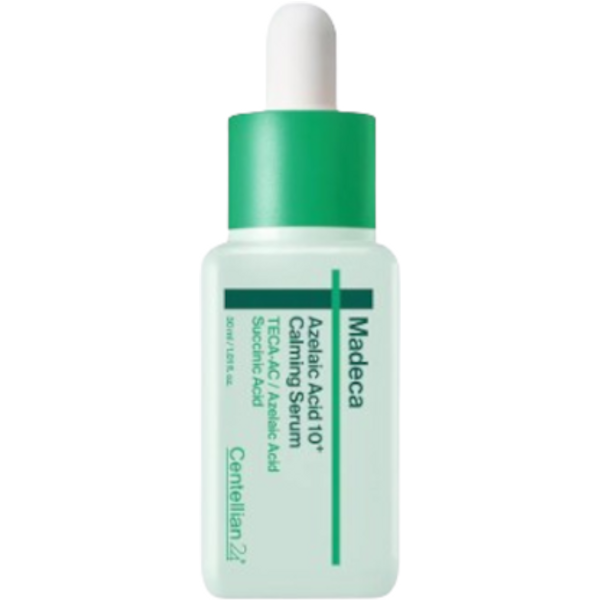 CENTELLIAN 24Madeca Azelaic Acid 10+ Calming Serum - 30ml$28.00Also on Stylevana
Already have one? Check how it fits your skin with Pick.
Common questions about Azelaic Acid#
What is Azelaic Acid?
- A multi-tasker that works on the look of redness, dark marks and breakout-prone skin at the same time.
What else is Azelaic Acid called?
- On a label you may see Azelaic.
When should you apply Azelaic Acid?
- Morning or evening.
How often can you use Azelaic Acid?
- Daily, all over the face, not the eye area.
Where do you apply Azelaic Acid?
- All over the face, not the eye area. Keep it off your lips too.
Can you use Azelaic Acid around the eyes?
- No. Azelaic Acid goes all over the face, not the eye area.
Does Azelaic Acid make skin more sensitive to the sun?
- No. Azelaic Acid is not flagged as increasing sun sensitivity.
What should you not use with Azelaic Acid?
- Space it apart from Exfoliants and Eye-area retinol.
Who should avoid Azelaic Acid?
- Skip it if any of these apply: Fragile or Sensitive and Recent Facial or Laser. Go slowly with Maternity & Nursing, Dry or Itchy Patches and Recent Shave or Wax.
Is there a cosmetic limit for Azelaic Acid?
- Only some regions set one. The maximum strength for Azelaic Acid in a cosmetic is 14% in Canada. No maximum is set in the United States, the European Union and Great Britain. A cap is a limit on the rules, not a signal to use more. Some products containing this ingredient at higher strengths are prescription medicines, not cosmetics.
Related ingredients#
How we check this#
Everything on this page traces to the sources listed below — regulators' own publications and published studies. Where the evidence does not answer a question, it is left unanswered.
Some sources below are the official product information for prescription medicines — some contain this ingredient at higher strengths, others are cited for how they interact with it. We use them for their safety and handling detail only. A cosmetic product is not one of those medicines and is not intended to treat any condition.
Our review is AI-assisted and is not a named expert's opinion. Last reviewed August 1, 2026.
Think something here is out of date or wrong? Email us at wiki@skinintelligence.ai with your reasoning and where you read it. We read what people send, and we update the page when the sources support it.
Regulators and official bodies · 18
- S1FDA. AZELEX® (azelaic acid cream) 20% — full prescribing information, NDA 020428, revised 02/2024.
- S2FDA. FINACEA® (azelaic acid) Gel, 15% — full prescribing information, NDA 021470 s-010, 2015.
- S3Health Canada. Cosmetic Ingredient Hotlist — List of Ingredients that are Restricted for Use in Cosmetic Products, 2025 edition. .
- S4Regulation (EC) No 1223/2009 of the European Parliament and of the Council on cosmetic products, consolidated text as at 01.05.2026, CELEX 02009R1223-20260501. .
- S5Retained Regulation (EC) No 1223/2009 (UK Cosmetics Regulation), Annex II and Annex III.
- S6MHRA / electronic medicines compendium. Skinoren 20% Cream — patient information leaflet (pil.285).
- S7MHRA / electronic medicines compendium. Finacea 15% Gel — patient information leaflet (pil.240).
- S8MotherToBaby (OTIS). Topical Acne Treatments fact sheet, carrying the ACOG recommendation.
- S9Cosmetic Ingredient Review. Azelaic acid ingredient record — no final or tentative safety assessment; linked to the open Draft Report on Dicarboxylic Acids (previously called Diisopropyl Sebacate) and to CIR's list of ingredient groups under active review.
- S10FDA. Prohibited & Restricted Ingredients in Cosmetics.
- S11Health Canada. Cosmetic Ingredient Hotlist: Prohibited and Restricted Ingredients — How to read the Hotlist (significant-figures rule).
- S43MHRA / electronic medicines compendium. Skinoren 20% Cream — Summary of Product Characteristics, PL 00043/0236, text revised 6 September 2023. .
- S44MHRA / electronic medicines compendium. Finacea 15% Gel — Summary of Product Characteristics, PL 00043/0237, text revised 13 July 2023. .
- S45MHRA / electronic medicines compendium. Roaccutane 20 mg soft capsules — Summary of Product Characteristics, sections 4.4 and 4.5. .
- S46MHRA / electronic medicines compendium. Differin Gel (adapalene 0.1%) — Summary of Product Characteristics, sections 4.4 and 4.5. .
- S47Reynolds RV, Yeung H, Cheng CE, Cook-Bolden F, Desai SR, Druby KM, Freeman EE, Keri JE, Stein Gold LF, Tan JKL, Tollefson MM, Weiss JS, Wu PA, Zaenglein AL, Han JM, Barbieri JS. Guidelines of care for the management of acne vulgaris. J Am Acad Dermatol. 2024;90(5):1006.e1–1006.e30. doi:10.1016/j.jaad.2023.12.017. PMID 38300170. (AAD society guideline — Tier 1 as a primary mandate document.).
- S48ACOG. Skin Conditions During Pregnancy — patient FAQ listing azelaic acid.
- S49FDA. ABSORICA® / ABSORICA LD® (isotretinoin) capsules — full prescribing information, and a generic isotretinoin capsule SPL, consulted for the absence of the topical-agent statement carried by S45. DailyMed SETIDs 3ef0cff8-19c1-4441-b780-fca6c7ee1615 and 31f62a49-4c6d-4ce3-a0ca-d159562370b1.
Studies and references · 38
- S12Liu H, Yu H, Xia J, Liu L, Liu GJ, Sang H, Peinemann F. Topical azelaic acid, salicylic acid, nicotinamide, sulphur, zinc and fruit acid (alpha-hydroxy acid) for acne. Cochrane Database Syst Rev. 2020;5(5):CD011368. doi:10.1002/14651858.CD011368.pub2. PMID 32356369.
- S13King S, Campbell J, Rowe R, Daly ML, Moncrieff G, Maybury C. A systematic review to evaluate the efficacy of azelaic acid in the management of acne, rosacea, melasma and skin aging. J Cosmet Dermatol. 2023;22(10):2650–2662. doi:10.1111/jocd.15923. PMID 37550898.
- S14Liu RH, Smith MK, Basta SA, Farmer ER. Azelaic acid in the treatment of papulopustular rosacea: a systematic review of randomized controlled trials. Arch Dermatol. 2006;142(8):1047–52. doi:10.1001/archderm.142.8.1047. PMID 16924055.
- S15Thiboutot DM, Fleischer AB Jr, Del Rosso JQ, Graupe K. Azelaic acid 15% gel once daily versus twice daily in papulopustular rosacea. J Drugs Dermatol. 2008;7(6):541–6. PMID 18561584.
- S16Cetiner S, Ilknur T, Ozkan S. Phototoxic effects of topical azelaic acid, benzoyl peroxide and adapalene were not detected when applied immediately before UVB to normal skin. Eur J Dermatol. 2004;14(4):235–7. PMID 15319156.
- S17Lowe NJ, Rizk D, Grimes P, Billips M, Pincus S. Azelaic acid 20% cream in the treatment of facial hyperpigmentation in darker-skinned patients. Clin Ther. 1998;20(5):945–59. doi:10.1016/s0149-2918(98)80076-3. PMID 9829446.
- S18Woolery-Lloyd HC, Keri J, Doig S. Retinoids and azelaic acid to treat acne and hyperpigmentation in skin of color. J Drugs Dermatol. 2013;12(4):434–7. PMID 23652891.
- S19Spellman MC, Pincus SH. Efficacy and safety of azelaic acid and glycolic acid combination therapy compared with tretinoin therapy for acne. Clin Ther. 1998;20(4):711–21. doi:10.1016/s0149-2918(98)80134-3. PMID 9737831.
- S20Kakita LS, Lowe NJ. Azelaic acid and glycolic acid combination therapy for facial hyperpigmentation in darker-skinned patients: a clinical comparison with hydroquinone. Clin Ther. 1998;20(5):960–70. doi:10.1016/s0149-2918(98)80077-5. PMID 9829447.
- S21Webster G. Combination azelaic acid therapy for acne vulgaris. J Am Acad Dermatol. 2000;43(2 Pt 3):S47–50. doi:10.1067/mjd.2000.108318. PMID 10898830.
- S22Graupe K, Cunliffe WJ, Gollnick HP, Zaumseil RP. Efficacy and safety of topical azelaic acid (20 percent cream): an overview of results from European clinical trials and experimental reports. Cutis. 1996;57(1 Suppl):20–35. PMID 8654128.
- S23Schallreuter KU, Wood JW. A possible mechanism of action for azelaic acid in the human epidermis. Arch Dermatol Res. 1990;282(3):168–71. doi:10.1007/BF00372617. PMID 2114832.
- S24Akamatsu H, Komura J, Asada Y, Miyachi Y, Niwa Y. Inhibitory effect of azelaic acid on neutrophil functions: a possible cause for its efficacy in treating pathogenetically unrelated diseases. Arch Dermatol Res. 1991;283(3):162–6. doi:10.1007/BF00372056. PMID 1867478.
- S25Wilhelm KP, Wilhelm D, Neumeister C, Zsolt I, Schwantes U. Lack of irritative potential of nadifloxacin 1% when combined with other topical anti-acne agents. Clin Exp Dermatol. 2012;37(2):112–7. doi:10.1111/j.1365-2230.2011.04214.x. PMID 22103435. (21-day cumulative open application test, n = 40 healthy volunteers. Each of adapalene, benzoyl peroxide, azelaic acid and topical isotretinoin was paired with nadifloxacin — never with each other.).
- S26Abdel Hay R, Hegazy R, Abdel Hady M, Saleh N. Clinical and dermoscopic evaluation of combined (salicylic acid 20% and azelaic acid 20%) versus trichloroacetic acid 25% chemical peel in acne: an RCT. J Dermatolog Treat. 2019;30(6):572–577. doi:10.1080/09546634.2018.1484876. PMID 29862871.
- S27Bjerring P, Draelos ZD, Fabi SG, Goodman GJ, Hau KC, Haus A, Heydenrych I, Kim J, Lin LC, Sayed K, Sundaram H, Tsubouchi R, Wu Y, Brieva P, Choudhary H, Xiang LF. International Expert Consensus on Integrated Skincare Active Ingredients for Pretreatment and Posttreatment Use With Medical Aesthetic Procedures to Enhance Skin Benefits. J Cosmet Dermatol. 2026;25(5):e70880. doi:10.1111/jocd.70880. PMID 42087526. (Panel convened by SkinCeuticals; two authors are SkinCeuticals employees — declared in the paper.).
- S28Draelos ZD. Examining 15% Azelaic Acid Foam for the Treatment of Folliculitis: A Pilot Study. J Clin Aesthet Dermatol. 2020;13(4):36–38. PMID 33144909. (Leo Pharma funded; open-label, uncontrolled, n = 26.).
- S29Wang Z, Wang B, Chen J, Wang M, Zhang J. Supramolecular engineering of an azelaic acid–nicotinamide cocrystal for dual anti-inflammatory and brightening efficacy. J Mater Chem B. 2026;14(8):2568–2577. doi:10.1039/d5tb02498f. PMID 41665034.
- S30Wong R, Sichmann MGO, Sun J, Kim AR, Bianchini RJ, Hermanson KD, Chabert L. In Vitro and In Vivo Assessment of an Innovative Peeling System with Azelaic and Tranexamic Acids for Targeted Hyperpigmentation Reduction. Dermatol Ther (Heidelb). 2025;15(5):1209–1225. doi:10.1007/s13555-025-01399-x. PMID 40254690. (Dermalogica / Unilever authors.).
- S31Shucheng H, Zhou X, Du D, Li J, Yu C, Jiang X. Effects of 15% Azelaic Acid Gel in the Management of Post-Inflammatory Erythema and Post-Inflammatory Hyperpigmentation in Acne Vulgaris. Dermatol Ther (Heidelb). 2024;14(5):1293–1314. doi:10.1007/s13555-024-01176-2. PMID 38734843. (Randomised, double-blind, placebo-controlled, n = 72 enrolled / 60 completed.).
- S32Albzea W, AlRashidi R, Alkandari D, Sadan M, Alkandari A, Alkanderi JJ, AlHajri MT, Almutairi SN, Alenzi A, Alanazi S, Al-Qurashi S, Alhajaji R, Al Shami A. Azelaic Acid Versus Hydroquinone for Managing Patients With Melasma: Systematic Review and Meta-Analysis of Randomized Controlled Trials. Cureus. 2023;15(7):e41796. doi:10.7759/cureus.41796. PMID 37457606.
- S33Wojcik A, Kubiak M, Rotsztejn H. Influence of azelaic and mandelic acid peels on sebum secretion in ageing women. Postepy Dermatol Alergol. 2013;30(3):140–5. doi:10.5114/pdia.2013.35614. PMID 24278065.
- S34Markiewicz-Tomczyk A, Budzisz E, Erkiert-Polguj A. Clinical evaluation of anti-aging effects of combined therapy — azelaic acid, phytic acid, and vitamin C applied layer by layer in females with Fitzpatrick skin types II and III. J Cosmet Dermatol. 2022;21(12):6830–6839. doi:10.1111/jocd.15359. PMID 36056802.
- S35Del Rosso JQ. Azelaic Acid Topical Formulations: Differentiation of 15% Gel and 15% Foam. J Clin Aesthet Dermatol. 2017;10(3):37–40. PMID 28360967.
- S36Ly S, Kamal K, Manjaly P, Barbieri JS, Mostaghimi A. Treatment of Acne Vulgaris During Pregnancy and Lactation: A Narrative Review. Dermatol Ther (Heidelb). 2023;13(1):115–130. doi:10.1007/s13555-022-00854-3. PMID 36447117.
- S37St Surin-Lord S, Miller J. Topical Treatment of Truncal Acne with Tretinoin Lotion 0.05% and Azelaic Acid Foam. Case Rep Dermatol Med. 2020;2020:5217567. doi:10.1155/2020/5217567. PMID 32257457. (Case series, n = 4.).
- S38Draelos ZD, Green BA, Edison BL. An evaluation of a polyhydroxy acid skin care regimen in combination with azelaic acid 15% gel in rosacea patients. J Cosmet Dermatol. 2006;5(1):23–9. doi:10.1111/j.1473-2165.2006.00219.x. PMID 17173568. (No abstract in the PubMed record; cited at title level only — no result is claimed from it.).
- S39Kusumawardani A, Paramitasari AR, Dewi SR, Betaubun AI. The application of liposomal azelaic acid, 4-n butyl resorcinol and retinol serum enhanced by microneedling for treatment of malar pattern melasma: a case series. Dermatol Reports. 2019;11(s1). (Not PubMed-indexed; authors taken from the article's own citation block.).
- S40Theoretical and potential combined use of salicylic acid, azelaic acid, and lactic acid in acne care. J Cutan Aesthet Surg. (Author attribution could not be confirmed against a PMID or DOI record, so the work is cited without one; used only to note that a combined-use proposal exists, never for a tolerability claim.).
- S41Azelaic acid and Melaleuca alternifolia essential oil co-loaded vesicular carrier for combinational therapy of acne (PMID 34842461); and hydrogel composite containing azelaic acid and tea tree essential oil (doi:10.1007/s13346-021-01092-4). (Preclinical formulation studies; cited only for co-formulation compatibility. Author lists not re-verified because no claim rests on attribution.).
- S42Azelaic acid–willow bark extract–panthenol loaded lipid nanocarriers (doi:10.1016/j.indcrop.2020.112860, ScienceDirect S0926669020305744); and azelaic acid/β-cyclodextrin loaded hyaluronic-acid-based dissolving microneedle (ScienceDirect S0927775724027547). (Preclinical formulation studies; cited only for co-formulation compatibility.).
- S50Parveen N, Sheikh A, Molugulu N, Annadurai S, Wahab S, Kesharwani P. Drug permeation enhancement, efficacy, and safety assessment of azelaic acid loaded SNEDDS hydrogel to overcome the treatment barriers of atopic dermatitis. Environ Res. 2023;236(Pt 2):116850. doi:10.1016/j.envres.2023.116850. PMID 37558118. (Preclinical — in vitro, ex vivo and rat-skin; no human data. Fetched 2026-08-01 — new.).
- S51Draelos ZD. Noxious sensory perceptions in patients with mild to moderate rosacea treated with azelaic acid 15% gel. Cutis. 2004;74(4):257–60. PMID 15551720. (n = 40; TEWL, corneometry and lactic-acid sting testing. Fetched 2026-08-01 — new.).
- S52NEW. Azelaic acid vs. placebo: effects on normal human keratinocytes and melanocytes. Electron microscopic evaluation after long-term application in vivo. Acta Derm Venereol. 1987;67(2):116–22. doi:10.2340/0001555567116122. PMID 2438874. (Double-blind vs placebo, 15 volunteers, 20% AA twice daily × 3 months, normal human epidermis.).
- S53NEW. Effects of azelaic acid on sebaceous gland, sebum excretion rate and keratinization pattern in human skin. An in vivo and in vitro study. Acta Derm Venereol Suppl (Stockh). 1989;143:20–30. PMID 2475995. (n = 47: 12 normal, 15 seborrhoeic, 20 acne; plus cultured keratinocytes.).
- S54NEW. Alpha-hydroxyacids and carboxylic acids. J Cosmet Dermatol. 2004;3(2):76–87. doi:10.1111/j.1473-2130.2004.00059.x. PMID 17147560. (Classifies azelaic acid within the carboxylic acids but outside the hydroxyacid keratinization-modulating subgroup.).
- S55NEW to this slot (already held in the vault). Azelaic Acid: Evidence-based Update on Mechanism of Action and Clinical Application. J Drugs Dermatol. 2015;14(9):964–8. PMID 26355614.
- S56NEW. Glycolic Acid Peels/Azelaic Acid 20% Cream Combination and Low Potency Triple Combination Lead to Similar Reduction in Melasma Severity in Ethnic Skin: Results of a Randomized Controlled Study. Indian J Dermatol. 2015;60(2):147–52. PMID 25814702.