What does Tranexamic Acid do?#
Tranexamic acid is a brightening ingredient that helps reduce the visible appearance of stubborn dark spots and post-blemish marks. It supports a more even, balanced-looking skin tone with consistent use.
Benefits
- Helps reduce the appearance of stubborn dark spots and post-blemish marks
- Supports a more even, balanced-looking skin tone over time
- Well-tolerated across a range of skin types and tones
How it works
Tranexamic acid is used in leave-on brightening formulas. It helps keep skin tone looking even and bright while supporting a more even appearance of existing spots over time.
How to use Tranexamic Acid#
Before you start
Patch test first if you react easily to new products, and stop using it if irritation persists.
Best time
Tranexamic acid suits either, and both if you like.
How often
From the start is fine — most people have no easing-in period and no settling-in phase to wait out.
Where it goes
After cleansing, on clean dry skin, before moisturizer.
Where to apply
Across the whole face rather than dabbed on individual spots — the areas around a mark tend to even out too. Keep it out of your eyes.
Sun
Wear sunscreen daily. Tranexamic acid isn't one of the actives we flag for extra sun care - and sun exposure is what drives the look of the marks you're working on, so daily protection earns its place either way.
Alongside others
It is unusually easy-going alongside other actives, so it does not need an evening of its own.
What to expect
Give it time — you may notice a difference from around the second week, and it keeps building over a couple of months.
If anything shows up at all it is usually mild redness, dryness or a little flaking in the first few days. It settles on its own — moisturize over the top and carry on.
Discontinue use if persistent irritation occurs.
The form you will see it in
Tranexamic acid dark spot serum
- Where it goes
- Before moisturizer
Using Tranexamic Acid with other ingredients
Pairs well with Tranexamic Acid
Niacinamide
Works well togetherComplementary brightening support — together they help promote a more even, luminous-looking complexion from two different angles.
Alpha arbutin
Works well togetherTwo brightening ingredients that complement each other to help the look of dark spots and uneven tone.
Vitamin C derivatives
Works well togetherComplementary antioxidant and brightening support for a more radiant, even-looking complexion.
Cysteamine
Works well togetherComplementary brightening support — together they help promote a more even, uniform-looking complexion from two different angles.
Kojic Acid
Works well togetherTogether they provide multi-level brightening support for a more uniform appearance, especially for stubborn dark spots.
Licorice Root Extract
Works well togetherTogether they provide multi-level brightening support for a more uniform appearance, especially for stubborn dark spots.
4-Butylresorcinol
Works well togetherTogether they support a more even-looking complexion and help soften the look of dark spots.
Azelaic acid
Works well togetherThey soften the look of dark marks from two angles — azelaic acid is the more noticeable of the pair on the skin, so ease it in gradually.
What not to use with Tranexamic Acid
Nothing flagged. None of the ingredients this wiki covers needs to be kept apart from Tranexamic Acid — check the label of anything not covered here.
Who should avoid Tranexamic Acid?#
Six situations change whether Tranexamic Acid suits your skin right now. Each one is either a reason to skip it, a reason to go slowly, or nothing to watch for.
- Maternity & Nursing
- Skip it
- Fragile or Sensitive
- Go slowly
- Dry or Itchy Patches
- Go slowly
- Recent Facial or Laser
- No caution
- Prone to Redness
- No caution
- Recent Shave or Wax
- No caution
Fragile or Sensitive — Use it less often — or stop — if it feels uncomfortable, and keep it off skin that’s broken, cut or sunburned.
Dry or Itchy Patches — Keep the rest of your routine well moisturized, and use it less often — or stop — if you notice tightness or itching.
Cosmetic strength limits for Tranexamic Acid where you live#
| Region | Most a cosmetic may contain | |
|---|---|---|
 United States United States | No explicit cap | |
The FDA restricts a short list of ingredients and sets no general strength ceiling on the rest. A figure marked "guidance, not law" is the Cosmetic Ingredient Review panel's recommendation. 21 CFR part 700, subpart B — Requirements for Specific Cosmetic Products (FDA) | ||
 Canada Canada | No explicit cap | |
One list does the work — Health Canada's Hotlist of prohibited and restricted cosmetic ingredients. | ||
 European Union European Union | No explicit cap | |
The Cosmetics Regulation's annexes, consolidated to 1 May 2026. A figure marked "guidance, not law" comes from the EU's cosmetic safety committee rather than from the annexes. | ||
 Great Britain Great Britain | No explicit cap | |
Great Britain kept the annexes as its own law and updates them only when it chooses; Northern Ireland follows the live EU Regulation, which is why some rows read differently for each. Regulation (EC) No 1223/2009 as it applies in Great Britain · Regulation (EC) No 1223/2009, Annexes II–VI | ||
 India India | No explicit cap | |
India writes its own standard, aligned to the European rules as they stood in 2012. Mandatory since 9 February 2026. IS 4707 (Part 2):2025 — restricted and prohibited cosmetic ingredients · IS 4707 (Part 3):2025 — preservatives · Cosmetics Rules, 2020, Ninth Schedule | ||
 Brazil Brazil | No explicit cap | |
ANVISA rewrote its restricted list in June 2026, and a companion act amended the prohibited list at the same time. RDC 1.029/2026 — restricted ingredients · RDC 529/2021 — prohibited ingredients, as amended by RDC 1.030/2026 · RDC 528/2021 — preservatives | ||
 Japan Japan | Not applicable (regulated as a quasi-drug) | |
Japan's cosmetics standard keeps drug ingredients out of cosmetics, so most of its figures sit in the ministry's list of the ones a cosmetic may still contain. Cosmetics Standards (化粧品基準), Ministry of Health, Labour and Welfare · Cosmetics Standards — the ministry's own English translation · Drug ingredients permitted in cosmetics — 2007 notification | ||
 South Korea South Korea | No explicit cap | |
One MFDS regulation carries both the prohibited list and the restricted list, in force 18 March 2026. Sunscreens and a few other categories are cleared product by product instead. Regulation on Safety Standards for Cosmetics (MFDS Notification 2026-19) · Regulation on the Review of Functional Cosmetics (MFDS Notification 2025-88) | ||
 Kenya Kenya | No explicit cap | |
Kenya's standard applies the EU annexes as they stand rather than copying them, so its ingredient limits are the EU's — including the 2024 additions. A figure marked "guidance, not law" sits outside the annexes and does not carry over. KS EAS 377-1, -2 and -3:2022 — cosmetics safety requirements, published by KEBS · Regulation (EC) No 1223/2009, Annexes II–VI | ||
 Namibia Namibia | No explicit cap | |
Namibia sets no ingredient limits at all. Its cosmetic rule is a single line requiring a product to be free of any harmful ingredient. Foodstuffs, Cosmetics and Disinfectants Ordinance 18 of 1979, and the regulations under it | ||
 Ukraine Ukraine | No explicit cap | |
Ukraine's own transposition of the EU annexes, as they stood before the 2024 additions, fully in force since 3 August 2026. A further revision is due on 1 February 2027. Technical Regulation on cosmetic products — Cabinet Resolution No. 65 of 20 January 2021 | ||
 Georgia Georgia | No explicit cap | |
Georgia has no cosmetics rulebook — its register of technical regulations carries no cosmetics entry — so only the general product-safety duty applies. | ||
 Australia Australia | 3% (dermal cosmetic use) | |
Australia writes no cosmetic ingredient list. A figure here is the point at which a substance becomes a medicine or a scheduled substance carrying Caution labeling, so its numbers sit well above other markets'. Poisons Standard — June 2026 · Therapeutic Goods (Excluded Goods) Determination 2018 | ||
 United Arab Emirates United Arab Emirates | No explicit cap | |
The Gulf standard points at the EU annexes as amended, so its ingredient limits are the EU's. A figure marked "guidance, not law" sits outside the annexes and does not carry over. GSO 1943:2024 — Cosmetic products: safety requirements (Gulf technical regulation) · Regulation (EC) No 1223/2009, Annexes II–VI | ||
 Kuwait Kuwait | No explicit cap | |
The Gulf standard points at the EU annexes as amended, so its ingredient limits are the EU's. A figure marked "guidance, not law" sits outside the annexes and does not carry over. GSO 1943:2024 — Cosmetic products: safety requirements (Gulf technical regulation) · Regulation (EC) No 1223/2009, Annexes II–VI | ||
 Hong Kong Hong Kong | Not applicable (sold as a medicine, not a cosmetic) | |
Hong Kong writes no cosmetics rulebook. Its Poisons List (Cap. 138A, Schedule 10) decides which substances may be sold only as medicines, and general safety is judged case by case against whichever overseas standard the enforcer considers reasonable. Pharmacy and Poisons Regulations (Cap. 138A), Schedule 10 — the poisons list · Pharmacy and Poisons Board — Guidance Notes on classifying pharmaceutical products, April 2026 | ||
 Singapore Singapore | 3% (skin products) | |
Singapore writes the ASEAN annexes into its own schedule, and its regulator tells companies to check the current ASEAN release as well — which is why a figure here can read "guidance, not law". Health Products (Cosmetic Products — ASEAN Cosmetic Directive) Regulations 2007, Third Schedule · ASEAN Cosmetic Directive annexes — release 2026-1, 22 June 2026 | ||
 Brunei Brunei | No explicit cap | |
Brunei carries the 2007 ASEAN annexes in its own schedule and has not updated them since, so it reads differently from Singapore on several ingredients. Medicines (Cosmetic Products) Regulations (Cap. 285 Rg 1), Schedule 1 — revised edition 2024 | ||
 Jordan Jordan | No explicit cap | |
Jordan's cosmetic rules defer to "the approved references" and name none of them, so there is no Jordanian figure to read. The only number in the instrument governs the ingredient list on the pack. JFDA instructions on cosmetics and pharmaceutical cosmetics, 2026 | ||
 Trinidad & Tobago Trinidad & Tobago | No explicit cap | |
Trinidad and Tobago has had the power to set cosmetic standards since 1960 and has never used it. The regulations made under the Act cover food and drugs, with no cosmetics part; what binds is the Act's general rule against selling a cosmetic that may injure the user. Food and Drugs Act, Chap. 30:01 · Food and Drugs Regulations | ||
Where a figure appears, that is the maximum strength allowed or advised for tranexamic acid in that market — some are set in cosmetics regulation, others are the ceiling a cosmetic safety panel recommends. Where no figure appears, the market either sets no cosmetic maximum or handles this ingredient outside its cosmetic rules. These are limits, not targets — the right strength for a formula is the formulator's decision. Some products containing this ingredient at higher strengths are prescription medicines, not cosmetics.
Open a market to see the rulebook its figure comes from. Those notes describe each market's own rules as we read them, current to August 24, 2026; the linked documents are the authority, and nothing here is legal advice.
Sample products with Tranexamic Acid#
A few well-known products, not a full list — product names are each brand's own. We don't sell them — the shop prices them in US dollars and ships from Hong Kong, so delivery and duties come on top. It may not ship everywhere.
We may earn a small commission when you buy through these links.
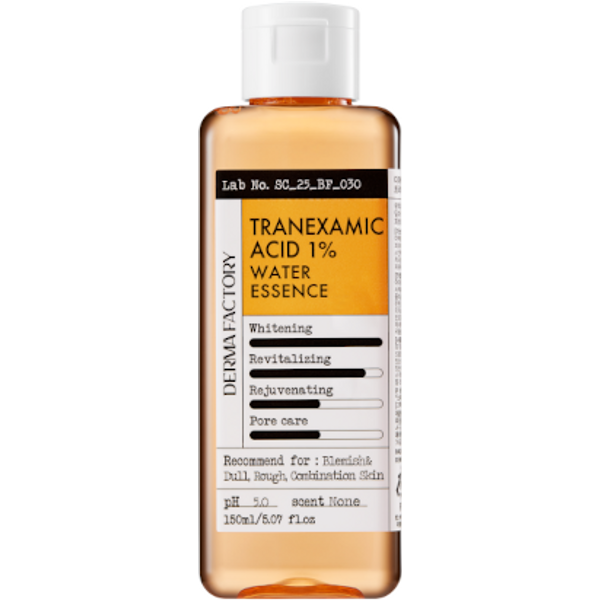
Serums · 12
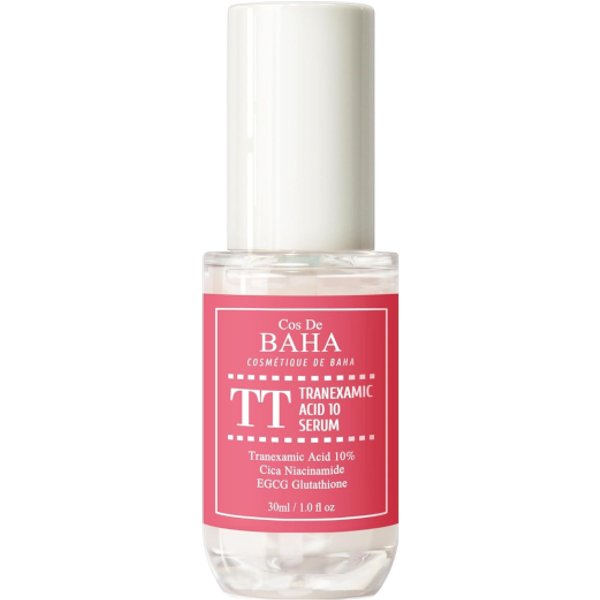 Cos De BAHATranexamic Acid 10 Serum (TT30) - 30ml$7.29Also on Stylevana
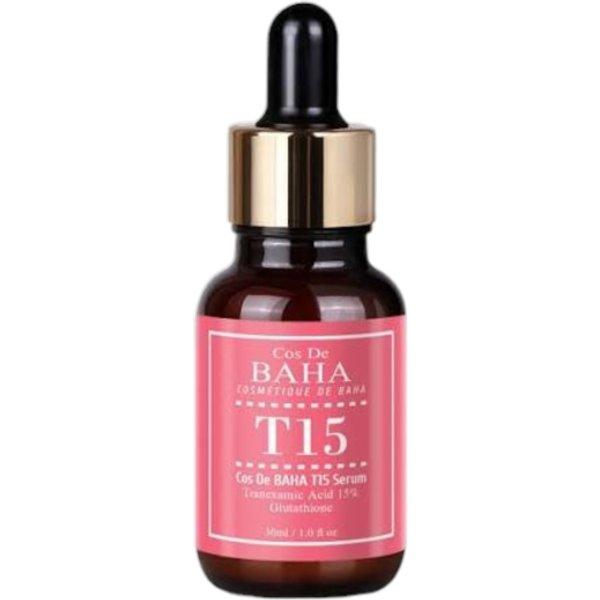 Cos De BAHATranexamic Acid 15 Serum (T15) - 30ml$9.19Also on YesStyle
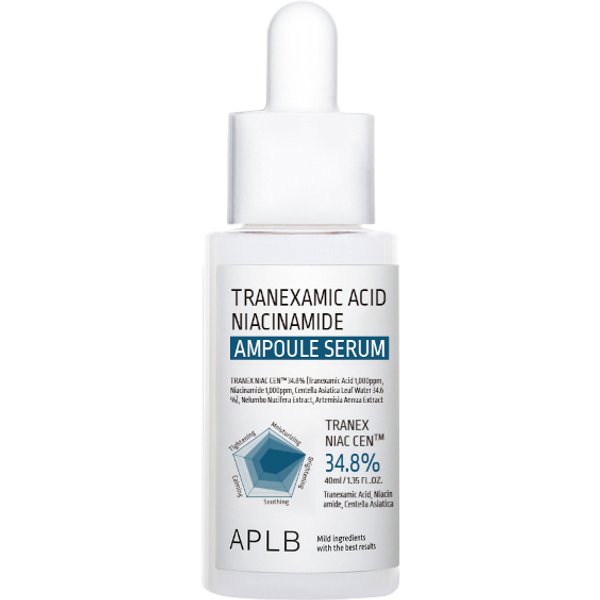 APLBTranexamic Acid Niacinamide Ampoule Serum - 40ml$9.80
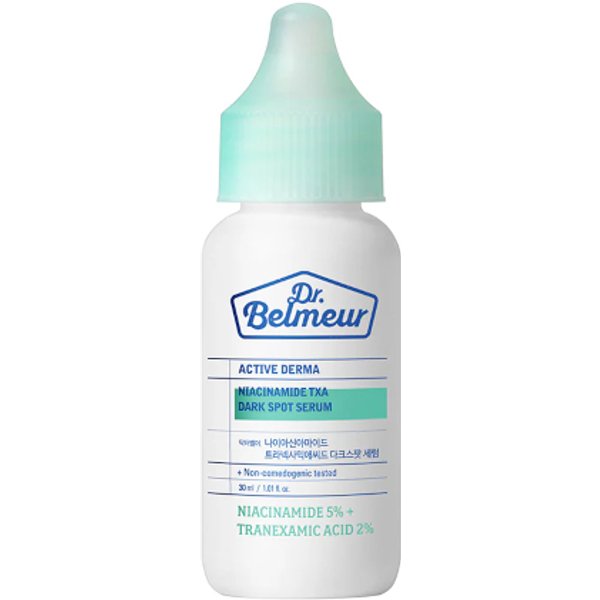 THE FACE SHOPDr. Belmeur Niacinamide TXA Dark Spot Serum - 30ml$10.50Also on Stylevana
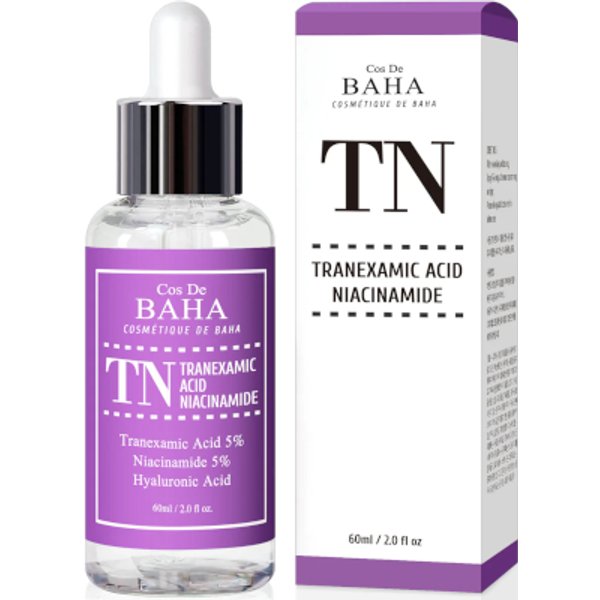 Cos De BAHATranexamic Acid Niacinamide Serum (TN60) - 60ml$11.18Also on Stylevana
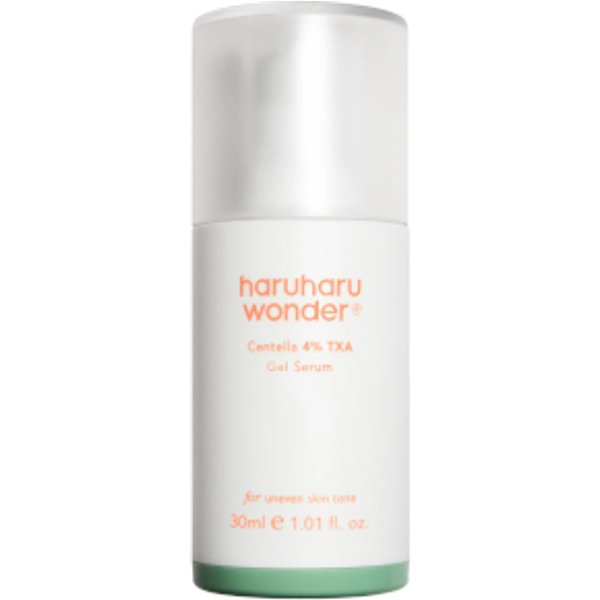 haruharu wonderCentella 4% TXA Gel Serum - 30ml$12.50Also on YesStyle
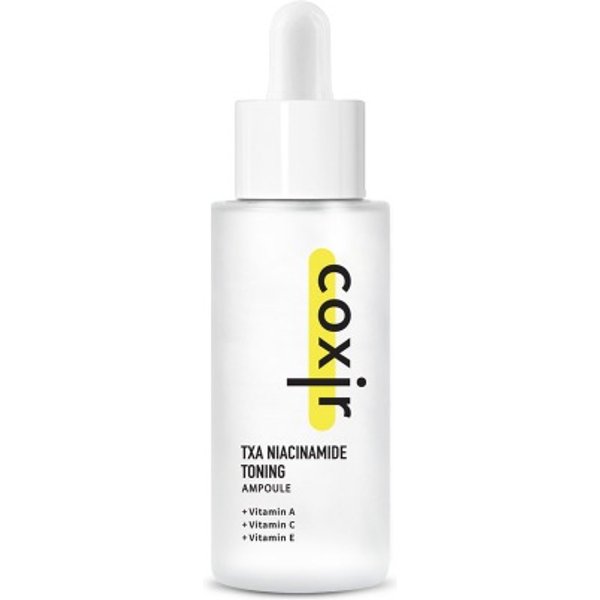 COXIRTXA Niacinamide Toning Ampoule - 50ml$15.73
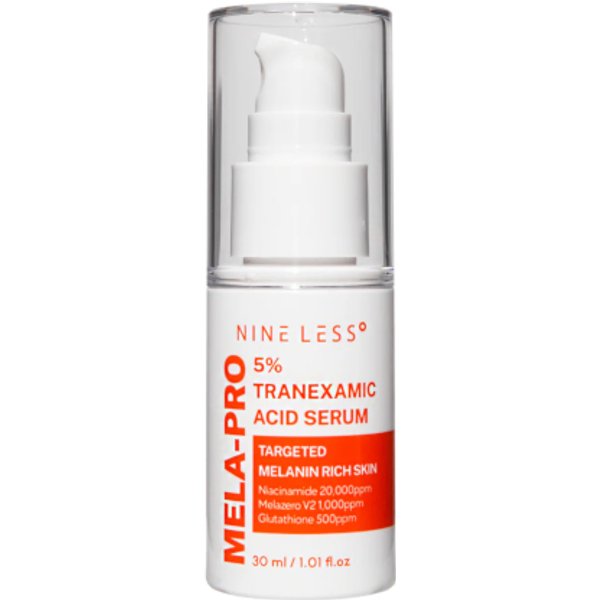 NINELESSMELA-PRO 5% Tranexamic Acid Serum - 30ml$18.20
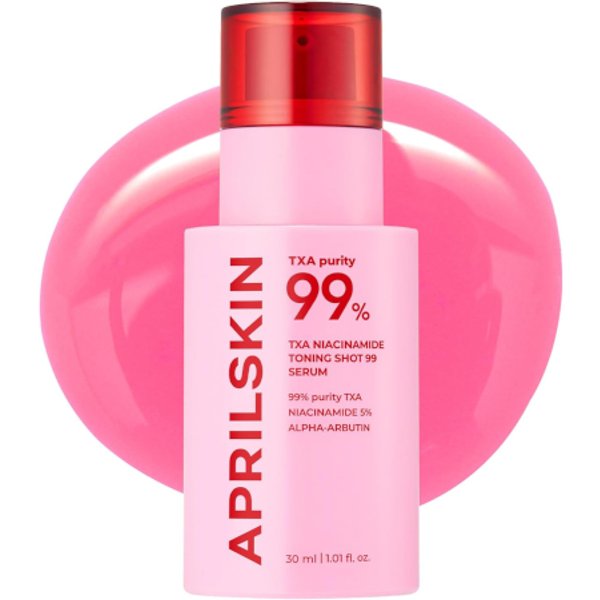 APRILSKINTXA Niacinamide Toning Shot 99 Serum - 30ml$19.40Also on Stylevana
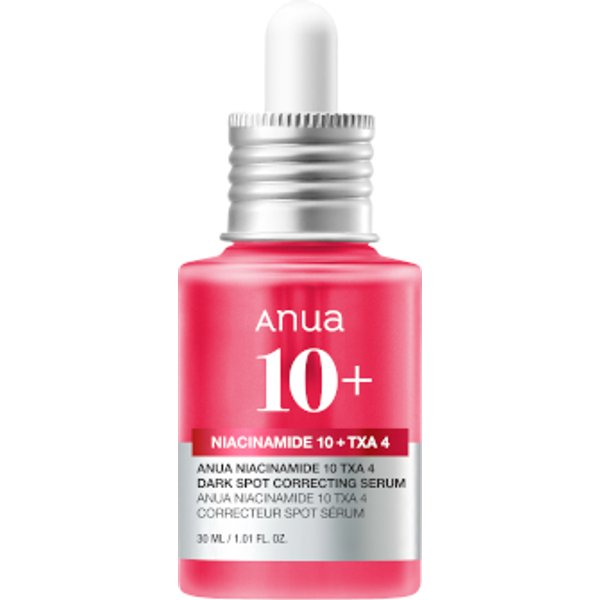 ANUANiacinamide10% + TXA 4% Dark Spot Removing Serum - 30ml$19.95Also on Stylevana
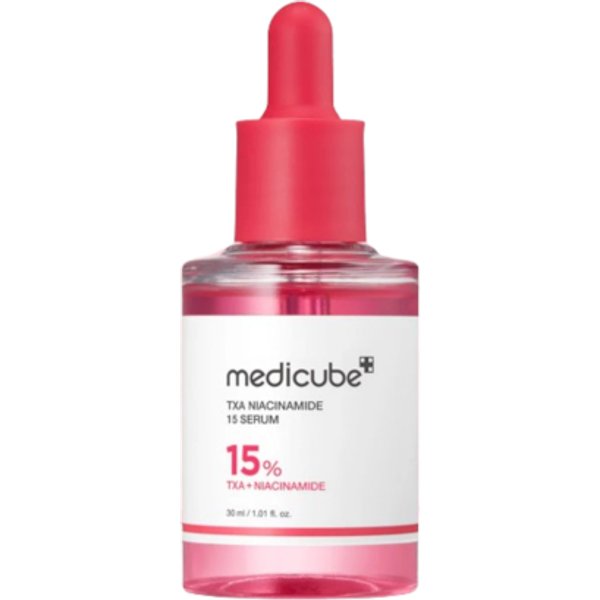 medicubeTXA Niacinamide 15 Serum - 30ml$24.90
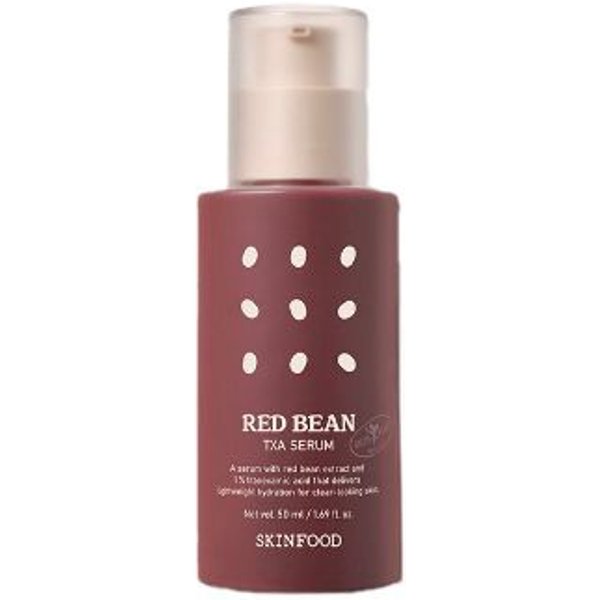 SKINFOODRed Bean TXA Serum - 50ml$25.53
Already have one? Check how it fits your skin with Pick.
Common questions about Tranexamic Acid#
What is Tranexamic Acid?
- A gentle brightening ingredient that helps stubborn dark spots and post-blemish marks look lighter, for a more even-looking complexion.
What else is Tranexamic Acid called?
- On a label you may see TXA, Tranexamic and Cetyl tranexamate.
When should you apply Tranexamic Acid?
- Morning or evening. Tranexamic acid suits either, and both if you like.
How often can you use Tranexamic Acid?
- Daily.
Where do you apply Tranexamic Acid?
- All over the face. Keep it away from your eyes and lips.
Can you use Tranexamic Acid around the eyes?
- Yes. Tranexamic Acid goes all over the face, the skin around the eyes included — keep it out of your eyes and off your lips.
Does Tranexamic Acid make skin more sensitive to the sun?
- No. Tranexamic Acid is not flagged as increasing sun sensitivity.
What should you not use with Tranexamic Acid?
- Nothing flagged. None of the ingredients this wiki covers needs to be kept apart from Tranexamic Acid — check the label of anything not covered here.
Who should avoid Tranexamic Acid?
- Skip it if any of these apply: Maternity & Nursing. Go slowly with Fragile or Sensitive and Dry or Itchy Patches.
Is there a cosmetic limit for Tranexamic Acid?
- No. No cosmetic regulator in the United States, Canada, the European Union or Great Britain sets a maximum strength for it. That is a limit on the rules, not a signal to use more. Some products containing this ingredient at higher strengths are prescription medicines, not cosmetics.
Related ingredients#
How we check this#
Everything on this page traces to the sources listed below — regulators' own publications and published studies. Where the evidence does not answer a question, it is left unanswered.
Some sources below are the official product information for prescription medicines — some contain this ingredient at higher strengths, others are cited for how they interact with it. We use them for their safety and handling detail only. A cosmetic product is not one of those medicines and is not intended to treat any condition.
Our review is AI-assisted and is not a named expert's opinion. Last reviewed August 5, 2026.
Think something here is out of date or wrong? Email us at wiki@skinintelligence.ai with your reasoning and where you read it. We read what people send, and we update the page when the sources support it.
Regulators and official bodies · 11
- S1Tranexamic Acid 500 mg Tablets — Summary of Product Characteristics, Waymade Plc t/a Sovereign Medical, PL 06464/1373, text revised 8 April 2026. emc.
- S2LYSTEDA (tranexamic acid) tablets, for oral use — US Full Prescribing Information. DailyMed setid a7e3180d-cf5b-4c2c-a31f-68bf6181f19a.
- S3LYSTEDA (tranexamic acid) tablets — FDA approved labeling, NDA 022430 s004.
- S4Evana Heavy Period Relief 500 mg tablets — Summary of Product Characteristics, Maxwellia Limited. emc.
- S32Health Canada. Prescription Drug List — list related to drugs for human use. Drug and Health Product Register. — entry "Tranexamic acid", effective 2013-12-19, no qualifier.
- S33Health Canada. Cosmetic Ingredient Hotlist — prohibited and restricted ingredients (2025). — no tranexamic acid entry; "Retinoic Acid and its salts" prohibited.
- S34Regulation (EC) No 1223/2009 on cosmetic products, Annex II (substances prohibited in cosmetic products). EUR-Lex CELEX 32009R1223. No tranexamic acid entry.
- S35Regulation (EC) No 1223/2009, Annex III (substances subject to restriction), as assimilated in UK law, up to date with all changes in force on or before 15 April 2026. — no tranexamic acid entry.
- S36FDA. Prohibited & Restricted Ingredients in Cosmetics (21 CFR 700 series). — no tranexamic acid entry.
- S37FDA. Is It a Cosmetic, a Drug, or Both? (Or Is It Soap?) — FD&C Act §201(g)/(i) intended-use test.
- S38WHO recommendation on tranexamic acid for the treatment of postpartum haemorrhage.
Studies and references · 32
- S5Maeda K. Mechanism of Action of Topical Tranexamic Acid in the Treatment of Melasma and Sun-Induced Skin Hyperpigmentation. Cosmetics 2022;9(5):108. doi:10.3390/cosmetics9050108.
- S6Kim SJ, Park JY, Shibata T, Fujiwara R, Kang HY. Efficacy and possible mechanisms of topical tranexamic acid in melasma. Clin Exp Dermatol 2016;41(5):480-5. doi:10.1111/ced.12835. PMID 27135282.
- S7Denda M, Kitamura K, Elias PM, Feingold KR. trans-4-(Aminomethyl)cyclohexane carboxylic acid (T-AMCHA), an anti-fibrinolytic agent, accelerates barrier recovery and prevents the epidermal hyperplasia induced by epidermal injury in hairless mice and humans. J Invest Dermatol 1997;109(1):84-90. PMID 9204960.
- S8Yasnova N, Sirait SP, Rahmayunita G. The effectiveness and safety of 3% tranexamic acid cream vs. 4% hydroquinone cream for mixed-type melasma in skin of color: a double-blind, split-face, randomized controlled trial. Acta Dermatovenerol Alp Pannonica Adriat 2024;33(2):83-88. PMID 38918942.
- S9Kanechorn Na Ayuthaya P, Niumphradit N, Manosroi A, Nakakes A. Topical 5% tranexamic acid for the treatment of melasma in Asians: a double-blind randomized controlled clinical trial. J Cosmet Laser Ther 2012;14(3):150-4. PMID 22506692.
- S10Desai S, Ayres E, Bak H, Manco M, Lynch S, Raab S, Du A, Green D, Skobowiat C, Wangari-Talbot J, Zheng Q. Effect of a Tranexamic Acid, Kojic Acid, and Niacinamide Containing Serum on Facial Dyschromia: A Clinical Evaluation. J Drugs Dermatol 2019;18(5):454-459. PMID 31141852.
- S11Chen T, Xue J, Wang Q. Tranexamic Acid for the Treatment of Hyperpigmentation and Telangiectatic Disorders Other Than Melasma: An Update. Clin Cosmet Investig Dermatol 2024;17:2151-2163. doi:10.2147/CCID.S479411. PMID 39350932.
- S12Pilot Clinical Safety and Efficacy Evaluation of a Topical 3% Tranexamic Acid Cream and Serum Protocol for Managing Facial Hyperpigmentation in Caucasian Patients. Cosmetics 2024;11(5):168. (authors not present in retrieved capture).
- S13Dermatology: how to manage facial hyperpigmentation in skin of colour. Drugs in Context 2022. PMID 35720052 / PMC9165630. (authors not present in retrieved capture).
- S14The use of tranexamic acid in dermatology. Acta Clin Croat 2023. PMID 38549597 / PMC10969640. (authors not present in retrieved capture).
- S15Efficacy and Best Mode of Delivery for Tranexamic Acid in Post-Inflammatory Hyperpigmentation: A Systematic Review. Clin Cosmet Investig Dermatol 2022;15:2873-2882. PMID 36597522 / PMC9805721. (authors not present in retrieved capture).
- S16In Vitro and In Vivo Assessment of an Innovative Peeling System with Azelaic and Tranexamic Acids for Targeted Hyperpigmentation Reduction. Dermatol Ther (Heidelb) 2025. PMID 40254690 / PMC12033157. (authors not present in retrieved capture).
- S17Topical tranexamic acid as a promising treatment for melasma. J Res Med Sci 2014. PMID 25422661 / PMC4235096. (authors not present in retrieved capture).
- S18A comparative study of 20% azelaic acid cream versus 5% tranexamic acid solution for the treatment of postinflammatory hyperpigmentation in patients with acne vulgaris: a single-blinded randomized clinical trial. PMC10199364. (authors not present in retrieved capture).
- S19Anwar AI, Wahab S, Widita W, Nurdin AR, Budhiani S, Seweng A. Randomized control trial outcomes of tranexamic acid combination serum as a depigmenting agent for the use in healthy individuals. Dermatol Ther 2019;32(6):e13146. PMID 31664751.
- S20Rocio J, et al. Evaluation of the Efficacy of a Serum Containing Niacinamide, Tranexamic Acid, Vitamin C, and Hydroxy Acid Compared to 4% Hydroquinone in the Management of Melasma. J Cosmet Dermatol 2025;24(3):e70097. PMID 40062688.
- S21Jeon H, Park N, Won JG, Shin YW, Choi J, Min K, Choi E, Kim CK, Park SW, Son NS. Enhanced Skin Permeation and Pigmentation Reduction Effects of a Novel Tranexamic Acid-Mandelic Acid Ion-Pairing Complex. Skin Res Technol 2025;31(9):e70222. PMID 40936315.
- S22Ng SP, Marcant M, Davis AF. In vitro human skin concentrations following topical application of 2% tranexamic acid in co-enhancer cream and branded cream formulations. J Cosmet Dermatol 2020;19(10):2656-2662. PMID 31961048.
- S23International Expert Consensus on Integrated Skincare Active Ingredients for Pretreatment and Posttreatment Use With Medical Aesthetic Procedures to Enhance Skin Benefits. J Cosmet Dermatol 2026. PMID 42087526 / PMC13145317. (authors not present in retrieved capture).
- S24Efficacy and Safety of Topical Tranexamic Acid Alone or in Combination with Either Fractional Carbon Dioxide Laser or Microneedling for the Treatment of Melasma. PMC10412040. (authors not present in retrieved capture).
- S25Ghandehari R, Robati RM, Niknezhad N, Hajizadeh N, Tehranchinia Z. Efficacy and safety of fractional CO2 laser and tranexamic acid versus microneedling and tranexamic acid in the treatment of infraorbital hyperpigmentation. J Dermatolog Treat 2022;33(3):1391-1396. PMID 32893707.
- S26Clinical Efficacy of a Novel Topical Formulation on Periorbital Dark Circles: An Objective Analysis. PMC12235579. (authors not present in retrieved capture).
- S27Tranexamic Acid Diminishes Laser-Induced Melanogenesis. PMC4466276. (authors not present in retrieved capture).
- S28Lindgren AL, Austin AH, Welsh KM. The Use of Tranexamic Acid to Prevent and Treat Post-Inflammatory Hyperpigmentation. J Drugs Dermatol 2021;20(3):344-345. PMID 33683077.
- S29Baybordi Aghdam S, et al. Efficacy, safety, tolerability and treatment durability of microneedling plus topical tranexamic acid in combination with topical modified Kligman lightening formula for melasma: a four-arm assessor and analyst blinded randomized controlled clinical trial. J Cosmet Dermatol 2024;23(11):3585-3597. PMID 39016678.
- S30Xu Z, et al. Oral tranexamic acid treats papulopustular rosacea by improving the skin barrier. J Cosmet Dermatol 2024;23(9):2918-2926. PMID 38712728.
- S31Zhang J, Gu D, Yan Y, Pan R, Zhong H, Zhang C, Xu Y. Potential Role of Tranexamic Acid in Rosacea Treatment: conquering Flushing Beyond Melasma. Clin Cosmet Investig Dermatol 2024;17:1405-1412. PMID 38895607.
- S39Safety and efficacy of niosomal and conventional tranexamic acid/niacinamide vs. hydroquinone creams in melasma: a randomized, double-blind, case-controlled clinical trial. Sci Rep 2025. PMID 41315336 / PMC12663283. (authors not present in retrieved capture).
- S40Clinical Safety and Efficacy of Hyaluronic Acid–Niacinamide–Tranexamic Acid Injectable Hydrogel for Multifactorial Facial Skin Quality Enhancement with Dark Skin Lightening. Gels 2025;11(7):495 / PMC12294899. (authors not present in retrieved capture).
- S41Hsieh PW, Chen WY, Aljuffali IA, Chen CC, Fang JY. Co-drug strategy for promoting skin targeting and minimizing the transdermal diffusion of hydroquinone and tranexamic acid. Curr Med Chem 2013;20(32):4080-92. PMID 23931279.
- S42Enhancing skin delivery of tranexamic acid via esterification: synthesis and evaluation of alkyl ester derivatives. PMID 39502868. (authors not present in retrieved capture).
- S43Combination Topical Tranexamic Acid and Vitamin C for the Treatment of Refractory Melasma. J Clin Aesthet Dermatol 2023. PMID 37560507 / PMC10409511. (authors not present in retrieved capture).