What does Licorice Root Extract do?#
Licorice root extract contains naturally derived brightening compounds that help promote a more even, luminous-looking complexion. It gently addresses the appearance of dark spots while also supporting a calmer, less irritated-looking skin tone.
Benefits
- Helps promote a brighter, more even-looking complexion
- Supports a calmer appearance, helping to reduce the look of redness and irritation
- Gentle enough for daily use, and well tolerated by most skin types, including sensitive skin
- Contains multiple naturally derived compounds that support both brightening and calming benefits
How it works
Licorice root extract contains several naturally derived compounds, each contributing something different: some help even out the look of dark spots, while others help calm the appearance of redness and irritation. Its gentle, soothing nature makes it well suited to sensitive skin and daily use.
How to use Licorice Root Extract#
Before you start
If your skin is broken or actively irritated, let it settle before you start.
How often
Twice a day is fine, from the first day. Most people have no settling-in period to push through and no purge, and there is no need to build up slowly.
Where it goes
After cleansing, before moisturizer.
Where to apply
Across the face, or just on the areas you want to even out.
Sun
Wear sunscreen daily. Licorice root isn't one of the actives we flag for extra sun care - and sun exposure is what drives the look of the marks you're working on, so daily protection earns its place either way.
Alongside others
It is gentle enough to suit sensitive skin, and it sits comfortably next to almost anything else in a routine.
What to expect
Expect it to work gradually. This is a several-weeks ingredient rather than a several-days one, so the useful thing is to keep going.
Discontinue use if unexpected discomfort occurs.
The form you will see it in
Licorice root brightening serum
- Where it goes
- Before moisturizer
Using Licorice Root Extract with other ingredients
Pairs well with Licorice Root Extract
Niacinamide
Works well togetherComplementary brightening support — together they help promote a more even, radiant-looking complexion from two different angles.
Tranexamic acid
Works well togetherTogether they provide multi-level brightening support for a more uniform appearance, especially for stubborn dark spots.
Vitamin C
Works well togetherVitamin C in the morning and licorice root in the evening — together they support a brighter, more even-looking complexion across both halves of the day.
What not to use with Licorice Root Extract
Nothing flagged. None of the ingredients this wiki covers needs to be kept apart from Licorice Root Extract — check the label of anything not covered here.
Who should avoid Licorice Root Extract?#
Six situations change whether Licorice Root Extract suits your skin right now. Each one is either a reason to skip it, a reason to go slowly, or nothing to watch for.
- Maternity & Nursing
- Go slowly
- Fragile or Sensitive
- Go slowly
- Recent Facial or Laser
- No caution
- Prone to Redness
- No caution
- Dry or Itchy Patches
- No caution
- Recent Shave or Wax
- No caution
Maternity & Nursing — If you are pregnant or nursing, you may prefer to check with your healthcare provider before use.
Fragile or Sensitive — Use it less often — or stop — if it feels uncomfortable, and keep it off skin that’s broken, cut or sunburned.
Cosmetic strength limits for Licorice Root Extract where you live#
| Region | Most a cosmetic may contain | |
|---|---|---|
 United States United States | No explicit cap | |
The FDA restricts a short list of ingredients and sets no general strength ceiling on the rest. A figure marked "guidance, not law" is the Cosmetic Ingredient Review panel's recommendation. 21 CFR part 700, subpart B — Requirements for Specific Cosmetic Products (FDA) | ||
 Canada Canada | No explicit cap | |
One list does the work — Health Canada's Hotlist of prohibited and restricted cosmetic ingredients. | ||
 European Union European Union | No explicit cap | |
The Cosmetics Regulation's annexes, consolidated to 1 May 2026. A figure marked "guidance, not law" comes from the EU's cosmetic safety committee rather than from the annexes. | ||
 Great Britain Great Britain | No explicit cap | |
Great Britain kept the annexes as its own law and updates them only when it chooses; Northern Ireland follows the live EU Regulation, which is why some rows read differently for each. Regulation (EC) No 1223/2009 as it applies in Great Britain · Regulation (EC) No 1223/2009, Annexes II–VI | ||
 India India | No explicit cap | |
India writes its own standard, aligned to the European rules as they stood in 2012. Mandatory since 9 February 2026. IS 4707 (Part 2):2025 — restricted and prohibited cosmetic ingredients · IS 4707 (Part 3):2025 — preservatives · Cosmetics Rules, 2020, Ninth Schedule | ||
 Brazil Brazil | No explicit cap | |
ANVISA rewrote its restricted list in June 2026, and a companion act amended the prohibited list at the same time. RDC 1.029/2026 — restricted ingredients · RDC 529/2021 — prohibited ingredients, as amended by RDC 1.030/2026 · RDC 528/2021 — preservatives | ||
 Japan Japan | 4.3% (licorice extract, leave-on); 0.5% (glycyrrhizinates) | |
Japan's cosmetics standard keeps drug ingredients out of cosmetics, so most of its figures sit in the ministry's list of the ones a cosmetic may still contain. Cosmetics Standards (化粧品基準), Ministry of Health, Labour and Welfare · Cosmetics Standards — the ministry's own English translation · Drug ingredients permitted in cosmetics — 2007 notification | ||
 South Korea South Korea | No explicit cap | |
One MFDS regulation carries both the prohibited list and the restricted list, in force 18 March 2026. Sunscreens and a few other categories are cleared product by product instead. Regulation on Safety Standards for Cosmetics (MFDS Notification 2026-19) · Regulation on the Review of Functional Cosmetics (MFDS Notification 2025-88) | ||
 Kenya Kenya | No explicit cap | |
Kenya's standard applies the EU annexes as they stand rather than copying them, so its ingredient limits are the EU's — including the 2024 additions. A figure marked "guidance, not law" sits outside the annexes and does not carry over. KS EAS 377-1, -2 and -3:2022 — cosmetics safety requirements, published by KEBS · Regulation (EC) No 1223/2009, Annexes II–VI | ||
 Namibia Namibia | No explicit cap | |
Namibia sets no ingredient limits at all. Its cosmetic rule is a single line requiring a product to be free of any harmful ingredient. Foodstuffs, Cosmetics and Disinfectants Ordinance 18 of 1979, and the regulations under it | ||
 Ukraine Ukraine | No explicit cap | |
Ukraine's own transposition of the EU annexes, as they stood before the 2024 additions, fully in force since 3 August 2026. A further revision is due on 1 February 2027. Technical Regulation on cosmetic products — Cabinet Resolution No. 65 of 20 January 2021 | ||
 Georgia Georgia | No explicit cap | |
Georgia has no cosmetics rulebook — its register of technical regulations carries no cosmetics entry — so only the general product-safety duty applies. | ||
 Australia Australia | No explicit cap | |
Australia writes no cosmetic ingredient list. A figure here is the point at which a substance becomes a medicine or a scheduled substance carrying Caution labeling, so its numbers sit well above other markets'. Poisons Standard — June 2026 · Therapeutic Goods (Excluded Goods) Determination 2018 | ||
 United Arab Emirates United Arab Emirates | No explicit cap | |
The Gulf standard points at the EU annexes as amended, so its ingredient limits are the EU's. A figure marked "guidance, not law" sits outside the annexes and does not carry over. GSO 1943:2024 — Cosmetic products: safety requirements (Gulf technical regulation) · Regulation (EC) No 1223/2009, Annexes II–VI | ||
 Kuwait Kuwait | No explicit cap | |
The Gulf standard points at the EU annexes as amended, so its ingredient limits are the EU's. A figure marked "guidance, not law" sits outside the annexes and does not carry over. GSO 1943:2024 — Cosmetic products: safety requirements (Gulf technical regulation) · Regulation (EC) No 1223/2009, Annexes II–VI | ||
 Hong Kong Hong Kong | No explicit cap | |
Hong Kong writes no cosmetics rulebook. Its Poisons List (Cap. 138A, Schedule 10) decides which substances may be sold only as medicines, and general safety is judged case by case against whichever overseas standard the enforcer considers reasonable. Pharmacy and Poisons Regulations (Cap. 138A), Schedule 10 — the poisons list · Pharmacy and Poisons Board — Guidance Notes on classifying pharmaceutical products, April 2026 | ||
 Singapore Singapore | No explicit cap | |
Singapore writes the ASEAN annexes into its own schedule, and its regulator tells companies to check the current ASEAN release as well — which is why a figure here can read "guidance, not law". Health Products (Cosmetic Products — ASEAN Cosmetic Directive) Regulations 2007, Third Schedule · ASEAN Cosmetic Directive annexes — release 2026-1, 22 June 2026 | ||
 Brunei Brunei | No explicit cap | |
Brunei carries the 2007 ASEAN annexes in its own schedule and has not updated them since, so it reads differently from Singapore on several ingredients. Medicines (Cosmetic Products) Regulations (Cap. 285 Rg 1), Schedule 1 — revised edition 2024 | ||
 Jordan Jordan | No explicit cap | |
Jordan's cosmetic rules defer to "the approved references" and name none of them, so there is no Jordanian figure to read. The only number in the instrument governs the ingredient list on the pack. JFDA instructions on cosmetics and pharmaceutical cosmetics, 2026 | ||
 Trinidad & Tobago Trinidad & Tobago | No explicit cap | |
Trinidad and Tobago has had the power to set cosmetic standards since 1960 and has never used it. The regulations made under the Act cover food and drugs, with no cosmetics part; what binds is the Act's general rule against selling a cosmetic that may injure the user. Food and Drugs Act, Chap. 30:01 · Food and Drugs Regulations | ||
Where a figure appears, that is the maximum strength allowed or advised for licorice root extract in that market — some are set in cosmetics regulation, others are the ceiling a cosmetic safety panel recommends. Where no figure appears, the market either sets no cosmetic maximum or handles this ingredient outside its cosmetic rules. These are limits, not targets — the right strength for a formula is the formulator's decision.
Open a market to see the rulebook its figure comes from. Those notes describe each market's own rules as we read them, current to August 24, 2026; the linked documents are the authority, and nothing here is legal advice.
Sample products with Licorice Root Extract#
A few well-known products, not a full list — product names are each brand's own. We don't sell them — the shop prices them in US dollars and ships from Hong Kong, so delivery and duties come on top. It may not ship everywhere.
We may earn a small commission when you buy through these links.
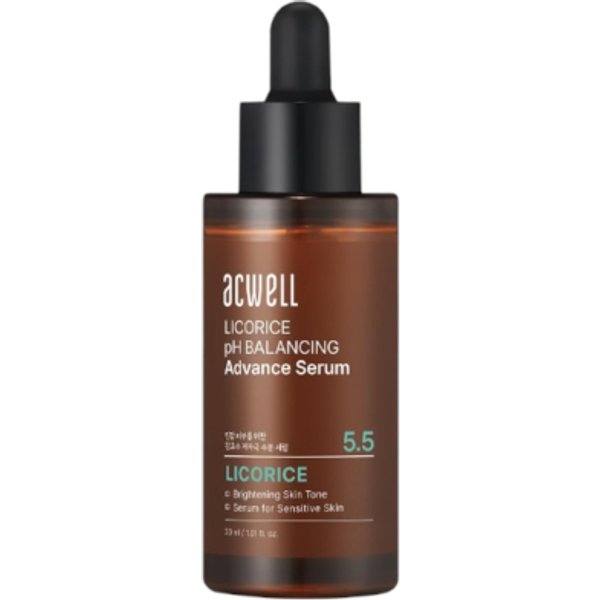
Already have one? Check how it fits your skin with Pick.
Common questions about Licorice Root Extract#
What is Licorice Root Extract?
- A gentle plant extract that helps dark spots and uneven patches look lighter, while calming the look of redness at the same time.
What else is Licorice Root Extract called?
- On a label you may see Licorice, Liquorice, Glabridin, Licochalcone and Glycyrrhiza.
When should you apply Licorice Root Extract?
- Morning or evening.
How often can you use Licorice Root Extract?
- Daily.
Where do you apply Licorice Root Extract?
- All over the face. Keep it away from your eyes and lips.
Can you use Licorice Root Extract around the eyes?
- Yes. Licorice Root Extract goes all over the face, the skin around the eyes included — keep it out of your eyes and off your lips.
Does Licorice Root Extract make skin more sensitive to the sun?
- No. Licorice Root Extract is not flagged as increasing sun sensitivity.
What should you not use with Licorice Root Extract?
- Nothing flagged. None of the ingredients this wiki covers needs to be kept apart from Licorice Root Extract — check the label of anything not covered here.
Who should avoid Licorice Root Extract?
- Go slowly with Maternity & Nursing and Fragile or Sensitive.
Is there a cosmetic limit for Licorice Root Extract?
- No. No cosmetic regulator in the United States, Canada, the European Union or Great Britain sets a maximum strength for it. That is a limit on the rules, not a signal to use more.
Related ingredients#
How we check this#
Everything on this page traces to the sources listed below — regulators' own publications and published studies. Where the evidence does not answer a question, it is left unanswered.
Our review is AI-assisted and is not a named expert's opinion. Last reviewed August 6, 2026.
Think something here is out of date or wrong? Email us at wiki@skinintelligence.ai with your reasoning and where you read it. We read what people send, and we update the page when the sources support it.
Regulators and official bodies · 7
- S1Cosmetic Ingredient Review Expert Panel. Final Report on the Safety Assessment of Glycyrrhetinic Acid, Potassium Glycyrrhetinate, Disodium Succinoyl Glycyrrhetinate, Glyceryl Glycyrrhetinate, Glycyrrhetinyl Stearate, Stearyl Glycyrrhetinate, Glycyrrhizic Acid, Ammonium Glycyrrhizate, Dipotassium Glycyrrhizate, Disodium Glycyrrhizate, Trisodium Glycyrrhizate, Methyl Glycyrrhizate, and Potassium Glycyrrhizinate. Int J Toxicol. 2007;26(Suppl 2):79–112. PMID 17613133 · DOI 10.1080/10915810701351228.
- S2Committee on Herbal Medicinal Products (HMPC). European Union herbal monograph on Glycyrrhiza glabra L.; Glycyrrhiza inflata Bat.; Glycyrrhiza uralensis Fisch., radix. Final – Revision 1. EMA/HMPC/108399/2024, adopted 04 March 2026.
- S3Regulation (EC) No 1223/2009, Annex II (prohibited substances) — retained text, legislation.gov.uk/eur/2009/1223/annex/II.
- S4Regulation (EC) No 1223/2009, Annex III (restricted substances) — retained text, legislation.gov.uk/eur/2009/1223/annex/III.
- S5Health Canada. Cosmetic Ingredient Hotlist: Prohibited and Restricted Ingredients (hotlist table), fetched 2026-08-04.
- S621 CFR 184.1408 — Licorice and licorice derivatives. eCFR, title 21 current as of 2026-07-31.
- S7FDA. Prohibited & Restricted Ingredients in Cosmetics.
Studies and references · 44
- S8Kolbe L, Immeyer J, Batzer J, Wensorra U, tom Dieck K, Mundt C, Wolber R, Stäb F, Schönrock U, Ceilley RI, Wenck H. Anti-inflammatory efficacy of Licochalcone A: correlation of clinical potency and in vitro effects. Arch Dermatol Res. 2006;298(1):23–30. PMID 16552540.
- S9Weber TM, Ceilley RI, Buerger A, Kolbe L, Trookman NS, Rizer RL, Schoelermann A. Skin tolerance, efficacy, and quality of life of patients with red facial skin using a skin care regimen containing Licochalcone A. J Cosmet Dermatol. 2006;5(3):227–32. PMID 17177744.
- S10Schoelermann AM, Weber TM, Arrowitz C, Rizer RL, Qian K, Babcock M. Skin compatibility and efficacy of a cosmetic skin care regimen with licochalcone A and 4-t-butylcyclohexanol in patients with rosacea subtype I. JEADV. 2016;30(Suppl 1):21–7. PMID 26805419.
- S11Sulzberger M, Worthmann AC, Holtzmann U, Buck B, Jung KA, Schoelermann AM, Rippke F, Stäb F, Wenck H, Neufang G, Grönniger E. Effective treatment for sensitive skin: 4-t-butylcyclohexanol and licochalcone A. JEADV. 2016;30(Suppl 1):9–17. PMID 26805417.
- S12Saric S, Clark AK, Sivamani RK, Lio PA, Lev-Tov HA. The Role of Polyphenols in Rosacea Treatment: A Systematic Review. J Altern Complement Med. 2017;23(12):920–9. PMID 28650692.
- S13Udompataikul M, Srisatwaja W. Comparative trial of moisturizer containing licochalcone A vs. hydrocortisone lotion in the treatment of childhood atopic dermatitis: a pilot study. JEADV. 2011;25(6):660–5. PMID 20840345.
- S14Wananukul S, Chatproedprai S, Chunharas A, Limpongsanuruk W, Singalavanija S, Nitiyarom R, Wisuthsarewong W. Randomized, double-blind, split-side, comparison study of moisturizer containing licochalcone A and 1% hydrocortisone in the treatment of childhood atopic dermatitis. J Med Assoc Thai. 2013;96(9):1135–42. PMID 24163988.
- S15Wananukul S, Chatproedprai S, Charutragulchai W. Randomized, double-blind, split-side comparison study of moisturizer containing licochalcone vs. 1% hydrocortisone in the treatment of infantile seborrhoeic dermatitis. JEADV. 2012;26(7):894–7. PMID 21790793.
- S16Saeedi M, Morteza-Semnani K, Ghoreishi MR. The treatment of atopic dermatitis with licorice gel. J Dermatolog Treat. 2003;14(3):153–7. PMID 14522625.
- S17Amer M, Metwalli M. Topical liquiritin improves melasma. Int J Dermatol. 2000;39(4):299–301. PMID 10809983.
- S18Cerulli A, Masullo M, Montoro P, Piacente S. Licorice (Glycyrrhiza glabra, G. uralensis, and G. inflata) and Their Constituents as Active Cosmeceutical Ingredients. Cosmetics. 2022;9(1):7. DOI 10.3390/cosmetics9010007.
- S19Hoffmann J, Gendrisch F, Schempp CM, Wölfle U. New Herbal Biomedicines for the Topical Treatment of Dermatological Disorders. Biomedicines. 2020;8(2):27. DOI 10.3390/biomedicines8020027.
- S20Semenescu I, Similie D, Diaconeasa Z, Danciu C. Recent Advances in the Management of Rosacea through Natural Compounds. Pharmaceuticals. 2024;17(2):212. DOI 10.3390/ph17020212.
- S21Parvizi MM, Hekmat M, Yousefi N, Javaheri R, Mehrzadeh A, Saki N. Clinical Trials Conducted on Herbal Remedies for the Treatment of Melasma: A Scoping Review. J Cosmet Dermatol. 2025;24(2). PMID 39710951.
- S22Yokota T, Nishio H, Kubota Y, Mizoguchi M. The inhibitory effect of glabridin from licorice extracts on melanogenesis and inflammation. Pigment Cell Res. 1998;11(6):355–61. PMID 9870547.
- S23Nerya O, Vaya J, Musa R, Izrael S, Ben-Arie R, Tamir S. Glabrene and isoliquiritigenin as tyrosinase inhibitors from licorice roots. J Agric Food Chem. 2003;51(5):1201–7. PMID 12590456.
- S24Uto T, Ohta T, Yamashita A, Fujii S, Shoyama Y. Liquiritin and Liquiritigenin Induce Melanogenesis via Enhancement of p38 and PKA Signaling Pathways. Medicines (Basel). 2019;6(2):68. PMID 31234488.
- S25Costa A, Moisés TA, Cordero T, Alves CR, Marmirori J. Association of emblica, licorice and belides as an alternative to hydroquinone in the clinical treatment of melasma. An Bras Dermatol. 2010;85(5):613–20. PMID 21152784.
- S26Draelos ZD, Diaz I. The clinical benefit of a multimodal topical approach to treating skin dyspigmentation. J Cosmet Dermatol. 2023;22(6):1799–804. PMID 37102219.
- S27Zhang T, Wang Y, Xu Y, Liu Y, Zhuang B, Zhang X, Liao C, Liu W, Ma Y. Enhanced Whitening Effect of the Formulations via Inhibition of Tyrosinase Activity by Combination of 4-n-Butylresorcinol, Licochalcone A and Glabridin at an Optimal Ratio. Skin Res Technol. 2026. DOI 10.1111/srt.70334.
- S28Xing M, Wang X, Zhao L, Zhou Z, Liu H, Wang B, Cheng A, Zhang S, Gao Y. Novel dissolving microneedles preparation for synergistic melasma therapy: Combined effects of tranexamic acid and licorice extract. Int J Pharm. 2021;600:120406. PMID 33711468.
- S29Kim BH, Lee YS, Kang KS. The mechanism of retinol-induced irritation and its application to anti-irritant development. Toxicol Lett. 2003;146(1):65–73. PMID 14615068.
- S30O'Connell RL, White IR, White JM, McFadden JP. Liquorice extract in a cosmetic product causing contact allergy. Contact Dermatitis. 2008;59(1):52. PMID 18598306.
- S31Kimyon RS, Liou YL, Schlarbaum JP, Warshaw EM. Allergic Contact Dermatitis to Licorice Root Extract. Dermatitis. 2019;30(3). PMID 31045935.
- S32Gatica-Ortega ME, Pastor-Nieto MA. Allergic contact dermatitis to Glycyrrhiza inflata root extract in an anti-acne cosmetic product. Contact Dermatitis. 2021;85(4). PMID 33913165.
- S33Sánchez-García V, Taboada-Paz L, Hernández-Quiles R, Betlloch-Mas I, Silvestre JF. Allergic contact dermatitis from glycyrrhetinic acid contained in a cream for palpebral eczema. Contact Dermatitis. 2023;88(4). PMID 36573308.
- S34NCCIH. Licorice Root: Usefulness and Safety. Last updated April 2025.
- S35Xie Y, Huang J, Liu J, Zhang Q. Efficacy of diammonium glycyrrhizinate in the treatment of rosacea with papules and pustules: A randomized, double-blind, placebo-controlled study. Dermatol Ther. 2022;35(12):e15905. PMID 36200523.
- S36Isbrucker RA, Burdock GA. Risk and safety assessment on the consumption of Licorice root (Glycyrrhiza sp.), its extract and powder as a food ingredient… Regul Toxicol Pharmacol. 2006;46(3):167–92. PMID 16884839.
- S37Räikkönen K, Martikainen S, Pesonen AK, Lahti J, Heinonen K, Pyhälä R, Lahti M, Tuovinen S, et al. Maternal Licorice Consumption During Pregnancy and Pubertal, Cognitive, and Psychiatric Outcomes in Children. Am J Epidemiol. 2017;185(5). PMID 28158597.
- S38Kantikosum K, Chongpison Y, Chottawornsak N, Asawanonda P. The efficacy of glycolic acid, salicylic acid, gluconolactone, and licochalcone A combined with 0.1% adapalene vs adapalene monotherapy in mild-to-moderate acne vulgaris: a double-blinded within-person comparative study. Clin Cosmet Investig Dermatol. 2019;12:151–61. PMID 30858720.
- S39Puaratanaarunkon T, Asawanonda P. A Randomized, Double Blinded, Split-Face Study of the Efficacy of Using a Broad Spectrum Sunscreen with Anti-Inflammatory Agent to Reduce Post Inflammatory Hyperpigmentation After Picosecond Laser. Clin Cosmet Investig Dermatol. 2022;15:331–7. PMID 35250287.
- S40Boonchai W, Varothai S, Winayanuwattikun W, Phaitoonvatanakij S, Chaweekulrat P, Kasemsarn P. Randomized investigator-blinded comparative study of moisturizer containing 4-t-butylcyclohexanol and licochalcone A versus 0.02% triamcinolone acetonide cream in facial dermatitis. J Cosmet Dermatol. 2018;17(6). PMID 29411520.
- S41Kowalska A, Kalinowska-Lis U. 18β-Glycyrrhetinic acid: its core biological properties and dermatological applications. Int J Cosmet Sci. 2019;41(4):325–31. PMID 31166601.
- S42Ao M, Shi Y, Cui Y, Guo W, Wang J, Yu L. Factors influencing glabridin stability. Nat Prod Commun. 2010;5(12):1907–12. PMID 21299118.
- S43Hollinger JC, Angra K, Halder RM. Are Natural Ingredients Effective in the Management of Hyperpigmentation? A Systematic Review. J Clin Aesthet Dermatol. 2018;11(2):28–37. PMID 29552273.
- S44Alexis AF, Blackcloud P. Natural ingredients for darker skin types: growing options for hyperpigmentation. J Drugs Dermatol. 2013;12(9 Suppl):s123–7. PMID 24002160.
- S45Cantelli M, Ferrillo M, Donnarumma M, Emanuele E, Fabbrocini G. A new proprietary gel containing glabridin, andrographolide, and apolactoferrin improves the appearance of epidermal melasma in adult women: A 6-month pilot, uncontrolled open-label study. J Cosmet Dermatol. 2020;19(6):1395–8. PMID 31541594.
- S46Chen J, Yu X, Huang Y. Inhibitory mechanisms of glabridin on tyrosinase. Spectrochim Acta A Mol Biomol Spectrosc. 2016;168:111–7. PMID 27288962.
- S47Ivosevic-Zaper J, Hofmann M, Kakadjanova A, Valesky E, Meissner M, Bereiter-Hahn J, Kaufmann R, Bernd A, Kippenberger S. Topically applied glycyrrhizic acid causes hair removal in rats. Pharm Biol. 2014;52(10):1362–5. PMID 24785361.
- S48Cantelli M, Ferrillo M, Granger C, Fabbrocini G. An open-label, investigator-initiated, single-center, prospective, pilot clinical study to evaluate the efficacy of a skin whitening serum applied twice daily combined with a spot-preventing SPF50+ sunscreen… J Cosmet Dermatol. 2022;21(4). PMID 34087055.
- S49Liu D, Jiang X, Yang F, Zhou J, Li Y, Yang H. Therapeutic potential of Licochalcone A in dermatological diseases: from basic to clinical research. Front Pharmacol. 2025;16. PMID 41181588.
- S50Murphy MJ, Dow AA. Natural Cosmeceutical Ingredients for the Management of Hyperpigmentation in Hispanic and Latino Women. J Clin Aesthet Dermatol. 2021;14(8). PMID 34840659.
- S51Peng G, Li Y, Zeng Y, Sun B, Zhang L, Liu Q. Effect of glabridin combined with bakuchiol on UVB-induced skin damage and its underlying mechanism: An experimental study. J Cosmet Dermatol. 2024;23(6):2256–69. PMID 38497297.