What does Alpha Arbutin do?#
Alpha arbutin is a gentle, well-tolerated brightening ingredient that helps reduce the visible appearance of dark spots and uneven skin tone. It supports a more even, luminous-looking complexion with consistent use.
Benefits
- Helps reduce the appearance of dark spots and uneven skin tone
- Gentle and well-tolerated, suitable for daily use on most skin types
- Supports a more even, luminous-looking complexion over time
- Can be used alongside other brightening ingredients in the same routine
How it works
Alpha arbutin was developed in Japan in the 1990s — a lab-made relative of the arbutin found in bearberry — and has been a staple of brightening formulations since the 2000s. It helps dark spots and areas of uneven tone gradually look lighter and more uniform with consistent use. It is gentle in use and suits most skin types.
How to use Alpha Arbutin#
Before you start
Patch test first if you react easily to new products, and stop using it if irritation or a rash appears.
Best time
It suits either, and both if you like.
How often
From the start is fine — it does not need weeks of easing in, and most people have no settling-in period to wait out.
Where it goes
After cleansing, before moisturizer.
Where to apply
Across the whole face, or just on the areas you want to even out. Keep it out of your eyes.
Sun
Wear sunscreen daily. Alpha arbutin isn't one of the actives we flag for extra sun care - and sun exposure is what drives the look of the marks you're working on, so daily protection earns its place either way.
Alongside others
It sits comfortably alongside other brightening ingredients, so it does not need an evening of its own.
What to expect
Give it time — any change in how dark spots look builds over several weeks rather than days.
Discontinue use if irritation or a rash occurs. Patch test first if you react easily to new products.
The form you will see it in
Alpha arbutin dark spot serum
- Where it goes
- Before moisturizer
Using Alpha Arbutin with other ingredients
Pairs well with Alpha Arbutin
Niacinamide
Works well togetherComplementary brightening support — together they help promote a more even, radiant-looking complexion from two different angles.
Tranexamic acid
Works well togetherTogether they provide multi-level support for a more even-looking complexion, especially for stubborn dark spots.
Kojic acid
Works well togetherTwo brightening ingredients that complement each other for a more even, radiant-looking complexion.
What not to use with Alpha Arbutin
Nothing flagged. None of the ingredients this wiki covers needs to be kept apart from Alpha Arbutin — check the label of anything not covered here.
Who should avoid Alpha Arbutin?#
Six situations change whether Alpha Arbutin suits your skin right now. Each one is either a reason to skip it, a reason to go slowly, or nothing to watch for.
- Fragile or Sensitive
- Skip it
- Maternity & Nursing
- Go slowly
- Recent Facial or Laser
- Go slowly
- Prone to Redness
- Go slowly
- Dry or Itchy Patches
- Go slowly
- Recent Shave or Wax
- No caution
Maternity & Nursing — If you are pregnant or nursing, you may prefer to check with your healthcare provider before use.
Recent Facial or Laser — Wait until your skin feels settled before reintroducing — typically 7 to 14 days after a facial or laser appointment.
Prone to Redness — Try it on a small area first, and use it less often — or stop — if you notice stinging or extra redness.
Dry or Itchy Patches — Keep the rest of your routine well moisturized, and use it less often — or stop — if you notice tightness or itching.
Cosmetic strength limits for Alpha Arbutin where you live#
| Region | Most a cosmetic may contain | |
|---|---|---|
 United States United States | No explicit cap | |
The FDA restricts a short list of ingredients and sets no general strength ceiling on the rest. A figure marked "guidance, not law" is the Cosmetic Ingredient Review panel's recommendation. 21 CFR part 700, subpart B — Requirements for Specific Cosmetic Products (FDA) | ||
 Canada Canada | No explicit cap | |
One list does the work — Health Canada's Hotlist of prohibited and restricted cosmetic ingredients. | ||
 European Union European Union | 2% (face cream); 0.5% (body lotion) — the only product types listed | |
The Cosmetics Regulation's annexes, consolidated to 1 May 2026. A figure marked "guidance, not law" comes from the EU's cosmetic safety committee rather than from the annexes. | ||
 Great Britain Great Britain | No explicit cap (Great Britain); 2% face, 0.5% body (Northern Ireland) | |
Great Britain kept the annexes as its own law and updates them only when it chooses; Northern Ireland follows the live EU Regulation, which is why some rows read differently for each. Regulation (EC) No 1223/2009 as it applies in Great Britain · Regulation (EC) No 1223/2009, Annexes II–VI | ||
 India India | No explicit cap | |
India writes its own standard, aligned to the European rules as they stood in 2012. Mandatory since 9 February 2026. IS 4707 (Part 2):2025 — restricted and prohibited cosmetic ingredients · IS 4707 (Part 3):2025 — preservatives · Cosmetics Rules, 2020, Ninth Schedule | ||
 Brazil Brazil | No explicit cap | |
ANVISA rewrote its restricted list in June 2026, and a companion act amended the prohibited list at the same time. RDC 1.029/2026 — restricted ingredients · RDC 529/2021 — prohibited ingredients, as amended by RDC 1.030/2026 · RDC 528/2021 — preservatives | ||
 Japan Japan | No explicit cap | |
Japan's cosmetics standard keeps drug ingredients out of cosmetics, so most of its figures sit in the ministry's list of the ones a cosmetic may still contain. Cosmetics Standards (化粧品基準), Ministry of Health, Labour and Welfare · Cosmetics Standards — the ministry's own English translation · Drug ingredients permitted in cosmetics — 2007 notification | ||
 South Korea South Korea | No explicit cap | |
One MFDS regulation carries both the prohibited list and the restricted list, in force 18 March 2026. Sunscreens and a few other categories are cleared product by product instead. Regulation on Safety Standards for Cosmetics (MFDS Notification 2026-19) · Regulation on the Review of Functional Cosmetics (MFDS Notification 2025-88) | ||
 Kenya Kenya | 2% (face cream); 0.5% (body lotion) — the only product types listed | |
Kenya's standard applies the EU annexes as they stand rather than copying them, so its ingredient limits are the EU's — including the 2024 additions. A figure marked "guidance, not law" sits outside the annexes and does not carry over. KS EAS 377-1, -2 and -3:2022 — cosmetics safety requirements, published by KEBS · Regulation (EC) No 1223/2009, Annexes II–VI | ||
 Namibia Namibia | No explicit cap | |
Namibia sets no ingredient limits at all. Its cosmetic rule is a single line requiring a product to be free of any harmful ingredient. Foodstuffs, Cosmetics and Disinfectants Ordinance 18 of 1979, and the regulations under it | ||
 Ukraine Ukraine | No explicit cap | |
Ukraine's own transposition of the EU annexes, as they stood before the 2024 additions, fully in force since 3 August 2026. A further revision is due on 1 February 2027. Technical Regulation on cosmetic products — Cabinet Resolution No. 65 of 20 January 2021 | ||
 Georgia Georgia | No explicit cap | |
Georgia has no cosmetics rulebook — its register of technical regulations carries no cosmetics entry — so only the general product-safety duty applies. | ||
 Australia Australia | 2% (face); 0.5% (body) — hydroquinone impurity ≤10 mg/kg | |
Australia writes no cosmetic ingredient list. A figure here is the point at which a substance becomes a medicine or a scheduled substance carrying Caution labeling, so its numbers sit well above other markets'. Poisons Standard — June 2026 · Therapeutic Goods (Excluded Goods) Determination 2018 | ||
 United Arab Emirates United Arab Emirates | 2% (face cream); 0.5% (body lotion) — the only product types listed | |
The Gulf standard points at the EU annexes as amended, so its ingredient limits are the EU's. A figure marked "guidance, not law" sits outside the annexes and does not carry over. GSO 1943:2024 — Cosmetic products: safety requirements (Gulf technical regulation) · Regulation (EC) No 1223/2009, Annexes II–VI | ||
 Kuwait Kuwait | 2% (face cream); 0.5% (body lotion) — the only product types listed | |
The Gulf standard points at the EU annexes as amended, so its ingredient limits are the EU's. A figure marked "guidance, not law" sits outside the annexes and does not carry over. GSO 1943:2024 — Cosmetic products: safety requirements (Gulf technical regulation) · Regulation (EC) No 1223/2009, Annexes II–VI | ||
 Hong Kong Hong Kong | No explicit cap | |
Hong Kong writes no cosmetics rulebook. Its Poisons List (Cap. 138A, Schedule 10) decides which substances may be sold only as medicines, and general safety is judged case by case against whichever overseas standard the enforcer considers reasonable. Pharmacy and Poisons Regulations (Cap. 138A), Schedule 10 — the poisons list · Pharmacy and Poisons Board — Guidance Notes on classifying pharmaceutical products, April 2026 | ||
 Singapore Singapore | No explicit cap | |
Singapore writes the ASEAN annexes into its own schedule, and its regulator tells companies to check the current ASEAN release as well — which is why a figure here can read "guidance, not law". Health Products (Cosmetic Products — ASEAN Cosmetic Directive) Regulations 2007, Third Schedule · ASEAN Cosmetic Directive annexes — release 2026-1, 22 June 2026 | ||
 Brunei Brunei | No explicit cap | |
Brunei carries the 2007 ASEAN annexes in its own schedule and has not updated them since, so it reads differently from Singapore on several ingredients. Medicines (Cosmetic Products) Regulations (Cap. 285 Rg 1), Schedule 1 — revised edition 2024 | ||
 Jordan Jordan | No explicit cap | |
Jordan's cosmetic rules defer to "the approved references" and name none of them, so there is no Jordanian figure to read. The only number in the instrument governs the ingredient list on the pack. JFDA instructions on cosmetics and pharmaceutical cosmetics, 2026 | ||
 Trinidad & Tobago Trinidad & Tobago | No explicit cap | |
Trinidad and Tobago has had the power to set cosmetic standards since 1960 and has never used it. The regulations made under the Act cover food and drugs, with no cosmetics part; what binds is the Act's general rule against selling a cosmetic that may injure the user. Food and Drugs Act, Chap. 30:01 · Food and Drugs Regulations | ||
Where a figure appears, that is the maximum strength allowed or advised for alpha arbutin in that market — some are set in cosmetics regulation, others are the ceiling a cosmetic safety panel recommends. Where no figure appears, the market either sets no cosmetic maximum or handles this ingredient outside its cosmetic rules. These are limits, not targets — the right strength for a formula is the formulator's decision.
Open a market to see the rulebook its figure comes from. Those notes describe each market's own rules as we read them, current to August 24, 2026; the linked documents are the authority, and nothing here is legal advice.
Sample products with Alpha Arbutin#
A few well-known products, not a full list — product names are each brand's own. We don't sell them — the shop prices them in US dollars and ships from Hong Kong, so delivery and duties come on top. It may not ship everywhere.
We may earn a small commission when you buy through these links.
Serums · 5
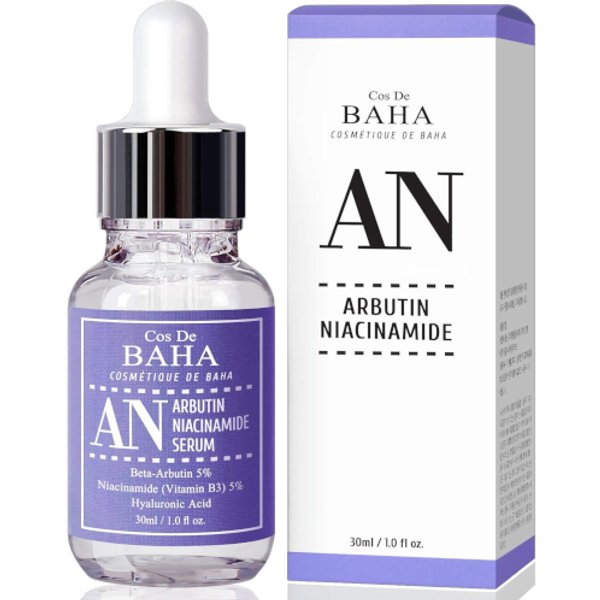 Cos De BAHAArbutin + Niacinamide Serum (AN) - 30ml$8.62Also on YesStyle
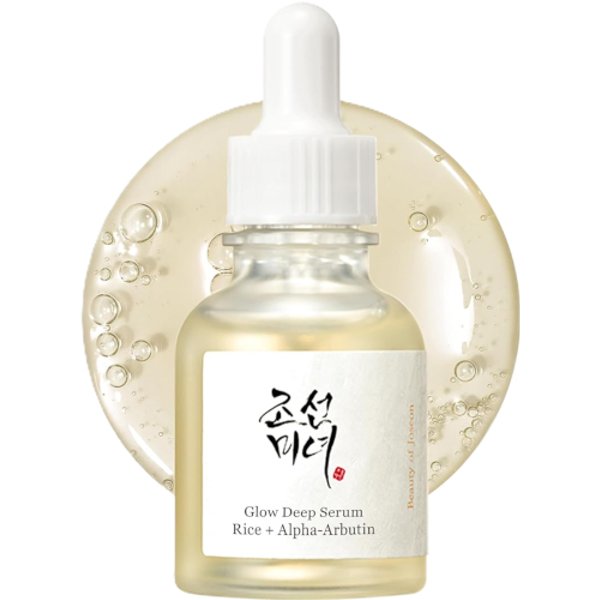 BEAUTY OF JOSEONGlow Deep Serum : Rice + Alpha Arbutin - 30ml$13.60
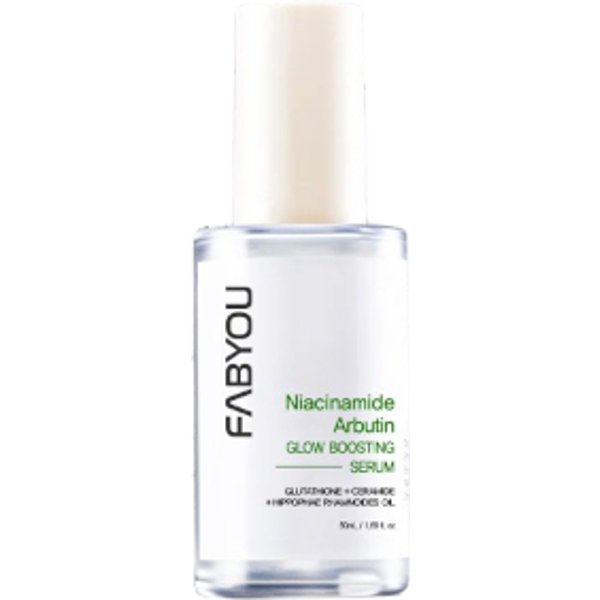 FABYOUNiacinamide Arbutin Glow Boosting Serum - 50ml$14.69
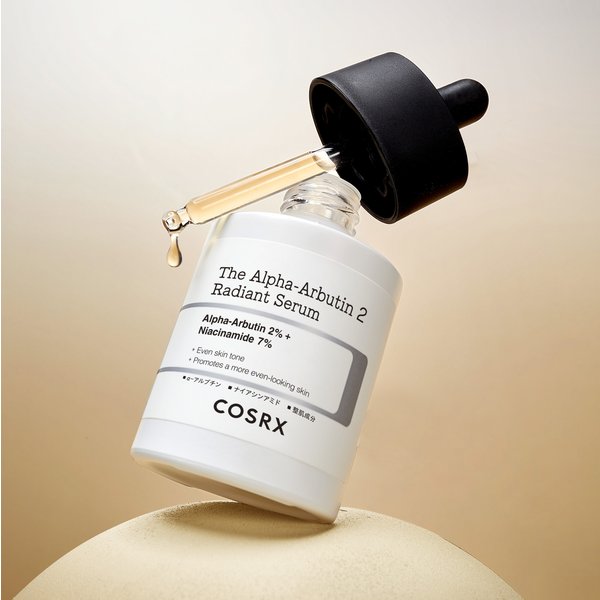 COSRXThe Alpha-Arbutin 2 Discoloration Care Serum - 50ml$20.00Also on YesStyle
 The OrdinaryAlpha Arbutin 2% + HA - 30ml$26.02
Already have one? Check how it fits your skin with Pick.
Common questions about Alpha Arbutin#
What is Alpha Arbutin?
- A gentle brightening ingredient that helps dark spots and uneven patches look lighter, for a more even-looking complexion.
What else is Alpha Arbutin called?
- On a label you may see Arbutin and Beta arbutin.
When should you apply Alpha Arbutin?
- Morning or evening. It suits either, and both if you like.
How often can you use Alpha Arbutin?
- Daily.
Where do you apply Alpha Arbutin?
- All over the face. Keep it away from your eyes and lips.
Can you use Alpha Arbutin around the eyes?
- Yes. Alpha Arbutin goes all over the face, the skin around the eyes included — keep it out of your eyes and off your lips.
Does Alpha Arbutin make skin more sensitive to the sun?
- No. Alpha Arbutin is not flagged as increasing sun sensitivity.
What should you not use with Alpha Arbutin?
- Nothing flagged. None of the ingredients this wiki covers needs to be kept apart from Alpha Arbutin — check the label of anything not covered here.
Who should avoid Alpha Arbutin?
- Skip it if any of these apply: Fragile or Sensitive. Go slowly with Maternity & Nursing, Recent Facial or Laser, Prone to Redness and Dry or Itchy Patches.
Is there a cosmetic limit for Alpha Arbutin?
- Only some regions set one. The maximum strength for Alpha Arbutin in a cosmetic is 2% (face cream); 0.5% (body lotion) — the only product types listed in the European Union. No maximum is set in the United States, Canada and Great Britain. A cap is a limit on the rules, not a signal to use more.
Related ingredients#
How we check this#
Everything on this page traces to the sources listed below — regulators' own publications and published studies. Where the evidence does not answer a question, it is left unanswered.
Some sources below are the official product information for prescription medicines, cited for how they interact with this ingredient. We use them for their safety and handling detail only. A cosmetic product is not one of those medicines and is not intended to treat any condition.
Our review is AI-assisted and is not a named expert's opinion. Last reviewed August 5, 2026.
Think something here is out of date or wrong? Email us at wiki@skinintelligence.ai with your reasoning and where you read it. We read what people send, and we update the page when the sources support it.
Regulators and official bodies · 9
- S1SCCS, Opinion on the safety of alpha- (CAS No 84380-01-8, EC No 617-561-8) and beta-arbutin (CAS No 497-76-7, EC No 207-850-3) in cosmetic products, SCCS/1642/22, preliminary 15–16 March 2022, final 31 January 2023.
- S2Commission Regulation (EU) 2024/996 of 3 April 2024 amending Regulation (EC) No 1223/2009 as regards Vitamin A, Alpha-Arbutin and Arbutin and certain substances with potential endocrine disrupting properties. OJ L, 2024/996, 4.4.2024.
- S3Regulation (EC) No 1223/2009 on cosmetic products, consolidated text 01.09.2025 — Article 14(1)(b); Annex II entry 1339; Annex III entries 14, 377, 378.
- S4Assimilated Regulation (EC) No 1223/2009, Annex III as it applies in Great Britain, legislation.gov.uk, as amended to S.I. 2025/413 (in force 30.9.2025).
- S5Health Canada, Cosmetic Ingredient Hotlist — List of Ingredients that are Prohibited for Use in Cosmetic Products and …Restricted….
- S6US FDA-registered SPL label, Hydroquinone USP, 4% Skin Bleaching Cream (openFDA, SPL set id d639c140-a4bf-41cd-8ca3-45ee38a2c0b5).
- S7FDA, Skin Bleaching Drug Products For Over-the-Counter Human Use; Proposed Rule, 71 FR 51146, 29 August 2006 (docket abstract read from the Federal Register API record for E6-14263).
- S8SmPC, Isotretinoin 10 mg soft capsules, electronic Medicines Compendium, product 10555 — §4.4, §4.5.
- S9SmPC, Adapalene/Benzoyl Peroxide 0.1%/2.5% Gel, electronic Medicines Compendium, product 15922 — §4.4.
Studies and references · 20
- S10SCCS; Degen GH. Opinion of the Scientific Committee on Consumer safety (SCCS) — Opinion on the safety of the use of α-arbutin in cosmetic products. Regul Toxicol Pharmacol. 2016. PMID 26646661. doi:10.1016/j.yrtph.2015.11.008.
- S11Sugimoto K, Nishimura T, Nomura K, Sugimoto K, Kuriki T. Syntheses of arbutin-alpha-glycosides and a comparison of their inhibitory effects with those of alpha-arbutin and arbutin on human tyrosinase. Chem Pharm Bull. 2003;51(7):798–801. PMID 12843585. doi:10.1248/cpb.51.798.
- S12Sugimoto K, Nishimura T, Nomura K, Sugimoto K, Kuriki T. Inhibitory effects of alpha-arbutin on melanin synthesis in cultured human melanoma cells and a three-dimensional human skin model. Biol Pharm Bull. 2004;27(4):510–14. PMID 15056856. doi:10.1248/bpb.27.510.
- S13Ertam I, Mutlu B, Unal I, Alper S, Kivçak B, Ozer O. Efficiency of ellagic acid and arbutin in melasma: a randomized, prospective, open-label study. J Dermatol. 2008;35(9):570–74. PMID 18837701. doi:10.1111/j.1346-8138.2008.00522.x.
- S14Polnikorn N. Treatment of refractory melasma with the MedLite C6 Q-switched Nd:YAG laser and alpha arbutin: a prospective study. J Cosmet Laser Ther. 2010;12(3):126–31. PMID 20482238. doi:10.3109/14764172.2010.487910.
- S15Tantanasrigul P, Sripha A, Chongmelaxme B. The Efficacy of Topical Cosmetic Containing Alpha-Arbutin 5% and Kojic Acid 2% Compared With Triple Combination Cream for the Treatment of Melasma: A Split-Face, Evaluator-Blinded Randomized Pilot Study. J Cosmet Dermatol. 2025. PMID 39555866. doi:10.1111/jocd.16562.
- S16Gabhane M, Patil R, Dharmadhikari S, Shah P, Khandhedia C, Mehta S. Efficacy and Safety of a Topical Formulation Containing Trihydroxybenzoic Acid Glucoside and α-Arbutin, Applied Along With a Sunscreen…in Indian Females With Facial Melasma or Dark Spots. J Cosmet Dermatol. 2025. PMID 39943675. doi:10.1111/jocd.70017.
- S17Austin E, Nguyen JK, Jagdeo J. Topical Treatments for Melasma: A Systematic Review of Randomized Controlled Trials. J Drugs Dermatol. 2019;18(11):1156–71. PMID 31741361.
- S18Mota S, Rosa GP, Barreto MC, Garrido J, Sousa E, Cruz MT, Almeida IF, Quintas C. Comparative Studies on the Photoreactivity, Efficacy, and Safety of Depigmenting Agents. Pharmaceuticals (Basel). 2023. PMID 38256889.
- S19Li Z, Wang Z, Zhou Q, Wang R, Xiong Z, Wu Y, Li Y, Liu L, Jiang C, Zhu H, Liu Q, Shu P. The molecular mechanisms underlying optical isomer arbutin permeating the skin. Int J Pharm. 2024. PMID 39142465. doi:10.1016/j.ijpharm.2024.124584.
- S20Lehn N, Grivicich I, de Sousa JT, Kubiaki CB, Henkin GS, Dihl RR, Picada JN. Toxicological evaluation of α-Arbutin, a skin depigmenting agent, with emphasis on mutagenicity assessment. Food Chem Toxicol. 2026. PMID 42173470. doi:10.1016/j.fct.2026.116164.
- S21Oiso N, Tatebayashi M, Hoshiyama Y, Kawada A. Allergic contact dermatitis caused by arbutin and dipotassium glycyrrhizate in skin-lightening products. Contact Dermatitis. 2017;77(1):51–53. PMID 28612442. doi:10.1111/cod.12739.
- S22Rageh MA, Seoudy WM, Abozeid MF, Elkholy AM, Moubasher AEA, Abdel-Latif AM, Attallah DAA, Mohamed EM, Assaf HA, Sabry H, Nasr MM, Hegazy MS, Hunter N, Zuelfakkar N, Bedair NI, Mohammed NE, Abdelkodous SF, Gohary YM, Mohy SM. Egyptian National Consensus on Dermocosmetic Ingredient Selection Across Common Dermatology Scenarios: A RAND/UCLA Appropriateness Study. Dermatol Ther (Heidelb). 2026. PMID 41537948. doi:10.1111/jocd.70297.
- S23Brady RT, Shah-Desai S. Clinical Efficacy of a Novel Topical Formulation on Periorbital Dark Circles: An Objective Analysis. J Cosmet Dermatol. 2025. PMID 40626342. doi:10.1111/jocd.70326.
- S24Ribero S, Romani A, Mattozzi C, Minoretti P. Comparative Efficacy of Skin-Lightening Formulations in Suppressing UVB-Induced Arachidonic Acid, α-MSH, and Melanin Expression: An In Vitro Keratinocyte-Melanocyte Co-culture Study. Cureus. 2025. PMID 40091954. doi:10.7759/cureus.78908.
- S25Zhang M, Ke J, Jiao Y, Ma L. Efficacy and Safety Evaluation of Microneedling Combined with Tranexamic Acid-Arbutin Liquid Excipients in the Treatment of Melasma: A Retrospective Study. Clin Cosmet Investig Dermatol. 2025. PMID 41321592.
- S26Zhang L, Zhao Q, Che Q, Wang W, Chen T, Tang X, Zhao X, Wang N, Li K, Wa Q. Effectiveness and Safety of Combined Use of Home-Based Radiofrequency Device and Arbutin Cream in Melasma and Facial Rejuvenation. J Cosmet Dermatol. 2025. PMID 39918262.
- S27Crocco EI, Veasey JV, Boin MF, Lellis RF, Alves RO. A novel cream formulation containing nicotinamide 4%, arbutin 3%, bisabolol 1%, and retinaldehyde 0.05% for treatment of epidermal melasma. Cutis. 2015;96(5):337–42. PMID 26682557.
- S28Lazar M, De La Garza H, Vashi NA. Exogenous Ochronosis: Characterizing a Rare Disorder in Skin of Color. J Clin Med. 2023. PMID 37445377.
- S29Ito S, Kolbe L, Weets G, Rogers T, Bushdid C, Nishimaki-Mogami T, Tanaka H, Passeron T, Ojika M, Wakamatsu K. Exogenous ochronosis by hydroquinone is not caused by inhibition of homogentisate dioxygenase but potentially by tyrosinase-catalysed metabolism of hydroquinone. Br J Dermatol. 2025. PMID 40662524. doi:10.1093/bjd/ljaf273.