What does Kojic Acid do?#
Kojic acid is a brightening ingredient derived from a natural fermentation process. It helps visibly reduce the appearance of dark spots and uneven skin tone, supporting a brighter, more uniform-looking complexion.
Benefits
- Helps reduce the visible appearance of dark spots and patches of uneven tone
- Brightening ingredient with decades of use in skincare
- Supports a brighter, more uniform-looking complexion over time
How it works
Kojic acid is derived from a natural fungal fermentation process, the same organisms used in traditional sake and soy sauce production in Japan. It has been used in brightening formulations for decades to help reduce the visible appearance of dark spots. Over time, consistent use supports a more even, brighter-looking skin tone.
How to use Kojic Acid#
Before you start
Patch test before you start, and give it a week rather than a night — a reaction to this one can take several days to show, so a single overnight test is not enough.
Where it goes
After cleansing, before moisturizer.
Where to apply
Across the face, or just on the areas you want to even out. It suits the backs of the hands too. Keep it away from the eye area.
Sun
Wear sunscreen daily. Kojic acid isn't one of the actives we flag for extra sun care - and sun exposure is what drives the look of the marks you're working on, so daily protection earns its place either way.
Alongside others
It sits comfortably alongside other brightening ingredients. Keep it to a different evening from exfoliating acids or a retinoid if your skin feels tight.
What to expect
Expect nothing dramatic in the first weeks. Most people have no settling-in period to push through, and no purge.
A little tingle or warmth early on is common and usually passes.
If it doesn't suit
If redness or stinging sticks around, use it less often. Stop altogether if a red, itchy rash appears after weeks of comfortable use, and don't go back to it — that pattern is different from ordinary irritation.
Patch test before first use and keep checking the spot for a week — a reaction to this ingredient can take several days to show. Discontinue use if irritation occurs, and if a red, itchy rash appears after weeks of comfortable use, stop and don't return to it.
The form you will see it in
Kojic acid dark spot corrector
- Where it goes
- Before moisturizer
Using Kojic Acid with other ingredients
Pairs well with Kojic Acid
Niacinamide
Works well togetherComplementary brightening support — together they help promote a more even, radiant-looking complexion from two different angles.
Tranexamic acid
Works well togetherTogether they provide multi-level brightening support for a more uniform appearance, especially for stubborn dark spots.
Alpha arbutin
Works well togetherTwo brightening ingredients that complement each other for a more even, radiant-looking complexion.
What not to use with Kojic Acid
Copper peptides
Different timesBetter used on alternate evenings rather than layered together.
Exfoliants
Different timesThese two are more comfortable on separate evenings than layered in one routine.
Eye-area retinol
Different timesBetter applied on separate evenings rather than layered around the eyes.
Retinoids
Different timesThese two are better applied on separate evenings rather than layered together.
Vitamin C
Different timesVitamin C and kojic acid are more comfortable at different times of day than layered together.
Who should avoid Kojic Acid?#
Six situations change whether Kojic Acid suits your skin right now. Each one is either a reason to skip it, a reason to go slowly, or nothing to watch for.
- Recent Facial or Laser
- Skip it
- Prone to Redness
- Skip it
- Dry or Itchy Patches
- Skip it
- Maternity & Nursing
- Go slowly
- Fragile or Sensitive
- Go slowly
- Recent Shave or Wax
- Go slowly
Maternity & Nursing — If you are pregnant or nursing, you may prefer to check with your healthcare provider before use.
Fragile or Sensitive — Use it less often — or stop — if it feels uncomfortable, and keep it off skin that’s broken, cut or sunburned.
Recent Shave or Wax — Avoid for 24 hours after waxing, threading, or dermaplaning.
Cosmetic strength limits for Kojic Acid where you live#
| Region | Most a cosmetic may contain | |
|---|---|---|
 United States United States | No explicit cap | |
The FDA restricts a short list of ingredients and sets no general strength ceiling on the rest. A figure marked "guidance, not law" is the Cosmetic Ingredient Review panel's recommendation. 21 CFR part 700, subpart B — Requirements for Specific Cosmetic Products (FDA) | ||
 Canada Canada | No explicit cap | |
One list does the work — Health Canada's Hotlist of prohibited and restricted cosmetic ingredients. | ||
 European Union European Union | 1% (face and hand only) | |
The Cosmetics Regulation's annexes, consolidated to 1 May 2026. A figure marked "guidance, not law" comes from the EU's cosmetic safety committee rather than from the annexes. | ||
 Great Britain Great Britain | 1% (face and hand only) | |
Great Britain kept the annexes as its own law and updates them only when it chooses; Northern Ireland follows the live EU Regulation, which is why some rows read differently for each. Regulation (EC) No 1223/2009 as it applies in Great Britain · Regulation (EC) No 1223/2009, Annexes II–VI | ||
 India India | No explicit cap | |
India writes its own standard, aligned to the European rules as they stood in 2012. Mandatory since 9 February 2026. IS 4707 (Part 2):2025 — restricted and prohibited cosmetic ingredients · IS 4707 (Part 3):2025 — preservatives · Cosmetics Rules, 2020, Ninth Schedule | ||
 Brazil Brazil | No explicit cap | |
ANVISA rewrote its restricted list in June 2026, and a companion act amended the prohibited list at the same time. RDC 1.029/2026 — restricted ingredients · RDC 529/2021 — prohibited ingredients, as amended by RDC 1.030/2026 · RDC 528/2021 — preservatives | ||
 Japan Japan | No explicit cap | |
Japan's cosmetics standard keeps drug ingredients out of cosmetics, so most of its figures sit in the ministry's list of the ones a cosmetic may still contain. Cosmetics Standards (化粧品基準), Ministry of Health, Labour and Welfare · Cosmetics Standards — the ministry's own English translation · Drug ingredients permitted in cosmetics — 2007 notification | ||
 South Korea South Korea | No explicit cap | |
One MFDS regulation carries both the prohibited list and the restricted list, in force 18 March 2026. Sunscreens and a few other categories are cleared product by product instead. Regulation on Safety Standards for Cosmetics (MFDS Notification 2026-19) · Regulation on the Review of Functional Cosmetics (MFDS Notification 2025-88) | ||
 Kenya Kenya | 1% (face and hand only) | |
Kenya's standard applies the EU annexes as they stand rather than copying them, so its ingredient limits are the EU's — including the 2024 additions. A figure marked "guidance, not law" sits outside the annexes and does not carry over. KS EAS 377-1, -2 and -3:2022 — cosmetics safety requirements, published by KEBS · Regulation (EC) No 1223/2009, Annexes II–VI | ||
 Namibia Namibia | No explicit cap | |
Namibia sets no ingredient limits at all. Its cosmetic rule is a single line requiring a product to be free of any harmful ingredient. Foodstuffs, Cosmetics and Disinfectants Ordinance 18 of 1979, and the regulations under it | ||
 Ukraine Ukraine | No explicit cap | |
Ukraine's own transposition of the EU annexes, as they stood before the 2024 additions, fully in force since 3 August 2026. A further revision is due on 1 February 2027. Technical Regulation on cosmetic products — Cabinet Resolution No. 65 of 20 January 2021 | ||
 Georgia Georgia | No explicit cap | |
Georgia has no cosmetics rulebook — its register of technical regulations carries no cosmetics entry — so only the general product-safety duty applies. | ||
 Australia Australia | No explicit cap | |
Australia writes no cosmetic ingredient list. A figure here is the point at which a substance becomes a medicine or a scheduled substance carrying Caution labeling, so its numbers sit well above other markets'. Poisons Standard — June 2026 · Therapeutic Goods (Excluded Goods) Determination 2018 | ||
 United Arab Emirates United Arab Emirates | 1% (face and hand only) | |
The Gulf standard points at the EU annexes as amended, so its ingredient limits are the EU's. A figure marked "guidance, not law" sits outside the annexes and does not carry over. GSO 1943:2024 — Cosmetic products: safety requirements (Gulf technical regulation) · Regulation (EC) No 1223/2009, Annexes II–VI | ||
 Kuwait Kuwait | 1% (face and hand only) | |
The Gulf standard points at the EU annexes as amended, so its ingredient limits are the EU's. A figure marked "guidance, not law" sits outside the annexes and does not carry over. GSO 1943:2024 — Cosmetic products: safety requirements (Gulf technical regulation) · Regulation (EC) No 1223/2009, Annexes II–VI | ||
 Hong Kong Hong Kong | No explicit cap | |
Hong Kong writes no cosmetics rulebook. Its Poisons List (Cap. 138A, Schedule 10) decides which substances may be sold only as medicines, and general safety is judged case by case against whichever overseas standard the enforcer considers reasonable. Pharmacy and Poisons Regulations (Cap. 138A), Schedule 10 — the poisons list · Pharmacy and Poisons Board — Guidance Notes on classifying pharmaceutical products, April 2026 | ||
 Singapore Singapore | 1% (face and hand); 0.2% (body) — guidance, not law | |
Singapore writes the ASEAN annexes into its own schedule, and its regulator tells companies to check the current ASEAN release as well — which is why a figure here can read "guidance, not law". Health Products (Cosmetic Products — ASEAN Cosmetic Directive) Regulations 2007, Third Schedule · ASEAN Cosmetic Directive annexes — release 2026-1, 22 June 2026 | ||
 Brunei Brunei | No explicit cap | |
Brunei carries the 2007 ASEAN annexes in its own schedule and has not updated them since, so it reads differently from Singapore on several ingredients. Medicines (Cosmetic Products) Regulations (Cap. 285 Rg 1), Schedule 1 — revised edition 2024 | ||
 Jordan Jordan | No explicit cap | |
Jordan's cosmetic rules defer to "the approved references" and name none of them, so there is no Jordanian figure to read. The only number in the instrument governs the ingredient list on the pack. JFDA instructions on cosmetics and pharmaceutical cosmetics, 2026 | ||
 Trinidad & Tobago Trinidad & Tobago | No explicit cap | |
Trinidad and Tobago has had the power to set cosmetic standards since 1960 and has never used it. The regulations made under the Act cover food and drugs, with no cosmetics part; what binds is the Act's general rule against selling a cosmetic that may injure the user. Food and Drugs Act, Chap. 30:01 · Food and Drugs Regulations | ||
Where a figure appears, that is the maximum strength allowed or advised for kojic acid in that market — some are set in cosmetics regulation, others are the ceiling a cosmetic safety panel recommends. Where no figure appears, the market either sets no cosmetic maximum or handles this ingredient outside its cosmetic rules. These are limits, not targets — the right strength for a formula is the formulator's decision.
Open a market to see the rulebook its figure comes from. Those notes describe each market's own rules as we read them, current to August 24, 2026; the linked documents are the authority, and nothing here is legal advice.
Sample products with Kojic Acid#
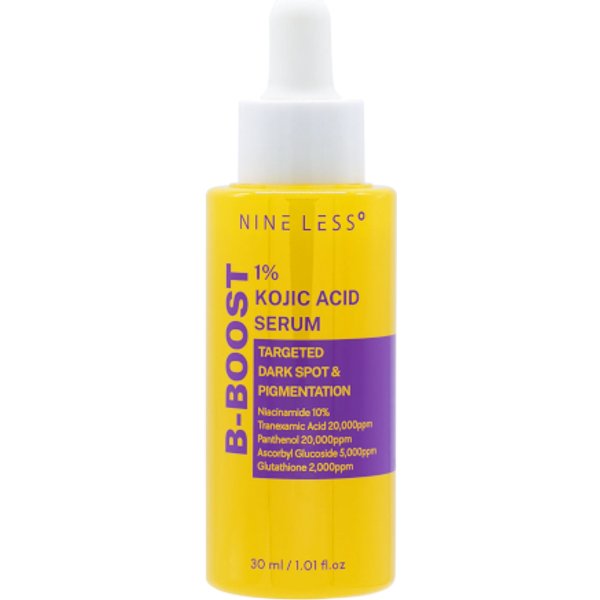
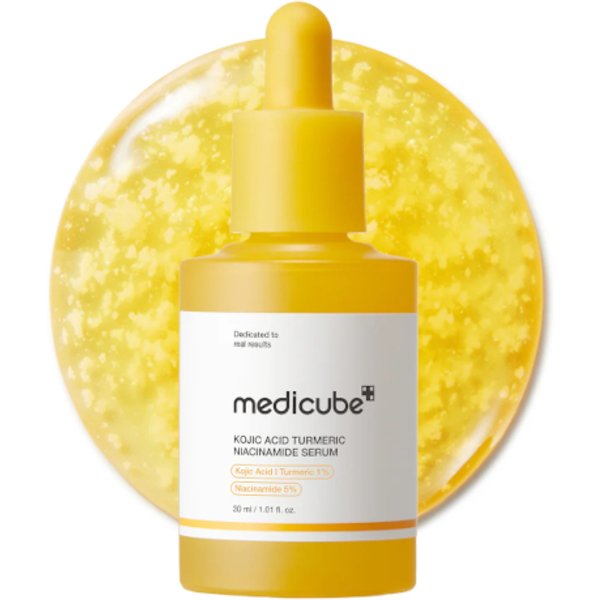
A few well-known products, not a full list — product names are each brand's own. We don't sell them — the shop prices them in US dollars and ships from Hong Kong, so delivery and duties come on top. It may not ship everywhere.
We may earn a small commission when you buy through these links.
Already have one? Check how it fits your skin with Pick.
Common questions about Kojic Acid#
What is Kojic Acid?
- A brightening ingredient from fungal fermentation that helps dark spots and uneven patches look lighter over time.
What else is Kojic Acid called?
- On a label you may see Kojic and Kojic dipalmitate.
When should you apply Kojic Acid?
- Evening.
How often can you use Kojic Acid?
- Daily, all over the face, not the eye area.
Where do you apply Kojic Acid?
- All over the face, not the eye area. Keep it off your lips too.
Can you use Kojic Acid around the eyes?
- No. Kojic Acid goes all over the face, not the eye area.
Does Kojic Acid make skin more sensitive to the sun?
- No. Kojic Acid is not flagged as increasing sun sensitivity.
What should you not use with Kojic Acid?
- Space it apart from Copper peptides, Exfoliants, Eye-area retinol, Retinoids and Vitamin C.
Who should avoid Kojic Acid?
- Skip it if any of these apply: Recent Facial or Laser, Prone to Redness and Dry or Itchy Patches. Go slowly with Maternity & Nursing, Fragile or Sensitive and Recent Shave or Wax.
Is there a cosmetic limit for Kojic Acid?
- Only some regions set one. The maximum strength for Kojic Acid in a cosmetic is 1% (face and hand only) in the European Union and 1% (face and hand only) in Great Britain. No maximum is set in the United States and Canada. A cap is a limit on the rules, not a signal to use more.
Related ingredients#
How we check this#
Everything on this page traces to the sources listed below — regulators' own publications and published studies. Where the evidence does not answer a question, it is left unanswered.
Some sources below are the official product information for prescription medicines, cited for how they interact with this ingredient. We use them for their safety and handling detail only. A cosmetic product is not one of those medicines and is not intended to treat any condition.
Our review is AI-assisted and is not a named expert's opinion. Last reviewed August 5, 2026.
Think something here is out of date or wrong? Email us at wiki@skinintelligence.ai with your reasoning and where you read it. We read what people send, and we update the page when the sources support it.
Regulators and official bodies · 10
- S1SCCS/1637/21 — Opinion on Kojic acid. Scientific Committee on Consumer Safety. Preliminary version 26–27 October 2021; final version 15–16 March 2022; Corrigendum 10 June 2022. — Tier 1.
- S2Commission Regulation (EU) 2024/996 of 3 April 2024 amending Regulation (EC) No 1223/2009 as regards the use of Vitamin A, Alpha-Arbutin and Arbutin and certain substances with potential endocrine disrupting properties in cosmetic products. Annex III entry 375. — Tier 1.
- S3The Cosmetic Products (Restriction of Chemical Substances) (No. 2) Regulations 2024, SI 2024/1334, Schedule 2 (Amendment to Annex 3), entry 323. — Tier 1.
- S4Regulation (EC) No 1223/2009, Annex III (GB assimilated, consolidated text), entry 323. — Tier 1.
- S5Health Canada — Cosmetic Ingredient Hotlist (2025 lists of prohibited and restricted ingredients). Fetched 2026-08-04. — Tier 1 — kojic acid absent from both tables.
- S6US FDA — Prohibited & Restricted Ingredients in Cosmetics. — Tier 1 — kojic acid absent.
- S7Amended Safety Assessment of Kojic Acid as Used in Cosmetics — Draft Tentative Amended Report for Panel Review, Cosmetic Ingredient Review; released 15 August 2025 for the 8–9 September 2025 Panel meeting; prepared by Christina Burnett, M.S. Includes the June 2025 Insufficient Data Announcement, the MOE submissions and the historical Panel transcripts. — Tier 1.
- S8Final Report of the Safety Assessment of Kojic Acid as Used in Cosmetics. Burnett CL, Bergfeld WF, Belsito DV, Hill RA, Klaassen CD, Liebler DC, Marks JG Jr, Shank RC, Slaga TJ, Snyder PW; Andersen FA (CIR Director). Int J Toxicol. 2010;29(6 Suppl):244S–273S. PMID 21164073. — Tier 1.
- S26Roaccutane 10 mg soft capsules — Summary of Product Characteristics. — Tier 1.
- S27Differin Cream — Summary of Product Characteristics. — Tier 1.
Studies and references · 25
- S9Contact allergy to kojic acid in skin care products. Nakagawa M, Kawai K, Kawai K. Contact Dermatitis. 1995;32(1):9–13. doi:10.1111/j.1600-0536.1995.tb00832.x. PMID 7720390. — Tier 2.
- S10Inhibition of Human Tyrosinase Requires Molecular Motifs Distinctively Different from Mushroom Tyrosinase. Mann T, Gerwat W, Batzer J, Eggers K, Scherner C, Wenck H, Stäb F, Hearing VJ, Röhm KH, Kolbe L. J Invest Dermatol. 2018;138(7):1601–1608. doi:10.1016/j.jid.2018.01.019. PMID 29427586. — Tier 2.
- S114-n-butylresorcinol, a highly effective tyrosinase inhibitor for the topical treatment of hyperpigmentation. Kolbe L, et al. J Eur Acad Dermatol Venereol. 2013 Jan. PMID 23205541. — Tier 2.
- S12A Comparative Study of the Efficacy of 4% Hydroquinone vs 0.75% Kojic Acid Cream in the Treatment of Facial Melasma. Indian J Dermatol. 2013;58(2):157. PMID 23716817; PMCID PMC3657227. — Tier 2 (authors not confirmable from the captured primary record).
- S13Kojic Acid vis-a-vis its Combinations with Hydroquinone and Betamethasone Valerate in Melasma: A Randomized, Single Blind, Comparative Study of Efficacy and Safety. Indian J Dermatol. 2013;58(4):281–285. PMCID PMC3726874. — Tier 2 (authors not confirmable from the captured primary record).
- S14The combination of glycolic acid and hydroquinone or kojic acid for the treatment of melasma and related conditions. Garcia A, et al. Dermatol Surg. 1996;22(5):443–447. PMID 8634807. — Tier 2.
- S15Treatment of melasma using kojic acid in a gel containing hydroquinone and glycolic acid. Lim JT. Dermatol Surg. 1999;25(4):282–284. PMID 10417583. — Tier 2.
- S16The Efficacy of Topical Cosmetic Containing Alpha-Arbutin 5% and Kojic Acid 2% Compared With Triple Combination Cream for the Treatment of Melasma: A Split-Face, Evaluator-Blinded Randomized Pilot Study. J Cosmet Dermatol. 2025;24(1):e16562. doi:10.1111/jocd.16562. PMID 39555866; PMCID PMC11740261. — Tier 2 (authors not confirmable from the captured primary record).
- S17Comparison of the Effectiveness and Safety of 5% Cysteamine and 2% Kojic Acid Creams in the Treatment of Melasma in Indian Adult Females. PMID 40296942; PMCID PMC12036495. — Tier 2 (authors not confirmable from the captured primary record).
- S18Topical Treatments for Melasma: A Systematic Review of Randomized Controlled Trials. Austin E, Nguyen JK, Jagdeo J. J Drugs Dermatol. 2019;18(11). PMID 31741361. — Tier 2.
- S19Evaluation of the Reduction of Skin Hyperpigmentation Changes under the Influence of a Preparation Containing Kojic Acid Using Hyperspectral Imaging—Preliminary Study. J Clin Med. 2023. PMID 37048793; PMCID PMC10094916. — Tier 2 (authors not confirmable from the captured primary record).
- S20An Integrative Approach to Treating Hyperpigmentation in Pregnancy. Ahuja K, Lio P. J Integr Dermatol, Review Article. — Tier 2.
- S21Exploring the Co-Crystallization of Kojic Acid with Silver(I), Copper(II), Zinc(II), and Gallium(III) for Potential Antibacterial Applications. Sun R, et al. PMCID PMC9920434. — Tier 2.
- S22Metal coordination and tyrosinase inhibition studies with Kojic-βAla-Kojic. Lachowicz JI, Nurchi VM, Crisponi G, Pelaez MdeG, Rescigno A, Stefanowicz P, Cal M, Szewczuk Z. J Inorg Biochem. 2015;151:36–43. doi:10.1016/j.jinorgbio.2015.07.001. PMID 26239546. — Tier 2.
- S23Review on the Use of Kojic Acid—A Skin-Lightening Ingredient. Cosmetics. 2022;9(3):64. — Tier 2.
- S24Nanotechnology-Enhanced Cosmetic Application of Kojic Acid Dipalmitate, a Kojic Acid Derivate with Improved Properties. Cosmetics. 2024;11(1):21. — Tier 2.
- S25Comparative Stability of Two Anti-hyperpigmentation Agents: Kojic Acid as a Natural Metabolite and Its Di-Palmitate Ester, Under Oxidative Stress; Application to Pharmaceutical Formulation Design. PMID 35620332; PMCID PMC9106968. — Tier 2.
- S28Depigmenting Effect of Kojic Acid Esters in Hyperpigmented B16F1 Melanoma Cells. PMCID PMC3468271. — Tier 2.
- S29Analysis of Kojic Acid Derivatives as Competitive Inhibitors of Tyrosinase: A Molecular Modeling Approach. PMID 34066283; PMCID PMC8152073. — Tier 2.
- S30Dermatology: how to manage facial hyperpigmentation in skin of colour. PMCID PMC9165630. — Tier 2.
- S31Allergic Contact Dermatitis to Kojic Acid. Actas Dermosifiliogr. — Tier 2.
- S32An Update on New and Existing Treatments for the Management of Melasma. PMCID PMC11358250. — Tier 2.
- S33Assessment of efficacy, safety, and tolerability of 4-n-butylresorcinol 0.3% cream: an Indian multicentric study on melasma. PMCID PMC4725640. — Tier 2.
- S34A comprehensive review on tyrosinase inhibitors. PMCID PMC6327992. — Tier 2.
- S35Allergic contact dermatitis from kojic acid. Serra-Baldrich E, et al. Contact Dermatitis. 1998 Aug. PMID 9746193. — Tier 2.