What does Mandelic Acid (AHA) do?#
Mandelic acid is an alpha-hydroxy acid (AHA) with a larger molecular size than glycolic acid, and it works more gradually on the skin's surface. It helps promote a smoother, more refined-looking complexion.
Benefits
- Helps promote smoother, more refined-looking skin texture
- Supports a more even-looking skin tone over time
- Works gradually on the surface, thanks to its larger molecular size
How it works
Mandelic acid is an alpha-hydroxy acid with a larger molecular size than glycolic acid, so it works gradually as it smooths away dull surface buildup for smoother, brighter-looking skin. It also helps support a more even-looking skin tone and a brighter, more refined complexion over time.
What to expect
A brief tingle and a little pinkness on application are common in the first few weeks, and both settle quickly — if it becomes uncomfortable, space it out rather than pushing through. Many people notice smoother-looking skin within the first few weeks, and it keeps building with use.
How to use Mandelic Acid (AHA)#
Before you start
Wait until skin has settled after waxing, threading, a facial or a peel before starting it again.
How often
Ease in gradually and follow the frequency on the pack rather than using it every night from the start.
Where it goes
After cleansing, before your moisturizer.
Where to apply
Across the whole face in a thin layer, rather than dabbed onto single spots, and keep it away from your eyes and lips. Rinse with water if any gets in.
Sun
Wear sunscreen daily while you are using it and for a week after you stop — an exfoliating acid leaves skin more sensitive to the sun.
Alongside others
Stick to one exfoliating product at a time — two on the same skin in the same session is what usually causes the stinging.
Keep it to a different evening from retinol, or use one in the morning and the other at night.
What to expect
A brief tingle and a little pinkness on application are the usual first impressions, and both settle quickly.
If it doesn't suit
If the tingle and pinkness do not settle, use it less often or stop.
This product contains an alpha-hydroxy acid (AHA) that may increase your skin's sensitivity to the sun. Wear sunscreen daily while using it and for a week after you stop. Discontinue use if irritation occurs and consult a healthcare provider.
The form you will see it in
Mandelic acid exfoliating serum
- Where it goes
- Before moisturizer
Using Mandelic Acid (AHA) with other ingredients
Pairs well with Mandelic Acid (AHA)
Hyaluronic Acid
Works well togetherHyaluronic acid adds hydration alongside your exfoliating step.
Tranexamic Acid
Works well togetherTranexamic acid targets the look of uneven tone while mandelic acid smooths the surface, for a more even-looking complexion.
What not to use with Mandelic Acid (AHA)
Azelaic acid
Different timesBoth are active on the skin’s surface and combining them can increase the chance of irritation.
Cysteamine
Different timesThese two are better applied on separate evenings rather than layered together.
Eye-area retinol
Different timesThe eye area is thinner and takes longer to settle, so keep exfoliants to a different evening from your eye retinol.
Kojic acid
Different timesThese two are more comfortable on separate evenings than layered in one routine.
Other exfoliants
Different timesMore than one exfoliant at once can feel drying, so they’re best kept to separate evenings.
Glycolic Acid (AHA) · Lactic Acid (AHA) · Salicylic Acid (BHA)
Retinoids
Different timesRetinoids and exfoliants can both feel drying, so they’re best kept to separate evenings.
Vitamin C
Different timesVitamin C and exfoliants are more comfortable at different times than layered in one routine.
Who should avoid Mandelic Acid (AHA)?#
Six situations change whether Mandelic Acid (AHA) suits your skin right now. Each one is either a reason to skip it, a reason to go slowly, or nothing to watch for.
- Fragile or Sensitive
- Skip it
- Recent Facial or Laser
- Skip it
- Recent Shave or Wax
- Skip it
- Prone to Redness
- Go slowly
- Dry or Itchy Patches
- Go slowly
- Maternity & Nursing
- No caution
Prone to Redness — Try it on a small area first, and use it less often — or stop — if you notice stinging or extra redness.
Dry or Itchy Patches — Keep the rest of your routine well moisturized, and use it less often — or stop — if you notice tightness or itching.
Cosmetic strength limits for Mandelic Acid (AHA) where you live#
| Region | Most a cosmetic may contain | |
|---|---|---|
 United States United States | No explicit cap | |
The FDA restricts a short list of ingredients and sets no general strength ceiling on the rest. A figure marked "guidance, not law" is the Cosmetic Ingredient Review panel's recommendation. 21 CFR part 700, subpart B — Requirements for Specific Cosmetic Products (FDA) | ||
 Canada Canada | 18% (total mono-AHA, pH ≥3.5) | |
One list does the work — Health Canada's Hotlist of prohibited and restricted cosmetic ingredients. | ||
 European Union European Union | No explicit cap | |
The Cosmetics Regulation's annexes, consolidated to 1 May 2026. A figure marked "guidance, not law" comes from the EU's cosmetic safety committee rather than from the annexes. | ||
 Great Britain Great Britain | No explicit cap | |
Great Britain kept the annexes as its own law and updates them only when it chooses; Northern Ireland follows the live EU Regulation, which is why some rows read differently for each. Regulation (EC) No 1223/2009 as it applies in Great Britain · Regulation (EC) No 1223/2009, Annexes II–VI | ||
 India India | No explicit cap | |
India writes its own standard, aligned to the European rules as they stood in 2012. Mandatory since 9 February 2026. IS 4707 (Part 2):2025 — restricted and prohibited cosmetic ingredients · IS 4707 (Part 3):2025 — preservatives · Cosmetics Rules, 2020, Ninth Schedule | ||
 Brazil Brazil | No explicit cap | |
ANVISA rewrote its restricted list in June 2026, and a companion act amended the prohibited list at the same time. RDC 1.029/2026 — restricted ingredients · RDC 529/2021 — prohibited ingredients, as amended by RDC 1.030/2026 · RDC 528/2021 — preservatives | ||
 Japan Japan | No explicit cap | |
Japan's cosmetics standard keeps drug ingredients out of cosmetics, so most of its figures sit in the ministry's list of the ones a cosmetic may still contain. Cosmetics Standards (化粧品基準), Ministry of Health, Labour and Welfare · Cosmetics Standards — the ministry's own English translation · Drug ingredients permitted in cosmetics — 2007 notification | ||
 South Korea South Korea | No cap (leave-on products must be pH 3.0–9.0) | |
One MFDS regulation carries both the prohibited list and the restricted list, in force 18 March 2026. Sunscreens and a few other categories are cleared product by product instead. Regulation on Safety Standards for Cosmetics (MFDS Notification 2026-19) · Regulation on the Review of Functional Cosmetics (MFDS Notification 2025-88) | ||
 Kenya Kenya | No explicit cap | |
Kenya's standard applies the EU annexes as they stand rather than copying them, so its ingredient limits are the EU's — including the 2024 additions. A figure marked "guidance, not law" sits outside the annexes and does not carry over. KS EAS 377-1, -2 and -3:2022 — cosmetics safety requirements, published by KEBS · Regulation (EC) No 1223/2009, Annexes II–VI | ||
 Namibia Namibia | No explicit cap | |
Namibia sets no ingredient limits at all. Its cosmetic rule is a single line requiring a product to be free of any harmful ingredient. Foodstuffs, Cosmetics and Disinfectants Ordinance 18 of 1979, and the regulations under it | ||
 Ukraine Ukraine | No explicit cap | |
Ukraine's own transposition of the EU annexes, as they stood before the 2024 additions, fully in force since 3 August 2026. A further revision is due on 1 February 2027. Technical Regulation on cosmetic products — Cabinet Resolution No. 65 of 20 January 2021 | ||
 Georgia Georgia | No explicit cap | |
Georgia has no cosmetics rulebook — its register of technical regulations carries no cosmetics entry — so only the general product-safety duty applies. | ||
 Australia Australia | No explicit cap | |
Australia writes no cosmetic ingredient list. A figure here is the point at which a substance becomes a medicine or a scheduled substance carrying Caution labeling, so its numbers sit well above other markets'. Poisons Standard — June 2026 · Therapeutic Goods (Excluded Goods) Determination 2018 | ||
 United Arab Emirates United Arab Emirates | 10% (total AHA, pH ≥3.5) | |
The Gulf standard points at the EU annexes as amended, so its ingredient limits are the EU's. A figure marked "guidance, not law" sits outside the annexes and does not carry over. GSO 1943:2024 — Cosmetic products: safety requirements (Gulf technical regulation) · Regulation (EC) No 1223/2009, Annexes II–VI | ||
 Kuwait Kuwait | 10% (total AHA, pH ≥3.5) | |
The Gulf standard points at the EU annexes as amended, so its ingredient limits are the EU's. A figure marked "guidance, not law" sits outside the annexes and does not carry over. GSO 1943:2024 — Cosmetic products: safety requirements (Gulf technical regulation) · Regulation (EC) No 1223/2009, Annexes II–VI | ||
 Hong Kong Hong Kong | No explicit cap | |
Hong Kong writes no cosmetics rulebook. Its Poisons List (Cap. 138A, Schedule 10) decides which substances may be sold only as medicines, and general safety is judged case by case against whichever overseas standard the enforcer considers reasonable. Pharmacy and Poisons Regulations (Cap. 138A), Schedule 10 — the poisons list · Pharmacy and Poisons Board — Guidance Notes on classifying pharmaceutical products, April 2026 | ||
 Singapore Singapore | No explicit cap | |
Singapore writes the ASEAN annexes into its own schedule, and its regulator tells companies to check the current ASEAN release as well — which is why a figure here can read "guidance, not law". Health Products (Cosmetic Products — ASEAN Cosmetic Directive) Regulations 2007, Third Schedule · ASEAN Cosmetic Directive annexes — release 2026-1, 22 June 2026 | ||
 Brunei Brunei | No explicit cap | |
Brunei carries the 2007 ASEAN annexes in its own schedule and has not updated them since, so it reads differently from Singapore on several ingredients. Medicines (Cosmetic Products) Regulations (Cap. 285 Rg 1), Schedule 1 — revised edition 2024 | ||
 Jordan Jordan | No explicit cap | |
Jordan's cosmetic rules defer to "the approved references" and name none of them, so there is no Jordanian figure to read. The only number in the instrument governs the ingredient list on the pack. JFDA instructions on cosmetics and pharmaceutical cosmetics, 2026 | ||
 Trinidad & Tobago Trinidad & Tobago | No explicit cap | |
Trinidad and Tobago has had the power to set cosmetic standards since 1960 and has never used it. The regulations made under the Act cover food and drugs, with no cosmetics part; what binds is the Act's general rule against selling a cosmetic that may injure the user. Food and Drugs Act, Chap. 30:01 · Food and Drugs Regulations | ||
Where a figure appears, that is the maximum strength allowed or advised for mandelic acid (aha) in that market — some are set in cosmetics regulation, others are the ceiling a cosmetic safety panel recommends. Where no figure appears, the market either sets no cosmetic maximum or handles this ingredient outside its cosmetic rules. These are limits, not targets — the right strength for a formula is the formulator's decision.
Open a market to see the rulebook its figure comes from. Those notes describe each market's own rules as we read them, current to August 24, 2026; the linked documents are the authority, and nothing here is legal advice.
Sample products with Mandelic Acid (AHA)#
A few well-known products, not a full list — product names are each brand's own. We don't sell them — the shop prices them in US dollars and ships from Hong Kong, so delivery and duties come on top. It may not ship everywhere.
We may earn a small commission when you buy through these links.
Serums · 7
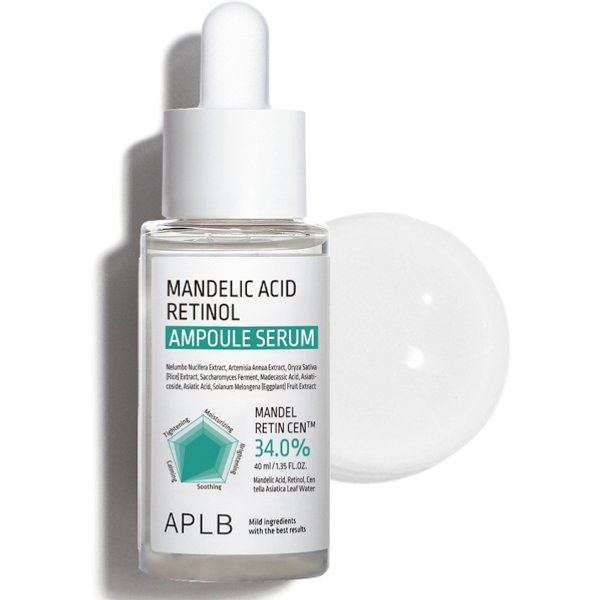 APLBMandelic Acid Retinol Ampoule Serum - 40ml$9.80Also on YesStyle
 John Jeff5% Mandelic Acid Serum - 2 Types 15ml$11.60
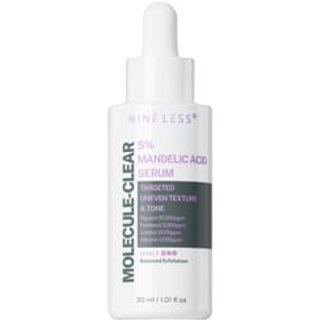 NINELESSMolecule-Clear 5% Mandelic Acid Serum 30ml$13.68
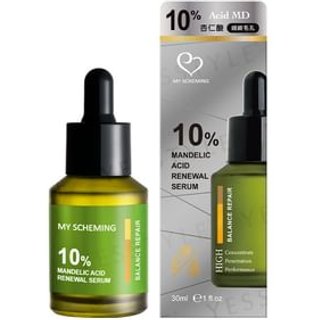 My Scheming10% Mandelic Acid Renewal Serum 30ml$14.35
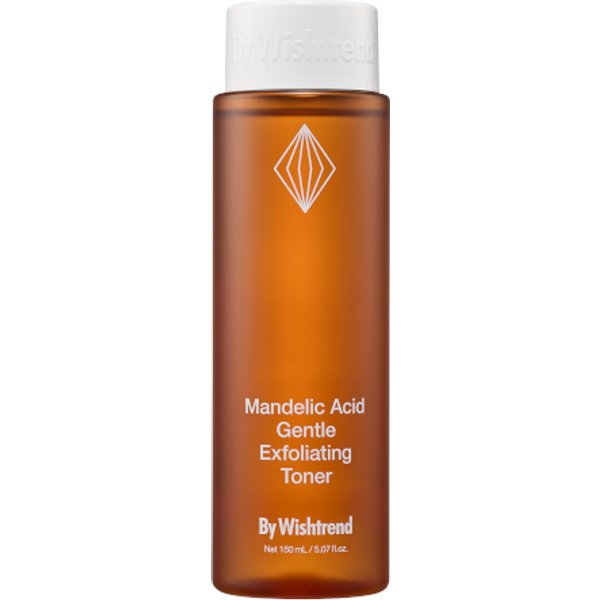 ByWishtrendMandelic Acid Gentle Exfoliating Toner - 150ml$16.10Also on Stylevana
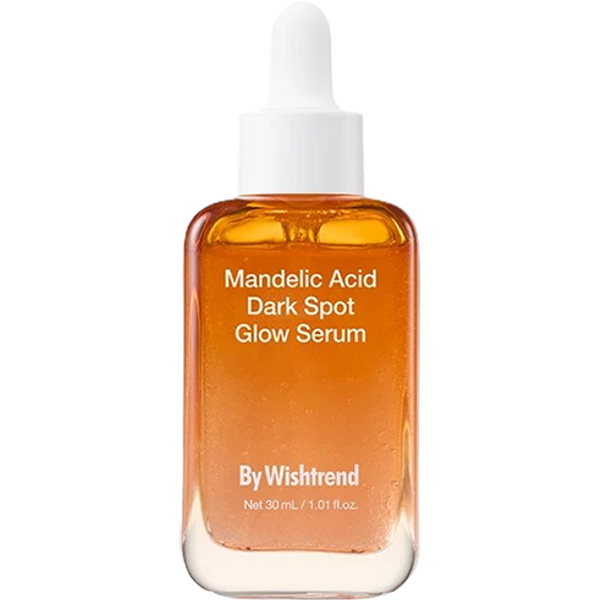 ByWishtrendMandelic Acid Dark Spot Correcting Serum - 30ml$19.55
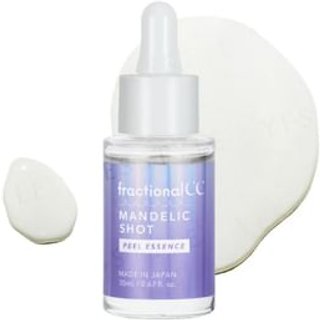 Fractional CCMandelic Shot Peel Essence 20ml$19.67
Already have one? Check how it fits your skin with Pick.
Common questions about Mandelic Acid (AHA)#
What is Mandelic Acid (AHA)?
- An AHA with a bigger molecule than glycolic acid — it works more gradually on the surface, loosening dull build-up for an even-looking finish.
What else is Mandelic Acid (AHA) called?
- On a label you may see AHA, Alpha hydroxy acid and Mandelic.
Is Mandelic Acid (AHA) an AHA or a BHA?
- An AHA — short for alpha hydroxy acid.
When should you apply Mandelic Acid (AHA)?
- Evening.
How often can you use Mandelic Acid (AHA)?
- 3× a week to daily, all over the face, not the eye area.
Where do you apply Mandelic Acid (AHA)?
- All over the face, not the eye area. Keep it off your lips too.
Can you use Mandelic Acid (AHA) around the eyes?
- No. Mandelic Acid (AHA) goes all over the face, not the eye area.
Does Mandelic Acid (AHA) make skin more sensitive to the sun?
- Yes — use sunscreen the next morning.
What should you not use with Mandelic Acid (AHA)?
- Space it apart from Azelaic acid, Cysteamine, Eye-area retinol, Kojic acid, Other exfoliants, Retinoids and Vitamin C.
Who should avoid Mandelic Acid (AHA)?
- Skip it if any of these apply: Fragile or Sensitive, Recent Facial or Laser and Recent Shave or Wax. Go slowly with Prone to Redness and Dry or Itchy Patches.
Is there a cosmetic limit for Mandelic Acid (AHA)?
- Only some regions set one. The maximum strength for Mandelic Acid (AHA) in a cosmetic is 18% (total mono-AHA, pH ≥3.5) in Canada. No maximum is set in the United States, the European Union and Great Britain. A cap is a limit on the rules, not a signal to use more.
Related ingredients#
How we check this#
Everything on this page traces to the sources listed below — regulators' own publications and published studies. Where the evidence does not answer a question, it is left unanswered.
Some sources below are the official product information for prescription medicines, cited for how they interact with this ingredient. We use them for their safety and handling detail only. A cosmetic product is not one of those medicines and is not intended to treat any condition.
Our review is AI-assisted and is not a named expert's opinion. Last reviewed August 7, 2026.
Think something here is out of date or wrong? Email us at wiki@skinintelligence.ai with your reasoning and where you read it. We read what people send, and we update the page when the sources support it.
Regulators and official bodies · 15
- S1FDA. Guidance for Industry: Labeling for Topically Applied Cosmetic Products Containing Alpha Hydroxy Acids as Ingredients. January 2005. Docket FDA-2000-P-0063. Office of the Commissioner, Office of the Chief Scientist.
- S2FDA. Alpha Hydroxy Acids (consumer page).
- S3Health Canada. Cosmetic Ingredient Hotlist — "List of Ingredients that are Restricted for Use in Cosmetic Products", entry "Alpha-hydroxy acids, including polyhydroxy acids and bionic acids with alpha hydroxyl groups, and their salts" (naming Mandelic acid, CAS 90-64-2).
- S4Health Canada. Prescription Drug List, entry "Alpha-hydroxy acids" (naming mandelic acid; listed 2014-12-25).
- S5SCCNFP. Updated position paper concerning consumer safety of alpha hydroxy acids, SCCNFP/0799/04.
- S6Regulation (EC) No 1223/2009 on cosmetic products, Annexes II and III (as retained in UK law).
- S7Roaccutane 10 mg soft capsules — Summary of Product Characteristics, §4.4, §4.5. electronic medicines compendium.
- S8Differin Gel — Summary of Product Characteristics, §4.4, §4.5. electronic medicines compendium.
- S9Aknemycin Plus — Summary of Product Characteristics, §4.3, §4.5, §4.8. electronic medicines compendium.
- S10Efracea 40 mg Modified Release Hard Capsules — SmPC, §4.4. electronic medicines compendium.
- S11Tetralysal 300 mg Hard Capsules — SmPC, §4.4. electronic medicines compendium.
- S12National Rosacea Society. Survey Shows Skin-Care Products, Ingredients May Aggravate Rosacea (Rosacea Review, Summer 1997); Why Is There Acid in My Face Wash? (June 2019).
- S13MotherToBaby. Topical Acne Treatments fact sheet (reporting ACOG guidance).
- S14Glycolic Acid. In: Drugs and Lactation Database (LactMed). NCBI Bookshelf NBK500912.
- S15Standard Guidelines of Care: Performing Procedures in Patients on or Recently Administered with Isotretinoin. PMCID PMC5820835.
Studies and references · 27
- S16Cosmetic Ingredient Review. Safety Assessment of Alpha Hydroxy Acids as Used in Cosmetics. Status: Re-Review for Panel Review. Release date 15 November 2013; panel meeting 8–9 December 2013. Document prepared by Monice M. Fiume. (Cited for containing no mention of mandelic acid.).
- S17Rizza L, Frasca G, Bonina C, Puglia C. Comparative in vivo study of the efficacy and tolerance of exfoliating agents using reflectance spectrophotometric methods. J Cosmet Sci. 2010;61(3):247-58. PMID 20587353.
- S18Edison BL, Smith HA, Li W-H, Parsa R, Green BA, Konish P, Dufort M, Tierney NK. Mandelic acid, a lipophilic alpha hydroxy acid, reduces lipid production, enhances exfoliation and provides clinical and patient perceivable benefits to oily and photodamaged skin. J Am Acad Dermatol. 2020;83(6 Suppl):AB97, abstract 18295. doi:10.1016/j.jaad.2020.06.474. Conference abstract; NeoStrata/Johnson & Johnson authors — industry-funded..
- S19Malviya A, Shrivastava S, Pancholi S, Hassanandani T, Kumar V, Dhakad JS. A Prospective Study Comparing Clinical Efficacy of 30% Mandelic Acid Peel Versus 30% Lactic Acid Peel in Periorbital Melanosis. Indian Dermatol Online J. 2025;16(6):916-920. PMID 41051381.
- S20Dayal S, Kalra KD, Sahu P. Comparative study of efficacy and safety of 45% mandelic acid versus 30% salicylic acid peels in mild-to-moderate acne vulgaris. J Cosmet Dermatol. 2020;19(2):393-399. PMID 31553119.
- S21Garg VK, Sinha S, Sarkar R. Glycolic acid peels versus salicylic-mandelic acid peels in active acne vulgaris and post-acne scarring and hyperpigmentation: a comparative study. Dermatol Surg. 2009;35(1):59-65. PMID 19076192.
- S22Sarkar R, Garg V, Bansal S, Sethi S, Gupta C. Comparative Evaluation of Efficacy and Tolerability of Glycolic Acid, Salicylic Mandelic Acid, and Phytic Acid Combination Peels in Melasma. Dermatol Surg. 2016;42(3):384-91. PMID 26859648.
- S23Sarkar R, Ghunawat S, Garg VK. Comparative Study of 35% Glycolic Acid, 20% Salicylic-10% Mandelic Acid, and Phytic Acid Combination Peels in the Treatment of Active Acne and Postacne Pigmentation. J Cutan Aesthet Surg. 2019;12(3):158-163. PMID 31619887. The only study in this file that states its Fitzpatrick range (IV–VI)..
- S24Jacobs SW, Culbertson EJ. Effects of Topical Mandelic Acid Treatment on Facial Skin Viscoelasticity. Facial Plast Surg. 2018;34(6):651-656. PMID 30513536. Single-arm; authors developed the formulation tested..
- S25Ciozda A, Firlej E, Bartosińska J, Raczkiewicz D. The Effect of Microneedling Mesotherapy, Chemical Exfoliation and Combination Therapy on Selected Skin Parameters and Cutibacterium acnes Colonization in Women With Oily Skin. J Cosmet Dermatol. 2026;25(2):e70752. PMID 41715896.
- S26Wójcik A, Kubiak M, Rotsztejn H. Influence of azelaic and mandelic acid peels on sebum secretion in ageing women. Postepy Dermatol Alergol. 2013;30(3):140-5. PMID 24278065.
- S27Warowna M, Strzelecka A, Kręcisz B. Influence of Lactobionic Acid on Hydration and Elasticity Parameters in Women Aged 30-40 and 50-60 Years in Comparison to Mandelic Acid. J Clin Med. 2025;14(5):1619. PMID 40095547.
- S28Jeon H, Park N, Won JG, Shin YW, Choi J, Park SW, Son NS. Enhancement of Exfoliating Effects through the Novel Cosmetic Ingredient Mandelic acid_Carnitine Ion-Pairing Complex. Skin Res Technol. 2024;30(6):e13788. PMID 38881052. LG H&H authors — industry..
- S29Jeon H, Park N, Won JG, Shin YW, Choi J, Min K, Choi E, Kim CK, Park SW, Son NS. Enhanced Skin Permeation and Pigmentation Reduction Effects of a Novel Tranexamic Acid-Mandelic Acid Ion-Pairing Complex. Skin Res Technol. 2025;31(9):e70222. PMID 40936315. LG H&H authors — industry..
- S30Aguirre A, Manzano D, Izu R, Gardeazabal J, Díaz Pérez JL. Allergic contact cheilitis from mandelic acid. Contact Dermatitis. 1994;31(2):133-4. PMID 7750270.
- S31Almeman AA. Evaluating the Efficacy and Safety of Alpha-Hydroxy Acids in Dermatological Practice: A Comprehensive Clinical and Legal Review. Clin Cosmet Investig Dermatol. 2024;17:1661-1685. PMID 39050562. Narrative review; has a published erratum; internally contradictory on penetration and misclassifies mandelic acid as a poly-hydroxyl AHA..
- S32Bs C, Vadlamudi SL, Shenoy C. Safety of Performing Superficial Chemical Peels in Patients on Oral Isotretinoin for Acne and Acne-Induced Pigmentation. J Clin Aesthet Dermatol. 2021;14(11):41-43. PMID 34980959. Retrospective..
- S33Anitha B. Prevention of complications in chemical peeling. J Cutan Aesthet Surg. 2010;3(3):186-8. PMID 21430836.
- S34Chemical Peels for Skin Resurfacing. StatPearls / NCBI Bookshelf NBK547752.
- S35Choińska R, Dąbrowska K, Świsłocka R, Lewandowski W, Świergiel AH. Antimicrobial Properties of Mandelic Acid, Gallic Acid and their Derivatives. Mini Rev Med Chem. 2021;21(17):2544-2550. PMID 33402087.
- S36Garofalo V, Cannizzaro MV, Mazzilli S, Bianchi L, Campione E. Clinical evidence on the efficacy and tolerability of a topical medical device containing benzoylperoxide 4%, retinol 0.5%, mandelic acid 1% and lactobionic acid 1% in the treatment of mild facial acne: an open label pilot study. Clin Cosmet Investig Dermatol. 2019;12:363-369. PMID 31190944. Single-arm, open-label, n=20..
- S37Taylor MB, Yanaki JS, Draper DO, Shurtz JC, Coglianese M. Successful short-term and long-term treatment of melasma and postinflammatory hyperpigmentation using vitamin C with a full-face iontophoresis mask and a mandelic/malic acid skin care regimen. J Drugs Dermatol. 2013;12(1):45-50. PMID 23377327. Uncontrolled; the mandelic/malic regimen was a co-intervention..
- S38Garelick E, Pohani P, Aswani A, Khan S, Chadha S, Patel T, Kebbe MB. Chemical Peels in Skin of Color: A Scoping Review of Safety, Efficacy, and Practice Patterns. Cureus. 2026;18(5):e108851. PMID 42306365.
- S39Zeeshan M, Arfeen N, Sonthalia S, Singh A, Roy PK. Treatment of acanthosis nigricans with sequential salicylic acid-mandelic acid combination peel and maintenance with glycolic acid-urea combination cream: A retrospective pilot study. J Cosmet Dermatol. 2022. PMID 34971480.
- S40Kapuścińska A, Nowak I. [Use of organic acids in acne and skin discolorations therapy]. Postepy Hig Med Dosw. 2015;69:374-83. PMID 25811473. (In Polish.).
- S41Lee SS, Burgener MM, Sayyed AA, Catterall L, Koljonen JL, Ruffolo A, Cash CG, Lacerna Kimbrell M, Sommer NZ. Noninvasive Cosmetic Treatments for Fitzpatrick IV-VI: A Narrative Review of Safety and Efficacy Guidelines. Plast Reconstr Surg Glob Open. 2026;14(3):e7541. PMID 41884758.
- S42Taylor MB. Summary of mandelic acid for the improvement of skin conditions. Cosmetic Dermatology 1999;12:26-28. Cited by S31 as the origin of the deeper-skin-tones claim. Indexed in neither PubMed nor Crossref; could not be retrieved or verified. Recorded here so that a future reviewer does not re-derive the claim from a citation chain that terminates in an unretrievable trade article.