What does Glycolic Acid (AHA) do?#
Glycolic acid is the smallest of the alpha-hydroxy acids (AHAs). It works at the outermost surface of the skin, helping promote a smoother, brighter-looking finish. As a leave-on serum, it stays on the skin rather than rinsing away.
Benefits
- Helps promote a smoother, brighter-looking skin surface
- Supports the appearance of a more refined, even-looking skin tone
- Helps soften the look of rough texture and fine lines
How it works
Glycolic acid is an alpha-hydroxy acid with the smallest molecular size in its class. It loosens dull surface buildup at the very outermost layer of the skin, which is what leaves the surface looking smoother and brighter. With consistent use, it also contributes to a more refined, revitalized appearance over time.
What to expect
You may notice a brief adjustment period when you start using glycolic acid. Mild stinging or tingling on application, along with some dryness or light flaking, can occur in the first few weeks as your skin adjusts. This is temporary and typically settles with continued use.
How to use Glycolic Acid (AHA)#
How often
Ease in gradually, following the frequency on the pack — there is no benefit to going faster than your skin is comfortable with.
Where it goes
After cleansing, before moisturizer.
Where to apply
Sweep it across the face rather than dabbing it on single spots, and keep it away from the eye area. Rinse with plenty of water if any gets in your eyes.
Sun
Wear sunscreen daily while you are using it, and for a week after you stop — the extra sun sensitivity outlasts the product.
Alongside others
Follow it with a moisturizer. Hydrating and barrier ingredients like hyaluronic acid and ceramides sit well alongside it.
Use one exfoliating product per session. Keep it to a different evening from other acids, from scrubs and enzyme masks, and from retinol.
What to expect
Stinging or tingling on application is common in the first few weeks.
Darker skin tones can be more prone to temporary uneven tone from strong actives — keep an eye on how your skin responds, especially early on.
If it doesn't suit
If the stinging stays sharp, or you get dryness and tightness, use it less often rather than pushing through.
This product contains an alpha-hydroxy acid (AHA) that may increase your skin's sensitivity to the sun. Use a sunscreen while using this product and for a week after you stop. Discontinue use if irritation occurs and consult a healthcare provider.
The form you will see it in
Glycolic acid exfoliating serum
- Where it goes
- Before moisturizer
Using Glycolic Acid (AHA) with other ingredients
Pairs well with Glycolic Acid (AHA)
Hyaluronic Acid
Works well togetherHyaluronic acid provides hydration that helps offset any dryness from exfoliation.
Ceramides
Works well togetherCeramides help keep skin feeling comfortable and hydrated alongside regular exfoliation.
What not to use with Glycolic Acid (AHA)
Azelaic acid
Different timesBoth are active on the skin’s surface and combining them can increase the chance of irritation.
Cysteamine
Different timesThese two are better applied on separate evenings rather than layered together.
Eye-area retinol
Different timesThe eye area is thinner and takes longer to settle, so keep exfoliants to a different evening from your eye retinol.
Other exfoliants
Different timesMore than one exfoliant at once can feel drying, so they’re best kept to separate evenings.
Enzyme Exfoliants · Lactic Acid (AHA) · LHA · Mandelic Acid (AHA) · PHA (Polyhydroxy Acid) · Salicylic Acid (BHA)
Retinoids
Different timesRetinoids and exfoliants can both feel drying, so they’re best kept to separate evenings.
Vitamin C
Different timesVitamin C and exfoliants are more comfortable at different times than layered in one routine.
Who should avoid Glycolic Acid (AHA)?#
Six situations change whether Glycolic Acid (AHA) suits your skin right now. Each one is either a reason to skip it, a reason to go slowly, or nothing to watch for.
- Fragile or Sensitive
- Skip it
- Recent Facial or Laser
- Skip it
- Recent Shave or Wax
- Skip it
- Prone to Redness
- Go slowly
- Dry or Itchy Patches
- Go slowly
- Maternity & Nursing
- No caution
Prone to Redness — Try it on a small area first, and use it less often — or stop — if you notice stinging or extra redness.
Dry or Itchy Patches — Keep the rest of your routine well moisturized, and use it less often — or stop — if you notice tightness or itching.
Cosmetic strength limits for Glycolic Acid (AHA) where you live#
| Region | Most a cosmetic may contain | |
|---|---|---|
 United States United States | 10% (pH ≥3.5 — guidance, not law) | |
The FDA restricts a short list of ingredients and sets no general strength ceiling on the rest. A figure marked "guidance, not law" is the Cosmetic Ingredient Review panel's recommendation. 21 CFR part 700, subpart B — Requirements for Specific Cosmetic Products (FDA) | ||
 Canada Canada | 18% (total mono-AHA, pH ≥3.5) | |
One list does the work — Health Canada's Hotlist of prohibited and restricted cosmetic ingredients. | ||
 European Union European Union | 4% (pH ≥3.8 — guidance, not law) | |
The Cosmetics Regulation's annexes, consolidated to 1 May 2026. A figure marked "guidance, not law" comes from the EU's cosmetic safety committee rather than from the annexes. | ||
 Great Britain Great Britain | 4% (pH ≥3.8 — guidance, not law) | |
Great Britain kept the annexes as its own law and updates them only when it chooses; Northern Ireland follows the live EU Regulation, which is why some rows read differently for each. Regulation (EC) No 1223/2009 as it applies in Great Britain · Regulation (EC) No 1223/2009, Annexes II–VI | ||
 India India | No explicit cap | |
India writes its own standard, aligned to the European rules as they stood in 2012. Mandatory since 9 February 2026. IS 4707 (Part 2):2025 — restricted and prohibited cosmetic ingredients · IS 4707 (Part 3):2025 — preservatives · Cosmetics Rules, 2020, Ninth Schedule | ||
 Brazil Brazil | No explicit cap | |
ANVISA rewrote its restricted list in June 2026, and a companion act amended the prohibited list at the same time. RDC 1.029/2026 — restricted ingredients · RDC 529/2021 — prohibited ingredients, as amended by RDC 1.030/2026 · RDC 528/2021 — preservatives | ||
 Japan Japan | No explicit cap | |
Japan's cosmetics standard keeps drug ingredients out of cosmetics, so most of its figures sit in the ministry's list of the ones a cosmetic may still contain. Cosmetics Standards (化粧品基準), Ministry of Health, Labour and Welfare · Cosmetics Standards — the ministry's own English translation · Drug ingredients permitted in cosmetics — 2007 notification | ||
 South Korea South Korea | No cap (leave-on products must be pH 3.0–9.0) | |
One MFDS regulation carries both the prohibited list and the restricted list, in force 18 March 2026. Sunscreens and a few other categories are cleared product by product instead. Regulation on Safety Standards for Cosmetics (MFDS Notification 2026-19) · Regulation on the Review of Functional Cosmetics (MFDS Notification 2025-88) | ||
 Kenya Kenya | No explicit cap | |
Kenya's standard applies the EU annexes as they stand rather than copying them, so its ingredient limits are the EU's — including the 2024 additions. A figure marked "guidance, not law" sits outside the annexes and does not carry over. KS EAS 377-1, -2 and -3:2022 — cosmetics safety requirements, published by KEBS · Regulation (EC) No 1223/2009, Annexes II–VI | ||
 Namibia Namibia | No explicit cap | |
Namibia sets no ingredient limits at all. Its cosmetic rule is a single line requiring a product to be free of any harmful ingredient. Foodstuffs, Cosmetics and Disinfectants Ordinance 18 of 1979, and the regulations under it | ||
 Ukraine Ukraine | No explicit cap | |
Ukraine's own transposition of the EU annexes, as they stood before the 2024 additions, fully in force since 3 August 2026. A further revision is due on 1 February 2027. Technical Regulation on cosmetic products — Cabinet Resolution No. 65 of 20 January 2021 | ||
 Georgia Georgia | No explicit cap | |
Georgia has no cosmetics rulebook — its register of technical regulations carries no cosmetics entry — so only the general product-safety duty applies. | ||
 Australia Australia | 5%; 20% (at pH 3.5 or greater) | |
Australia writes no cosmetic ingredient list. A figure here is the point at which a substance becomes a medicine or a scheduled substance carrying Caution labeling, so its numbers sit well above other markets'. Poisons Standard — June 2026 · Therapeutic Goods (Excluded Goods) Determination 2018 | ||
 United Arab Emirates United Arab Emirates | 10% (total AHA, pH ≥3.5) | |
The Gulf standard points at the EU annexes as amended, so its ingredient limits are the EU's. A figure marked "guidance, not law" sits outside the annexes and does not carry over. GSO 1943:2024 — Cosmetic products: safety requirements (Gulf technical regulation) · Regulation (EC) No 1223/2009, Annexes II–VI | ||
 Kuwait Kuwait | 10% (total AHA, pH ≥3.5) | |
The Gulf standard points at the EU annexes as amended, so its ingredient limits are the EU's. A figure marked "guidance, not law" sits outside the annexes and does not carry over. GSO 1943:2024 — Cosmetic products: safety requirements (Gulf technical regulation) · Regulation (EC) No 1223/2009, Annexes II–VI | ||
 Hong Kong Hong Kong | No explicit cap | |
Hong Kong writes no cosmetics rulebook. Its Poisons List (Cap. 138A, Schedule 10) decides which substances may be sold only as medicines, and general safety is judged case by case against whichever overseas standard the enforcer considers reasonable. Pharmacy and Poisons Regulations (Cap. 138A), Schedule 10 — the poisons list · Pharmacy and Poisons Board — Guidance Notes on classifying pharmaceutical products, April 2026 | ||
 Singapore Singapore | 10% (glycolic and lactic combined, pH ≥3.5) | |
Singapore writes the ASEAN annexes into its own schedule, and its regulator tells companies to check the current ASEAN release as well — which is why a figure here can read "guidance, not law". Health Products (Cosmetic Products — ASEAN Cosmetic Directive) Regulations 2007, Third Schedule · ASEAN Cosmetic Directive annexes — release 2026-1, 22 June 2026 | ||
 Brunei Brunei | No explicit cap | |
Brunei carries the 2007 ASEAN annexes in its own schedule and has not updated them since, so it reads differently from Singapore on several ingredients. Medicines (Cosmetic Products) Regulations (Cap. 285 Rg 1), Schedule 1 — revised edition 2024 | ||
 Jordan Jordan | No explicit cap | |
Jordan's cosmetic rules defer to "the approved references" and name none of them, so there is no Jordanian figure to read. The only number in the instrument governs the ingredient list on the pack. JFDA instructions on cosmetics and pharmaceutical cosmetics, 2026 | ||
 Trinidad & Tobago Trinidad & Tobago | No explicit cap | |
Trinidad and Tobago has had the power to set cosmetic standards since 1960 and has never used it. The regulations made under the Act cover food and drugs, with no cosmetics part; what binds is the Act's general rule against selling a cosmetic that may injure the user. Food and Drugs Act, Chap. 30:01 · Food and Drugs Regulations | ||
Where a figure appears, that is the maximum strength allowed or advised for glycolic acid (aha) in that market — some are set in cosmetics regulation, others are the ceiling a cosmetic safety panel recommends. Where no figure appears, the market either sets no cosmetic maximum or handles this ingredient outside its cosmetic rules. These are limits, not targets — the right strength for a formula is the formulator's decision.
Open a market to see the rulebook its figure comes from. Those notes describe each market's own rules as we read them, current to August 24, 2026; the linked documents are the authority, and nothing here is legal advice.
Sample products with Glycolic Acid (AHA)#
A few well-known products, not a full list — product names are each brand's own. We don't sell them — the shop prices them in US dollars and ships from Hong Kong, so delivery and duties come on top. It may not ship everywhere.
We may earn a small commission when you buy through these links.
Serums · 9
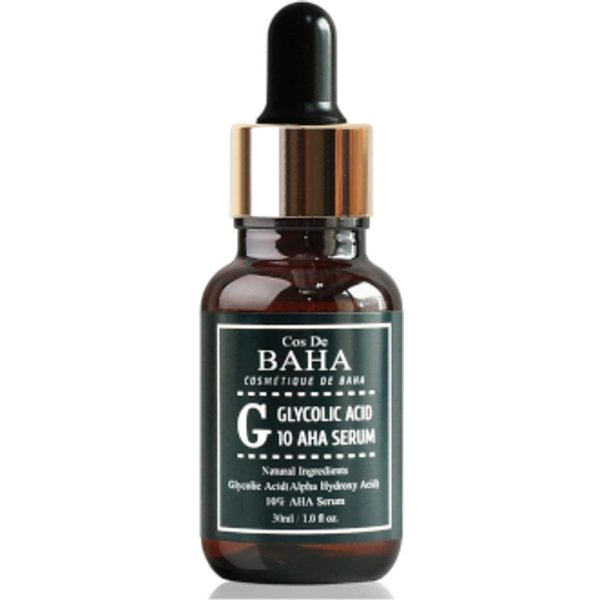 Cos De BAHAGlycolic Serum (G) - 30ml$8.62Also on YesStyle
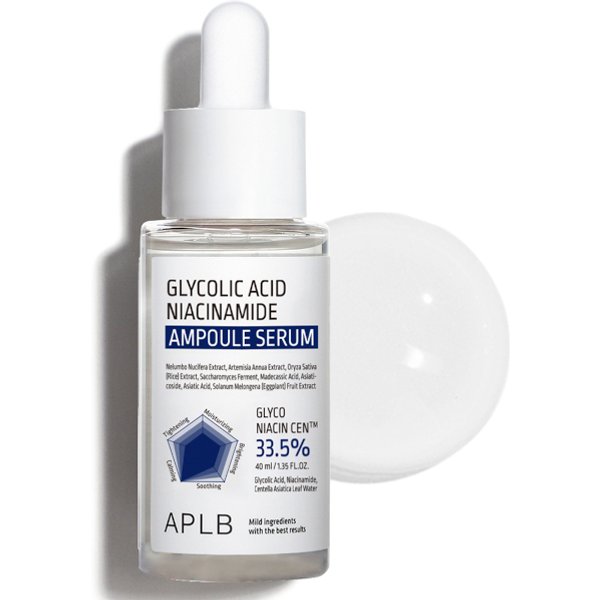 APLBGlycolic Acid Niacinamide Ampoule Serum - 40ml$9.80Also on YesStyle
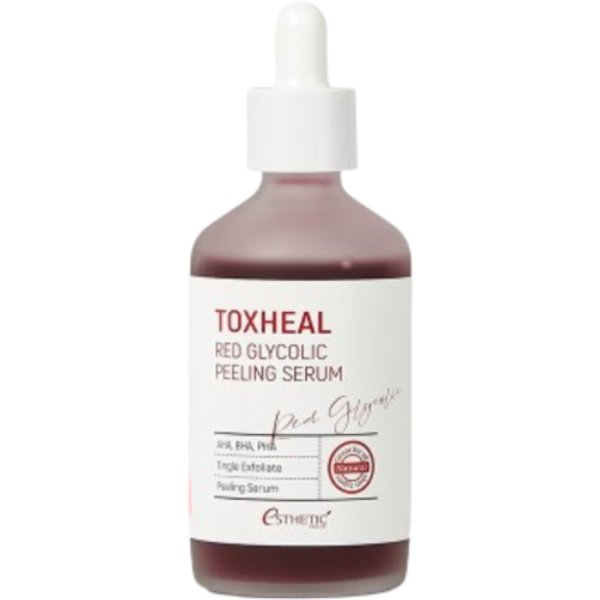 Esthetic HouseToxheal Red Glycolic Peeling Serum - 100ml$13.31
 A'PIEUGlycolic Acid Peeling Booster 120ml 120ml$14.10
 My Scheming10% Glycolic Acid Peeling Serum 30ml$14.35
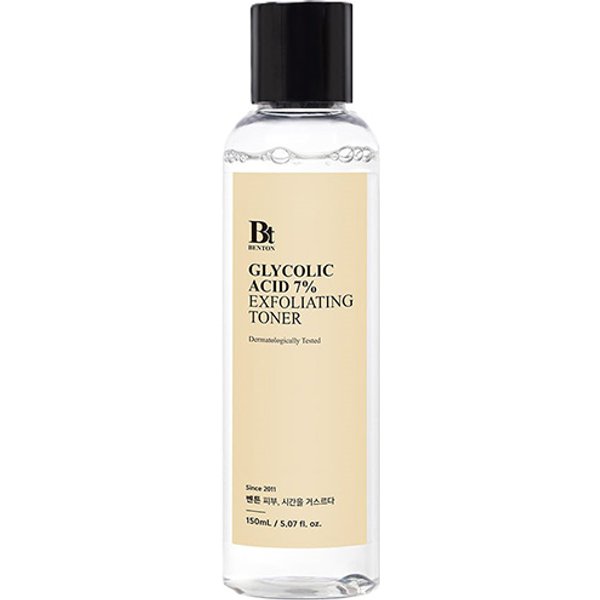 BentonGlycolic Acid 7% Exfoliating Toner - 150ml$16.50Also on Stylevana
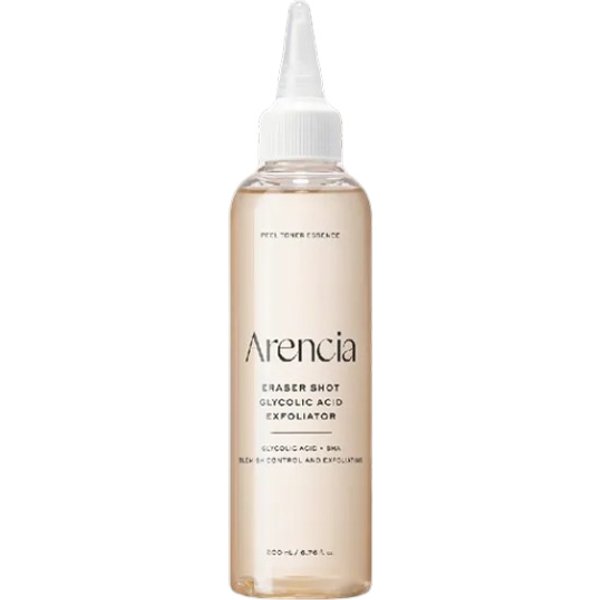 ArenciaEraser Shot Glycolic Acid Exfoliator - 200ml$18.72Also on Stylevana
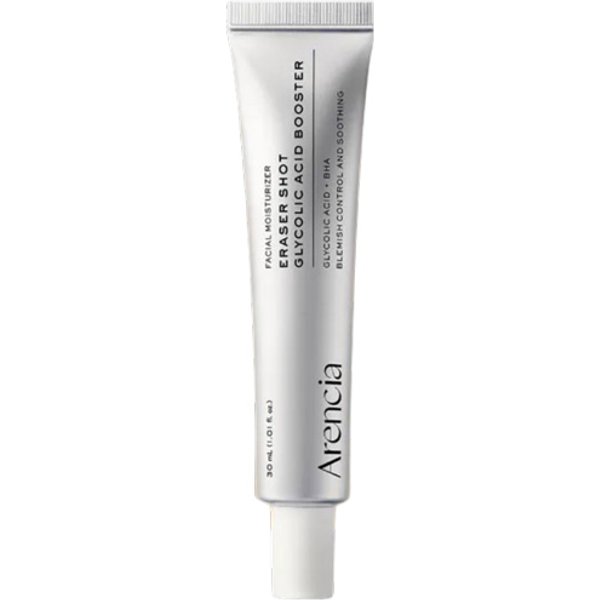 ArenciaEraser Shot Glycolic Acid Booster - 30ml$20.00
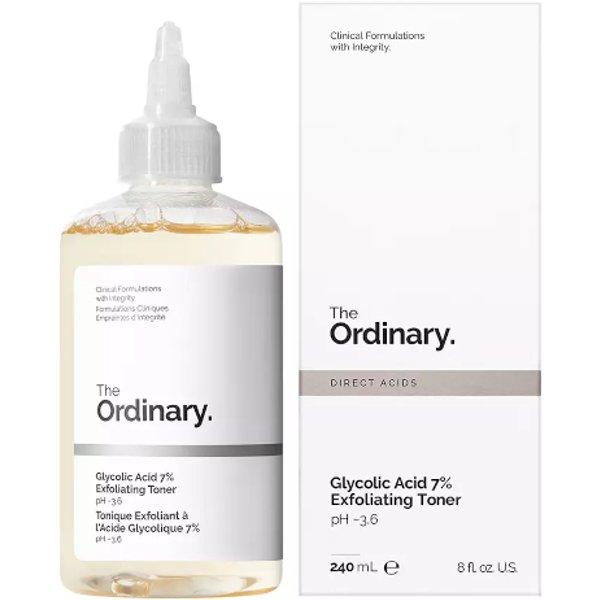 The OrdinaryGlycolic Acid 7% Exfoliating Toner - 240ml$30.80
Already have one? Check how it fits your skin with Pick.
Common questions about Glycolic Acid (AHA)#
What is Glycolic Acid (AHA)?
- The smallest of the alpha-hydroxy acids — it loosens dull surface buildup at the outermost layer, softening the look of uneven tone, rough texture and fine lines.
What else is Glycolic Acid (AHA) called?
- On a label you may see AHA, Alpha hydroxy acid and Glycolic.
Is Glycolic Acid (AHA) an AHA or a BHA?
- An AHA — short for alpha hydroxy acid.
When should you apply Glycolic Acid (AHA)?
- Evening.
How often can you use Glycolic Acid (AHA)?
- 3× a week to daily, all over the face, not the eye area.
Where do you apply Glycolic Acid (AHA)?
- All over the face, not the eye area. Keep it off your lips too.
Can you use Glycolic Acid (AHA) around the eyes?
- No. Glycolic Acid (AHA) goes all over the face, not the eye area.
Does Glycolic Acid (AHA) make skin more sensitive to the sun?
- Yes — use sunscreen the next morning.
What should you not use with Glycolic Acid (AHA)?
- Space it apart from Azelaic acid, Cysteamine, Eye-area retinol, Other exfoliants, Retinoids and Vitamin C.
Who should avoid Glycolic Acid (AHA)?
- Skip it if any of these apply: Fragile or Sensitive, Recent Facial or Laser and Recent Shave or Wax. Go slowly with Prone to Redness and Dry or Itchy Patches.
Is there a cosmetic limit for Glycolic Acid (AHA)?
- Yes. The maximum strength for Glycolic Acid (AHA) in a cosmetic is 10% (pH ≥3.5 — guidance, not law) in the United States, 18% (total mono-AHA, pH ≥3.5) in Canada, 4% (pH ≥3.8 — guidance, not law) in the European Union and 4% (pH ≥3.8 — guidance, not law) in Great Britain. A cap is a limit on the rules, not a signal to use more.
Related ingredients#
How we check this#
Everything on this page traces to the sources listed below — regulators' own publications and published studies. Where the evidence does not answer a question, it is left unanswered.
Some sources below are the official product information for prescription medicines, cited for how they interact with this ingredient. We use them for their safety and handling detail only. A cosmetic product is not one of those medicines and is not intended to treat any condition.
Our review is AI-assisted and is not a named expert's opinion. Last reviewed August 7, 2026.
Think something here is out of date or wrong? Email us at wiki@skinintelligence.ai with your reasoning and where you read it. We read what people send, and we update the page when the sources support it.
Regulators and official bodies · 11
- S1FDA. Guidance for Industry: Labeling for Cosmetics Containing Alpha Hydroxy Acids. Docket FDA-2000-P-0063, January 2005.
- S2FDA. Alpha Hydroxy Acids (cosmetic ingredient page).
- S3SCCNFP. Position Paper concerning the safety of alpha-hydroxy acids. SCCNFP/0370/00, adopted 28 June 2000.
- S4SCCNFP. Updated position paper concerning consumer safety of alpha-hydroxy acids. SCCNFP/0799/04, adopted 25 May 2004.
- S5Health Canada. Cosmetic Ingredient Hotlist — entry "Alpha-hydroxy acids, including polyhydroxy acids and bionic acids with alpha hydroxyl groups, and their salts" (Glycolic acid, CAS 79-14-1).
- S6Cosmetic Ingredient Review. Alpha Hydroxy Acids re-review document, carrying the 1998 Final Report conclusion and the underlying study data.
- S721 CFR 333.350 — Labeling of acne drug products (eCFR, current).
- S8eCFR full-text search API, run 2026-08-04: "sunburn alert" → 0 results; "glycolic acid" → 15 results, all 21 CFR 74.3206 (colour additive) or 46 CFR 150 (marine cargo).
- S24Isotretinoin 10 mg soft capsules — Summary of Product Characteristics, emc (product 10555).
- S25Aknemycin Plus (erythromycin 4% / tretinoin 0.025%) — Summary of Product Characteristics, emc (product 6386).
- S26Differin Gel (adapalene 0.1%) — Summary of Product Characteristics, emc (product 921).
Studies and references · 22
- S9Kaidbey K, Sutherland B, Bennett P, Wamer WG, Barton C, Dennis D, Kornhauser A. Topical glycolic acid enhances photodamage by ultraviolet light. Photodermatol Photoimmunol Photomed. 2003;19(1):21-7. PMID 12713551.
- S10Kornhauser A, Wei RR, Yamaguchi Y, Coelho SG, Kaidbey K, Barton C, Takahashi K, Beer JZ, Miller SA, Hearing VJ. The effects of topically applied glycolic acid and salicylic acid on ultraviolet radiation-induced erythema, DNA damage and sunburn cell formation in human skin. J Dermatol Sci. 2009;55(1):10-7. PMID 19411163.
- S11Kornhauser A, Coelho SG, Hearing VJ. Applications of hydroxy acids: classification, mechanisms, and photoactivity. Clin Cosmet Investig Dermatol. 2010;3:135-42. PMID 21437068.
- S12Fartasch M, Teal J, Menon GK. Mode of action of glycolic acid on human stratum corneum: ultrastructural and functional evaluation of the epidermal barrier. Arch Dermatol Res. 1997;289(7):404-9. PMID 9248619.
- S13Stiller MJ, Bartolone J, Stern R, Smith S, Kollias N, Gillies R, Drake LA. Topical 8% glycolic acid and 8% L-lactic acid creams for the treatment of photodamaged skin. A double-blind vehicle-controlled clinical trial. Arch Dermatol. 1996;132(6):631-6. PMID 8651713.
- S14Smith WP. Comparative effectiveness of alpha-hydroxy acids on skin properties. Int J Cosmet Sci. 1996;18(2):75-83. PMID 19245467.
- S15Sharad J. Glycolic acid peel therapy – a current review. Clin Cosmet Investig Dermatol. 2013;6:281-8. PMID 24399880.
- S16Houshmand EB. Effect of glycolic acid, phytic acid, soothing complex containing emulsion on hyperpigmentation and skin luminosity: A clinical evaluation. J Cosmet Dermatol. 2021;20(3):776-780. PMID 33458927.
- S17Spellman MC, Pincus SH. Efficacy and safety of azelaic acid and glycolic acid combination therapy compared with tretinoin therapy for acne. Clin Ther. 1998;20(4):711-21. PMID 9737831.
- S18Appa Y. Retinoid therapy: compatible skin care. Skin Pharmacol Appl Skin Physiol. 1999;12(3):111-9. PMID 10393518.
- S19Dréno B, Nocera T, Verrière F, Vienne MP, Ségard C, Vitse S, Carré C. Topical retinaldehyde with glycolic acid: study of tolerance and acceptability in association with anti-acne treatments in 1,709 patients. Dermatology. 2005;210 Suppl 1:22-9. PMID 15724104.
- S20Alvarez GV, Kang BY, Richmond AM, Hoss E, Sulewski R, Minkis K, Rozenberg SS, Antonovich D, Boucher A, Bernstein EF, Bertucci V, Chapas AM, Cohen JL, Council ML, Dover JS, Geronemus R, Given KML, Goldbach HS, Goldman MP, Hooper D, Kaufman J, Munavalli G, Pacheco TR, Rossi AM, Wilson S, Alam M. Skincare ingredients recommended by cosmetic dermatologists: A Delphi consensus study. J Am Acad Dermatol. 2025;93(6):1509-1525. PMID 40233838.
- S21Perricone NV, DiNardo JC. Photoprotective and antiinflammatory effects of topical glycolic acid. Dermatol Surg. 1996;22(5):435-7. PMID 8634805.
- S22Ly S, Kamal K, Manjaly P, Barbieri JS, Mostaghimi A. Treatment of Acne Vulgaris During Pregnancy and Lactation: A Narrative Review. Dermatol Ther (Heidelb). 2023;13(1):115-130. PMID 36447117.
- S23Glycolic Acid. Drugs and Lactation Database (LactMed), NCBI Bookshelf NBK500912.
- S27Almeman AA. Evaluating the Efficacy and Safety of Alpha-Hydroxy Acids in Dermatological Practice: A Comprehensive Clinical and Legal Review. Clin Cosmet Investig Dermatol. 2024;17:1661-1685. PMID 39050562.
- S28National Rosacea Society. Why Is There Acid in My Face Wash? rosacea.org blog, June 2019.
- S29Topical AHA in Dermatology: Formulations, Mechanisms of Action, Efficacy, and Future Perspectives. Cosmetics. 2023;10(5):131. doi:10.3390/cosmetics10050131 · Cited without authors — attribution could not be confirmed against a PMID or DOI author record.
- S30Wiegmann D, Haddad L. Two is better than one: The combined effects of glycolic acid and salicylic acid on acne-related disorders. J Cosmet Dermatol. 2020;19(9):2349-2351. PMID 32250551.
- S31Tung RC, Bergfeld WF, Vidimos AT, Remzi BK. alpha-Hydroxy acid-based cosmetic procedures. Guidelines for patient management. Am J Clin Dermatol. 2000;1(2):81-8. PMID 11702315.
- S32Green BA, Yu RJ, Van Scott EJ. Clinical and cosmeceutical uses of hydroxyacids. Clin Dermatol. 2009;27(5):495-501. PMID 19695482.
- S33The Effectiveness of Topical Keratolytics (Alpha Hydroxy Acids/Beta Hydroxy Acids/Urea) in Treating Keratosis Pilaris: A Review of the Literature. Cureus. 2025. PMID 41631232.