What does Enzyme Exfoliants do?#
Enzyme exfoliants use naturally derived plant enzymes (such as papain from papaya or bromelain from pineapple) to help gently remove surface buildup for a smoother-looking complexion. Unlike acid-based exfoliants, they work at a mildly acidic to neutral pH, which many people find more comfortable on the skin.
Benefits
- Helps promote smoother, softer-looking skin through gentle enzymatic action
- Works at a mildly acidic to neutral pH, which many people find more comfortable than a low-pH acid exfoliant
- Helps clear the dull, flaky-looking build-up that leaves skin looking rough
How it works
Plant-derived enzymes like papain and bromelain gently smooth away dull surface buildup for smoother, brighter-looking skin. Unlike acid-based exfoliants, they work at a mildly acidic to neutral pH, which many people find more comfortable. Left on the skin this is a full exfoliating step, so most people find it sits best on an evening when nothing else exfoliating is in the routine.
How to use Enzyme Exfoliants#
Before you start
Patch test first.
Skip it on skin that's broken, sore or sunburned, and wait until it's calm again.
Not recommended if you have a known allergy to papaya, pineapple, fig, banana, avocado, kiwi, or latex.
Where it goes
It comes in two forms and they belong in different steps — a powder wash at the cleansing stage, a mask as a targeted step.
Where to apply
Across the whole face rather than dabbed onto single spots, and keep it away from the eye area. Rinse with plenty of water if any gets in your eyes.
How long
Follow the timing on the pack and don't extend it. With enzymes, longer doesn't give a better result.
Alongside others
Follow it with a moisturizer — in the studies behind it, that step came straight afterwards.
Keep it to a different evening from an exfoliating acid or a retinoid — two exfoliating steps in one session is what usually causes the stinging.
What to expect
There's no settling-in phase to push through — it should feel comfortable from the start, and anything that doesn't is worth stopping for.
If it doesn't suit
If it stings or tingles, rinse it off with water rather than waiting it out.
This product contains plant-derived enzymes from papaya, pineapple or fig, which people with a latex allergy can also react to. Patch test before first use. Discontinue if irritation occurs.
Forms you will see it in
Enzyme powder wash
- Where it goes
- Your wash, morning or evening
- How often
- Up to daily
- Strength
- Gentle
- Sun sensitivity
- None
Enzyme exfoliating mask
- Where it goes
- Before moisturizer, evening
- How often
- 3× a week to daily
- Strength
- Moderate
- Sun sensitivity
- None
Using Enzyme Exfoliants with other ingredients
What not to use with Enzyme Exfoliants
Copper peptides
Never the same eveningExfoliating enzymes and copper peptides are more comfortable in separate sessions than layered together.
Eye-area retinol
Different timesThe eye area is thinner and takes longer to settle, so keep exfoliants to a different evening from your eye retinol.
Other exfoliants
Different timesMore than one exfoliant at once can feel drying, so they’re best kept to separate evenings.
Glycolic Acid (AHA) · Lactic Acid (AHA) · LHA · PHA (Polyhydroxy Acid) · Salicylic Acid (BHA)
Retinoids
Different timesRetinoids and exfoliants can both feel drying, so they’re best kept to separate evenings.
Vitamin C
Different timesVitamin C and exfoliants are more comfortable at different times than layered in one routine.
Who should avoid Enzyme Exfoliants?#
Six situations change whether Enzyme Exfoliants suits your skin right now. Each one is either a reason to skip it, a reason to go slowly, or nothing to watch for.
- Maternity & Nursing
- Skip it
- Fragile or Sensitive
- Skip it
- Recent Facial or Laser
- Skip it
- Prone to Redness
- Go slowly
- Dry or Itchy Patches
- Go slowly
- Recent Shave or Wax
- Go slowly
Prone to Redness — Try it on a small area first, and use it less often — or stop — if you notice stinging or extra redness.
Dry or Itchy Patches — Keep the rest of your routine well moisturized, and use it less often — or stop — if you notice tightness or itching.
Recent Shave or Wax — Avoid for 24 hours after waxing, threading, or dermaplaning.
Cosmetic strength limits for Enzyme Exfoliants where you live#
| Region | Most a cosmetic may contain | |
|---|---|---|
 United States United States | No explicit cap | |
The FDA restricts a short list of ingredients and sets no general strength ceiling on the rest. A figure marked "guidance, not law" is the Cosmetic Ingredient Review panel's recommendation. 21 CFR part 700, subpart B — Requirements for Specific Cosmetic Products (FDA) | ||
 Canada Canada | No explicit cap | |
One list does the work — Health Canada's Hotlist of prohibited and restricted cosmetic ingredients. | ||
 European Union European Union | No explicit cap | |
The Cosmetics Regulation's annexes, consolidated to 1 May 2026. A figure marked "guidance, not law" comes from the EU's cosmetic safety committee rather than from the annexes. | ||
 Great Britain Great Britain | No explicit cap | |
Great Britain kept the annexes as its own law and updates them only when it chooses; Northern Ireland follows the live EU Regulation, which is why some rows read differently for each. Regulation (EC) No 1223/2009 as it applies in Great Britain · Regulation (EC) No 1223/2009, Annexes II–VI | ||
 India India | No explicit cap | |
India writes its own standard, aligned to the European rules as they stood in 2012. Mandatory since 9 February 2026. IS 4707 (Part 2):2025 — restricted and prohibited cosmetic ingredients · IS 4707 (Part 3):2025 — preservatives · Cosmetics Rules, 2020, Ninth Schedule | ||
 Brazil Brazil | No explicit cap | |
ANVISA rewrote its restricted list in June 2026, and a companion act amended the prohibited list at the same time. RDC 1.029/2026 — restricted ingredients · RDC 529/2021 — prohibited ingredients, as amended by RDC 1.030/2026 · RDC 528/2021 — preservatives | ||
 Japan Japan | No explicit cap | |
Japan's cosmetics standard keeps drug ingredients out of cosmetics, so most of its figures sit in the ministry's list of the ones a cosmetic may still contain. Cosmetics Standards (化粧品基準), Ministry of Health, Labour and Welfare · Cosmetics Standards — the ministry's own English translation · Drug ingredients permitted in cosmetics — 2007 notification | ||
 South Korea South Korea | No explicit cap | |
One MFDS regulation carries both the prohibited list and the restricted list, in force 18 March 2026. Sunscreens and a few other categories are cleared product by product instead. Regulation on Safety Standards for Cosmetics (MFDS Notification 2026-19) · Regulation on the Review of Functional Cosmetics (MFDS Notification 2025-88) | ||
 Kenya Kenya | No explicit cap | |
Kenya's standard applies the EU annexes as they stand rather than copying them, so its ingredient limits are the EU's — including the 2024 additions. A figure marked "guidance, not law" sits outside the annexes and does not carry over. KS EAS 377-1, -2 and -3:2022 — cosmetics safety requirements, published by KEBS · Regulation (EC) No 1223/2009, Annexes II–VI | ||
 Namibia Namibia | No explicit cap | |
Namibia sets no ingredient limits at all. Its cosmetic rule is a single line requiring a product to be free of any harmful ingredient. Foodstuffs, Cosmetics and Disinfectants Ordinance 18 of 1979, and the regulations under it | ||
 Ukraine Ukraine | No explicit cap | |
Ukraine's own transposition of the EU annexes, as they stood before the 2024 additions, fully in force since 3 August 2026. A further revision is due on 1 February 2027. Technical Regulation on cosmetic products — Cabinet Resolution No. 65 of 20 January 2021 | ||
 Georgia Georgia | No explicit cap | |
Georgia has no cosmetics rulebook — its register of technical regulations carries no cosmetics entry — so only the general product-safety duty applies. | ||
 Australia Australia | No explicit cap | |
Australia writes no cosmetic ingredient list. A figure here is the point at which a substance becomes a medicine or a scheduled substance carrying Caution labeling, so its numbers sit well above other markets'. Poisons Standard — June 2026 · Therapeutic Goods (Excluded Goods) Determination 2018 | ||
 United Arab Emirates United Arab Emirates | No explicit cap | |
The Gulf standard points at the EU annexes as amended, so its ingredient limits are the EU's. A figure marked "guidance, not law" sits outside the annexes and does not carry over. GSO 1943:2024 — Cosmetic products: safety requirements (Gulf technical regulation) · Regulation (EC) No 1223/2009, Annexes II–VI | ||
 Kuwait Kuwait | No explicit cap | |
The Gulf standard points at the EU annexes as amended, so its ingredient limits are the EU's. A figure marked "guidance, not law" sits outside the annexes and does not carry over. GSO 1943:2024 — Cosmetic products: safety requirements (Gulf technical regulation) · Regulation (EC) No 1223/2009, Annexes II–VI | ||
 Hong Kong Hong Kong | No explicit cap | |
Hong Kong writes no cosmetics rulebook. Its Poisons List (Cap. 138A, Schedule 10) decides which substances may be sold only as medicines, and general safety is judged case by case against whichever overseas standard the enforcer considers reasonable. Pharmacy and Poisons Regulations (Cap. 138A), Schedule 10 — the poisons list · Pharmacy and Poisons Board — Guidance Notes on classifying pharmaceutical products, April 2026 | ||
 Singapore Singapore | No explicit cap | |
Singapore writes the ASEAN annexes into its own schedule, and its regulator tells companies to check the current ASEAN release as well — which is why a figure here can read "guidance, not law". Health Products (Cosmetic Products — ASEAN Cosmetic Directive) Regulations 2007, Third Schedule · ASEAN Cosmetic Directive annexes — release 2026-1, 22 June 2026 | ||
 Brunei Brunei | No explicit cap | |
Brunei carries the 2007 ASEAN annexes in its own schedule and has not updated them since, so it reads differently from Singapore on several ingredients. Medicines (Cosmetic Products) Regulations (Cap. 285 Rg 1), Schedule 1 — revised edition 2024 | ||
 Jordan Jordan | No explicit cap | |
Jordan's cosmetic rules defer to "the approved references" and name none of them, so there is no Jordanian figure to read. The only number in the instrument governs the ingredient list on the pack. JFDA instructions on cosmetics and pharmaceutical cosmetics, 2026 | ||
 Trinidad & Tobago Trinidad & Tobago | No explicit cap | |
Trinidad and Tobago has had the power to set cosmetic standards since 1960 and has never used it. The regulations made under the Act cover food and drugs, with no cosmetics part; what binds is the Act's general rule against selling a cosmetic that may injure the user. Food and Drugs Act, Chap. 30:01 · Food and Drugs Regulations | ||
No cosmetic regulator in the 20 markets above sets a maximum strength for enzyme exfoliants. That is the state of the rules, not a signal to use more: how much goes into a product is the formulator's decision.
Open a market to see the rulebook its figure comes from. Those notes describe each market's own rules as we read them, current to August 24, 2026; the linked documents are the authority, and nothing here is legal advice.
Sample products with Enzyme Exfoliants#
A few well-known products, not a full list — product names are each brand's own. We don't sell them — the shop prices them in US dollars and ships from Hong Kong, so delivery and duties come on top. It may not ship everywhere.
We may earn a small commission when you buy through these links.
Cleansers · 10
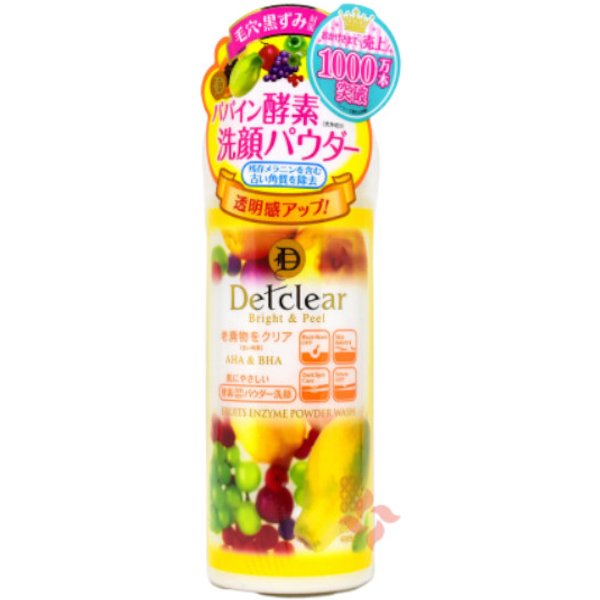 Meishoku Brilliant ColorsDETCLEAR Bright & Peel Fruit Enzyme Powder Wash - 75g$7.49Also on YesStyle
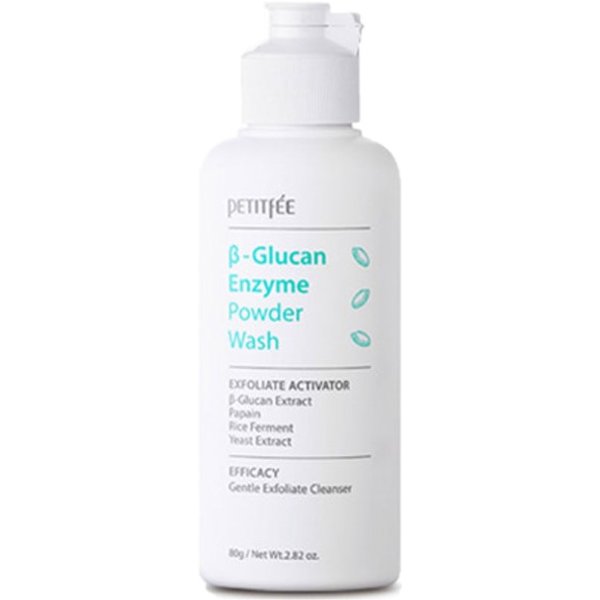 PETITFEEBeta Glucan Enzyme Powder Wash - 80G$12.60Also on YesStyle
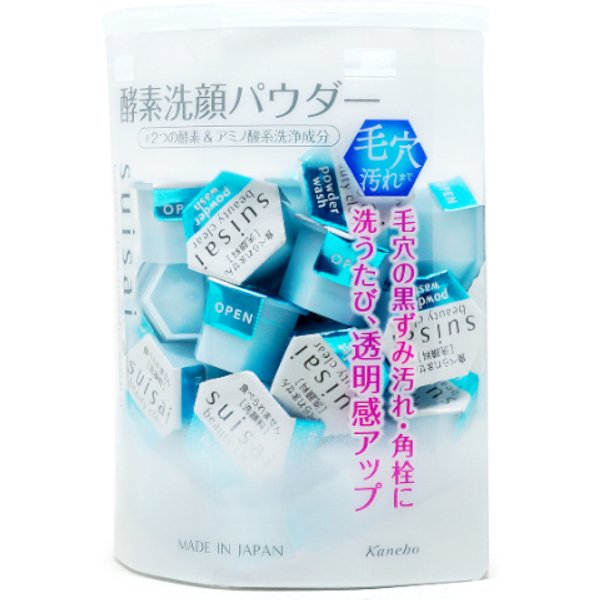 KaneboSuisai Beauty Clear Powder Wash N - 0.4g x 32pcs$13.39
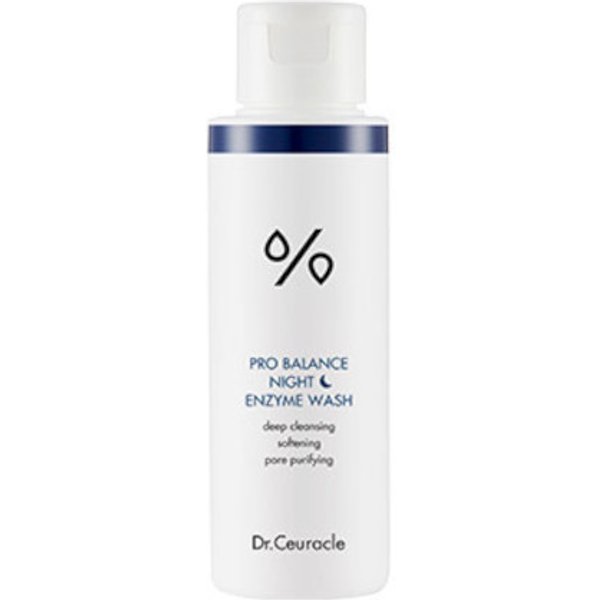 Dr.CeuraclePro Balance Night Enzyme Wash - 50g$16.94Also on Stylevana
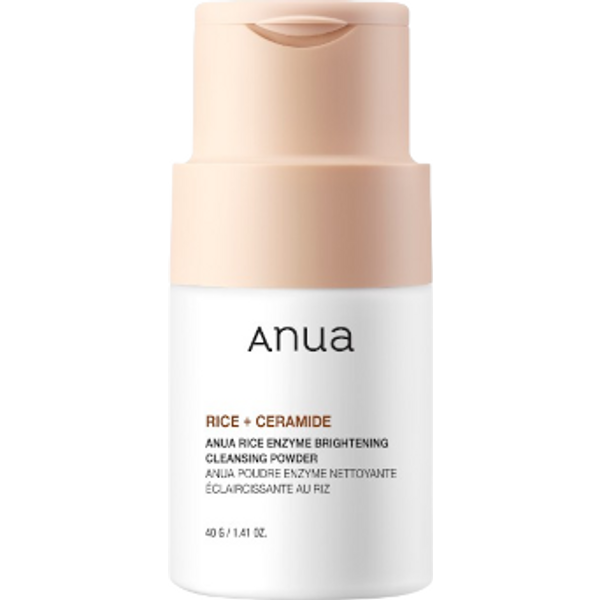 ANUARice Enzyme Brightening Cleansing Powder - 40g$18.00Also on YesStyle
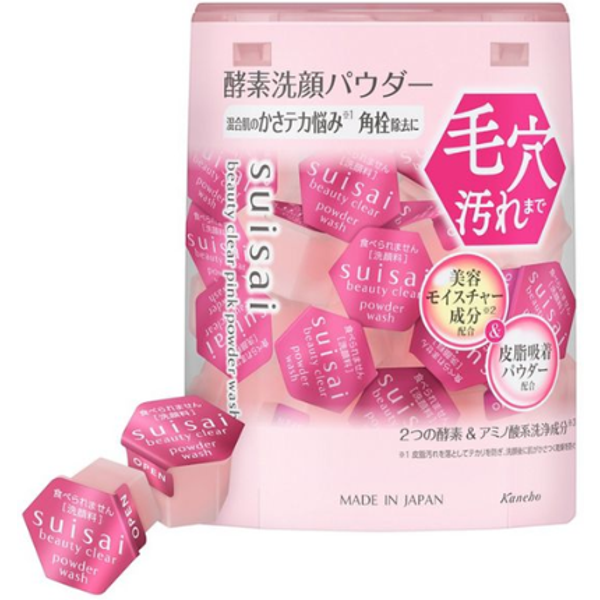 KaneboSuisai Beauty Clear Pink Powder Wash - 0.4g x 32pcs$19.10Also on Stylevana
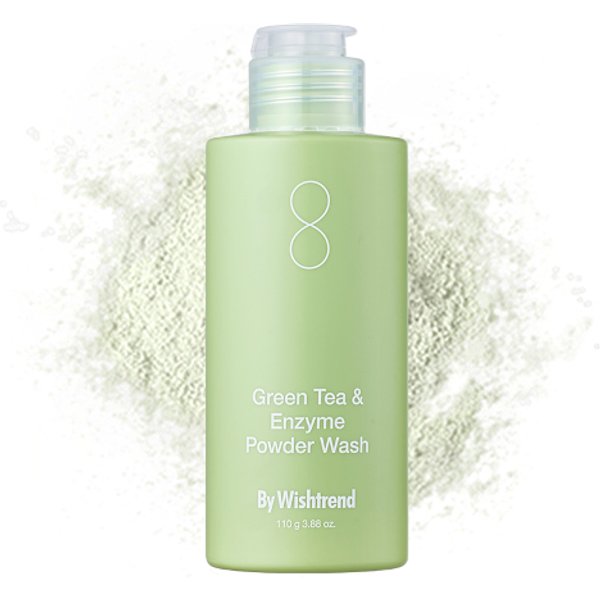 ByWishtrendGreen Tea & Enzyme Powder Wash - 110g$19.60Also on Stylevana
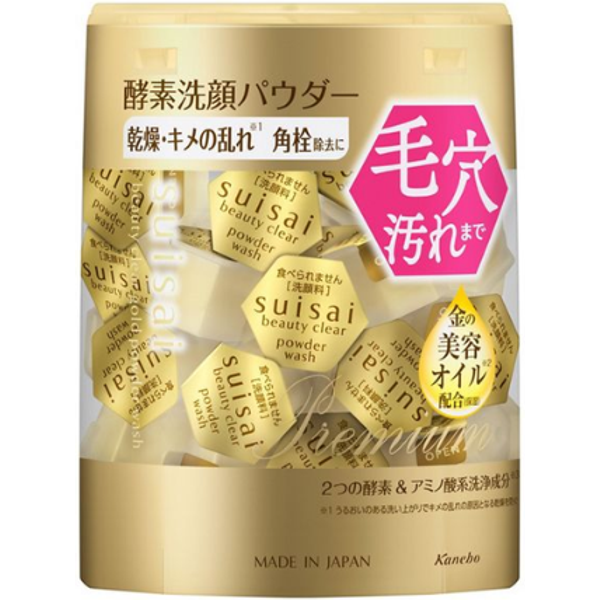 KaneboSuisai Beauty Clear Gold Powder Wash - 0.4g x 32pcs$21.59
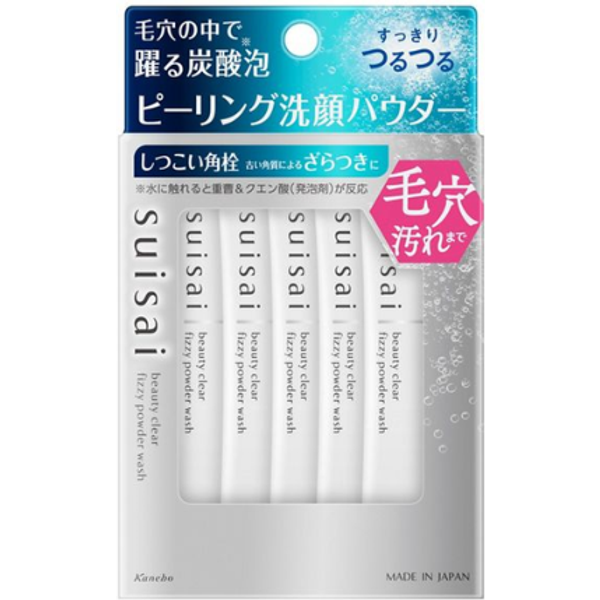 KaneboSuisai Beauty Clear Fizzy Powder Wash - 1g x 32pcs$25.59
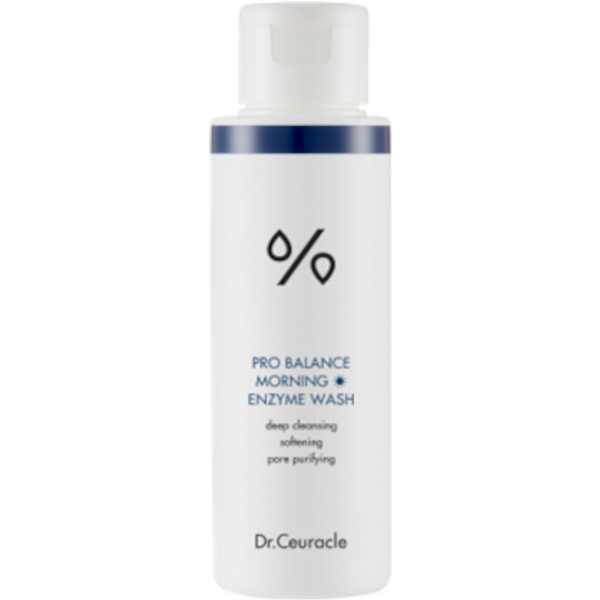 Dr.CeuraclePRO-BALANCE MORNING ENZYME WASH - 50g$30.00
Serums · 1
Already have one? Check how it fits your skin with Pick.
Common questions about Enzyme Exfoliants#
What is Enzyme Exfoliants?
- Plant enzymes that loosen the dull, flaky-looking cells on the surface so they lift away, without the low pH an acid exfoliant needs.
What else is Enzyme Exfoliants called?
- On a label you may see Papain and Bromelain.
When should you apply Enzyme Exfoliants?
- Morning or evening as the Enzyme powder wash and Evening as the Enzyme exfoliating mask.
Which form of Enzyme Exfoliants should you use?
- Enzyme powder wash — your wash, morning or evening, up to daily. Enzyme exfoliating mask — before moisturizer, evening, 3× a week to daily.
How often can you use Enzyme Exfoliants?
- Up to daily as the Enzyme powder wash and 3× a week to daily as the Enzyme exfoliating mask.
Where do you apply Enzyme Exfoliants?
- All over the face, not the eye area. Keep it off your lips too.
Can you use Enzyme Exfoliants around the eyes?
- No. Enzyme Exfoliants goes all over the face, not the eye area.
Does Enzyme Exfoliants make skin more sensitive to the sun?
- No. Enzyme Exfoliants is not flagged as increasing sun sensitivity.
What should you not use with Enzyme Exfoliants?
- Not on the same evening as Copper peptides. Space it apart from Eye-area retinol, Other exfoliants, Retinoids and Vitamin C.
Who should avoid Enzyme Exfoliants?
- Skip it if any of these apply: Maternity & Nursing, Fragile or Sensitive and Recent Facial or Laser. Go slowly with Prone to Redness, Dry or Itchy Patches and Recent Shave or Wax.
Is there a cosmetic limit for Enzyme Exfoliants?
- No. No cosmetic regulator in the United States, Canada, the European Union or Great Britain sets a maximum strength for it. That is a limit on the rules, not a signal to use more.
Related ingredients#
How we check this#
Everything on this page traces to the sources listed below — regulators' own publications and published studies. Where the evidence does not answer a question, it is left unanswered.
Some sources below are the official product information for prescription medicines, cited for how they interact with this ingredient. We use them for their safety and handling detail only. A cosmetic product is not one of those medicines and is not intended to treat any condition.
Our review is AI-assisted and is not a named expert's opinion. Last reviewed August 6, 2026.
Think something here is out of date or wrong? Email us at wiki@skinintelligence.ai with your reasoning and where you read it. We read what people send, and we update the page when the sources support it.
Regulators and official bodies · 8
- S1FDA. Topical Drug Products Containing Papain; Enforcement Action Dates. Federal Register Vol. 73, No. 185, 23 September 2008, pp. 54831–54834. Docket No. FDA–2008–N–0481.
- S2Cosmetic Ingredient Review Expert Panel for Cosmetic Ingredient Safety. Safety Assessment of Carica papaya (Papaya)-Derived Ingredients as Used in Cosmetics. Final Report, March 2021. (CIR panel report; no individual authorship in the record.).
- S3European Medicines Agency. NexoBrid (concentrate of proteolytic enzymes enriched in bromelain) — Summary of Product Characteristics, Annex I of the product information, last updated 03 December 2025. Sections 4.3, 4.4, 4.5, 4.6 cited.
- S4Health Canada. Cosmetic Ingredient Hotlist: Prohibited and Restricted Ingredients..
- S5FDA. Guidance for Industry: Labeling for Cosmetics Containing Alpha Hydroxy Acids. Sections I, VII, VIII, IX cited.
- S6Regulation (EC) No 1223/2009 of the European Parliament and of the Council on cosmetic products, consolidated text, Annexes II and III.
- S7Regulation (EC) No 1223/2009 as retained in Great Britain, Annexes II and III.
- S821 CFR Part 700, Subpart B — Requirements for Specific Cosmetic Products.
Studies and references · 18
- S9Trevisol TC, Henriques RO, Souza AJA, Furigo A Jr. An overview of the use of proteolytic enzymes as exfoliating agents. J Cosmet Dermatol. 2022;21(8):3300–3307. · PMID 34897928 · DOI 10.1111/jocd.14673 · in vault.
- S10Trevisol TC, Henriques RO, Cesca K, Souza AJA, Furigo A Jr. In vitro effect on the proteolytic activity of papain with proteins of the skin as substrate. Int J Cosmet Sci. 2022;44(5):542–554. · PMID 35892222 · DOI 10.1111/ics.12805 · in vault.
- S11Smith WP, Bishop M, Gillis G, Maibach H. Topical proteolytic enzymes affect epidermal and dermal properties. Int J Cosmet Sci. 2007;29(1):15–21. · PMID 18489307 · DOI 10.1111/j.1467-2494.2007.00354.x · in vault.
- S12El-Kadi KN, Rawlings AV, Feinberg C, Watkinson A, Nunn CC, Battaglia A, Chandar P, Richardson N, Pocalyko DJ. Broad specificity alkaline proteases efficiently reduce the visual scaling associated with soap-induced xerosis. Arch Dermatol Res. 2001;293(10):500–507. · PMID 11820726 · DOI 10.1007/pl00007464 · in vault.
- S13Loomans ME, Hannon DP. An electron microscopic study of the effects of subtilisin and detergents on human stratum corneum. J Invest Dermatol. 1970;55(2):101–114. No abstract in the PubMed record; cited for the existence and method of the study only, with no finding attributed to it. · PMID 5489489 · DOI 10.1111/1523-1747.ep12291544 · in vault.
- S14Stremnitzer C, Manzano-Szalai K, Willensdorfer A, Starkl P, Pieper M, König P, Mildner M, Tschachler E, Reichart U, Jensen-Jarolim E. Papain Degrades Tight Junction Proteins of Human Keratinocytes In Vitro and Sensitizes C57BL/6 Mice via the Skin Independent of its Enzymatic Activity or TLR4 Activation. J Invest Dermatol. 2015;135(7):1790–1800. · PMID 25705851 · in vault.
- S15Shimura S, Takai T, Iida H, Maruyama N, Ochi H, Kamijo S, Nishioka I, Hara M, Matsuda A, Saito H, Nakae S, Ogawa H, Okumura K, Ikeda S. Epicutaneous Allergic Sensitization by Cooperation between Allergen Protease Activity and Mechanical Skin Barrier Damage in Mice. J Invest Dermatol. 2016;136(7):1408–1417. · PMID 26987428 · DOI 10.1016/j.jid.2016.02.810 · in vault.
- S16Iida H, Takai T, Hirasawa Y, Kamijo S, Shimura S, Ochi H, Nishioka I, Maruyama N, Ogawa H, Okumura K, Ikeda S. Epicutaneous administration of papain induces IgE and IgG responses in a cysteine protease activity-dependent manner. Allergol Int. 2014;63(2):219–226. · PMID 24662805 · DOI 10.2332/allergolint.13-OA-0621 · in vault.
- S17Basketter D, Berg N, Kruszewski FH, Sarlo K, Concoby B. The toxicology and immunology of detergent enzymes. J Immunotoxicol. 2012;9(3):320–326. · PMID 22375922 · DOI 10.3109/1547691X.2012.659358 · in vault.
- S18Quiñones D, Alonso S, López R, Sánchez I, Rodríguez F, Fernández L, Jerez J. [Contact urticaria, rhinoconjunctivitis and bronchial asthma from occupational use of papain]. Allergol Immunopathol (Madr). 1999;27(5):273–275. (Article in Spanish.) · PMID 10568879 · in vault.
- S19Mansfield LE, Ting S, Haverly RW, Yoo TJ. The incidence and clinical implications of hypersensitivity to papain in an allergic population, confirmed by blinded oral challenge. Ann Allergy. 1985;55(4):541–543. · PMID 4051260 · in vault.
- S20Bizjak-Suran M, Jørgensen IL, Alfonso JH. Update on occupational contact urticaria: a systematic narrative review. Curr Opin Allergy Clin Immunol. 2026. · PMID 41410133 · PMCID PMC12955977 · in vault.
- S21Sarlo K, Fletcher ER, Gaines WG, Ritz HL. Respiratory allergenicity of detergent enzymes in the guinea pig intratracheal test: association with sensitization of occupationally exposed individuals. Fundam Appl Toxicol. 1997. · PMID 9325026 · in vault.
- S22Proteolytic Enzyme Activities of Bromelain, Ficin, and Papain from Fruit By-Products and Potential Applications in Sustainable and Functional Cosmetics for Skincare. Applied Sciences. 2025;15(5):2637.
- S23Quarre JP, Lecomte J, Lauwers D, Gilbert P, Thiriaux J. Allergy to latex and papain. J Allergy Clin Immunol. 1995;95(4):922. · PMID 7722179 · DOI 10.1016/s0091-6749(95)70144-3 · in vault.
- S24Goeminne PC, Adams E, Deschepper K, Valcke Y, Nemery B. Papain-induced asthma: a man with dyspnea from dawn till dust. Acta Clin Belg. 2013. Cited for the existence of the occupational asthma record only; abstract not retrieved into the vault. · PMID 23967724.
- S25American Academy of Dermatology. How to safely exfoliate at home. AAD public-education page. Treated as Tier 3 for confidence purposes: the tier definitions admit AAD at Tier 1 for "primary mandate documents only — a body's patient leaflet is not its guidance", and this is a consumer page.
- S26Holyavka M, Pankova S, Koroleva V, Vyshkvorkina Y, Lukin A, Kondratyev M, Artyukhov V. Influence of UV radiation on molecular structure and catalytic activity of free and immobilized bromelain, ficin and papain. J Photochem Photobiol B. 2019;201:111681. · PMID 31704638 · in vault.