What does PHA (Polyhydroxy Acid) do?#
PHAs (polyhydroxy acids) are a class of exfoliating acids with larger molecules that work gradually on the skin's surface. They provide exfoliation while simultaneously supporting hydration, making them an excellent choice for sensitive skin or those new to exfoliants.
Benefits
- Helps promote smoother, more refined-looking skin with a gentle touch
- Supports skin hydration while exfoliating
- Well-suited for sensitive skin and those new to chemical exfoliation
How it works
PHAs like gluconolactone and lactobionic acid gently smooth away dull surface buildup for smoother, brighter-looking skin. Their larger molecular size is linked to a more gradual action at the skin's surface. PHAs also act as humectants, helping the skin feel hydrated rather than stripped, so the skin looks smoother and more comfortable after use.
How to use PHA (Polyhydroxy Acid)#
Best time
Evening is the easier place for it, though it suits either time of day.
How often
Follow the frequency on the pack. There is no need to build up slowly.
Where it goes
A leave-on step: after cleansing, before your moisturizer.
Where to apply
Across the whole face rather than dabbed onto single spots, and keep it away from the eye area. Rinse with plenty of water if any gets in your eyes.
Sun
Wear sunscreen over the areas you have applied it before spending time in the sun.
Alongside others
Follow it with a moisturizer. It draws water to the surface, so it sits comfortably alongside humectants and barrier creams.
Stick to one exfoliating product at a time — two acids in the same session is what usually causes the tightness.
Keep it to a different evening from retinol.
What to expect
Mild tingling or dryness can turn up.
If it doesn't suit
Use it on fewer days rather than pushing through, and stop if the tingling or dryness persists.
Discontinue use if unexpected discomfort occurs.
The form you will see it in
PHA exfoliating serum
- Where it goes
- Before moisturizer
Using PHA (Polyhydroxy Acid) with other ingredients
Pairs well with PHA (Polyhydroxy Acid)
Hyaluronic Acid
Works well togetherTogether they help skin feel hydrated from multiple angles.
What not to use with PHA (Polyhydroxy Acid)
Eye-area retinol
Different timesThe eye area is thinner and takes longer to settle, so keep exfoliants to a different evening from your eye retinol.
Other exfoliants
Different timesMore than one exfoliant at once can feel drying, so they’re best kept to separate evenings.
Enzyme Exfoliants · Glycolic Acid (AHA) · Lactic Acid (AHA) · LHA · Salicylic Acid (BHA)
Retinoids
Different timesRetinoids and exfoliants can both feel drying, so they’re best kept to separate evenings.
Vitamin C
Different timesVitamin C and exfoliants are more comfortable at different times than layered in one routine.
Who should avoid PHA (Polyhydroxy Acid)?#
Six situations change whether PHA (Polyhydroxy Acid) suits your skin right now. Each one is either a reason to skip it, a reason to go slowly, or nothing to watch for.
- Fragile or Sensitive
- Go slowly
- Recent Facial or Laser
- Go slowly
- Prone to Redness
- Go slowly
- Dry or Itchy Patches
- Go slowly
- Recent Shave or Wax
- Go slowly
- Maternity & Nursing
- No caution
Fragile or Sensitive — Use it less often — or stop — if it feels uncomfortable, and keep it off skin that’s broken, cut or sunburned.
Recent Facial or Laser — Wait until your skin feels settled before reintroducing — typically 7 to 14 days after a facial or laser appointment.
Prone to Redness — Try it on a small area first, and use it less often — or stop — if you notice stinging or extra redness.
Dry or Itchy Patches — Keep the rest of your routine well moisturized, and use it less often — or stop — if you notice tightness or itching.
Recent Shave or Wax — Avoid for 24 hours after waxing, threading, or dermaplaning.
Cosmetic strength limits for PHA (Polyhydroxy Acid) where you live#
| Region | Most a cosmetic may contain | |
|---|---|---|
 United States United States | No explicit cap | |
The FDA restricts a short list of ingredients and sets no general strength ceiling on the rest. A figure marked "guidance, not law" is the Cosmetic Ingredient Review panel's recommendation. 21 CFR part 700, subpart B — Requirements for Specific Cosmetic Products (FDA) | ||
 Canada Canada | 18% (total mono-AHA, pH ≥3.5) | |
One list does the work — Health Canada's Hotlist of prohibited and restricted cosmetic ingredients. | ||
 European Union European Union | No explicit cap | |
The Cosmetics Regulation's annexes, consolidated to 1 May 2026. A figure marked "guidance, not law" comes from the EU's cosmetic safety committee rather than from the annexes. | ||
 Great Britain Great Britain | No explicit cap | |
Great Britain kept the annexes as its own law and updates them only when it chooses; Northern Ireland follows the live EU Regulation, which is why some rows read differently for each. Regulation (EC) No 1223/2009 as it applies in Great Britain · Regulation (EC) No 1223/2009, Annexes II–VI | ||
 India India | No explicit cap | |
India writes its own standard, aligned to the European rules as they stood in 2012. Mandatory since 9 February 2026. IS 4707 (Part 2):2025 — restricted and prohibited cosmetic ingredients · IS 4707 (Part 3):2025 — preservatives · Cosmetics Rules, 2020, Ninth Schedule | ||
 Brazil Brazil | No explicit cap | |
ANVISA rewrote its restricted list in June 2026, and a companion act amended the prohibited list at the same time. RDC 1.029/2026 — restricted ingredients · RDC 529/2021 — prohibited ingredients, as amended by RDC 1.030/2026 · RDC 528/2021 — preservatives | ||
 Japan Japan | No explicit cap | |
Japan's cosmetics standard keeps drug ingredients out of cosmetics, so most of its figures sit in the ministry's list of the ones a cosmetic may still contain. Cosmetics Standards (化粧品基準), Ministry of Health, Labour and Welfare · Cosmetics Standards — the ministry's own English translation · Drug ingredients permitted in cosmetics — 2007 notification | ||
 South Korea South Korea | No cap (leave-on products must be pH 3.0–9.0) | |
One MFDS regulation carries both the prohibited list and the restricted list, in force 18 March 2026. Sunscreens and a few other categories are cleared product by product instead. Regulation on Safety Standards for Cosmetics (MFDS Notification 2026-19) · Regulation on the Review of Functional Cosmetics (MFDS Notification 2025-88) | ||
 Kenya Kenya | No explicit cap | |
Kenya's standard applies the EU annexes as they stand rather than copying them, so its ingredient limits are the EU's — including the 2024 additions. A figure marked "guidance, not law" sits outside the annexes and does not carry over. KS EAS 377-1, -2 and -3:2022 — cosmetics safety requirements, published by KEBS · Regulation (EC) No 1223/2009, Annexes II–VI | ||
 Namibia Namibia | No explicit cap | |
Namibia sets no ingredient limits at all. Its cosmetic rule is a single line requiring a product to be free of any harmful ingredient. Foodstuffs, Cosmetics and Disinfectants Ordinance 18 of 1979, and the regulations under it | ||
 Ukraine Ukraine | No explicit cap | |
Ukraine's own transposition of the EU annexes, as they stood before the 2024 additions, fully in force since 3 August 2026. A further revision is due on 1 February 2027. Technical Regulation on cosmetic products — Cabinet Resolution No. 65 of 20 January 2021 | ||
 Georgia Georgia | No explicit cap | |
Georgia has no cosmetics rulebook — its register of technical regulations carries no cosmetics entry — so only the general product-safety duty applies. | ||
 Australia Australia | No explicit cap | |
Australia writes no cosmetic ingredient list. A figure here is the point at which a substance becomes a medicine or a scheduled substance carrying Caution labeling, so its numbers sit well above other markets'. Poisons Standard — June 2026 · Therapeutic Goods (Excluded Goods) Determination 2018 | ||
 United Arab Emirates United Arab Emirates | No explicit cap | |
The Gulf standard points at the EU annexes as amended, so its ingredient limits are the EU's. A figure marked "guidance, not law" sits outside the annexes and does not carry over. GSO 1943:2024 — Cosmetic products: safety requirements (Gulf technical regulation) · Regulation (EC) No 1223/2009, Annexes II–VI | ||
 Kuwait Kuwait | No explicit cap | |
The Gulf standard points at the EU annexes as amended, so its ingredient limits are the EU's. A figure marked "guidance, not law" sits outside the annexes and does not carry over. GSO 1943:2024 — Cosmetic products: safety requirements (Gulf technical regulation) · Regulation (EC) No 1223/2009, Annexes II–VI | ||
 Hong Kong Hong Kong | No explicit cap | |
Hong Kong writes no cosmetics rulebook. Its Poisons List (Cap. 138A, Schedule 10) decides which substances may be sold only as medicines, and general safety is judged case by case against whichever overseas standard the enforcer considers reasonable. Pharmacy and Poisons Regulations (Cap. 138A), Schedule 10 — the poisons list · Pharmacy and Poisons Board — Guidance Notes on classifying pharmaceutical products, April 2026 | ||
 Singapore Singapore | No explicit cap | |
Singapore writes the ASEAN annexes into its own schedule, and its regulator tells companies to check the current ASEAN release as well — which is why a figure here can read "guidance, not law". Health Products (Cosmetic Products — ASEAN Cosmetic Directive) Regulations 2007, Third Schedule · ASEAN Cosmetic Directive annexes — release 2026-1, 22 June 2026 | ||
 Brunei Brunei | No explicit cap | |
Brunei carries the 2007 ASEAN annexes in its own schedule and has not updated them since, so it reads differently from Singapore on several ingredients. Medicines (Cosmetic Products) Regulations (Cap. 285 Rg 1), Schedule 1 — revised edition 2024 | ||
 Jordan Jordan | No explicit cap | |
Jordan's cosmetic rules defer to "the approved references" and name none of them, so there is no Jordanian figure to read. The only number in the instrument governs the ingredient list on the pack. JFDA instructions on cosmetics and pharmaceutical cosmetics, 2026 | ||
 Trinidad & Tobago Trinidad & Tobago | No explicit cap | |
Trinidad and Tobago has had the power to set cosmetic standards since 1960 and has never used it. The regulations made under the Act cover food and drugs, with no cosmetics part; what binds is the Act's general rule against selling a cosmetic that may injure the user. Food and Drugs Act, Chap. 30:01 · Food and Drugs Regulations | ||
Where a figure appears, that is the maximum strength allowed or advised for pha (polyhydroxy acid) in that market — some are set in cosmetics regulation, others are the ceiling a cosmetic safety panel recommends. Where no figure appears, the market either sets no cosmetic maximum or handles this ingredient outside its cosmetic rules. These are limits, not targets — the right strength for a formula is the formulator's decision.
Open a market to see the rulebook its figure comes from. Those notes describe each market's own rules as we read them, current to August 24, 2026; the linked documents are the authority, and nothing here is legal advice.
Sample products with PHA (Polyhydroxy Acid)#
A few well-known products, not a full list — product names are each brand's own. We don't sell them — the shop prices them in US dollars and ships from Hong Kong, so delivery and duties come on top. It may not ship everywhere.
We may earn a small commission when you buy through these links.
Serums · 5
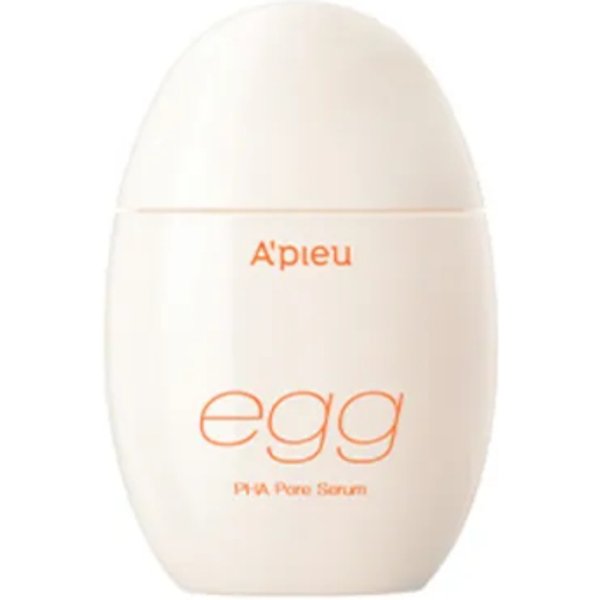 A'PIEUEgg PHA Pore Serum - 55g$11.61Also on Stylevana
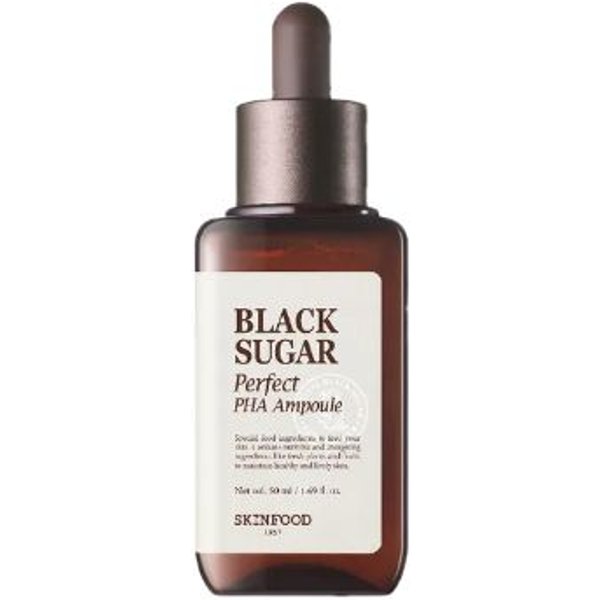 SKINFOODBlack Sugar Perfect PHA Ampoule - 50ml$12.32Also on Stylevana
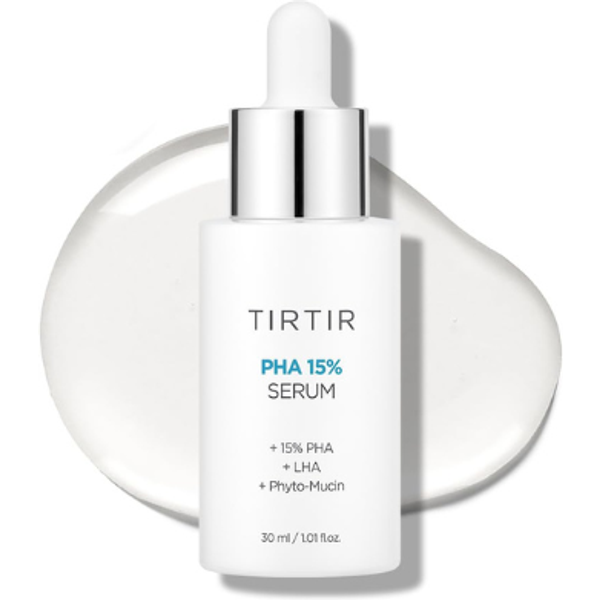 TIRTIRPHA 15% Serum - 30ml$18.75Also on Stylevana
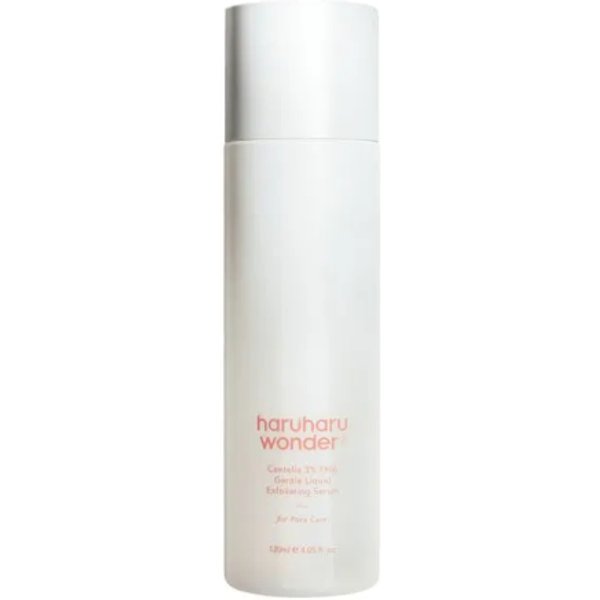 haruharu wonderCentella 3% PHA Gentle Liquid Exfoliating Serum - 120ml$19.60Also on YesStyle
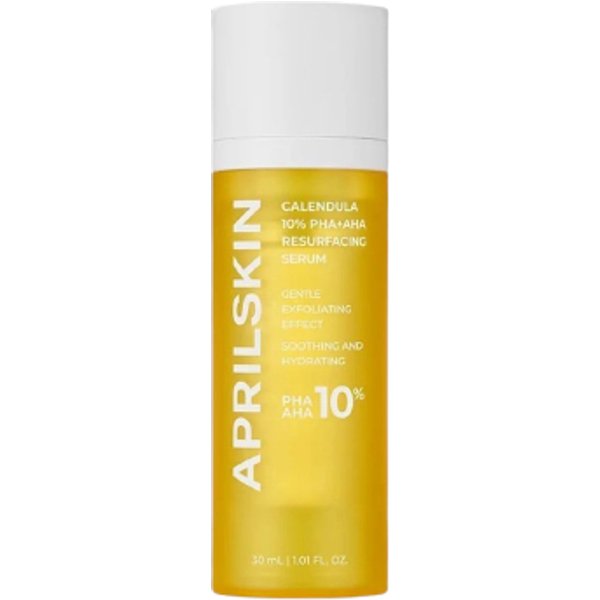 APRILSKINCalendula 10% PHA+AHA Resurfacing Serum - 30ml$22.90
Already have one? Check how it fits your skin with Pick.
Common questions about PHA (Polyhydroxy Acid)#
What is PHA (Polyhydroxy Acid)?
- A gentle exfoliating acid that lifts away dull surface build-up while holding water at the surface, so skin looks smoother without looking stripped.
What else is PHA (Polyhydroxy Acid) called?
- On a label you may see PHA, Polyhydroxy acid, Gluconolactone and Lactobionic acid.
Is PHA (Polyhydroxy Acid) an AHA or a BHA?
- Neither. It is a PHA — short for polyhydroxy acid.
When should you apply PHA (Polyhydroxy Acid)?
- Morning or evening. Evening is the easier place for it, though it suits either time of day.
How often can you use PHA (Polyhydroxy Acid)?
- Up to daily, all over the face, not the eye area.
Where do you apply PHA (Polyhydroxy Acid)?
- All over the face, not the eye area. Keep it off your lips too.
Can you use PHA (Polyhydroxy Acid) around the eyes?
- No. PHA (Polyhydroxy Acid) goes all over the face, not the eye area.
Does PHA (Polyhydroxy Acid) make skin more sensitive to the sun?
- No. PHA (Polyhydroxy Acid) is not flagged as increasing sun sensitivity.
What should you not use with PHA (Polyhydroxy Acid)?
- Space it apart from Eye-area retinol, Other exfoliants, Retinoids and Vitamin C.
Who should avoid PHA (Polyhydroxy Acid)?
- Go slowly with Fragile or Sensitive, Recent Facial or Laser, Prone to Redness, Dry or Itchy Patches and Recent Shave or Wax.
Is there a cosmetic limit for PHA (Polyhydroxy Acid)?
- Only some regions set one. The maximum strength for PHA (Polyhydroxy Acid) in a cosmetic is 18% (total mono-AHA, pH ≥3.5) in Canada. No maximum is set in the United States, the European Union and Great Britain. A cap is a limit on the rules, not a signal to use more.
Related ingredients#
How we check this#
Everything on this page traces to the sources listed below — regulators' own publications and published studies. Where the evidence does not answer a question, it is left unanswered.
Our review is AI-assisted and is not a named expert's opinion. Last reviewed August 7, 2026.
Think something here is out of date or wrong? Email us at wiki@skinintelligence.ai with your reasoning and where you read it. We read what people send, and we update the page when the sources support it.
Regulators and official bodies · 11
- S1Health Canada. Cosmetic Ingredient Hotlist — Prohibited and Restricted Ingredients (list), entry "Alpha-hydroxy acids, including polyhydroxy acids and bionic acids with alpha hydroxyl groups, and their salts". — fetched 2026-08-04.
- S2Cosmetic Ingredient Review Expert Panel. Safety Assessment of Glycolactones as Used in Cosmetics. Final Report, released 12 October 2022.
- S3Cosmetic Ingredient Review. Glycolactones — Tentative Report, March 2022.
- S4US FDA. Guidance for Industry: Labeling for Topically Applied Cosmetic Products Containing Alpha Hydroxy Acids as Ingredients, January 2005.
- S5US FDA. Alpha Hydroxy Acids (cosmetic ingredient page).
- S6SCCNFP. Position Paper concerning the Safety of Alpha-Hydroxy Acids, SCCNFP/0370/00, adopted 28 June 2000.
- S7SCCNFP. Updated Position Paper concerning Consumer Safety of Alpha-Hydroxy Acids, SCCNFP/0799/04, adopted 25 May 2004.
- S8European Commission, CosIng. Ingredient GLUCONOLACTONE, CAS 90-80-2, EC 202-016-5. Functions: CHELATING, SKIN CONDITIONING. No Cosmetics Regulation provisions; no SCCS opinions.
- S9European Commission, CosIng. Ingredient LACTOBIONIC ACID, CAS 96-82-2, EC 202-538-3. Function: BUFFERING. No Cosmetics Regulation provisions; no SCCS opinions.
- S10Regulation (EC) No 1223/2009, Annex III as retained in Great Britain, legislation.gov.uk.
- S11US FDA. Prohibited & Restricted Ingredients in Cosmetics..
Studies and references · 24
- S12Berardesca E, Distante F, Vignoli GP, Oresajo C, Green B. Alpha hydroxyacids modulate stratum corneum barrier function. Br J Dermatol. 1997;137(6):934-8. PMID 9470910.
- S13Hunt MJ, Barnetson RS. A comparative study of gluconolactone versus benzoyl peroxide in the treatment of acne. Australas J Dermatol. 1992;33(3):131-4. PMID 1303072.
- S14Bernstein EF, Brown DB, Schwartz MD, Kaidbey K, Ksenzenko SM. The polyhydroxy acid gluconolactone protects against ultraviolet radiation in an in vitro model of cutaneous photoaging. Dermatol Surg. 2004;30(2 Pt 1):189-95. PMID 14756648.
- S15Grimes PE, Green BA, Wildnauer RH, Edison BL. The use of polyhydroxy acids (PHAs) in photoaged skin. Cutis. 2004;73(2 Suppl):3-13. PMID 15002656.
- S16Edison BL, Green BA, Wildnauer RH, Sigler ML. A polyhydroxy acid skin care regimen provides antiaging effects comparable to an alpha-hydroxyacid regimen. Cutis. 2004;73(2 Suppl):14-7. PMID 15002657.
- S17Briden ME. Alpha-hydroxyacid chemical peeling agents: case studies and rationale for safe and effective use. Cutis. 2004;73(2 Suppl):18-24. PMID 15002658.
- S18Yu RJ, Van Scott EJ. Alpha-hydroxyacids and carboxylic acids. J Cosmet Dermatol. 2004;3(2):76-87. PMID 17147560.
- S19Draelos ZD, Green BA, Edison BL. An evaluation of a polyhydroxy acid skin care regimen in combination with azelaic acid 15% gel in rosacea patients. J Cosmet Dermatol. 2006;5(1):23-9. PMID 17173568. No abstract in PubMed or Europe PMC..
- S20Green BA, Yu RJ, Van Scott EJ. Clinical and cosmeceutical uses of hydroxyacids. Clin Dermatol. 2009;27(5):495-501. PMID 19695482.
- S21Tasic-Kostov M, Savic S, Lukic M, Tamburic S, Pavlovic M, Vuleta G. Lactobionic acid in a natural alkylpolyglucoside-based vehicle: assessing safety and efficacy aspects in comparison to glycolic acid. J Cosmet Dermatol. 2010;9(1):3-10. PMID 20367666.
- S22Kornhauser A, Coelho SG, Hearing VJ. Applications of hydroxy acids: classification, mechanisms, and photoactivity. Clin Cosmet Investig Dermatol. 2010;3:135-42. PMID 21437068 / PMC3047947.
- S23Kantikosum K, Chongpison Y, Chottawornsak N, Asawanonda P. The efficacy of glycolic acid, salicylic acid, gluconolactone, and licochalcone A combined with 0.1% adapalene vs adapalene monotherapy in mild-to-moderate acne vulgaris: a double-blinded within-person comparative study. Clin Cosmet Investig Dermatol. 2019;12:151-61. PMID 30858720.
- S24Tasić-Kostov M, Lukić M, Savić S. A 10% Lactobionic acid-containing moisturizer reduces skin surface pH without irritation — an in vivo/in vitro study. J Cosmet Dermatol. 2019;18(6):1705-10. PMID 30859734.
- S25Algiert-Zielińska B, Mucha P, Rotsztejn H. Comparative evaluation of skin moisture after topical application of 10% and 30% lactobionic acid. J Cosmet Dermatol. 2018;17(6):1096-100. PMID 29318715.
- S26Algiert-Zielińska B, Mucha P, Rotsztejn H. Effects of lactobionic acid peel, aluminum oxide crystal microdermabrasion, and both procedures on skin hydration, elasticity, and transepidermal water loss. J Cosmet Dermatol. 2019;18(5):1463-74. PMID 30661294.
- S27Algiert-Zielińska B, Mucha P, Rotsztejn H. Lactic and lactobionic acids as typically moisturizing compounds. Int J Dermatol. 2019;58(3):374-9. PMID 30270529.
- S28Jarząbek-Perz S, Dziedzic M, Rotsztejn H, Kołodziejczak A. Evaluation of the effects of 10% and 30% gluconolactone chemical peel on sebum, pH, and TEWL. J Cosmet Dermatol. 2023;22(12):3305-12. PMID 37335807.
- S29Jarząbek-Perz S, Dziedzic M, Kołodziejczak A, Rotsztejn H. Split-face evaluation: Gluconolactone plus oxybrasion versus gluconolactone plus microneedling. The effects on skin parameters. Skin Res Technol. 2023;29(6). PMID 37357656 / PMC10209840.
- S30Gentili G, Perugini P, Bugliaro S, D'Antonio C. Efficacy and safety of a new peeling formulated with a pool of PHAs for the treatment of all skin types, even sensitive. J Cosmet Dermatol. 2023;22(2). PMID 35796684 / PMC10087944.
- S31Peng Y, Mao M, Huang Z, Zhao H, Li Y, Jian D. Comparison of Efficacy and Willingness to a 5% Gluconolactone-Based Topical Serum and Intense Pulsed Light in Mild Erythema of Rosacea: A Paired Control Study. J Cosmet Dermatol. 2025;24(3). PMID 40111222. ChiCTR2400087665.
- S32Warowna M, Strzelecka A, Kręcisz B. Influence of Lactobionic Acid on Hydration and Elasticity Parameters in Women Aged 30-40 and 50-60 Years in Comparison to Mandelic Acid. J Clin Med. 2025;14(5):1619. PMID 40095547.
- S33Bruce S, Roberts W, Teller C, Colvan L. The Effects of a Daily Skincare Regimen on Maintaining the Benefits Obtained from Previous Chemical Resurfacing Treatments. J Drugs Dermatol. 2016;15(9):1145-50. PMID 27602981.
- S34Puigdemont A, Furiani N, De Lucia M, Carrasco I, Ordeix L, Fondevila D, Ramió-Lluch L, Brazis P. Topical polyhydroxy acid treatment for autosomal recessive congenital ichthyosis in the golden retriever: a prospective pilot study. Vet Dermatol. 2018. PMID 29786154. (Canine; cited nowhere above as human evidence — recorded because it is the only keratinisation-normalisation study for a PHA and a future reviewer will find it.).
- S35Zhu M, He X, Zhu Z, Lynch S, Wang H, Zhou X, Tu Y, Steel A, Hsu KC, Niu Y, Cho A, Hashimoto M, Yan X, Su M, Wang W. The effect of a serum containing acetyl hexapeptide-8, dipeptide diaminobutyroyl benzylamide diacetate and gluconolactone on skin biomarkers, wrinkles and skin texture: ex vivo and clinical studies. Int J Cosmet Sci. 2026. PMID 41668671.