What does Beta-Glucan do?#
A hydrating serum that delivers beta-glucan to help calm and hydrate skin, supporting a soothed and comfortable-looking complexion.
Benefits
- Helps calm the appearance of redness
- Helps skin look soothed and feel hydrated and comfortable
- Serum formula absorbs smoothly to deliver hydration
How it works
Beta-glucan is a naturally derived polysaccharide that helps skin look calmer and more hydrated. It works by forming a moisture-retaining film on the skin's surface and supporting a healthy-looking moisture barrier, helping to maintain a comfortable, even-toned appearance.
How to use Beta-Glucan#
Before you start
Check the source if you have a known oat or wheat allergy. The same name covers oat-derived, yeast-derived and mushroom-derived versions, and only the oat one is relevant to that allergy.
Best time
Either time suits it, or both.
How often
There is nothing to ease into and no reason to build up slowly.
Where it goes
A toner or essence goes on straight after cleansing, a serum after that, a cream last.
Alongside others
It layers under or over most other steps and does not need an evening of its own.
If it doesn't suit
Most people have no adjustment phase and no early flare-up to sit through. Itching, redness or bumps appearing over several days of use are a reaction rather than settling in, so stop if that happens.
Discontinue use if unexpected discomfort occurs.
Forms you will see it in
Beta-Glucan essence
- Where it goes
- After cleansing, morning or evening
- How often
- Daily
- Strength
- Gentle
- Sun sensitivity
- None
Beta-Glucan soothing serum
- Where it goes
- Before moisturizer, morning or evening
- How often
- Daily
- Strength
- Gentle
- Sun sensitivity
- None
Beta-Glucan soothing cream
- Where it goes
- As your moisturizer, morning or evening
- How often
- Daily
- Strength
- Gentle
- Sun sensitivity
- None
Using Beta-Glucan with other ingredients
Pairs well with Beta-Glucan
Hyaluronic Acid
Works well togetherComplementary hydration at different levels for plumper-looking skin.
Niacinamide
Works well togetherBoth support the look of a healthy moisture barrier and a calmer-looking complexion.
Ceramides
Works well togetherBeta-glucan supports a comfortable feel while ceramides help skin look and feel more resilient.
What not to use with Beta-Glucan
Nothing flagged. None of the ingredients this wiki covers needs to be kept apart from Beta-Glucan — check the label of anything not covered here.
Who should avoid Beta-Glucan?#
Six situations change whether Beta-Glucan suits your skin right now. Each one is either a reason to skip it, a reason to go slowly, or nothing to watch for.
- Maternity & Nursing
- No caution
- Fragile or Sensitive
- No caution
- Recent Facial or Laser
- No caution
- Prone to Redness
- No caution
- Dry or Itchy Patches
- No caution
- Recent Shave or Wax
- No caution
Cosmetic strength limits for Beta-Glucan where you live#
| Region | Most a cosmetic may contain | |
|---|---|---|
 United States United States | No explicit cap | |
The FDA restricts a short list of ingredients and sets no general strength ceiling on the rest. A figure marked "guidance, not law" is the Cosmetic Ingredient Review panel's recommendation. 21 CFR part 700, subpart B — Requirements for Specific Cosmetic Products (FDA) | ||
 Canada Canada | No explicit cap | |
One list does the work — Health Canada's Hotlist of prohibited and restricted cosmetic ingredients. | ||
 European Union European Union | No explicit cap | |
The Cosmetics Regulation's annexes, consolidated to 1 May 2026. A figure marked "guidance, not law" comes from the EU's cosmetic safety committee rather than from the annexes. | ||
 Great Britain Great Britain | No explicit cap | |
Great Britain kept the annexes as its own law and updates them only when it chooses; Northern Ireland follows the live EU Regulation, which is why some rows read differently for each. Regulation (EC) No 1223/2009 as it applies in Great Britain · Regulation (EC) No 1223/2009, Annexes II–VI | ||
 India India | No explicit cap | |
India writes its own standard, aligned to the European rules as they stood in 2012. Mandatory since 9 February 2026. IS 4707 (Part 2):2025 — restricted and prohibited cosmetic ingredients · IS 4707 (Part 3):2025 — preservatives · Cosmetics Rules, 2020, Ninth Schedule | ||
 Brazil Brazil | No explicit cap | |
ANVISA rewrote its restricted list in June 2026, and a companion act amended the prohibited list at the same time. RDC 1.029/2026 — restricted ingredients · RDC 529/2021 — prohibited ingredients, as amended by RDC 1.030/2026 · RDC 528/2021 — preservatives | ||
 Japan Japan | No explicit cap | |
Japan's cosmetics standard keeps drug ingredients out of cosmetics, so most of its figures sit in the ministry's list of the ones a cosmetic may still contain. Cosmetics Standards (化粧品基準), Ministry of Health, Labour and Welfare · Cosmetics Standards — the ministry's own English translation · Drug ingredients permitted in cosmetics — 2007 notification | ||
 South Korea South Korea | No explicit cap | |
One MFDS regulation carries both the prohibited list and the restricted list, in force 18 March 2026. Sunscreens and a few other categories are cleared product by product instead. Regulation on Safety Standards for Cosmetics (MFDS Notification 2026-19) · Regulation on the Review of Functional Cosmetics (MFDS Notification 2025-88) | ||
 Kenya Kenya | No explicit cap | |
Kenya's standard applies the EU annexes as they stand rather than copying them, so its ingredient limits are the EU's — including the 2024 additions. A figure marked "guidance, not law" sits outside the annexes and does not carry over. KS EAS 377-1, -2 and -3:2022 — cosmetics safety requirements, published by KEBS · Regulation (EC) No 1223/2009, Annexes II–VI | ||
 Namibia Namibia | No explicit cap | |
Namibia sets no ingredient limits at all. Its cosmetic rule is a single line requiring a product to be free of any harmful ingredient. Foodstuffs, Cosmetics and Disinfectants Ordinance 18 of 1979, and the regulations under it | ||
 Ukraine Ukraine | No explicit cap | |
Ukraine's own transposition of the EU annexes, as they stood before the 2024 additions, fully in force since 3 August 2026. A further revision is due on 1 February 2027. Technical Regulation on cosmetic products — Cabinet Resolution No. 65 of 20 January 2021 | ||
 Georgia Georgia | No explicit cap | |
Georgia has no cosmetics rulebook — its register of technical regulations carries no cosmetics entry — so only the general product-safety duty applies. | ||
 Australia Australia | No explicit cap | |
Australia writes no cosmetic ingredient list. A figure here is the point at which a substance becomes a medicine or a scheduled substance carrying Caution labeling, so its numbers sit well above other markets'. Poisons Standard — June 2026 · Therapeutic Goods (Excluded Goods) Determination 2018 | ||
 United Arab Emirates United Arab Emirates | No explicit cap | |
The Gulf standard points at the EU annexes as amended, so its ingredient limits are the EU's. A figure marked "guidance, not law" sits outside the annexes and does not carry over. GSO 1943:2024 — Cosmetic products: safety requirements (Gulf technical regulation) · Regulation (EC) No 1223/2009, Annexes II–VI | ||
 Kuwait Kuwait | No explicit cap | |
The Gulf standard points at the EU annexes as amended, so its ingredient limits are the EU's. A figure marked "guidance, not law" sits outside the annexes and does not carry over. GSO 1943:2024 — Cosmetic products: safety requirements (Gulf technical regulation) · Regulation (EC) No 1223/2009, Annexes II–VI | ||
 Hong Kong Hong Kong | No explicit cap | |
Hong Kong writes no cosmetics rulebook. Its Poisons List (Cap. 138A, Schedule 10) decides which substances may be sold only as medicines, and general safety is judged case by case against whichever overseas standard the enforcer considers reasonable. Pharmacy and Poisons Regulations (Cap. 138A), Schedule 10 — the poisons list · Pharmacy and Poisons Board — Guidance Notes on classifying pharmaceutical products, April 2026 | ||
 Singapore Singapore | No explicit cap | |
Singapore writes the ASEAN annexes into its own schedule, and its regulator tells companies to check the current ASEAN release as well — which is why a figure here can read "guidance, not law". Health Products (Cosmetic Products — ASEAN Cosmetic Directive) Regulations 2007, Third Schedule · ASEAN Cosmetic Directive annexes — release 2026-1, 22 June 2026 | ||
 Brunei Brunei | No explicit cap | |
Brunei carries the 2007 ASEAN annexes in its own schedule and has not updated them since, so it reads differently from Singapore on several ingredients. Medicines (Cosmetic Products) Regulations (Cap. 285 Rg 1), Schedule 1 — revised edition 2024 | ||
 Jordan Jordan | No explicit cap | |
Jordan's cosmetic rules defer to "the approved references" and name none of them, so there is no Jordanian figure to read. The only number in the instrument governs the ingredient list on the pack. JFDA instructions on cosmetics and pharmaceutical cosmetics, 2026 | ||
 Trinidad & Tobago Trinidad & Tobago | No explicit cap | |
Trinidad and Tobago has had the power to set cosmetic standards since 1960 and has never used it. The regulations made under the Act cover food and drugs, with no cosmetics part; what binds is the Act's general rule against selling a cosmetic that may injure the user. Food and Drugs Act, Chap. 30:01 · Food and Drugs Regulations | ||
No cosmetic regulator in the 20 markets above sets a maximum strength for beta-glucan. That is the state of the rules, not a signal to use more: how much goes into a product is the formulator's decision.
Open a market to see the rulebook its figure comes from. Those notes describe each market's own rules as we read them, current to August 24, 2026; the linked documents are the authority, and nothing here is legal advice.
Sample products with Beta-Glucan#
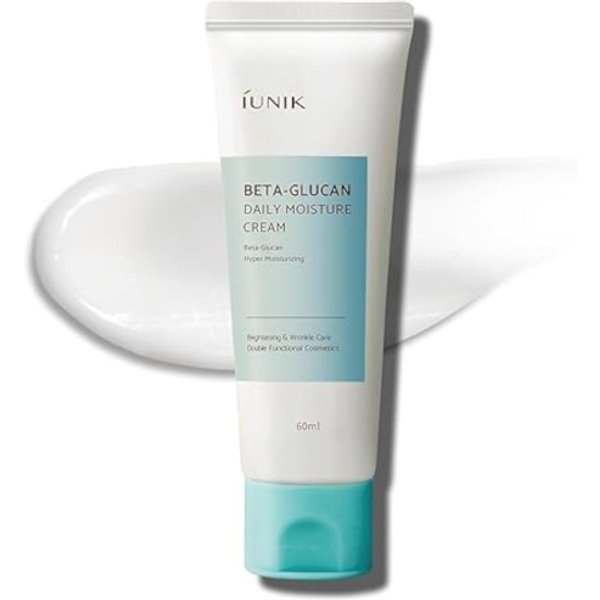
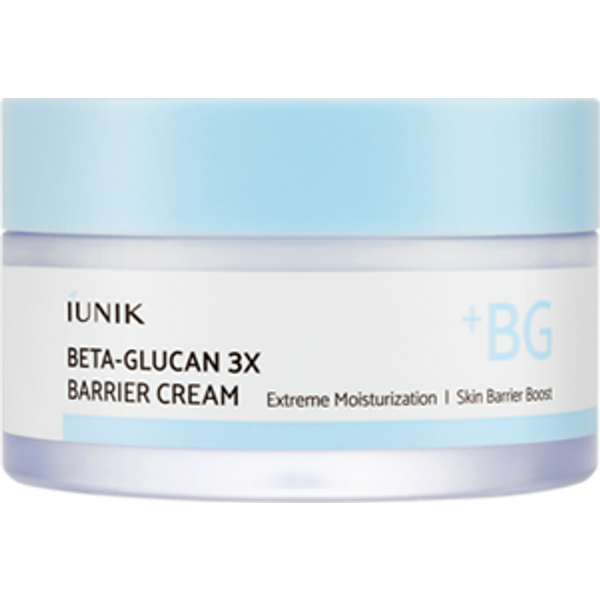
A few well-known products, not a full list — product names are each brand's own. We don't sell them — the shop prices them in US dollars and ships from Hong Kong, so delivery and duties come on top. It may not ship everywhere.
We may earn a small commission when you buy through these links.
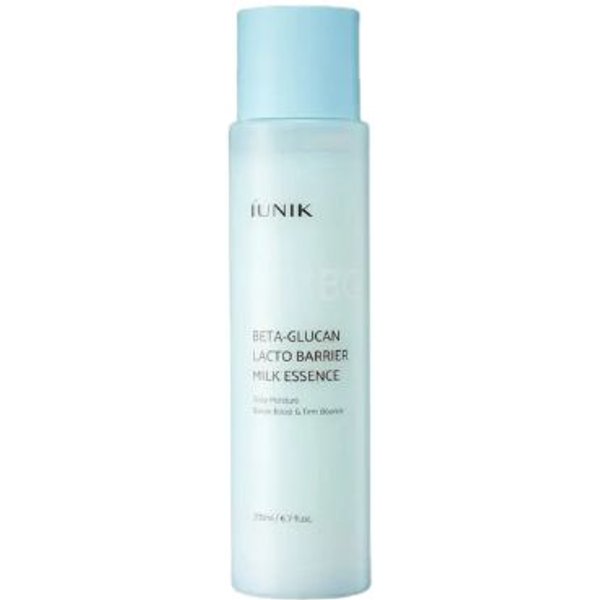
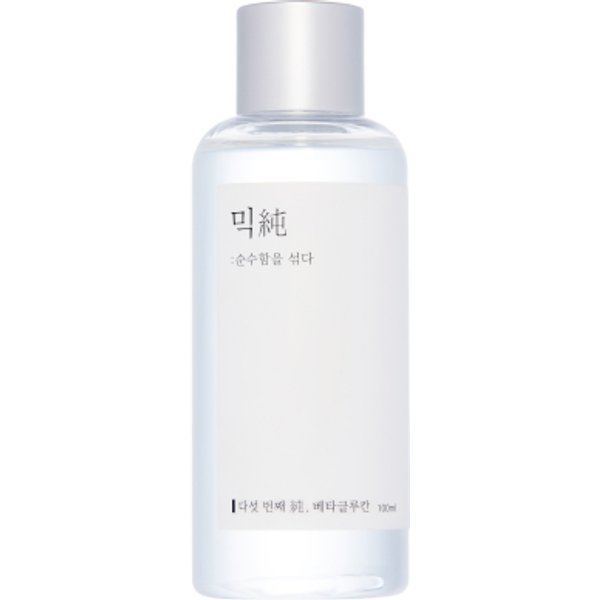
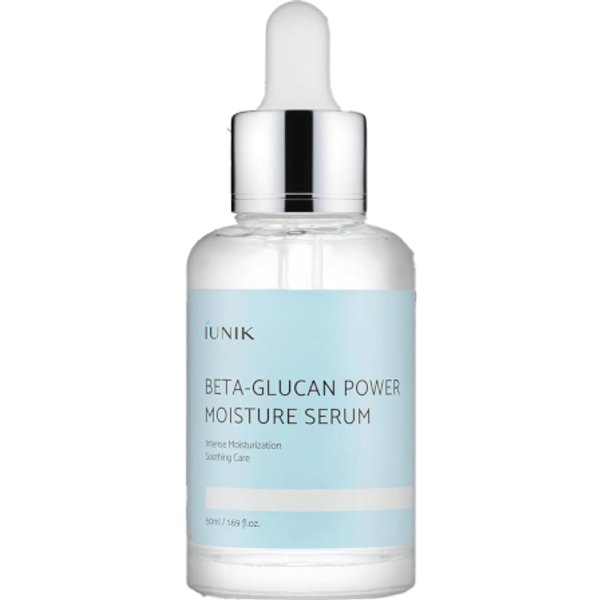
Already have one? Check how it fits your skin with Pick.
Common questions about Beta-Glucan#
What is Beta-Glucan?
- A polysaccharide drawn from oats, yeast or mushrooms that forms a light moisture-holding film on the surface of the skin and calms the look of redness.
What else is Beta-Glucan called?
- On a label you may see Glucan, Oat beta-glucan and Yeast beta-glucan.
When should you apply Beta-Glucan?
- Morning or evening. Either time suits it, or both.
Which form of Beta-Glucan should you use?
- Beta-Glucan essence — after cleansing, morning or evening, daily. Beta-Glucan soothing serum — before moisturizer, morning or evening, daily. Beta-Glucan soothing cream — as your moisturizer, morning or evening, daily.
How often can you use Beta-Glucan?
- Daily.
Where do you apply Beta-Glucan?
- All over the face. Keep it away from your eyes and lips.
Can you use Beta-Glucan around the eyes?
- Yes. Beta-Glucan goes all over the face, the skin around the eyes included — keep it out of your eyes and off your lips.
Does Beta-Glucan make skin more sensitive to the sun?
- No. Beta-Glucan is not flagged as increasing sun sensitivity.
What should you not use with Beta-Glucan?
- Nothing flagged. None of the ingredients this wiki covers needs to be kept apart from Beta-Glucan — check the label of anything not covered here.
Is there a cosmetic limit for Beta-Glucan?
- No. No cosmetic regulator in the United States, Canada, the European Union or Great Britain sets a maximum strength for it. That is a limit on the rules, not a signal to use more.
Related ingredients#
How we check this#
Everything on this page traces to the sources listed below — regulators' own publications and published studies. Where the evidence does not answer a question, it is left unanswered.
Our review is AI-assisted and is not a named expert's opinion. Last reviewed August 7, 2026.
Think something here is out of date or wrong? Email us at wiki@skinintelligence.ai with your reasoning and where you read it. We read what people send, and we update the page when the sources support it.
Regulators and official bodies · 8
- S4Cosmetic Ingredient Review. Safety Assessment of Yeast-Derived Ingredients as Used in Cosmetics. Final Report, release date 1 Oct 2024, Panel meeting 3–4 June 2024.
- S5Cosmetic Ingredient Review. Safety Assessment of Yeast-Derived Ingredients as Used in Cosmetics. Draft Report for Panel Review, release 20 Aug 2021. Stamped "Distributed for Comment Only — Do Not Cite or Quote"; its CONCLUSION reads "To be determined". Used only for the wINCI function definition and the Council concentration-of-use table it reproduces, never for a safety conclusion..
- S6Biotec BetaGlucans AS. Woulgan® Bioactive Beta-Glucan Gel — User Manual (EN). CE-marked medical device, hydrogel containing soluble yeast β-1,3/1,6-glucan (SBG).
- S2321 CFR 347.10 — Skin protectant active ingredients. eCFR, Title 21 current as of 22 Apr 2026.
- S24Regulation (EC) No 1223/2009 of the European Parliament and of the Council on cosmetic products, consolidated text CELEX 02009R1223 (consolidations of 2025-09-01 and 2026-05-01), Annexes II–VI.
- S25Health Canada. Cosmetic Ingredient Hotlist — List of Prohibited and Restricted Cosmetic Ingredients.
- S26Regulation (EC) No 1223/2009 as retained in UK law, Annex II and Annex III (legislation.gov.uk, EUR 2009/1223).
- S27US FDA 510(k) premarket notification database (openFDA): K964241, K980962, K982825, K002078 (product code MGQ); K050086 (FRO), Brennen Medical Inc.
Studies and references · 22
- S1Feng X, Shang J, Wang Y, Chen Y, Liu Y. Exploring the Properties and Application Potential of β-Glucan in Skin Care. Food Sci Nutr. 2025;13(4):e70212. PMID 40291929 / PMC12023766.
- S2Bos JD, Meinardi MM. The 500 Dalton rule for the skin penetration of chemical compounds and drugs. Exp Dermatol. 2000;9(3):165–9. PMID 10839713.
- S3Jiang H, Li J, Luo S, Cui C, Luo L, Li Y, Liang Z. Oat β-Glucooligosaccharides: Preparation, characterization, skin permeability, and photodamage repair for skincare applications. Carbohydr Res. 2025;557:109648. PMID 40865351.
- S7Zykova SN, Balandina KA, Vorokhobina NV, Kuznetsova AV, Engstad R, Zykova TA. Macrophage stimulating agent soluble yeast β-1,3/1,6-glucan as a topical treatment of diabetic foot and leg ulcers: A randomized, double blind, placebo-controlled phase II study. J Diabetes Investig. 2014;5(4). PMID 25411598 / PMC4210076.
- S8Cao Y, Wang P, Zhang G, Hu C, Zhang H, Wang X. Administration of skin care regimens containing β-glucan for skin recovery after fractional laser therapy: A split-face, double-blinded, vehicle-controlled study. J Cosmet Dermatol. 2021;20(6):1756–62. PMID 33128496.
- S9Jesenak M, Urbancek S, Majtan J, Banovcin P, Hercogova J. β-Glucan-based cream (containing pleuran isolated from Pleurotus ostreatus) in supportive treatment of mild-to-moderate atopic dermatitis. J Dermatolog Treat. 2016;27(4):351–4. PMID 26654776.
- S10Schiano I, Raco S, Cestone E, Jesenak M, Rennerova Z, Majtan J. Pleuran-β-Glucan from Oyster Culinary-Medicinal Mushroom, Pleurotus ostreatus (Agaricomycetes), Soothes and Improves Skin Parameters. Int J Med Mushrooms. 2021. PMID 35381156.
- S11Gautier S, Xhauflaire-Uhoda E, Gonry P, Piérard GE. Chitin-glucan, a natural cell scaffold for skin moisturization and rejuvenation. Int J Cosmet Sci. 2008;30(6):459–69. PMID 19099547.
- S12Castelli D, Colin L, Camel E, Ries G. Pretreatment of skin with a Ginkgo biloba extract/sodium carboxymethyl-beta-1,3-glucan formulation appears to inhibit the elicitation of allergic contact dermatitis in man. Contact Dermatitis. 1998;38(3):123–6. PMID 9536401.
- S13Jing R, Fu M, Huang Y, Zhang K, Ye J, Gong F, Jihea Ali Naji Nasser AB, Xu X, Xiao J, Yu G, Lin S, Zhao W, Xu N, Li X, Li Z, Gao S. Oat β-glucan repairs the epidermal barrier by upregulating the levels of epidermal differentiation, cell-cell junctions and lipids via Dectin-1. Br J Pharmacol. 2024;181(11):1596–1613. PMID 38124222.
- S14Pichon C, Marat X, Brule A, Black A, Gueniche A. The harnessing potential of carboxymethyl beta glucan: A driver of skin repair. Int J Cosmet Sci. 2026, online ahead of print. PMID 42332934.
- S15Cao Y, Wang P, Liu X, Zhang G, Cao Z, Xue H, He Q, Wang X. Improving the outcome of treating striae gravidarum by combined therapies using topical β-glucan and 1565-nm non-ablative fractional laser: A prospective randomized vehicle-controlled parallel group study. J Dermatol. 2022;49(9):829–36. PMID 35570397.
- S16Medeiros SDV, Cordeiro SL, Cavalcanti JEC, Melchuna KM, Lima AMDS, Filho IA, Medeiros AC, Rocha KBF, Oliveira EM, Faria EDB, Sassaki GL, Rocha HAO, Sales VSF. Effects of purified Saccharomyces cerevisiae (1→3)-β-glucan on venous ulcer healing. Int J Mol Sci. 2012. PMID 22942695.
- S17Delatte SJ, Evans J, Hebra A, Adamson W, Othersen HB, Tagge EP. Effectiveness of beta-glucan collagen for treatment of partial-thickness burns in children. J Pediatr Surg. 2001;36(1):113–8. PMID 11150448.
- S18King B, Barrett S, Cutting KF. Clinical evaluation of a bioactive beta-glucan gel in the treatment of 'hard-to-heal' wounds. J Wound Care. 2017;26(2):58–63. PMID 28182518.
- S19Glass GE. Cosmeceuticals: The Principles and Practice of Skin Rejuvenation by Nonprescription Topical Therapy. Aesthet Surg J Open Forum. 2020. PMID 36776759 / PMC9905273.
- S20Boussault P, Léauté-Labrèze C, Saubusse E, Maurice-Tison S, Perromat M, Roul S, Sarrat A, Taïeb A, Boralevi F. Oat sensitization in children with atopic dermatitis: prevalence, risks and associated factors. Allergy. 2007;62(11):1251–6. PMID 17919139.
- S21Pootongkam S, Nedorost S. Oat and wheat as contact allergens in personal care products. Dermatitis. 2013;24(6):291–5. PMID 24201466.
- S22Cruzval-O'Reilly E, Morrell DS, Lugo-Somolinos A. Lentinan Dermatitis: Time to Rename Shiitake Dermatitis. Dermatitis. 2021. PMID 33449484.
- S28Kim H, Lee S, Ki CS. Modular formation of hyaluronic acid/β-glucan hybrid nanogels for topical dermal delivery targeting skin dendritic cells. Carbohydr Polym. 2021;252:117132. PMID 33183591.
- S29Du B, Bian Z, Xu B. Skin health promotion effects of natural beta-glucan derived from cereals and microorganisms: a review. Phytother Res. 2014;28(2):159–66. PMID 23494974.
- S30Sousa P, Tavares-Valente D, Amorim M, Azevedo-Silva J, Pintado M, Fernandes J. β-Glucan extracts as high-value multifunctional ingredients for skin health: A review. Carbohydr Polym. 2023;322:121329. PMID 37839841.