What does Pimple Patches do?#
Pimple patches are thin, adhesive stickers that sit over an individual blemish. They create a protective, moisture-retaining cover that helps the spot look less noticeable and keeps you from touching or picking it.
Benefits
- Creates a protective barrier over individual blemishes to help them look less noticeable
- Provides a protective, moisture-retaining cover over the blemish
- Prevents picking and touching, which can worsen the appearance of blemishes
- Sticks securely for either overnight or daytime wear
How it works
A pimple patch works by forming a soft, moisture-retaining seal over the spot. The patch's soft cover protects it from outside contact and the temptation to touch, which helps the blemish look less red and less noticeable while it settles.
How to use Pimple Patches#
How often
It is a spot-by-spot step rather than a daily one — there is nothing for it to do on a day with no blemish. While one is on, change it once a day, or sooner once the middle has turned white.
Where it goes
It goes on last, straight onto clean dry skin, with nothing underneath it — a serum, cream or oil on the spot is the usual reason a patch slides off.
How to apply
One patch, one spot. Choose a size bigger than the blemish so the edge sits on unmarked skin all the way round, and press the whole edge down. To take it off, draw it back slowly and flat along the skin rather than straight up, and if it is stuck, take it off in the shower.
How long
Overnight or through the day both work. Follow the timing on the pack.
What to expect
The white circle is the patch itself changing color — it is not anything pulled out of the spot.
What to look for
It suits a spot that has already opened at the surface. A deep bump under the skin gives it little to work on.
If it doesn't suit
If the skin under or around the patch stings, itches, or comes up red and flaky rather than settling, stop using them; some people react to the sticky layer.
Do not apply to broken, bleeding, or open skin. For use on intact blemishes only. If you experience redness or itching around the patch edges, you may be sensitive to the adhesive — discontinue use.
The form you will see it in
Pimple patches
- Where it goes
- On the blemish
Using Pimple Patches with other ingredients
What not to use with Pimple Patches
Nothing flagged. None of the ingredients this wiki covers needs to be kept apart from Pimple Patches — check the label of anything not covered here.
Who should avoid Pimple Patches?#
Six situations change whether Pimple Patches suits your skin right now. Each one is either a reason to skip it, a reason to go slowly, or nothing to watch for.
- Fragile or Sensitive
- Go slowly
- Prone to Redness
- Go slowly
- Maternity & Nursing
- No caution
- Recent Facial or Laser
- No caution
- Dry or Itchy Patches
- No caution
- Recent Shave or Wax
- No caution
Fragile or Sensitive — Use it less often — or stop — if it feels uncomfortable, and keep it off skin that’s broken, cut or sunburned.
Prone to Redness — Try it on a small area first, and use it less often — or stop — if you notice stinging or extra redness.
Cosmetic strength limits for Pimple Patches where you live#
| Region | Most a cosmetic may contain | |
|---|---|---|
 United States United States | Not applicable | |
The FDA restricts a short list of ingredients and sets no general strength ceiling on the rest. A figure marked "guidance, not law" is the Cosmetic Ingredient Review panel's recommendation. 21 CFR part 700, subpart B — Requirements for Specific Cosmetic Products (FDA) | ||
 Canada Canada | Not applicable | |
One list does the work — Health Canada's Hotlist of prohibited and restricted cosmetic ingredients. | ||
 European Union European Union | Not applicable | |
The Cosmetics Regulation's annexes, consolidated to 1 May 2026. A figure marked "guidance, not law" comes from the EU's cosmetic safety committee rather than from the annexes. | ||
 Great Britain Great Britain | Not applicable | |
Great Britain kept the annexes as its own law and updates them only when it chooses; Northern Ireland follows the live EU Regulation, which is why some rows read differently for each. Regulation (EC) No 1223/2009 as it applies in Great Britain · Regulation (EC) No 1223/2009, Annexes II–VI | ||
 India India | Not applicable | |
India writes its own standard, aligned to the European rules as they stood in 2012. Mandatory since 9 February 2026. IS 4707 (Part 2):2025 — restricted and prohibited cosmetic ingredients · IS 4707 (Part 3):2025 — preservatives · Cosmetics Rules, 2020, Ninth Schedule | ||
 Brazil Brazil | Not applicable | |
ANVISA rewrote its restricted list in June 2026, and a companion act amended the prohibited list at the same time. RDC 1.029/2026 — restricted ingredients · RDC 529/2021 — prohibited ingredients, as amended by RDC 1.030/2026 · RDC 528/2021 — preservatives | ||
 Japan Japan | Not applicable | |
Japan's cosmetics standard keeps drug ingredients out of cosmetics, so most of its figures sit in the ministry's list of the ones a cosmetic may still contain. Cosmetics Standards (化粧品基準), Ministry of Health, Labour and Welfare · Cosmetics Standards — the ministry's own English translation · Drug ingredients permitted in cosmetics — 2007 notification | ||
 South Korea South Korea | Not applicable | |
One MFDS regulation carries both the prohibited list and the restricted list, in force 18 March 2026. Sunscreens and a few other categories are cleared product by product instead. Regulation on Safety Standards for Cosmetics (MFDS Notification 2026-19) · Regulation on the Review of Functional Cosmetics (MFDS Notification 2025-88) | ||
 Kenya Kenya | Not applicable | |
Kenya's standard applies the EU annexes as they stand rather than copying them, so its ingredient limits are the EU's — including the 2024 additions. A figure marked "guidance, not law" sits outside the annexes and does not carry over. KS EAS 377-1, -2 and -3:2022 — cosmetics safety requirements, published by KEBS · Regulation (EC) No 1223/2009, Annexes II–VI | ||
 Namibia Namibia | Not applicable | |
Namibia sets no ingredient limits at all. Its cosmetic rule is a single line requiring a product to be free of any harmful ingredient. Foodstuffs, Cosmetics and Disinfectants Ordinance 18 of 1979, and the regulations under it | ||
 Ukraine Ukraine | Not applicable | |
Ukraine's own transposition of the EU annexes, as they stood before the 2024 additions, fully in force since 3 August 2026. A further revision is due on 1 February 2027. Technical Regulation on cosmetic products — Cabinet Resolution No. 65 of 20 January 2021 | ||
 Georgia Georgia | Not applicable | |
Georgia has no cosmetics rulebook — its register of technical regulations carries no cosmetics entry — so only the general product-safety duty applies. | ||
 Australia Australia | Not applicable | |
Australia writes no cosmetic ingredient list. A figure here is the point at which a substance becomes a medicine or a scheduled substance carrying Caution labeling, so its numbers sit well above other markets'. Poisons Standard — June 2026 · Therapeutic Goods (Excluded Goods) Determination 2018 | ||
 United Arab Emirates United Arab Emirates | Not applicable | |
The Gulf standard points at the EU annexes as amended, so its ingredient limits are the EU's. A figure marked "guidance, not law" sits outside the annexes and does not carry over. GSO 1943:2024 — Cosmetic products: safety requirements (Gulf technical regulation) · Regulation (EC) No 1223/2009, Annexes II–VI | ||
 Kuwait Kuwait | Not applicable | |
The Gulf standard points at the EU annexes as amended, so its ingredient limits are the EU's. A figure marked "guidance, not law" sits outside the annexes and does not carry over. GSO 1943:2024 — Cosmetic products: safety requirements (Gulf technical regulation) · Regulation (EC) No 1223/2009, Annexes II–VI | ||
 Hong Kong Hong Kong | No explicit cap | |
Hong Kong writes no cosmetics rulebook. Its Poisons List (Cap. 138A, Schedule 10) decides which substances may be sold only as medicines, and general safety is judged case by case against whichever overseas standard the enforcer considers reasonable. Pharmacy and Poisons Regulations (Cap. 138A), Schedule 10 — the poisons list · Pharmacy and Poisons Board — Guidance Notes on classifying pharmaceutical products, April 2026 | ||
 Singapore Singapore | Not applicable | |
Singapore writes the ASEAN annexes into its own schedule, and its regulator tells companies to check the current ASEAN release as well — which is why a figure here can read "guidance, not law". Health Products (Cosmetic Products — ASEAN Cosmetic Directive) Regulations 2007, Third Schedule · ASEAN Cosmetic Directive annexes — release 2026-1, 22 June 2026 | ||
 Brunei Brunei | Not applicable | |
Brunei carries the 2007 ASEAN annexes in its own schedule and has not updated them since, so it reads differently from Singapore on several ingredients. Medicines (Cosmetic Products) Regulations (Cap. 285 Rg 1), Schedule 1 — revised edition 2024 | ||
 Jordan Jordan | No explicit cap | |
Jordan's cosmetic rules defer to "the approved references" and name none of them, so there is no Jordanian figure to read. The only number in the instrument governs the ingredient list on the pack. JFDA instructions on cosmetics and pharmaceutical cosmetics, 2026 | ||
 Trinidad & Tobago Trinidad & Tobago | No explicit cap | |
Trinidad and Tobago has had the power to set cosmetic standards since 1960 and has never used it. The regulations made under the Act cover food and drugs, with no cosmetics part; what binds is the Act's general rule against selling a cosmetic that may injure the user. Food and Drugs Act, Chap. 30:01 · Food and Drugs Regulations | ||
Where a figure appears, that is the maximum strength allowed or advised for pimple patches in that market — some are set in cosmetics regulation, others are the ceiling a cosmetic safety panel recommends. Where no figure appears, the market either sets no cosmetic maximum or handles this ingredient outside its cosmetic rules. These are limits, not targets — the right strength for a formula is the formulator's decision.
Open a market to see the rulebook its figure comes from. Those notes describe each market's own rules as we read them, current to August 24, 2026; the linked documents are the authority, and nothing here is legal advice.
Sample products with Pimple Patches#
A few well-known products, not a full list — product names are each brand's own. We don't sell them — the shop prices them in US dollars and ships from Hong Kong, so delivery and duties come on top. It may not ship everywhere.
We may earn a small commission when you buy through these links.
Spot care · 11
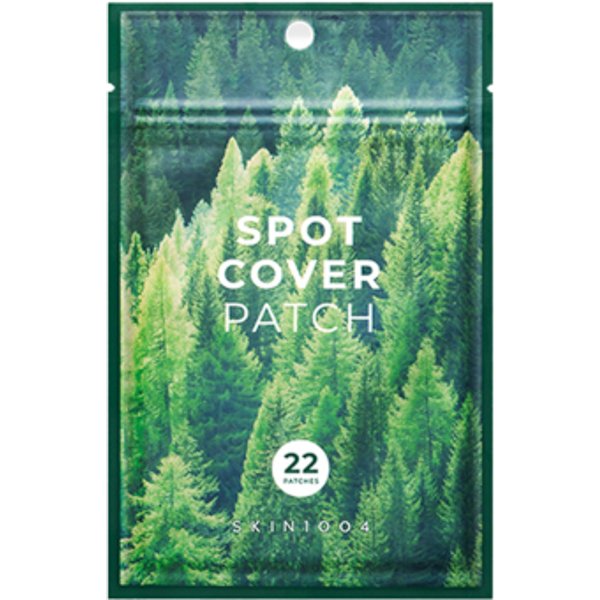 SKIN1004Madagascar Centella Tea-Trica Spot Cover Patch - 22 patches$1.99Also on Stylevana
![Isntree Onion Newpair Spot Patch [Basic] - 24 patches (10mm*12ea+12mm*12ea)](https://4jopkgnkf8lvn4mf.public.blob.vercel-storage.com/products/stylevana/uniform/stylevana-26630.jpg) IsntreeOnion Newpair Spot Patch [Basic] - 24 patches (10mm*12ea+12mm*12ea)$2.19Also on YesStyle
IsntreeOnion Newpair Spot Patch [Basic] - 24 patches (10mm*12ea+12mm*12ea)$2.19Also on YesStyle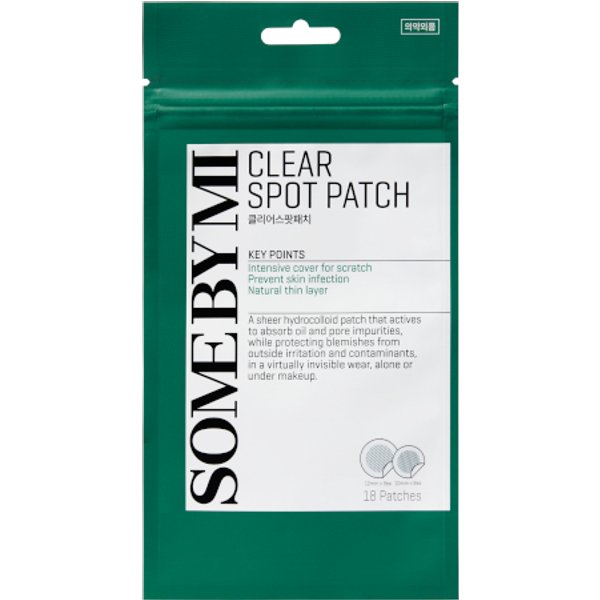 SOME BY MIClear Spot Patch 18pcs$3.68Also on Stylevana
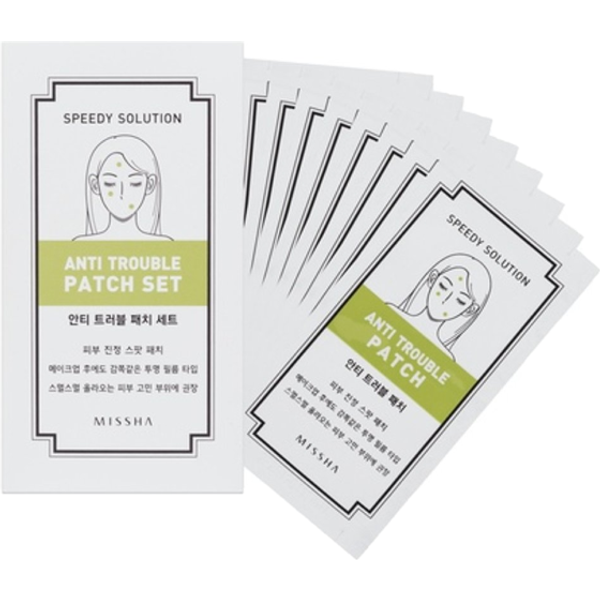 MISSHASpeedy Solution Anti-Trouble Patch 8pcs$4.50
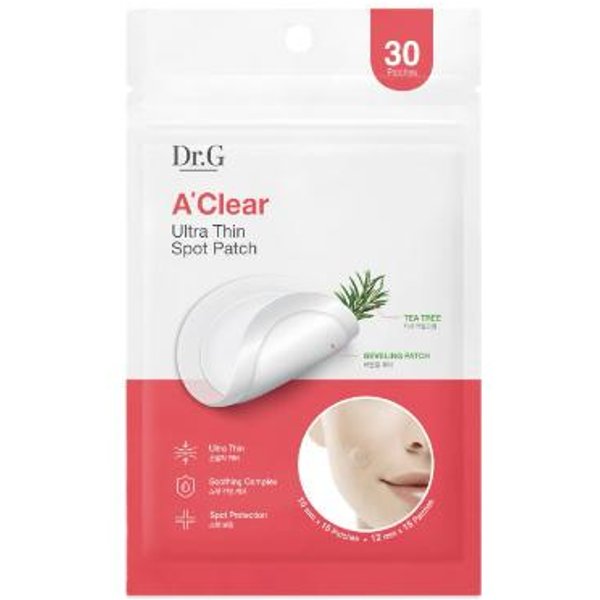 Dr.GA'Clear Ultra Thin Spot Patch - 30 patches$4.90
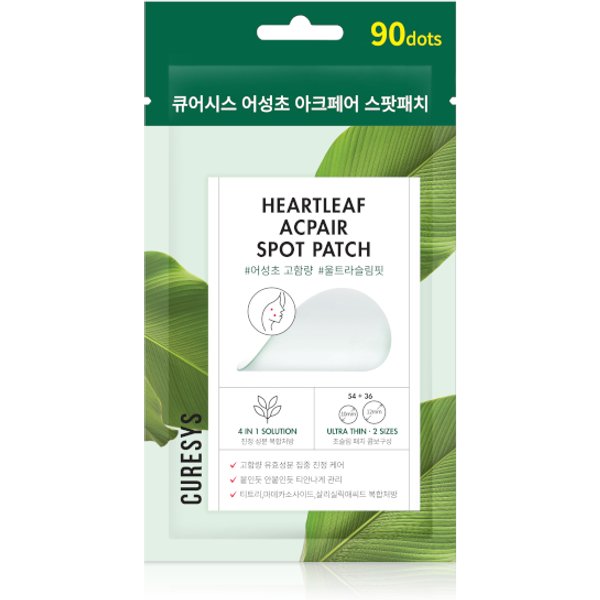 CURESYSHeartleaf Acpair Spot Patch - 90 Patches$5.59
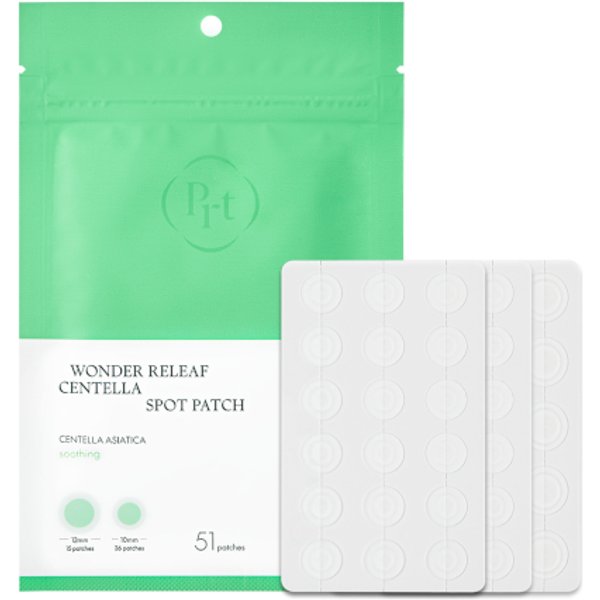 Purito SEOULWonder Releaf Centella Spot Patch - 51ea$6.93Also on YesStyle
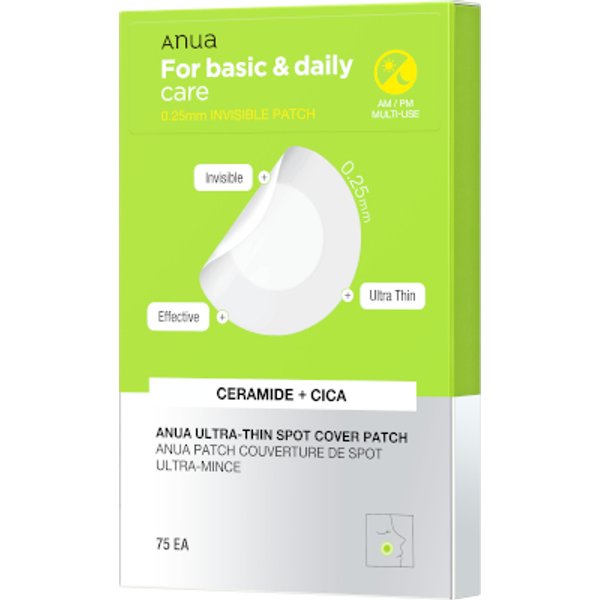 ANUAUltra-Thin Spot Cover Patch - 75ea$7.87Also on Stylevana
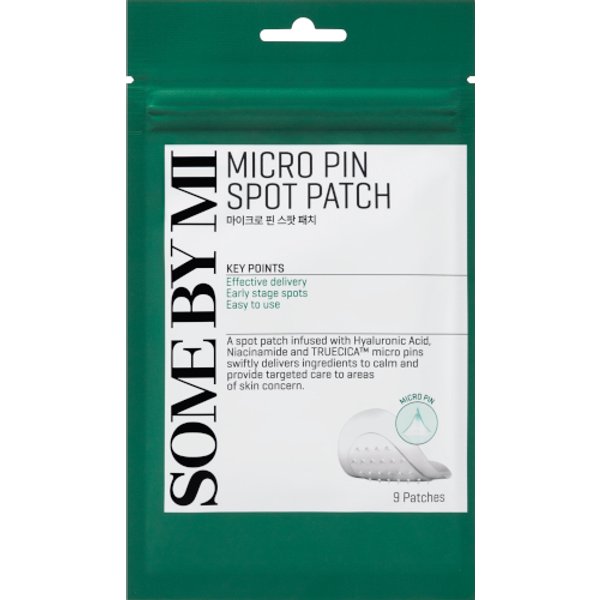 SOME BY MIMicro Pin Spot Patch - 14mm*9 patches$7.90Also on Stylevana
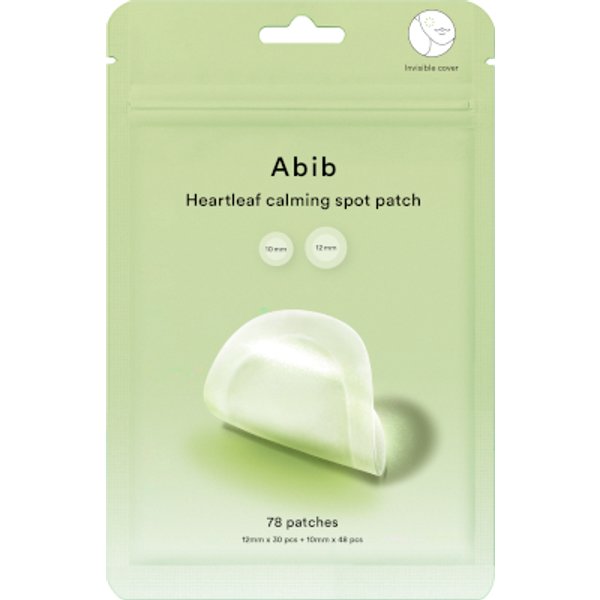 AbibHeartleaf Calming Spot Patch - 78 patches$12.00Also on YesStyle
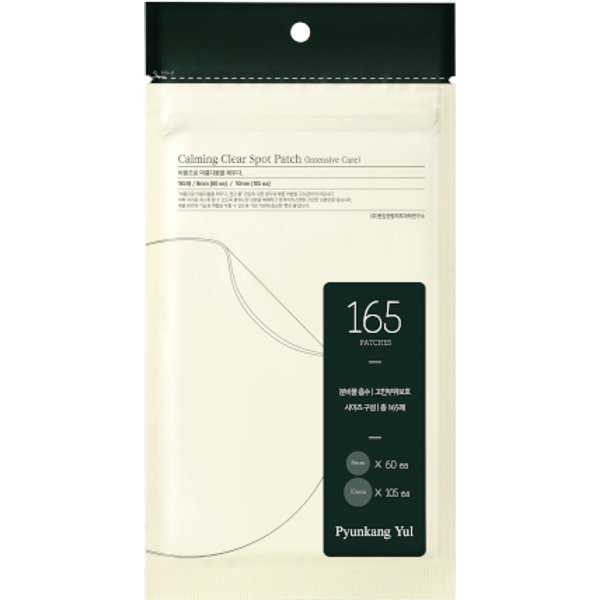 Pyunkang YulCalming Clear Spot Patch (Intensive Care) - 165 patches$16.99Also on Stylevana
Already have one? Check how it fits your skin with Pick.
Common questions about Pimple Patches#
What is Pimple Patches?
- A small sticker worn over one spot — it covers the blemish and keeps your hands off it, so the spot looks flatter and less red while it settles.
What else is Pimple Patches called?
- On a label you may see Hydrocolloid, Spot patch, Pimple patch, Spot sticker and Blemish patch.
When should you apply Pimple Patches?
- Morning or evening.
How often can you use Pimple Patches?
- Daily, on the spot only.
Where do you apply Pimple Patches?
- On the spot only. Keep it away from your eyes and lips.
Can you use Pimple Patches around the eyes?
- No — Pimple Patches goes on the spot only.
Does Pimple Patches make skin more sensitive to the sun?
- No. Pimple Patches is not flagged as increasing sun sensitivity.
What should you not use with Pimple Patches?
- Nothing flagged. None of the ingredients this wiki covers needs to be kept apart from Pimple Patches — check the label of anything not covered here.
Who should avoid Pimple Patches?
- Go slowly with Fragile or Sensitive and Prone to Redness.
Related ingredients#
How we check this#
Everything on this page traces to the sources listed below — regulators' own publications and published studies. Where the evidence does not answer a question, it is left unanswered.
Some sources below are the official product information for prescription medicines, cited for how they interact with this ingredient. We use them for their safety and handling detail only. A cosmetic product is not one of those medicines and is not intended to treat any condition.
Our review is AI-assisted and is not a named expert's opinion. Last reviewed August 8, 2026.
Think something here is out of date or wrong? Email us at wiki@skinintelligence.ai with your reasoning and where you read it. We read what people send, and we update the page when the sources support it.
Regulators and official bodies · 11
- S421 CFR 878.4018 — Hydrophilic wound dressing. eCFR, title 21 current as of 2026-07-31.
- S521 CFR 878.4020 — Occlusive wound dressing. eCFR.
- S621 CFR 878.4022 — Hydrogel wound dressing and burn dressing. eCFR.
- S7FDA openFDA Device Classification and Device Registration & Listing APIs — product codes NAC (878.4018), NAE (878.4022), NAD (878.4020), KGX (880.5240) against listings named "Pimple Patch", "Acne Patch", "Hydrocolloid pimple Patch", "Blemish Patch". Queried 2026-08-03; FDA database, not a mandate text.
- S8Regulation (EU) 2017/745 (Medical Device Regulation), Annex VIII, Chapter III, §4.4 — Rule 4. EUR-Lex CELEX 32017R0745.
- S9Council Directive 93/42/EEC, Annex IX §1.4 — Rule 4 (consolidated text to 2007-10-11). EUR-Lex CELEX 01993L0042-20071011.
- S10The Medical Devices Regulations 2002 (SI 2002/618), regulation 7(1). legislation.gov.uk.
- S11Medical Devices Regulations (SOR/98-282), Schedule 1, Part 1, Rule 4. Justice Laws Canada.
- S1221 CFR 801.5 — Medical devices; adequate directions for use. eCFR.
- S24Isotretinoin capsules — US prescribing information. DailyMed SPL, Amneal Pharmaceuticals LLC, setid c2917c3d-3499-48a0-ba53-120cb979195d.
- S25Tretinoin gel / tretinoin cream — US prescribing information. DailyMed SPL, Padagis US LLC, setid 4889c7f8-37d0-4f1a-9829-bca107806586.
Studies and references · 19
- S1Nguyen N, Dulai AS, Adnan S, Khan ZE, Sivamani RK. Narrative Review of the Use of Hydrocolloids in Dermatology: Applications and Benefits. J Clin Med. 2025 Feb 18. PMID 40004874. doi:10.3390/jcm14041345.
- S2Chao CM, Lai WY, Wu BY, Chang HC, Huang WS, Chen YF. A pilot study on efficacy treatment of acne vulgaris using a new method: results of a randomized double-blind trial with Acne Dressing. J Cosmet Sci. 2006 Mar-Apr;57(2):95-105. PMID 16688374.
- S350551 The Science Behind a Viral Trend: Demonstrating Safety and Efficacy of Hydrocolloid Patch for Facial Acne. J Am Acad Dermatol conference abstract, S0190-9622(24)02377-6. No author list in the record — cited without attribution. Conference abstract, not a peer-reviewed manuscript; S1 notes the full manuscript was unavailable at review.
- S13Ladenheim D, Martin GP, Marriott C, Hollingsbee DA, Brown MB. An in-vitro study of the effect of hydrocolloid patch occlusion on the penetration of triamcinolone acetonide through skin in man. J Pharm Pharmacol. 1996 Aug;48(8):806-11. PMID 8887729. doi:10.1111/j.2042-7158.1996.tb03978.x.
- S14Burstein SE, Maibach HI. The Effect of Sequential Topical Application of Dermatologic Medications on Absorption: Clinical Considerations. Skin Pharmacol Physiol. 2026;39(2):84-98. PMID 41610072. doi:10.1159/000550716.
- S15Dyson E, Sikkink S, Nocita D, Twigg P, Westgate G, Swift T. Evaluating the Irritant Factors of Silicone and Hydrocolloid Skin Contact Adhesives Using Trans-Epidermal Water Loss, Protein Stripping, Erythema, and Ease of Removal. ACS Appl Bio Mater. 2024 Jan 15. PMID 38150300. doi:10.1021/acsabm.3c00874.
- S16Waring M, Bielfeldt S, Mätzold K, Wilhelm KP, Butcher M. An evaluation of the skin stripping of wound dressing adhesives. J Wound Care. 2011 Sep;20(9):412-22. PMID 22068140. doi:10.12968/jowc.2011.20.9.412.
- S17McNichol L, Lund C, Rosen T, Gray M. Medical adhesives and patient safety: state of the science: consensus statements for the assessment, prevention, and treatment of adhesive-related skin injuries. J Wound Ostomy Continence Nurs. 2013 Jul-Aug;40(4):365-80. PMID 23759927. doi:10.1097/WON.0b013e3182995516.
- S18Cavallini M, Gazzola R, Vaienti L. Effects of adhesive dressings on stratum corneum conductance. Skin Res Technol. 2012 May;18(2):241-4. PMID 22092993. doi:10.1111/j.1600-0846.2011.00561.x.
- S19Küçük K, Van Gysel J, Del Marmol V, White JML. Allergic Contact Dermatitis Induced by Modern Wound Dressings: A Comprehensive Analysis of Risks and Allergenic Components. Int Wound J. 2025 Mar;22(3):e70153. PMID 40069101. doi:10.1111/iwj.70153.
- S20Omura R, Sowa-Osako J, Tateishi C, Okazaki A, Fukai K, Kawakami T, Tahara M, Tsuruta D. Allergic contact dermatitis to abietic acid derivatives in an over-the-counter hydrocolloid dressing. Contact Dermatitis. 2020 May;82(5):309-310. PMID 31891190. doi:10.1111/cod.13461.
- S21Rademaker M. Face-masks for facial atopic eczema: consider a hydrocolloid dressing. Australas J Dermatol. 2013 Aug;54(3):222-4. PMID 23190447. doi:10.1111/ajd.12004.
- S22Du-Soriano J, Friscia D, Kirsner RS. Efficacy of a Novel Daily-Use Hydrocolloid Pad on Wound Healing: Findings of a 16-Day, Single-Center, Randomized, Controlled Study. Adv Wound Care (New Rochelle). 2025 Dec 16. PMID 41457749. doi:10.1177/21621918251405806.
- S23Khatri KA, Margolis RJ, Bhatty RS, Garcia V. Comparison of two wound dressings after laser skin resurfacing. J Cosmet Laser Ther. 2005 Dec;7(3-4):206-12. PMID 16414910. doi:10.1080/14764170500450356.
- S26Padula C, Ferretti C, Nicoli S, Santi P. Combined patch containing salicylic acid and nicotinamide: role of drug interaction. Curr Drug Deliv. 2010 Dec. PMID 20950260. MEDICATED patch — different article.
- S27Restivo J (medically reviewed by Bhatia N). What are hydrocolloid patches and how can they be used in clinical practice? PA/NP Emerge, 2024-12-15. A dermatology education site, not peer-reviewed, and its own references include Healthline and a personal dermatologist blog (Tier 4 publishers).
- S28e-lactation.com — Hydrocolloid Patch entry, "Very Low Risk". A drug database, not a regulator's mandate document.
- S29Okan G, Rendon MI. The effects of a high glycerin content hydrogel premolded mask dressing on post-laser resurfacing wounds. J Cosmet Laser Ther. 2011 Aug;13(4):162-5. PMID 21699364. doi:10.3109/14764172.2011.594063. Hydrogel, not hydrocolloid.
- S30Hydrocolloid PSAs: New Formulation Strategies. Medical Device & Diagnostic Industry, June 1999.