What does Urea do?#
Urea is a humectant used in skincare for decades. At cosmetic concentrations, it helps skin feel softer, smoother, and more comfortably hydrated, making it a long-standing choice for dry and rough-textured skin.
Benefits
- Helps support the look and feel of well-hydrated, comfortable skin
- Attracts and binds water for improved hydration and a smoother skin surface
- Helps support the look and feel of the skin's moisture barrier
- Gently smooths the look and feel of rough or dry texture at cosmetic concentrations
How it works
Urea is a humectant with a long history in skincare for dry and rough-textured skin. It helps skin look and feel smoother, softer, and more comfortable by adding surface hydration. At cosmetic concentrations, the visible result is improved texture, less flakiness, and a healthier-looking skin surface that feels well-hydrated throughout the day.
How to use Urea#
Before you start
Skip it while skin is broken or looking irritated, and start again once it has settled.
Best time
Either time suits it, or both.
How often
There is nothing to ease into.
Where it goes
Last, after any serums or targeted steps.
Where to apply
Concentrate it where skin looks rough, dry or flaky — that is where the smoothing shows most.
Alongside others
It pairs naturally with the other hydrating steps rather than competing with them, so it needs no evening of its own.
What to expect
A brief tingle on very dry skin is normal and passes quickly.
Cosmetic-range urea (up to 10%) is well tolerated by most skin types. A brief tingling on very dry skin is normal and typically fades quickly.
The form you will see it in
Urea cream
- Where it goes
- As your moisturizer
Using Urea with other ingredients
Pairs well with Urea
Hyaluronic Acid
Works well togetherBoth are humectants that bind water at different levels of the skin for comprehensive hydration.
Ceramides
Works well togetherUrea helps smooth and hydrate the skin surface while ceramides reinforce the look and feel of the skin's moisture barrier, addressing both sides of a healthier-looking complexion.
Niacinamide
Works well togetherNiacinamide supports the look and feel of the moisture barrier while urea provides direct hydration for comprehensive skin comfort.
Glycerin
Works well togetherBoth are humectants that help skin hold on to moisture, working together for a hydrated, comfortable feel.
What not to use with Urea
Nothing flagged. None of the ingredients this wiki covers needs to be kept apart from Urea — check the label of anything not covered here.
Who should avoid Urea?#
Six situations change whether Urea suits your skin right now. Each one is either a reason to skip it, a reason to go slowly, or nothing to watch for.
- Fragile or Sensitive
- Go slowly
- Recent Facial or Laser
- Go slowly
- Prone to Redness
- Go slowly
- Recent Shave or Wax
- Go slowly
- Maternity & Nursing
- No caution
- Dry or Itchy Patches
- No caution
Fragile or Sensitive — Use it less often — or stop — if it feels uncomfortable, and keep it off skin that’s broken, cut or sunburned.
Recent Facial or Laser — Wait until your skin feels settled before reintroducing — typically 7 to 14 days after a facial or laser appointment.
Prone to Redness — Try it on a small area first, and use it less often — or stop — if you notice stinging or extra redness.
Recent Shave or Wax — Avoid for 24 hours after waxing, threading, or dermaplaning.
Cosmetic strength limits for Urea where you live#
| Region | Most a cosmetic may contain | |
|---|---|---|
 United States United States | No explicit cap | |
The FDA restricts a short list of ingredients and sets no general strength ceiling on the rest. A figure marked "guidance, not law" is the Cosmetic Ingredient Review panel's recommendation. 21 CFR part 700, subpart B — Requirements for Specific Cosmetic Products (FDA) | ||
 Canada Canada | 10% | |
One list does the work — Health Canada's Hotlist of prohibited and restricted cosmetic ingredients. | ||
 European Union European Union | No explicit cap | |
The Cosmetics Regulation's annexes, consolidated to 1 May 2026. A figure marked "guidance, not law" comes from the EU's cosmetic safety committee rather than from the annexes. | ||
 Great Britain Great Britain | No explicit cap | |
Great Britain kept the annexes as its own law and updates them only when it chooses; Northern Ireland follows the live EU Regulation, which is why some rows read differently for each. Regulation (EC) No 1223/2009 as it applies in Great Britain · Regulation (EC) No 1223/2009, Annexes II–VI | ||
 India India | No explicit cap | |
India writes its own standard, aligned to the European rules as they stood in 2012. Mandatory since 9 February 2026. IS 4707 (Part 2):2025 — restricted and prohibited cosmetic ingredients · IS 4707 (Part 3):2025 — preservatives · Cosmetics Rules, 2020, Ninth Schedule | ||
 Brazil Brazil | No explicit cap | |
ANVISA rewrote its restricted list in June 2026, and a companion act amended the prohibited list at the same time. RDC 1.029/2026 — restricted ingredients · RDC 529/2021 — prohibited ingredients, as amended by RDC 1.030/2026 · RDC 528/2021 — preservatives | ||
 Japan Japan | No explicit cap | |
Japan's cosmetics standard keeps drug ingredients out of cosmetics, so most of its figures sit in the ministry's list of the ones a cosmetic may still contain. Cosmetics Standards (化粧品基準), Ministry of Health, Labour and Welfare · Cosmetics Standards — the ministry's own English translation · Drug ingredients permitted in cosmetics — 2007 notification | ||
 South Korea South Korea | 10% | |
One MFDS regulation carries both the prohibited list and the restricted list, in force 18 March 2026. Sunscreens and a few other categories are cleared product by product instead. Regulation on Safety Standards for Cosmetics (MFDS Notification 2026-19) · Regulation on the Review of Functional Cosmetics (MFDS Notification 2025-88) | ||
 Kenya Kenya | No explicit cap | |
Kenya's standard applies the EU annexes as they stand rather than copying them, so its ingredient limits are the EU's — including the 2024 additions. A figure marked "guidance, not law" sits outside the annexes and does not carry over. KS EAS 377-1, -2 and -3:2022 — cosmetics safety requirements, published by KEBS · Regulation (EC) No 1223/2009, Annexes II–VI | ||
 Namibia Namibia | No explicit cap | |
Namibia sets no ingredient limits at all. Its cosmetic rule is a single line requiring a product to be free of any harmful ingredient. Foodstuffs, Cosmetics and Disinfectants Ordinance 18 of 1979, and the regulations under it | ||
 Ukraine Ukraine | No explicit cap | |
Ukraine's own transposition of the EU annexes, as they stood before the 2024 additions, fully in force since 3 August 2026. A further revision is due on 1 February 2027. Technical Regulation on cosmetic products — Cabinet Resolution No. 65 of 20 January 2021 | ||
 Georgia Georgia | No explicit cap | |
Georgia has no cosmetics rulebook — its register of technical regulations carries no cosmetics entry — so only the general product-safety duty applies. | ||
 Australia Australia | No explicit cap | |
Australia writes no cosmetic ingredient list. A figure here is the point at which a substance becomes a medicine or a scheduled substance carrying Caution labeling, so its numbers sit well above other markets'. Poisons Standard — June 2026 · Therapeutic Goods (Excluded Goods) Determination 2018 | ||
 United Arab Emirates United Arab Emirates | 10% (bath products may exceed) | |
The Gulf standard points at the EU annexes as amended, so its ingredient limits are the EU's. A figure marked "guidance, not law" sits outside the annexes and does not carry over. GSO 1943:2024 — Cosmetic products: safety requirements (Gulf technical regulation) · Regulation (EC) No 1223/2009, Annexes II–VI | ||
 Kuwait Kuwait | 10% (bath products may exceed) | |
The Gulf standard points at the EU annexes as amended, so its ingredient limits are the EU's. A figure marked "guidance, not law" sits outside the annexes and does not carry over. GSO 1943:2024 — Cosmetic products: safety requirements (Gulf technical regulation) · Regulation (EC) No 1223/2009, Annexes II–VI | ||
 Hong Kong Hong Kong | No explicit cap | |
Hong Kong writes no cosmetics rulebook. Its Poisons List (Cap. 138A, Schedule 10) decides which substances may be sold only as medicines, and general safety is judged case by case against whichever overseas standard the enforcer considers reasonable. Pharmacy and Poisons Regulations (Cap. 138A), Schedule 10 — the poisons list · Pharmacy and Poisons Board — Guidance Notes on classifying pharmaceutical products, April 2026 | ||
 Singapore Singapore | No explicit cap | |
Singapore writes the ASEAN annexes into its own schedule, and its regulator tells companies to check the current ASEAN release as well — which is why a figure here can read "guidance, not law". Health Products (Cosmetic Products — ASEAN Cosmetic Directive) Regulations 2007, Third Schedule · ASEAN Cosmetic Directive annexes — release 2026-1, 22 June 2026 | ||
 Brunei Brunei | No explicit cap | |
Brunei carries the 2007 ASEAN annexes in its own schedule and has not updated them since, so it reads differently from Singapore on several ingredients. Medicines (Cosmetic Products) Regulations (Cap. 285 Rg 1), Schedule 1 — revised edition 2024 | ||
 Jordan Jordan | No explicit cap | |
Jordan's cosmetic rules defer to "the approved references" and name none of them, so there is no Jordanian figure to read. The only number in the instrument governs the ingredient list on the pack. JFDA instructions on cosmetics and pharmaceutical cosmetics, 2026 | ||
 Trinidad & Tobago Trinidad & Tobago | No explicit cap | |
Trinidad and Tobago has had the power to set cosmetic standards since 1960 and has never used it. The regulations made under the Act cover food and drugs, with no cosmetics part; what binds is the Act's general rule against selling a cosmetic that may injure the user. Food and Drugs Act, Chap. 30:01 · Food and Drugs Regulations | ||
Where a figure appears, that is the maximum strength allowed or advised for urea in that market — some are set in cosmetics regulation, others are the ceiling a cosmetic safety panel recommends. Where no figure appears, the market either sets no cosmetic maximum or handles this ingredient outside its cosmetic rules. These are limits, not targets — the right strength for a formula is the formulator's decision.
Open a market to see the rulebook its figure comes from. Those notes describe each market's own rules as we read them, current to August 24, 2026; the linked documents are the authority, and nothing here is legal advice.
Sample products with Urea#
A few well-known products, not a full list — product names are each brand's own. We don't sell them — the shop prices them in US dollars and ships from Hong Kong, so delivery and duties come on top. It may not ship everywhere.
We may earn a small commission when you buy through these links.
Moisturizers · 9
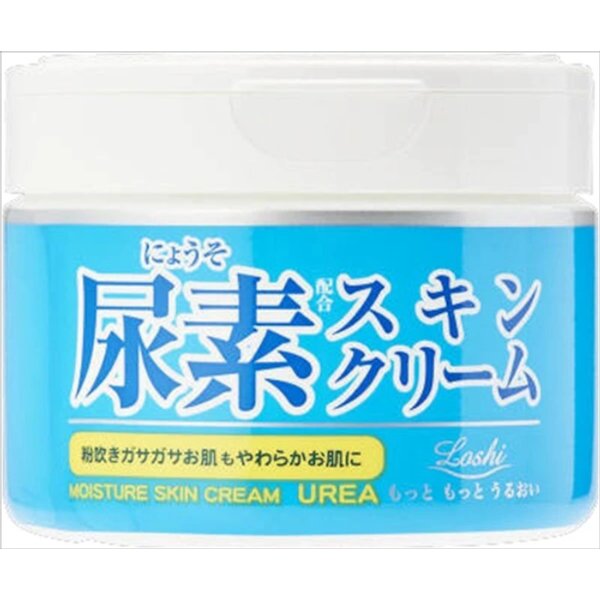 CosmetexRolandLoshi Moist Aid Urea Skin Cream - 220g$7.69
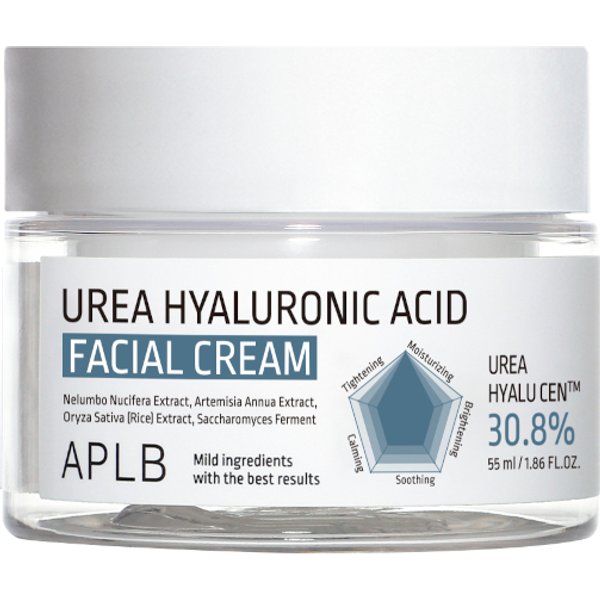 APLBUrea Hyaluronic Acid Facial Cream - 55ml$9.80Also on YesStyle
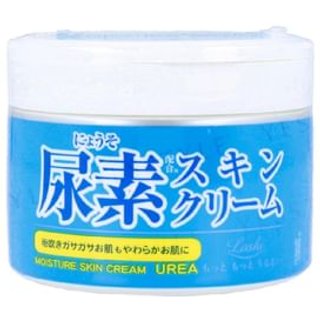 Cosmetex RolandLoshi Horse Oil Moisture Skin Cream Urea 220g$14.25
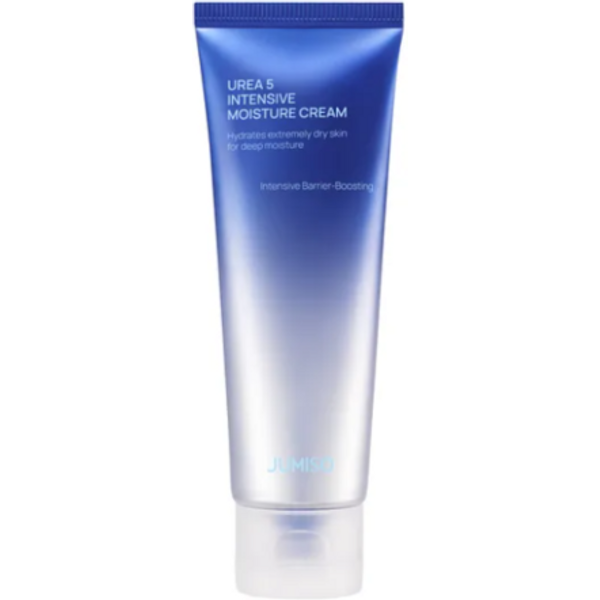 JumisoUrea 5 Intensive Moisture Cream - 80ml$17.60Also on YesStyle
 JUMISOUrea 9.9 Intensive Multi Balm 50ml$18.00
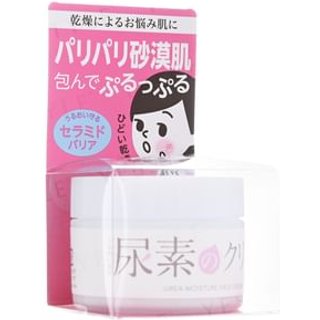 Ishizawa-LabSukoyaka Suhada Urea Moisture Face Cream 60g$22.14
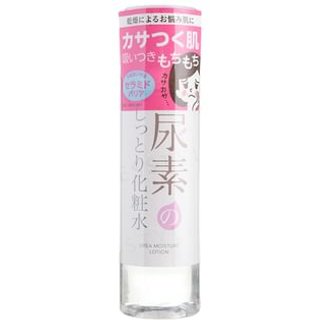 Ishizawa-LabSukoyaka Suhada Urea Moisture Lotion 200ml$22.99
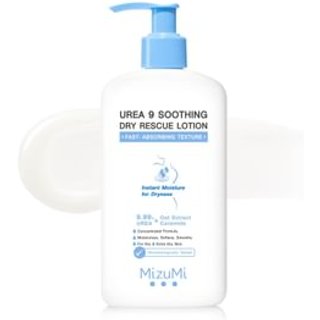 MizuMiUrea 9 Soothing Dry Rescue Lotion 250g$25.46
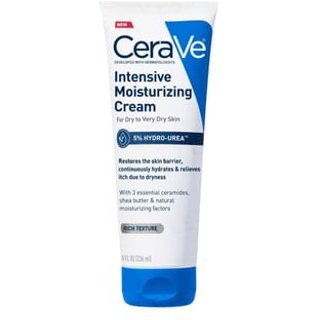 CeraVeIntensive Moisturizing Cream 5% Hydro-Urea Regular 236ml$33.16
Already have one? Check how it fits your skin with Pick.
Common questions about Urea#
What is Urea?
- Skin makes urea of its own, and adding more of it holds water in the surface layers — so dry, rough-looking areas look smoother and feel softer.
What else is Urea called?
- On a label you may see Carbamide.
When should you apply Urea?
- Morning or evening. Either time suits it, or both.
How often can you use Urea?
- Daily.
Where do you apply Urea?
- All over the face. Keep it away from your eyes and lips.
Can you use Urea around the eyes?
- Yes. Urea goes all over the face, the skin around the eyes included — keep it out of your eyes and off your lips.
Does Urea make skin more sensitive to the sun?
- No. Urea is not flagged as increasing sun sensitivity.
What should you not use with Urea?
- Nothing flagged. None of the ingredients this wiki covers needs to be kept apart from Urea — check the label of anything not covered here.
Who should avoid Urea?
- Go slowly with Fragile or Sensitive, Recent Facial or Laser, Prone to Redness and Recent Shave or Wax.
Is there a cosmetic limit for Urea?
- Only some regions set one. The maximum strength for Urea in a cosmetic is 10% in Canada. No maximum is set in the United States, the European Union and Great Britain. A cap is a limit on the rules, not a signal to use more.
Related ingredients#
How we check this#
Everything on this page traces to the sources listed below — regulators' own publications and published studies. Where the evidence does not answer a question, it is left unanswered.
Some sources below are the official product information for prescription medicines, cited for how they interact with this ingredient. We use them for their safety and handling detail only. A cosmetic product is not one of those medicines and is not intended to treat any condition.
Our review is AI-assisted and is not a named expert's opinion. Last reviewed August 8, 2026.
Think something here is out of date or wrong? Email us at wiki@skinintelligence.ai with your reasoning and where you read it. We read what people send, and we update the page when the sources support it.
Regulators and official bodies · 9
- S4Balneum Plus Cream (Lauromacrogols 3.0% w/w, Urea 5.0% w/w) — Summary of Product Characteristics, Almirall Ltd, emc/MHRA.
- S5E45 Itch Relief Cream (Lauromacrogols 3.0%, Urea 5.0%) — Summary of Product Characteristics, Karo Pharma AB, emc/MHRA.
- S6Urea Cream 40% (Rx only) — FDA label, DailyMed.
- S7Health Canada, Cosmetic Ingredient Hotlist — entry "Urea, 57-13-6": (a) cosmetics intended to be diluted in bath water; (b) other cosmetics — 10%.
- S8Regulation (EC) No 1223/2009 on cosmetic products, Annexes I–X (as retained in GB). Urea (CAS 57-13-6) appears in no annex; the sole "Urea" entry is Diazolidinyl Urea, Annex V preservative.
- S921 CFR § 347.10 — Skin protectant active ingredients (eCFR). Lists allantoin through zinc oxide; urea absent.
- S24SCCNFP. "Evaluation and opinion on: Salicylic Acid" (SCCNFP/0522/01, final). European Commission.
- S25International Society of Atopic Dermatitis (applicant) and WHO Department of Control of Neglected Tropical Diseases (co-applicant). "Inclusion of urea- and glycerol-based topical moisturizers on the EML and EMLc for the treatment of atopic dermatitis in adults and children." Application to the 2025 WHO EML Expert Committee. Applicant dossier — see provenance flags..
- S33Cymex Cream (Urea PhEur 1.0% w/w, Cetrimide 0.5%, Dimeticone 350 9.0%, Chlorocresol 0.1%) — Summary of Product Characteristics, Dexcel Pharma Ltd, emc/MHRA.
Studies and references · 29
- S1Celleno L. "Topical urea in skincare: A review." Dermatol Ther. 2018 Nov. · PMID 30378232.
- S2"Urea in Dermatology: A Review of its Emollient, Moisturizing, Keratolytic, Skin Barrier Enhancing and Antimicrobial Properties." Dermatol Ther (Heidelb). · PMC8611129.
- S3"The Effectiveness of Topical Keratolytics (Alpha Hydroxy Acids/Beta Hydroxy Acids/Urea) in Treating Keratosis Pilaris: A Review of the Literature." · PMC12860576.
- S10"Final report of the safety assessment of Urea." Int J Toxicol. 2005;24 Suppl 3:1-56. (PubMed record reads "No authors listed".) · PMID 16422263.
- S11Lodén M, Boström P, Kneczke M. "Distribution and keratolytic effect of salicylic acid and urea in human skin." Skin Pharmacol. 1995;8(4):173-8. · PMID 7488393 · doi 10.1159/000211343.
- S12Gloor M, Fluhr J, Wasik B, Gehring W. "[Clinical effect of salicylic acid and high dose urea applied according to the standardized New German Formulary]." Pharmazie. 2001;56(10):810-4. · PMID 11683130.
- S13Grether-Beck S, Felsner I, Brenden H, Kohne Z, et al. "Urea uptake enhances barrier function and antimicrobial defense in humans by regulating epidermal gene expression." J Invest Dermatol. 2012. · PMID 22418868 · PMC3352965.
- S14Lodén M, Andersson A-C, Anderson C, Bergbrant I-M, Frödin T, Öhman H, Sandström M-H, Särnhult T, Voog E, Stenberg B, Pawlik E, Preisler-Häggqvist A, Svensson Å, Lindberg M. "A Double-Blind Study Comparing the Effect of Glycerin and Urea on Dry, Eczematous Skin in Atopic Patients." Acta Derm Venereol. 2002;82:45-47.
- S15Bissonnette R, Maari C, Provost N, Bolduc C, Nigen S, Rougier A, Seite S. "A double-blind study of tolerance and efficacy of a new urea-containing moisturizer in patients with atopic dermatitis." J Cosmet Dermatol. 2010;9(1):16-21. · PMID 20367668 · doi 10.1111/j.1473-2165.2010.00476.x.
- S16"Effectiveness and Tolerability of an Emollient 'Plus' Compared to Urea 10% in Patients With Mild-to-Moderate Atopic Dermatitis." · PMID 39973079.
- S17"Comparing the Potential for Irritation of a Ceramide-Based Moisturizer with a Urea-Based Moisturizer for Pediatric Atopic Dermatitis." Dermatol Ther (Heidelb). 2020. · PMC7367988.
- S18"An experimental study of irritant effects of urea in different vehicles." Acta Derm Venereol Suppl. 1992;177:44-6. · PMID 1466185.
- S19"A three-hour test for rapid comparison of effects of moisturizers and active constituents (urea). Measurement of hydration, scaling and skin surface lipidization by noninvasive techniques." Acta Derm Venereol Suppl. 1992;177:29-33. · PMID 1466183.
- S20Wohlrab W. "[Effect of urea on penetration kinetics of vitamin A acid in human skin]." Z Hautkr. 1990;65(9):803-5. · PMID 2264369.
- S21Gabard B, Bieli E. "[Salicylic acid and urea — possible modification of the keratolytic effect of salicylic acid by urea]." Hautarzt. 1989;40 Suppl 9:71-3. · PMID 2807928.
- S22Banerjee PK, Choudhury AK, Panja SK. "Topical urea in dermatology." Indian J Dermatol. 1990;35(1):17-24. · PMID 2245997.
- S23"Glycerol and urea can be used to increase skin permeability in reduced hydration conditions." · PMID 23643739.
- S26"Comparative trial of benzoyl peroxide versus benzoyl peroxide with urea in inflammatory acne." · PMID 6213380.
- S27"A multicenter efficacy and tolerability evaluation of benzoyl peroxide in a 10% urea vehicle for the treatment of acne vulgaris." · PMID 16703780.
- S28McCormick E, Nussbaum D, Friedman A, Pham H, Meckfessel MH, Emesiani C. "Evaluation of a Moisturizing Cream with 20% Urea for Keratosis Pilaris." J Drugs Dermatol. 2024;23(1):1274-1277. · doi 10.36849/JDD.7806.
- S29"Effect of topical treatment with urea in ichthyosis, atopic dermatitis, psoriasis, and other skin conditions — a systematic review." Ann Med Surg. 2025. · PMID 40109645 · PMC11918770.
- S30"Evaluation of a 10% Urea Lotion for Xerosis: Clinical and Patient-Reported Outcomes From a Prospective Study." J Cosmet Dermatol. 2026. · PMID 41807289 · PMC12975674.
- S31"The use of urea for the treatment of onychomycosis: a systematic review." · PMC6458736.
- S32"Effect of topical treatment with 7.5% urea in Ichthyosis Vulgaris: A randomized, controlled, double blinded, split body study." · PMC9060062 · NCT02978209.
- S34"Placebo-Controlled Trial to Determine the Effectiveness of a Urea/Lactic Acid-Based Topical Keratolytic Agent for Prevention of Capecitabine-Induced Hand-Foot Syndrome: NCCTG Study N05C5." · PMC3020691.
- S35"A Review of Moisturizing Additives for Atopic Dermatitis." Cosmetics 2022;9(4):75.
- S36"High-Potency Vitamin C Topical Formulations" (US patent application 20210228467). Tier 3 — cannot back a quantitative claim; cited only as a formulation fact..
- S37"Niacinamide and its impact on stratum corneum hydration and structure." · PMID 39929949 · PMC11811021.
- S38"Basic Emollients for Xerosis Cutis in Atopic Dermatitis: A Review of Clinical Studies" and the APJAI atopic-dermatitis emollient review, both reporting two studies in which urea was superior to glycerin in AD. · PMC12124105; apjai-journal.org AP-230920-0969.