What does Caffeine do?#
Caffeine is a naturally occurring plant compound. It is formulated into eye creams and serums to support a brighter, more refreshed-looking under-eye area.
Benefits
- Supports a brighter-looking under-eye appearance
- Contributes to a more refreshed, awake-looking eye area
- Provides antioxidant support against everyday environmental stress
How it works
Caffeine is a naturally occurring antioxidant. Around the eye area it is used to help the skin look brighter and more refreshed, and its antioxidant properties support an eye area that looks healthy against everyday environmental stress.
How to use Caffeine#
Best time
The evidence supports either, so use whichever fits your routine.
How often
From the start is fine — caffeine is gentle and has no easing-in period.
Where to apply
On the orbital bone — the ridge you can feel under the eye and along the brow. Not on the eyelid and not along the lash line: product placed inside the orbital rim tends to migrate into the eye as you blink. If it gets into your eye, rinse with water.
How to apply
Pat it in with a fingertip. Do not rub or drag — the skin here is the thinnest on the body, and rubbing your eyes works against the very look you are treating.
Alongside others
It sits comfortably alongside the rest of a routine, so it does not need an evening of its own.
For external use around the eye area only. Avoid direct contact with eyes; if product gets into the eye, rinse with water. Discontinue use if irritation occurs.
The form you will see it in
Caffeine eye serum
- Where it goes
- Around the eyes
Using Caffeine with other ingredients
Pairs well with Caffeine
Niacinamide
Works well togetherBoth are used around the eye area to support a brighter, more even-looking appearance.
Alpha Arbutin
Works well togetherCommonly chosen alongside caffeine in eye area products for the look of under-eye darkness.
Vitamin C Derivatives
Works well togetherGentle vitamin C forms are often formulated together with caffeine in eye products.
What not to use with Caffeine
Nothing flagged. None of the ingredients this wiki covers needs to be kept apart from Caffeine — check the label of anything not covered here.
Who should avoid Caffeine?#
Six situations change whether Caffeine suits your skin right now. Each one is either a reason to skip it, a reason to go slowly, or nothing to watch for.
- Recent Facial or Laser
- Skip it
- Maternity & Nursing
- No caution
- Fragile or Sensitive
- No caution
- Prone to Redness
- No caution
- Dry or Itchy Patches
- No caution
- Recent Shave or Wax
- No caution
Cosmetic strength limits for Caffeine where you live#
| Region | Most a cosmetic may contain | |
|---|---|---|
 United States United States | No explicit cap | |
The FDA restricts a short list of ingredients and sets no general strength ceiling on the rest. A figure marked "guidance, not law" is the Cosmetic Ingredient Review panel's recommendation. 21 CFR part 700, subpart B — Requirements for Specific Cosmetic Products (FDA) | ||
 Canada Canada | No explicit cap | |
One list does the work — Health Canada's Hotlist of prohibited and restricted cosmetic ingredients. | ||
 European Union European Union | No explicit cap | |
The Cosmetics Regulation's annexes, consolidated to 1 May 2026. A figure marked "guidance, not law" comes from the EU's cosmetic safety committee rather than from the annexes. | ||
 Great Britain Great Britain | No explicit cap | |
Great Britain kept the annexes as its own law and updates them only when it chooses; Northern Ireland follows the live EU Regulation, which is why some rows read differently for each. Regulation (EC) No 1223/2009 as it applies in Great Britain · Regulation (EC) No 1223/2009, Annexes II–VI | ||
 India India | No explicit cap | |
India writes its own standard, aligned to the European rules as they stood in 2012. Mandatory since 9 February 2026. IS 4707 (Part 2):2025 — restricted and prohibited cosmetic ingredients · IS 4707 (Part 3):2025 — preservatives · Cosmetics Rules, 2020, Ninth Schedule | ||
 Brazil Brazil | No explicit cap | |
ANVISA rewrote its restricted list in June 2026, and a companion act amended the prohibited list at the same time. RDC 1.029/2026 — restricted ingredients · RDC 529/2021 — prohibited ingredients, as amended by RDC 1.030/2026 · RDC 528/2021 — preservatives | ||
 Japan Japan | 2% | |
Japan's cosmetics standard keeps drug ingredients out of cosmetics, so most of its figures sit in the ministry's list of the ones a cosmetic may still contain. Cosmetics Standards (化粧品基準), Ministry of Health, Labour and Welfare · Cosmetics Standards — the ministry's own English translation · Drug ingredients permitted in cosmetics — 2007 notification | ||
 South Korea South Korea | No explicit cap | |
One MFDS regulation carries both the prohibited list and the restricted list, in force 18 March 2026. Sunscreens and a few other categories are cleared product by product instead. Regulation on Safety Standards for Cosmetics (MFDS Notification 2026-19) · Regulation on the Review of Functional Cosmetics (MFDS Notification 2025-88) | ||
 Kenya Kenya | No explicit cap | |
Kenya's standard applies the EU annexes as they stand rather than copying them, so its ingredient limits are the EU's — including the 2024 additions. A figure marked "guidance, not law" sits outside the annexes and does not carry over. KS EAS 377-1, -2 and -3:2022 — cosmetics safety requirements, published by KEBS · Regulation (EC) No 1223/2009, Annexes II–VI | ||
 Namibia Namibia | No explicit cap | |
Namibia sets no ingredient limits at all. Its cosmetic rule is a single line requiring a product to be free of any harmful ingredient. Foodstuffs, Cosmetics and Disinfectants Ordinance 18 of 1979, and the regulations under it | ||
 Ukraine Ukraine | No explicit cap | |
Ukraine's own transposition of the EU annexes, as they stood before the 2024 additions, fully in force since 3 August 2026. A further revision is due on 1 February 2027. Technical Regulation on cosmetic products — Cabinet Resolution No. 65 of 20 January 2021 | ||
 Georgia Georgia | No explicit cap | |
Georgia has no cosmetics rulebook — its register of technical regulations carries no cosmetics entry — so only the general product-safety duty applies. | ||
 Australia Australia | No explicit cap | |
Australia writes no cosmetic ingredient list. A figure here is the point at which a substance becomes a medicine or a scheduled substance carrying Caution labeling, so its numbers sit well above other markets'. Poisons Standard — June 2026 · Therapeutic Goods (Excluded Goods) Determination 2018 | ||
 United Arab Emirates United Arab Emirates | No explicit cap | |
The Gulf standard points at the EU annexes as amended, so its ingredient limits are the EU's. A figure marked "guidance, not law" sits outside the annexes and does not carry over. GSO 1943:2024 — Cosmetic products: safety requirements (Gulf technical regulation) · Regulation (EC) No 1223/2009, Annexes II–VI | ||
 Kuwait Kuwait | No explicit cap | |
The Gulf standard points at the EU annexes as amended, so its ingredient limits are the EU's. A figure marked "guidance, not law" sits outside the annexes and does not carry over. GSO 1943:2024 — Cosmetic products: safety requirements (Gulf technical regulation) · Regulation (EC) No 1223/2009, Annexes II–VI | ||
 Hong Kong Hong Kong | No explicit cap | |
Hong Kong writes no cosmetics rulebook. Its Poisons List (Cap. 138A, Schedule 10) decides which substances may be sold only as medicines, and general safety is judged case by case against whichever overseas standard the enforcer considers reasonable. Pharmacy and Poisons Regulations (Cap. 138A), Schedule 10 — the poisons list · Pharmacy and Poisons Board — Guidance Notes on classifying pharmaceutical products, April 2026 | ||
 Singapore Singapore | No explicit cap | |
Singapore writes the ASEAN annexes into its own schedule, and its regulator tells companies to check the current ASEAN release as well — which is why a figure here can read "guidance, not law". Health Products (Cosmetic Products — ASEAN Cosmetic Directive) Regulations 2007, Third Schedule · ASEAN Cosmetic Directive annexes — release 2026-1, 22 June 2026 | ||
 Brunei Brunei | No explicit cap | |
Brunei carries the 2007 ASEAN annexes in its own schedule and has not updated them since, so it reads differently from Singapore on several ingredients. Medicines (Cosmetic Products) Regulations (Cap. 285 Rg 1), Schedule 1 — revised edition 2024 | ||
 Jordan Jordan | No explicit cap | |
Jordan's cosmetic rules defer to "the approved references" and name none of them, so there is no Jordanian figure to read. The only number in the instrument governs the ingredient list on the pack. JFDA instructions on cosmetics and pharmaceutical cosmetics, 2026 | ||
 Trinidad & Tobago Trinidad & Tobago | No explicit cap | |
Trinidad and Tobago has had the power to set cosmetic standards since 1960 and has never used it. The regulations made under the Act cover food and drugs, with no cosmetics part; what binds is the Act's general rule against selling a cosmetic that may injure the user. Food and Drugs Act, Chap. 30:01 · Food and Drugs Regulations | ||
Where a figure appears, that is the maximum strength allowed or advised for caffeine in that market — some are set in cosmetics regulation, others are the ceiling a cosmetic safety panel recommends. Where no figure appears, the market either sets no cosmetic maximum or handles this ingredient outside its cosmetic rules. These are limits, not targets — the right strength for a formula is the formulator's decision.
Open a market to see the rulebook its figure comes from. Those notes describe each market's own rules as we read them, current to August 24, 2026; the linked documents are the authority, and nothing here is legal advice.
Sample products with Caffeine#
A few well-known products, not a full list — product names are each brand's own. We don't sell them — the shop prices them in US dollars and ships from Hong Kong, so delivery and duties come on top. It may not ship everywhere.
We may earn a small commission when you buy through these links.
Eye care · 5
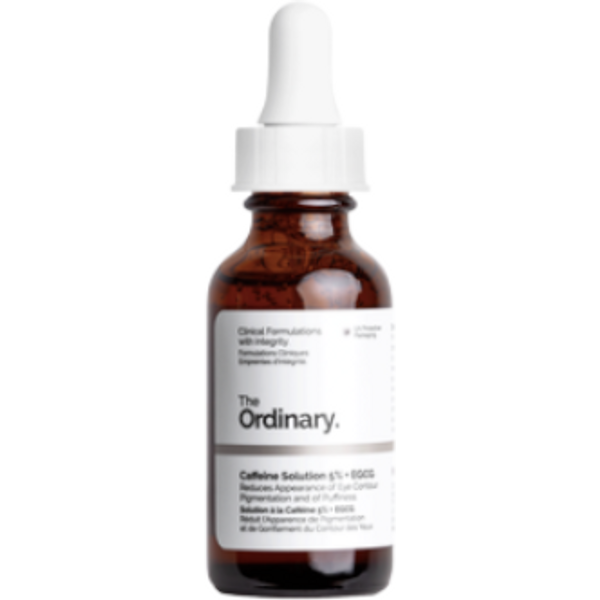 The OrdinaryCaffeine Solution 5% + EGCG - 30ml$12.19
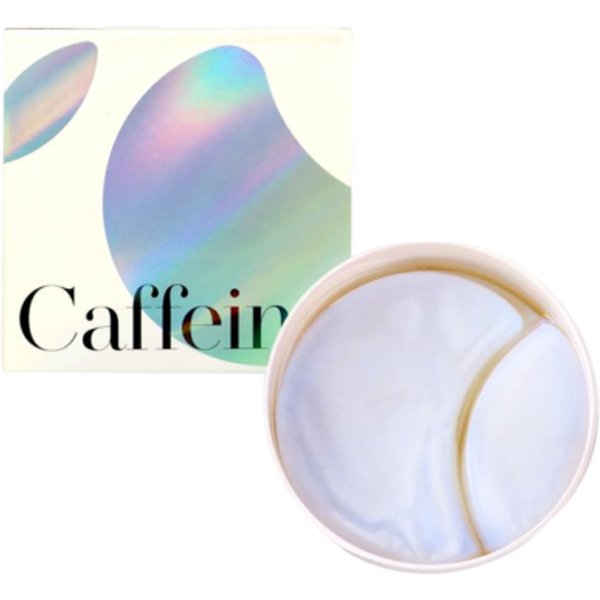 KSECRETInstant Relief Eye Gel Patches - CAFFEINE - 102g$16.80
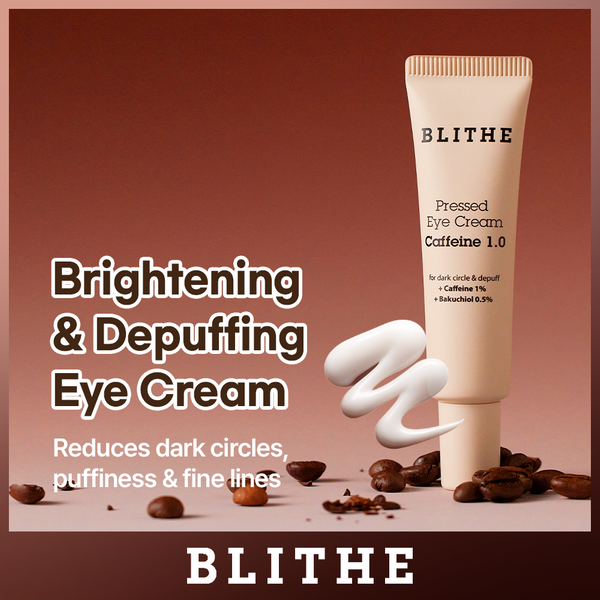 BlithePressed Eye Cream Caffeine 1.0 - 20ml$18.05Also on Stylevana
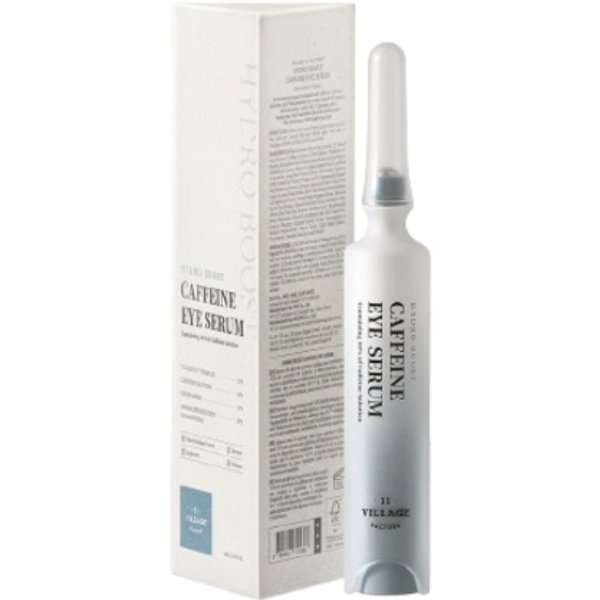 Village 11 FactoryHydro Boost Caffeine Eye Serum - 10ml$18.90
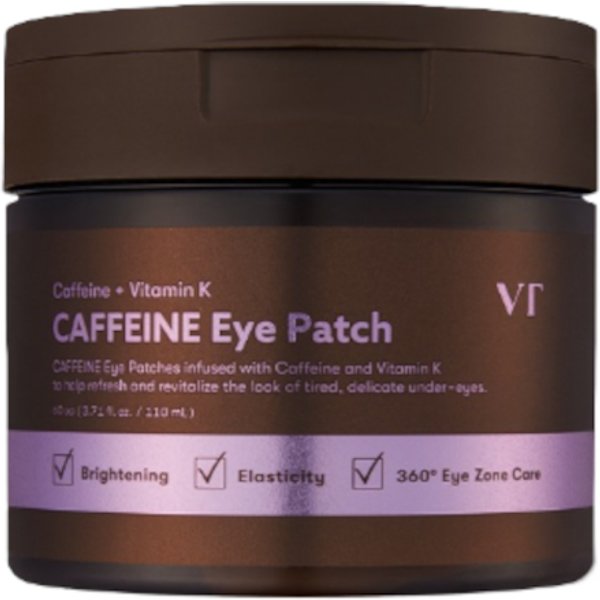 VTCaffeine Eye Patch - 110ml/60patches$23.71Also on Stylevana
Already have one? Check how it fits your skin with Pick.
Common questions about Caffeine#
What is Caffeine?
- A naturally occurring plant compound used in eye products to help the under-eye area look brighter and more refreshed.
When should you apply Caffeine?
- Morning or evening. The evidence supports either, so use whichever fits your routine.
How often can you use Caffeine?
- Daily, around the eyes only.
Where do you apply Caffeine?
- Around the eyes only.
Can you use Caffeine around the eyes?
- Yes — Caffeine goes around the eyes only.
Does Caffeine make skin more sensitive to the sun?
- No. Caffeine is not flagged as increasing sun sensitivity.
What should you not use with Caffeine?
- Nothing flagged. None of the ingredients this wiki covers needs to be kept apart from Caffeine — check the label of anything not covered here.
Who should avoid Caffeine?
- Skip it if any of these apply: Recent Facial or Laser.
Is there a cosmetic limit for Caffeine?
- No. No cosmetic regulator in the United States, Canada, the European Union or Great Britain sets a maximum strength for it. That is a limit on the rules, not a signal to use more.
Related ingredients#
How we check this#
Everything on this page traces to the sources listed below — regulators' own publications and published studies. Where the evidence does not answer a question, it is left unanswered.
Some sources below are the official product information for prescription medicines, cited for how they interact with this ingredient. We use them for their safety and handling detail only. A cosmetic product is not one of those medicines and is not intended to treat any condition.
Our review is AI-assisted and is not a named expert's opinion. Last reviewed August 7, 2026.
Think something here is out of date or wrong? Email us at wiki@skinintelligence.ai with your reasoning and where you read it. We read what people send, and we update the page when the sources support it.
Regulators and official bodies · 10
- S1Cosmetic Ingredient Review Expert Panel. Safety Assessment of Methylxanthines as Used in Cosmetics. Draft Final Report for Panel Review, released 9 November 2018; panel meeting 3–4 December 2018. cir-safety.org/sites/default/files/Methylxanthines.pdf. Note on status: every page is stamped "Distributed for comment only — do not cite or quote"; it is used here for the underlying study data, and the conclusion is taken from the published final report S2.
- S13Health Canada. Cosmetic Ingredient Hotlist: List of Ingredients that are Prohibited for Use in Cosmetic Products / List of Ingredients that are Restricted for Use in Cosmetic Products. 2025 edition. canada.ca.
- S14US Food and Drug Administration. Prohibited & Restricted Ingredients in Cosmetics, citing 21 CFR Part 700 Subpart B. fda.gov.
- S15Regulation (EC) No 1223/2009 of the European Parliament and of the Council of 30 November 2009 on cosmetic products — consolidated text in force from 1 May 2026, CELEX 02009R1223-20260501, all Annexes (eur-lex.europa.eu); and Annex II and Annex III as retained in UK law (legislation.gov.uk/eur/2009/1223).
- S23Methotrexate 2.5mg Tablets BP — Summary of Product Characteristics, §4.5. electronic medicines compendium, product 4608.
- S24Roaccutane 10 mg soft capsules (emc 100633), Roaccutane 20 mg soft capsules (emc 100634), Isotretinoin 10 mg soft capsules (emc 10555) — Summaries of Product Characteristics.
- S25Differin Gel (emc 921), Differin Cream (emc 920), Aklief 50 microgram/g cream (emc 13881), Treclin 1%/0.025% w/w Gel (emc 5371), Epiduo 0.1%/2.5% Gel (emc 451), Adapalene/Benzoyl Peroxide 0.1%/2.5% gel (emc 15922) — Summaries of Product Characteristics.
- S26Tetralysal 300mg Hard Capsules (emc 926), Efracea 40mg Modified Release Hard Capsules (emc 6652) — Summaries of Product Characteristics.
- S27Deximune 25 mg soft capsules (ciclosporin) — Summary of Product Characteristics, emc 2602.
- S29Ciprofloxacin 250 mg film-coated tablets — Summary of Product Characteristics, §4.5. electronic medicines compendium, product 4341.
Studies and references · 19
- S2Cherian PA, Bergfeld WF, Belsito DV, Hill RA, Klaassen CD, Liebler DC, Marks JG Jr, Shank RC, Slaga TJ, Snyder PW, Fiume M, Heldreth B. Safety Assessment of Methylxanthines as Used in Cosmetics. Int J Toxicol. 2024;43(4_suppl):42–77. PMID 39049435. doi:10.1177/10915818241260282.
- S3Ahmadraji F, Shatalebi MA. Evaluation of the clinical efficacy and safety of an eye counter pad containing caffeine and vitamin K in emulsified Emu oil base. Adv Biomed Res. 2015;4:10. PMID 25625116; PMC4300604.
- S4Hamie H, Yassine R, Shoukfeh R, Turk D, Huq F, Moossavi M. A review of the efficacy of popular eye cream ingredients. Int J Womens Dermatol. 2024;10(2):e156. PMID 38873621; PMC11175953.
- S5Elias ML, Israeli AF, Madan R. Caffeine in Skincare: Its Role in Skin Cancer, Sun Protection, and Cosmetics. Indian J Dermatol. 2023;68(5):546–550. PMID 38099120; PMC10718232.
- S6Rajabi-Estarabadi A, Hartman CL, Iglesia S, Kononov T, Zahr AS. Effectiveness and tolerance of multicorrective topical treatment for infraorbital dark circles and puffiness. J Cosmet Dermatol. 2024;23(2):486–495. PMID 38112168. doi:10.1111/jocd.16122.
- S7Ojeh N, Stojadinovic O, Pastar I, Sawaya A, Yin N, Tomic-Canic M. The effects of caffeine on wound healing. Int Wound J. 2016;13(5):605–13. PMID 25041108; PMC7950075. doi:10.1111/iwj.12327.
- S8Rosado C, Tokunaga VK, Sauce R, de Oliveira CA, Sarruf FD, Parise-Filho R, Maurício E, de Almeida TS, Velasco MVR, Baby AR. Another Reason for Using Caffeine in Dermocosmetics: Sunscreen Adjuvant. Front Physiol. 2019;10:519. PMID 31130869; PMC6509748.
- S9Zhang J, Rahman M, Zhao Q, Feliciano J, Bisz E, Dziuk B, Lalancette R, Szostak R, Szostak M. N-Heterocyclic Carbene Complexes of Nickel(II) from Caffeine and Theophylline: Sustainable Alternative to Imidazol-2-ylidenes. Organometallics. 2022;41(14):1806–1815. PMID 36213557; PMC9534456.
- S10Francescato G, Leitão MIPS, Orsini G, Petronilho A. Synthesis and Medicinal Applications of N-Heterocyclic Carbene Complexes Based on Caffeine and Other Xanthines. ChemMedChem. 2024;19(15):e202400118. PMID 38668124. doi:10.1002/cmdc.202400118.
- S11Chan S, Kantham S, Rao VM, Palanivelu MK, Pham HL, Shaw PN, McGeary RP, Ross BP. Metal chelation, radical scavenging and inhibition of Aβ42 fibrillation by food constituents in relation to Alzheimer's disease. Food Chem. 2016;199:185–94. PMID 26775960.
- S12PubChem compound records: caffeine CID 2519, theophylline CID 2153, theobromine CID 5429, xanthine CID 1188. NCBI PubChem (curated scientific database).
- S16Li S, Chen ML, Drucker AM, Cho E, Geng H, Qureshi AA, Li WQ. Association of Caffeine Intake and Caffeinated Coffee Consumption With Risk of Incident Rosacea in Women. JAMA Dermatol. 2018;154(12):1394–1400. PMID 30347034; PMC6583325.
- S17Semenescu I, Similie D, Diaconeasa Z, Danciu C. Recent Advances in the Management of Rosacea through Natural Compounds. Pharmaceuticals (Basel). 2024;17(2):212. PMID 38399428; PMC10892689.
- S18Sawant O, Khan T. Management of periorbital hyperpigmentation: An overview of nature-based agents and alternative approaches. Dermatol Ther. 2020;33(4):e13717. PMID 32472659. doi:10.1111/dth.13717.
- S19Park M, Akuffo-Addo E, Mar K, Zhu CK, Mukovozov I. Treatments for periorbital hyperpigmentation in fitzpatrick skin types IV–VI: a systematic review. Arch Dermatol Res. 2024;316(8):552. PMID 39172264. doi:10.1007/s00403-024-03278-5. No abstract released on PubMed or Europe PMC; full text behind authentication. Cited for the existence and scope of the review only.
- S20Mattoli L, Mercati V, Burico M, Bedont S, Porchia M, Tisato F, D'Aronco S, Crotti S, Agostini M, Traldi P. Experimental Evidence of the Presence of Bimolecular Caffeine/Catechin Complexes in Green Tea Extracts. J Nat Prod. 2018;81(11):2338–2347. PMID 30372064.
- S21Muhammad F, Jaberi-Douraki M, de Sousa DP, Riviere JE. Modulation of chemical dermal absorption by 14 natural products: a quantitative structure permeation analysis of components often found in topical preparations. Cutan Ocul Toxicol. 2017;36(3):237–252. PMID 27825281.
- S22Herman A, Herman AP. Caffeine's mechanisms of action and its cosmetic use. Skin Pharmacol Physiol. 2013;26(1):8–14. PMID 23075568. doi:10.1159/000343174.
- S28Heidari F, Ebrahim Zadeh M, Haji Abole Zadeh M, Namiranian N. The Frequency of Periorbital Hyperpigmentation Risk Factors. J Cosmet Dermatol. 2025;24(2):e70036. PMID 39924458; PMC11807928.