What does Peptides (Eye Area) do?#
A peptide eye cream for the look of fine lines around the eyes. Applied around the eye area, it helps the skin there look smoother, supporting a firmer-looking eye contour over several weeks of consistent use.
Benefits
- Softens the look of fine lines around the eyes
- Promotes the appearance of smoother skin around the eyes
- Supports a firmer-looking eye contour
How it works
Peptides are short chains of amino acids used in eye-area formulas. Applied around the eye, they help the skin there look smoother and firmer over time, softening the appearance of fine lines. Eye-area formulas are made for the thinner, more delicate skin around the eyes, and the visible difference builds gradually with consistent use rather than appearing straight away.
How to use Peptides (Eye Area)#
Before you start
Leave it off while the skin around your eyes is irritated or looking red, and start again once it has settled.
How often
From the start is fine — peptides are gentle around the eyes, so no easing-in period is needed.
Where to apply
Stay on the orbital bone, the ridge you can feel around the eye socket. Keep it off the lash line and out of the inner corner, so it cannot wick into the eye.
How to apply
Pat it in with a fingertip along the brow bone and under the eye, rather than rubbing — the skin there reacts to friction.
How much
A drop-sized amount around each eye is enough.
Alongside others
If a retinoid eye product is already part of your routine, the arrangement the studies actually tested is the peptide product in the morning and the retinoid at night.
What to expect
Give it about four weeks before judging it, and any visible difference tends to keep building after that.
If it doesn't suit
If your lids feel heavy in the morning, use less or choose a lighter texture — that feeling comes from a rich cream sitting near the lid, not from the peptides.
For external use around the eye area only. Avoid direct contact with eyes. Discontinue use if irritation occurs.
The form you will see it in
Peptide eye cream
- Where it goes
- Around the eyes
Using Peptides (Eye Area) with other ingredients
Pairs well with Peptides (Eye Area)
Retinol (Eye Area)
Works well togetherThe pairing that was actually tested around the eyes — a peptide eye cream in the morning and a retinoid eye cream at night.
Ceramides
Works well togetherCeramides keep the eye area comfortable, and a peptide eye cream sits easily alongside them.
Hyaluronic Acid
Works well togetherHyaluronic acid brings lightweight hydration to the eye area, which keeps the overall texture from feeling heavy.
Caffeine
Works well togetherCaffeine addresses puffiness while peptides support firmness, targeting different eye area concerns.
Niacinamide
Works well togetherPeptides and niacinamide have been studied together in one routine, each supporting a smoother-looking finish in its own way.
What not to use with Peptides (Eye Area)
Nothing flagged. None of the ingredients this wiki covers needs to be kept apart from Peptides (Eye Area) — check the label of anything not covered here.
Who should avoid Peptides (Eye Area)?#
Six situations change whether Peptides (Eye Area) suits your skin right now. Each one is either a reason to skip it, a reason to go slowly, or nothing to watch for.
- Fragile or Sensitive
- Skip it
- Prone to Redness
- Go slowly
- Dry or Itchy Patches
- Go slowly
- Maternity & Nursing
- No caution
- Recent Facial or Laser
- No caution
- Recent Shave or Wax
- No caution
Prone to Redness — Try it on a small area first, and use it less often — or stop — if you notice stinging or extra redness.
Dry or Itchy Patches — Keep the rest of your routine well moisturized, and use it less often — or stop — if you notice tightness or itching.
Cosmetic strength limits for Peptides (Eye Area) where you live#
| Region | Most a cosmetic may contain | |
|---|---|---|
 United States United States | No explicit cap | |
The FDA restricts a short list of ingredients and sets no general strength ceiling on the rest. A figure marked "guidance, not law" is the Cosmetic Ingredient Review panel's recommendation. 21 CFR part 700, subpart B — Requirements for Specific Cosmetic Products (FDA) | ||
 Canada Canada | No explicit cap | |
One list does the work — Health Canada's Hotlist of prohibited and restricted cosmetic ingredients. | ||
 European Union European Union | No explicit cap | |
The Cosmetics Regulation's annexes, consolidated to 1 May 2026. A figure marked "guidance, not law" comes from the EU's cosmetic safety committee rather than from the annexes. | ||
 Great Britain Great Britain | No explicit cap | |
Great Britain kept the annexes as its own law and updates them only when it chooses; Northern Ireland follows the live EU Regulation, which is why some rows read differently for each. Regulation (EC) No 1223/2009 as it applies in Great Britain · Regulation (EC) No 1223/2009, Annexes II–VI | ||
 India India | No explicit cap | |
India writes its own standard, aligned to the European rules as they stood in 2012. Mandatory since 9 February 2026. IS 4707 (Part 2):2025 — restricted and prohibited cosmetic ingredients · IS 4707 (Part 3):2025 — preservatives · Cosmetics Rules, 2020, Ninth Schedule | ||
 Brazil Brazil | No explicit cap | |
ANVISA rewrote its restricted list in June 2026, and a companion act amended the prohibited list at the same time. RDC 1.029/2026 — restricted ingredients · RDC 529/2021 — prohibited ingredients, as amended by RDC 1.030/2026 · RDC 528/2021 — preservatives | ||
 Japan Japan | No explicit cap | |
Japan's cosmetics standard keeps drug ingredients out of cosmetics, so most of its figures sit in the ministry's list of the ones a cosmetic may still contain. Cosmetics Standards (化粧品基準), Ministry of Health, Labour and Welfare · Cosmetics Standards — the ministry's own English translation · Drug ingredients permitted in cosmetics — 2007 notification | ||
 South Korea South Korea | No explicit cap | |
One MFDS regulation carries both the prohibited list and the restricted list, in force 18 March 2026. Sunscreens and a few other categories are cleared product by product instead. Regulation on Safety Standards for Cosmetics (MFDS Notification 2026-19) · Regulation on the Review of Functional Cosmetics (MFDS Notification 2025-88) | ||
 Kenya Kenya | No explicit cap | |
Kenya's standard applies the EU annexes as they stand rather than copying them, so its ingredient limits are the EU's — including the 2024 additions. A figure marked "guidance, not law" sits outside the annexes and does not carry over. KS EAS 377-1, -2 and -3:2022 — cosmetics safety requirements, published by KEBS · Regulation (EC) No 1223/2009, Annexes II–VI | ||
 Namibia Namibia | No explicit cap | |
Namibia sets no ingredient limits at all. Its cosmetic rule is a single line requiring a product to be free of any harmful ingredient. Foodstuffs, Cosmetics and Disinfectants Ordinance 18 of 1979, and the regulations under it | ||
 Ukraine Ukraine | No explicit cap | |
Ukraine's own transposition of the EU annexes, as they stood before the 2024 additions, fully in force since 3 August 2026. A further revision is due on 1 February 2027. Technical Regulation on cosmetic products — Cabinet Resolution No. 65 of 20 January 2021 | ||
 Georgia Georgia | No explicit cap | |
Georgia has no cosmetics rulebook — its register of technical regulations carries no cosmetics entry — so only the general product-safety duty applies. | ||
 Australia Australia | No explicit cap | |
Australia writes no cosmetic ingredient list. A figure here is the point at which a substance becomes a medicine or a scheduled substance carrying Caution labeling, so its numbers sit well above other markets'. Poisons Standard — June 2026 · Therapeutic Goods (Excluded Goods) Determination 2018 | ||
 United Arab Emirates United Arab Emirates | No explicit cap | |
The Gulf standard points at the EU annexes as amended, so its ingredient limits are the EU's. A figure marked "guidance, not law" sits outside the annexes and does not carry over. GSO 1943:2024 — Cosmetic products: safety requirements (Gulf technical regulation) · Regulation (EC) No 1223/2009, Annexes II–VI | ||
 Kuwait Kuwait | No explicit cap | |
The Gulf standard points at the EU annexes as amended, so its ingredient limits are the EU's. A figure marked "guidance, not law" sits outside the annexes and does not carry over. GSO 1943:2024 — Cosmetic products: safety requirements (Gulf technical regulation) · Regulation (EC) No 1223/2009, Annexes II–VI | ||
 Hong Kong Hong Kong | No explicit cap | |
Hong Kong writes no cosmetics rulebook. Its Poisons List (Cap. 138A, Schedule 10) decides which substances may be sold only as medicines, and general safety is judged case by case against whichever overseas standard the enforcer considers reasonable. Pharmacy and Poisons Regulations (Cap. 138A), Schedule 10 — the poisons list · Pharmacy and Poisons Board — Guidance Notes on classifying pharmaceutical products, April 2026 | ||
 Singapore Singapore | No explicit cap | |
Singapore writes the ASEAN annexes into its own schedule, and its regulator tells companies to check the current ASEAN release as well — which is why a figure here can read "guidance, not law". Health Products (Cosmetic Products — ASEAN Cosmetic Directive) Regulations 2007, Third Schedule · ASEAN Cosmetic Directive annexes — release 2026-1, 22 June 2026 | ||
 Brunei Brunei | No explicit cap | |
Brunei carries the 2007 ASEAN annexes in its own schedule and has not updated them since, so it reads differently from Singapore on several ingredients. Medicines (Cosmetic Products) Regulations (Cap. 285 Rg 1), Schedule 1 — revised edition 2024 | ||
 Jordan Jordan | No explicit cap | |
Jordan's cosmetic rules defer to "the approved references" and name none of them, so there is no Jordanian figure to read. The only number in the instrument governs the ingredient list on the pack. JFDA instructions on cosmetics and pharmaceutical cosmetics, 2026 | ||
 Trinidad & Tobago Trinidad & Tobago | No explicit cap | |
Trinidad and Tobago has had the power to set cosmetic standards since 1960 and has never used it. The regulations made under the Act cover food and drugs, with no cosmetics part; what binds is the Act's general rule against selling a cosmetic that may injure the user. Food and Drugs Act, Chap. 30:01 · Food and Drugs Regulations | ||
No cosmetic regulator in the 20 markets above sets a maximum strength for peptides (eye area). That is the state of the rules, not a signal to use more: how much goes into a product is the formulator's decision.
Open a market to see the rulebook its figure comes from. Those notes describe each market's own rules as we read them, current to August 24, 2026; the linked documents are the authority, and nothing here is legal advice.
Sample products with Peptides (Eye Area)#
A few well-known products, not a full list — product names are each brand's own. We don't sell them — the shop prices them in US dollars and ships from Hong Kong, so delivery and duties come on top. It may not ship everywhere.
We may earn a small commission when you buy through these links.
Eye care · 8
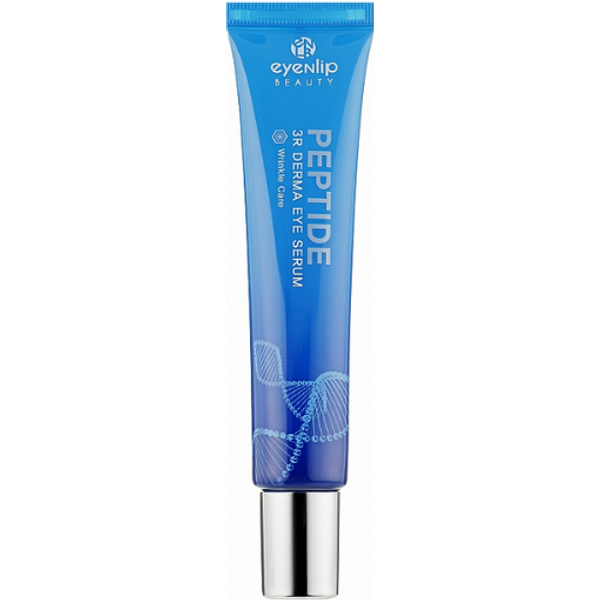 EYENLIPPeptide 3R Derma Eye Serum - 25ml$6.59
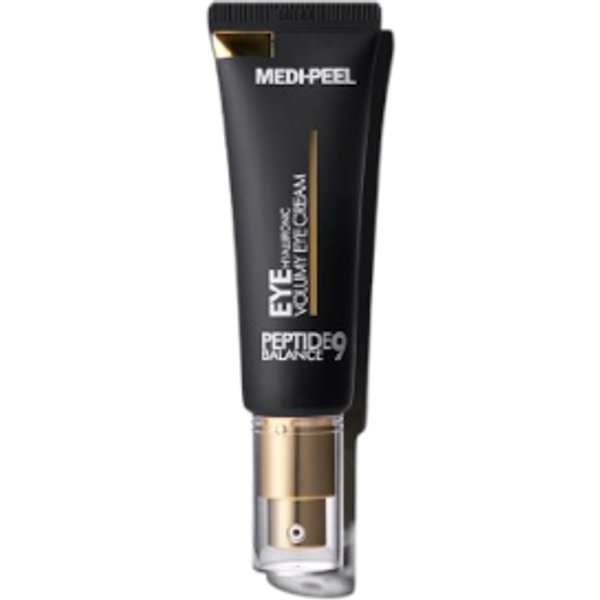 MEDIPEEL+Peptide 9 Hyaluronic Volumy Eye Cream - 40ml$7.65Also on Stylevana
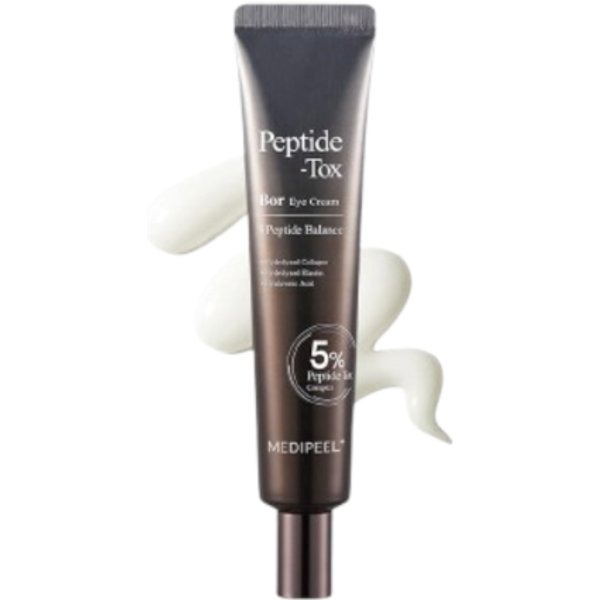 MEDIPEEL+Peptide-Tox Bor Eye Cream - 40ml$8.49Also on YesStyle
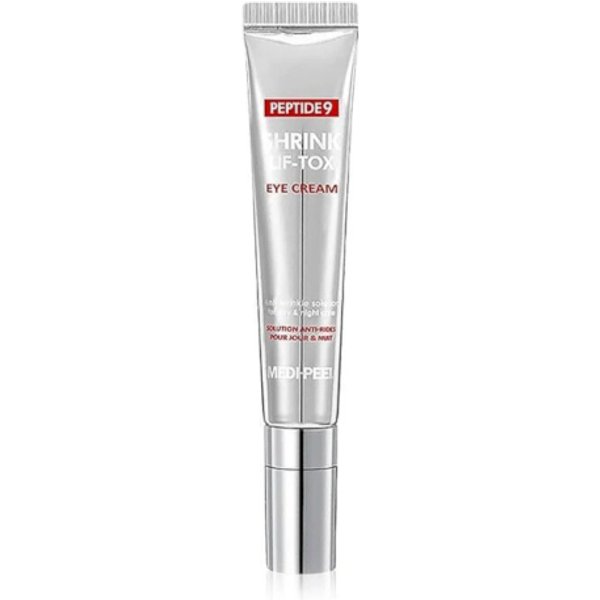 MEDIPEEL+Peptide 9 Volume Lif-Tox Eye Cream - 20ml$9.03Also on YesStyle
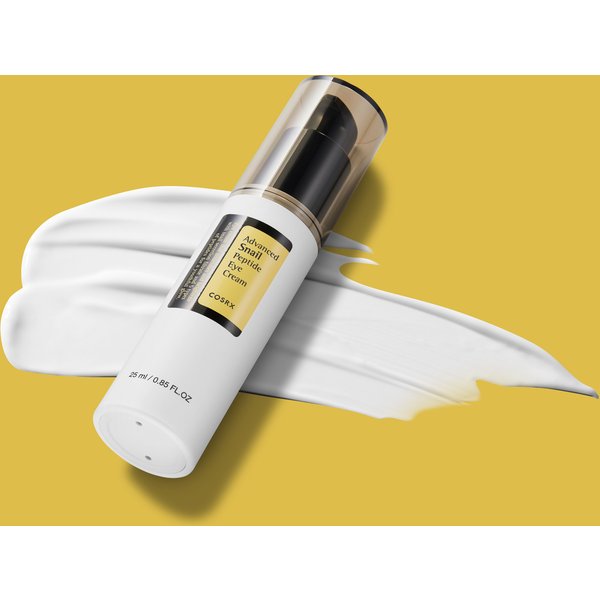 COSRXAdvanced Snail Peptide Eye Cream - 25ml$22.40Also on YesStyle
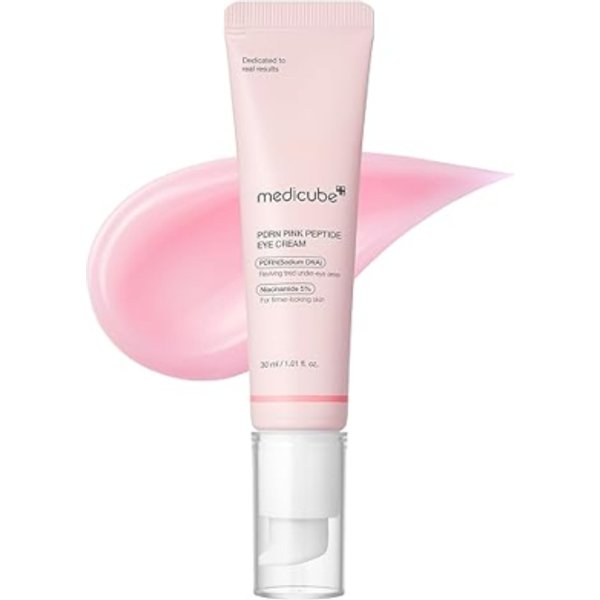 medicubePDRN Pink Peptide Eye Cream - 30ml$23.90Also on YesStyle
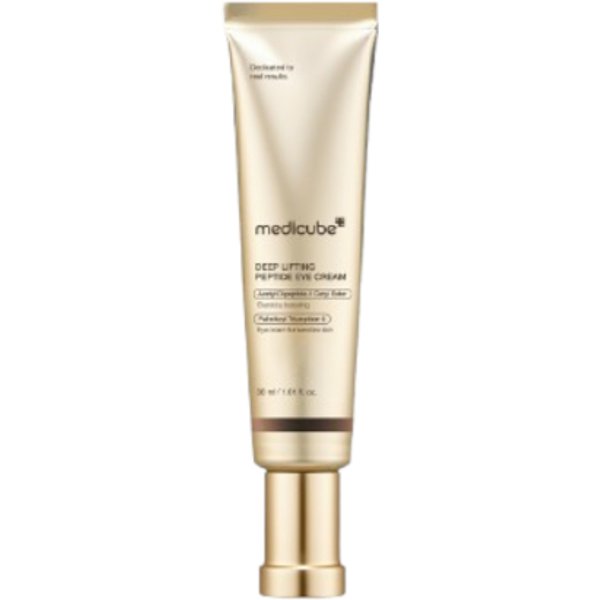 medicubeDeep Lifting Peptide Eye Cream - 30ml$24.90
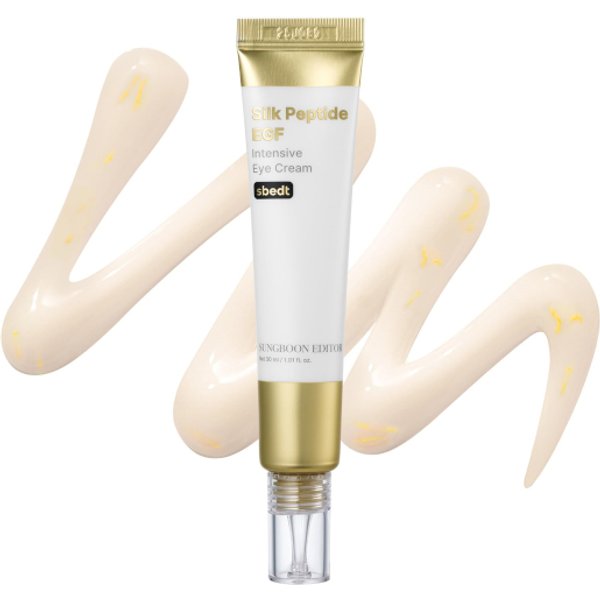 SUNGBOON EDITORSilk Peptide Intensive Lifting Eye Cream - 30ml$35.00
Already have one? Check how it fits your skin with Pick.
Common questions about Peptides (Eye Area)#
What is Peptides (Eye Area)?
- Short chains of amino acids in an eye product, used to soften the look of fine lines around the eyes and help the skin there look smoother.
What else is Peptides (Eye Area) called?
- On a label you may see Peptide.
When should you apply Peptides (Eye Area)?
- Morning or evening.
How often can you use Peptides (Eye Area)?
- Daily, around the eyes only.
Where do you apply Peptides (Eye Area)?
- Around the eyes only.
Can you use Peptides (Eye Area) around the eyes?
- Yes — Peptides (Eye Area) goes around the eyes only.
Does Peptides (Eye Area) make skin more sensitive to the sun?
- No. Peptides (Eye Area) is not flagged as increasing sun sensitivity.
What should you not use with Peptides (Eye Area)?
- Nothing flagged. None of the ingredients this wiki covers needs to be kept apart from Peptides (Eye Area) — check the label of anything not covered here.
Who should avoid Peptides (Eye Area)?
- Skip it if any of these apply: Fragile or Sensitive. Go slowly with Prone to Redness and Dry or Itchy Patches.
Is there a cosmetic limit for Peptides (Eye Area)?
- No. No cosmetic regulator in the United States, Canada, the European Union or Great Britain sets a maximum strength for it. That is a limit on the rules, not a signal to use more.
Related ingredients#
How we check this#
Everything on this page traces to the sources listed below — regulators' own publications and published studies. Where the evidence does not answer a question, it is left unanswered.
Some sources below are the official product information for prescription medicines, cited for how they interact with this ingredient. We use them for their safety and handling detail only. A cosmetic product is not one of those medicines and is not intended to treat any condition.
Our review is AI-assisted and is not a named expert's opinion. Last reviewed August 7, 2026.
Think something here is out of date or wrong? Email us at wiki@skinintelligence.ai with your reasoning and where you read it. We read what people send, and we update the page when the sources support it.
Regulators and official bodies · 14
- S1Cosmetic Ingredient Review. Safety Assessment of Myristoyl Pentapeptide-4, Palmitoyl Pentapeptide-4, and Pentapeptide-4 as Used in Cosmetics. Final Report, September 2024.
- S2Cosmetic Ingredient Review. Safety Assessment of Acetyl Hexapeptide-8 and Acetyl Hexapeptide-8 Amide as Used in Cosmetics. Draft Report for Panel Review, 21 August 2020. Conclusion: "To be determined." Marked "Distributed for Comment Only — Do Not Cite or Quote." Used here as evidence of the underlying study data it reproduces, with its draft status stated wherever it is relied on.
- S3Cosmetic Ingredient Review. Acetyl Hexapeptide-8 and Acetyl Hexapeptide-8 Amide — revised tentative report, technical data. December 2020.
- S4Cosmetic Ingredient Review. Safety Assessment of Tripeptide-1, Hexapeptide-12, Their Metal Salts and Fatty Acyl Derivatives, and Palmitoyl Tetrapeptide-7 as Used in Cosmetics. Final Report, June 2014. Conclusion applicable only to the sequences GHK, VGVAPG and GQPR.
- S5Cosmetic Ingredient Review. Palmitoyl Oligopeptides — Scientific Literature Review. July 2012. Carries the palmitoyl tripeptide-1 "around the eye zones" trial and the palmitoyl pentapeptide-3 eye-area trial.
- S6U.S. Food and Drug Administration. Eye Cosmetic Safety..
- S7Regulation (EC) No 1223/2009 of the European Parliament and of the Council of 30 November 2009 on cosmetic products, consolidated text 02009R1223, version applying from 1 May 2026 — Annex II entries 1728 and 1729, Annex III entry 307. EUR-Lex.
- S8Regulation (EC) No 1223/2009 as assimilated in Great Britain — Annex II and Annex III.
- S9Health Canada. Cosmetic Ingredient Hotlist — List of Ingredients that are Prohibited for Use in Cosmetic Products; List of Ingredients that are Restricted for Use in Cosmetic Products..
- S10Roaccutane 20 mg soft capsules — Summary of Product Characteristics. electronic medicines compendium, product 100634. §4.4, §4.5, §4.8.
- S11Differin Gel — Summary of Product Characteristics. electronic medicines compendium, product 921. §4.2, §4.4, §4.5, §4.8.
- S12Efracea 40 mg Modified Release Hard Capsules (doxycycline) — Summary of Product Characteristics. electronic medicines compendium, product 6652. §4.4, §4.8.
- S13National Rosacea Society. Rosacea Skin Care & Cosmetics..
- S14U.S. Food and Drug Administration. FINACEA (azelaic acid) Foam, 15% — prescribing information, 2020. §5.2 Eye and Mucous Membranes Irritation.
Studies and references · 20
- S15Lungu C, Considine E, Zahir S, Ponsati B, Arrastia S, Hallett M. Pilot study of topical acetyl hexapeptide-8 in the treatment for blepharospasm in patients receiving botulinum toxin therapy. Eur J Neurol. 2013;20(3):515–518. doi:10.1111/ene.12009. PMID 23146065.
- S16Blanes-Mira C, Clemente J, Jodas G, Gil A, Fernández-Ballester G, Ponsati B, Gutierrez L, Pérez-Payá E, Ferrer-Montiel A. A synthetic hexapeptide (Argireline) with antiwrinkle activity. Int J Cosmet Sci. 2002;24(5):303–310. doi:10.1046/j.1467-2494.2002.00153.x. PMID 18498523.
- S17Wang Y, Wang M, Xiao XS, Pan P, Li P, Huo J. The anti wrinkle efficacy of synthetic hexapeptide (Argireline) in Chinese Subjects. J Cosmet Laser Ther. 2013;15(4):237–241. PMID 23607739.
- S18Raikou V, Varvaresou A, Panderi I, Papageorgiou E. The efficacy study of the combination of tripeptide-10-citrulline and acetyl hexapeptide-3. A prospective, randomized controlled study. J Cosmet Dermatol. 2017;16(2):271–278. doi:10.1111/jocd.12314. PMID 28150423.
- S19Hamie H, Yassine R, Shoukfeh R, Turk D, Huq F, Moossavi M. A review of the efficacy of popular eye cream ingredients. Int J Womens Dermatol. 2024;10(2). doi:10.1097/JW9.0000000000000156. PMID 38873621.
- S20Kaufman J, Callender V, Young C, Jones P, Wortzman M, Nelson D. Efficacy and Tolerability of a Retinoid Eye Cream for Fine to Moderate Wrinkles of the Periorbital Region. J Drugs Dermatol. 2022;21(9):932–937. doi:10.36849/JDD.6815. PMID 36074511.
- S21Zonari A, Brace LE, Li F, Harder NHO, Harker C, Jacob C, Kaufman J, Chilukuri S, Oliveira CR, Boroni M, Carvalho JL. Clinical efficacy of OS-01 peptide formulation in reducing the signs of periorbital skin aging. Int J Cosmet Sci. 2025. doi:10.1111/ics.13042. PMID 39788697. Uncontrolled, n=22, multi-component..
- S22Yang F, Zhang X, Wang H, Guo M, Zhang J, Feng X, Yu J, Yang J, Zhu J, Wang Y. Comprehensive evaluation of the efficacy and safety of a new multi-component anti-aging topical eye cream. Skin Res Technol. 2024;30(7). doi:10.1111/srt.13790. PMID 38932444. Authors state the study "did not include a control or placebo group"..
- S23Borzova E, Snarskaya E, Bratkovskaya A. Eyelid dermatitis in patch-tested adult patients: a systematic review with a meta-analysis. Sci Rep. 2024;14(1):18791. doi:10.1038/s41598-024-69612-z. PMID 39138344.
- S24Dagi Glass LR, Aakalu VK, Foster JA, Grob SR, McCulley TJ, Tao J, Vagefi MR, Yoon M, Pineles SL, Wladis EJ. Patch Testing for Eyelid Dermatitis: A Report by the American Academy of Ophthalmology. Ophthalmology. 2025;132(7):842–847. doi:10.1016/j.ophtha.2025.01.019. PMID 40119863.
- S25Bjerring P, Draelos ZD, Fabi SG, Goodman GJ, Hau KC, Haus A, Heydenrych I, Kim J, Lin LC, Sayed K, Sundaram H, Tsubouchi R, Wu Y, Brieva P, Choudhary H, Xiang LF. International Expert Consensus on Integrated Skincare Active Ingredients for Pretreatment and Posttreatment Use With Medical Aesthetic Procedures to Enhance Skin Benefits. J Cosmet Dermatol. 2026. doi:10.1111/jocd.70880. PMID 42087526. Delphi expert consensus, not a trial..
- S26Zdrada-Nowak J, Surgiel-Gemza A, Szatkowska M. Acetyl Hexapeptide-8 in Cosmeceuticals—A Review of Skin Permeability and Efficacy. Int J Mol Sci. 2025;26(12):5722. doi:10.3390/ijms26125722. PMID 40565185.
- S27Escobar S, Valois A, Nielsen M, Closs B, Kerob D. Effectiveness of a formulation containing peptides and vitamin C in treating signs of facial ageing: three clinical studies. Int J Cosmet Sci. 2021;43(2):131–135. doi:10.1111/ics.12665. PMID 33038010.
- S28Pintea A, Manea A, Pintea C, Vlad RA, Bîrsan M, Antonoaea P, Rédai EM, Ciurba A. Peptides: Emerging Candidates for the Prevention and Treatment of Skin Senescence: A Review. Biomolecules. 2025;15(1):88. doi:10.3390/biom15010088. PMID 39858482.
- S29Fu JJ, Hillebrand GG, Raleigh P, Li J, Marmor MJ, Bertucci V, Grimes PE, Mandy SH, Perez MI, Weinkle SH, Kaczvinsky JR. A randomized, controlled comparative study of the wrinkle reduction benefits of a cosmetic niacinamide/peptide/retinyl propionate product regimen vs. a prescription 0.02% tretinoin product regimen. Br J Dermatol. 2010;162(3):647–654. doi:10.1111/j.1365-2133.2009.09436.x. PMID 20374604.
- S30Sawant O, Khan T. Management of periorbital hyperpigmentation: An overview of nature-based agents and alternative approaches. Dermatol Ther. 2020;33(4):e13717. doi:10.1111/dth.13717. PMID 32472659.
- S31Rajabi-Estarabadi A, Hartman CL, Iglesia S, Kononov T, Zahr AS. Effectiveness and tolerance of multicorrective topical treatment for infraorbital dark circles and puffiness. J Cosmet Dermatol. 2024;23(2):486–495. doi:10.1111/jocd.16122. PMID 38112168. Open-label, no control, multi-component; three authors affiliated to the product's manufacturer..
- S32Nguyen TQ, Zahr AS, Kononov T, Ablon G. A Randomized, Double-blind, Placebo-controlled Clinical Study Investigating the Efficacy and Tolerability of a Peptide Serum Targeting Expression Lines. J Clin Aesthet Dermatol. 2021;14(5):14–21. Whole face, not periorbital; industry-affiliated authors..
- S33Ferreira MS, Magalhães MC, Sousa-Lobo JM, Almeida IF. Trending Anti-Aging Peptides. Cosmetics. 2020;7(4):91. doi:10.3390/cosmetics7040091.
- S34Henseler H. Investigating the effects of Argireline in a skin serum containing hyaluronic acids on skin surface wrinkles using the Visia Complexion Analysis camera system for objective skin analysis. GMS Interdiscip Plast Reconstr Surg DGPW. 2023;12:Doc09. doi:10.3205/iprs000179. PMID 38024099. Single-author, co-formulation..