What does Ferulic Acid do?#
A plant-derived antioxidant for the morning serum step. In vitamin C serums it also helps keep vitamin C and vitamin E stable.
Benefits
- Provides antioxidant support against everyday environmental stress
- Helps vitamin C and vitamin E stay stable when they share a formula
- Can help skin look smoother over time
- Can help a dull complexion look brighter
How it works
Ferulic acid is an antioxidant found in plant cell walls — rice bran, oats and many seeds are rich in it, and cosmetic ferulic acid can be made from rice bran. As an antioxidant it neutralizes the unstable molecules that everyday environmental stress creates at the skin's surface. Most ferulic acid on shop shelves sits in vitamin C serums in a small amount, where it keeps the vitamin C and vitamin E stable; products that lead with ferulic acid use it as a main ingredient in its own right. Ethyl ferulate, often listed in sunscreens, is a different ingredient.
How to use Ferulic Acid#
Best time
Best in the morning; evening use also works.
How often
Every day, from the first day, with no need to build up.
Where it goes
After cleansing, before moisturizer and sunscreen.
Where to apply
Across the whole face. Keep it out of the eyes.
Sun
Wear sunscreen daily. Ferulic acid isn't one of the actives we flag for extra sun care.
Alongside others
It is often combined with vitamin C and vitamin E. In a vitamin C serum it is usually present in a small amount to keep the vitamins stable, and vitamin C is the main ingredient.
As a serum it is not an exfoliant, so it adds no extra exfoliation alongside acids or retinol.
What to expect
Some people feel a brief tingle the first few times, and some ferulic acid serums feel slightly greasy or tacky. Both usually settle, and a lighter moisturizer over the top helps with the feel. If redness or itching doesn't settle, stop using it.
What to look for
Ethyl ferulate, often listed in sunscreens, is a different ingredient, and so is gamma-oryzanol from rice bran. Look for ferulic acid itself on the list.
Storing it
Store it sealed, away from light and heat. Replace it if the serum has darkened.
Discontinue use if unexpected discomfort occurs.
The form you will see it in
Ferulic acid serum
- Where it goes
- Before sunscreen
Using Ferulic Acid with other ingredients
Pairs well with Ferulic Acid
Vitamin C (L-Ascorbic Acid)
Works well togetherFerulic acid helps vitamin C stay stable when they share a formula.
Vitamin E
Works well togetherOften formulated with vitamin C as an antioxidant trio, where ferulic acid helps keep both vitamins stable.
What not to use with Ferulic Acid
Nothing flagged. None of the ingredients this wiki covers needs to be kept apart from Ferulic Acid — check the label of anything not covered here.
Who should avoid Ferulic Acid?#
Six situations change whether Ferulic Acid suits your skin right now. Each one is either a reason to skip it, a reason to go slowly, or nothing to watch for.
- Maternity & Nursing
- No caution
- Fragile or Sensitive
- No caution
- Recent Facial or Laser
- No caution
- Prone to Redness
- No caution
- Dry or Itchy Patches
- No caution
- Recent Shave or Wax
- No caution
Cosmetic strength limits for Ferulic Acid where you live#
| Region | Most a cosmetic may contain | |
|---|---|---|
 United States United States | No explicit cap | |
The FDA restricts a short list of ingredients and sets no general strength ceiling on the rest. A figure marked "guidance, not law" is the Cosmetic Ingredient Review panel's recommendation. 21 CFR part 700, subpart B — Requirements for Specific Cosmetic Products (FDA) | ||
 Canada Canada | No explicit cap | |
One list does the work — Health Canada's Hotlist of prohibited and restricted cosmetic ingredients. | ||
 European Union European Union | No explicit cap | |
The Cosmetics Regulation's annexes, consolidated to 1 May 2026. A figure marked "guidance, not law" comes from the EU's cosmetic safety committee rather than from the annexes. | ||
 Great Britain Great Britain | No explicit cap | |
Great Britain kept the annexes as its own law and updates them only when it chooses; Northern Ireland follows the live EU Regulation, which is why some rows read differently for each. Regulation (EC) No 1223/2009 as it applies in Great Britain · Regulation (EC) No 1223/2009, Annexes II–VI | ||
 India India | No explicit cap | |
India writes its own standard, aligned to the European rules as they stood in 2012. Mandatory since 9 February 2026. IS 4707 (Part 2):2025 — restricted and prohibited cosmetic ingredients · IS 4707 (Part 3):2025 — preservatives · Cosmetics Rules, 2020, Ninth Schedule | ||
 Brazil Brazil | No explicit cap | |
ANVISA rewrote its restricted list in June 2026, and a companion act amended the prohibited list at the same time. RDC 1.029/2026 — restricted ingredients · RDC 529/2021 — prohibited ingredients, as amended by RDC 1.030/2026 · RDC 528/2021 — preservatives | ||
 Japan Japan | 10% | |
Japan's cosmetics standard keeps drug ingredients out of cosmetics, so most of its figures sit in the ministry's list of the ones a cosmetic may still contain. Cosmetics Standards (化粧品基準), Ministry of Health, Labour and Welfare · Cosmetics Standards — the ministry's own English translation · Drug ingredients permitted in cosmetics — 2007 notification | ||
 South Korea South Korea | No explicit cap | |
One MFDS regulation carries both the prohibited list and the restricted list, in force 18 March 2026. Sunscreens and a few other categories are cleared product by product instead. Regulation on Safety Standards for Cosmetics (MFDS Notification 2026-19) · Regulation on the Review of Functional Cosmetics (MFDS Notification 2025-88) | ||
 Kenya Kenya | No explicit cap | |
Kenya's standard applies the EU annexes as they stand rather than copying them, so its ingredient limits are the EU's — including the 2024 additions. A figure marked "guidance, not law" sits outside the annexes and does not carry over. KS EAS 377-1, -2 and -3:2022 — cosmetics safety requirements, published by KEBS · Regulation (EC) No 1223/2009, Annexes II–VI | ||
 Namibia Namibia | No explicit cap | |
Namibia sets no ingredient limits at all. Its cosmetic rule is a single line requiring a product to be free of any harmful ingredient. Foodstuffs, Cosmetics and Disinfectants Ordinance 18 of 1979, and the regulations under it | ||
 Ukraine Ukraine | No explicit cap | |
Ukraine's own transposition of the EU annexes, as they stood before the 2024 additions, fully in force since 3 August 2026. A further revision is due on 1 February 2027. Technical Regulation on cosmetic products — Cabinet Resolution No. 65 of 20 January 2021 | ||
 Georgia Georgia | No explicit cap | |
Georgia has no cosmetics rulebook — its register of technical regulations carries no cosmetics entry — so only the general product-safety duty applies. | ||
 Australia Australia | No explicit cap | |
Australia writes no cosmetic ingredient list. A figure here is the point at which a substance becomes a medicine or a scheduled substance carrying Caution labeling, so its numbers sit well above other markets'. Poisons Standard — June 2026 · Therapeutic Goods (Excluded Goods) Determination 2018 | ||
 United Arab Emirates United Arab Emirates | No explicit cap | |
The Gulf standard points at the EU annexes as amended, so its ingredient limits are the EU's. A figure marked "guidance, not law" sits outside the annexes and does not carry over. GSO 1943:2024 — Cosmetic products: safety requirements (Gulf technical regulation) · Regulation (EC) No 1223/2009, Annexes II–VI | ||
 Kuwait Kuwait | No explicit cap | |
The Gulf standard points at the EU annexes as amended, so its ingredient limits are the EU's. A figure marked "guidance, not law" sits outside the annexes and does not carry over. GSO 1943:2024 — Cosmetic products: safety requirements (Gulf technical regulation) · Regulation (EC) No 1223/2009, Annexes II–VI | ||
 Hong Kong Hong Kong | No explicit cap | |
Hong Kong writes no cosmetics rulebook. Its Poisons List (Cap. 138A, Schedule 10) decides which substances may be sold only as medicines, and general safety is judged case by case against whichever overseas standard the enforcer considers reasonable. Pharmacy and Poisons Regulations (Cap. 138A), Schedule 10 — the poisons list · Pharmacy and Poisons Board — Guidance Notes on classifying pharmaceutical products, April 2026 | ||
 Singapore Singapore | No explicit cap | |
Singapore writes the ASEAN annexes into its own schedule, and its regulator tells companies to check the current ASEAN release as well — which is why a figure here can read "guidance, not law". Health Products (Cosmetic Products — ASEAN Cosmetic Directive) Regulations 2007, Third Schedule · ASEAN Cosmetic Directive annexes — release 2026-1, 22 June 2026 | ||
 Brunei Brunei | No explicit cap | |
Brunei carries the 2007 ASEAN annexes in its own schedule and has not updated them since, so it reads differently from Singapore on several ingredients. Medicines (Cosmetic Products) Regulations (Cap. 285 Rg 1), Schedule 1 — revised edition 2024 | ||
 Jordan Jordan | No explicit cap | |
Jordan's cosmetic rules defer to "the approved references" and name none of them, so there is no Jordanian figure to read. The only number in the instrument governs the ingredient list on the pack. JFDA instructions on cosmetics and pharmaceutical cosmetics, 2026 | ||
 Trinidad & Tobago Trinidad & Tobago | No explicit cap | |
Trinidad and Tobago has had the power to set cosmetic standards since 1960 and has never used it. The regulations made under the Act cover food and drugs, with no cosmetics part; what binds is the Act's general rule against selling a cosmetic that may injure the user. Food and Drugs Act, Chap. 30:01 · Food and Drugs Regulations | ||
Where a figure appears, that is the maximum strength allowed or advised for ferulic acid in that market — some are set in cosmetics regulation, others are the ceiling a cosmetic safety panel recommends. Where no figure appears, the market either sets no cosmetic maximum or handles this ingredient outside its cosmetic rules. These are limits, not targets — the right strength for a formula is the formulator's decision.
Open a market to see the rulebook its figure comes from. Those notes describe each market's own rules as we read them, current to August 24, 2026; the linked documents are the authority, and nothing here is legal advice.
Sample products with Ferulic Acid#
A few well-known products, not a full list — product names are each brand's own. We don't sell them — the shop prices them in US dollars and ships from Hong Kong, so delivery and duties come on top. It may not ship everywhere.
We may earn a small commission when you buy through these links.
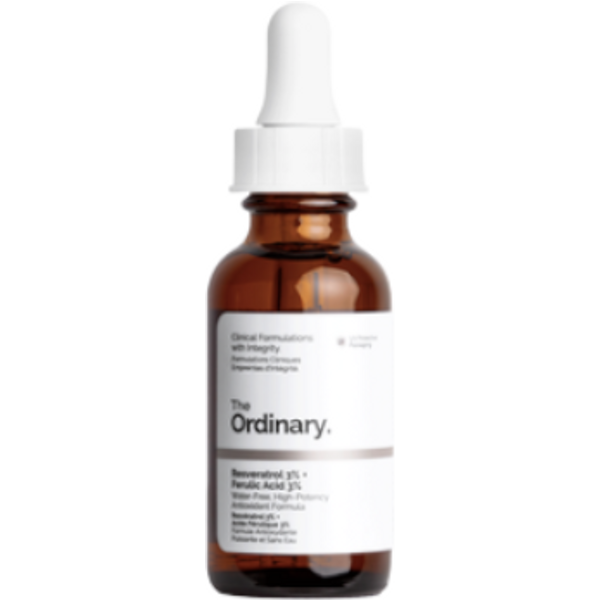
Already have one? Check how it fits your skin with Pick.
Common questions about Ferulic Acid#
What is Ferulic Acid?
- A plant antioxidant from rice bran and seeds, used to keep vitamin C and vitamin E stable in the same formula and for its own antioxidant support.
What else is Ferulic Acid called?
- On a label you may see Ferulic and Trans-ferulic acid.
When should you apply Ferulic Acid?
- Morning or evening. Best in the morning; evening use also works.
How often can you use Ferulic Acid?
- Daily.
Where do you apply Ferulic Acid?
- All over the face. Keep it away from your eyes and lips.
Can you use Ferulic Acid around the eyes?
- Yes. Ferulic Acid goes all over the face, the skin around the eyes included — keep it out of your eyes and off your lips.
Does Ferulic Acid make skin more sensitive to the sun?
- Ferulic Acid isn't one of the actives we flag for extra sun care, but that's not a promise about your skin. Wear sunscreen every morning regardless.
What should you not use with Ferulic Acid?
- Nothing flagged. None of the ingredients this wiki covers needs to be kept apart from Ferulic Acid — check the label of anything not covered here.
Is there a cosmetic limit for Ferulic Acid?
- No. No cosmetic regulator in the United States, Canada, the European Union or Great Britain sets a maximum strength for it. That is a limit on the rules, not a signal to use more.
Related ingredients#
How we check this#
Everything on this page traces to the sources listed below — regulators' own publications and published studies. Where the evidence does not answer a question, it is left unanswered.
Some sources below are medical studies. This ingredient has been studied in conditions a doctor treats, and the record cited here includes findings that did not favor it. We use those studies for their safety and handling detail only. A cosmetic product is not a medicine and is not intended to treat, cure or prevent any condition.
Some sources below are the official product information for prescription medicines, cited for how they interact with this ingredient. We use them for their safety and handling detail only. A cosmetic product is not one of those medicines and is not intended to treat any condition.
Our review is AI-assisted and is not a named expert's opinion. Last reviewed September 23, 2026.
Think something here is out of date or wrong? Email us at wiki@skinintelligence.ai with your reasoning and where you read it. We read what people send, and we update the page when the sources support it.
Regulators and official bodies · 15
- S1CosIng — Ingredient: FERULIC ACID (CAS 1135-24-6, EC 214-490-0; functions Antimicrobial, Antioxidant; no Regulation provisions; no SCCS opinion).
- S2Regulation (EC) No 1223/2009 on cosmetic products, consolidated 2025-09-01, EUR-Lex.
- S3The Product Safety and Metrology etc. (Amendment etc.) (EU Exit) Regulations 2019, SI 2019/696, Schedule 34.
- S421 CFR Part 700 Subpart B — Requirements for Specific Cosmetic Products (eCFR).
- S5Health Canada — Cosmetic Ingredient Hotlist: Prohibited and Restricted Ingredients.
- S34Roaccutane 20 mg soft capsules — SmPC (emc 100634), sections 4.4/4.5.
- S35Differin Gel (adapalene 0.1%) — SmPC (emc 921), section 4.5.
- S36Treclin 1%/0.025% w/w Gel (clindamycin/tretinoin) — SmPC (emc 5371), sections 4.4/4.5.
- S37Doxycycline 100 mg Capsules — SmPC (emc 13082), section 4.4.
- S39Commission Decision (EU) 2019/701 — glossary of common ingredient names (entries 6693, 8753, 9154, 16199).
- S40Regulation (EC) No 1223/2009 on cosmetic products.
- S41Regulation (EC) No 1223/2009, Annex II, as it applies in Great Britain.
- S42Regulation (EC) No 1223/2009, Annex III, as it applies in Great Britain.
- S43US FDA — Prohibited & Restricted Ingredients in Cosmetics.
- S44Cosmetic Ingredient Review — Amended final report on the safety assessment of Oryza sativa (rice)-derived ingredients. Int J Toxicol 2006.
Studies and references · 57
- S6Lin FH, Lin JY, Gupta RD, Tournas JA, Burch JA, Selim MA, Monteiro-Riviere NA, Grichnik JM, Zielinski J, Pinnell SR. Ferulic acid stabilizes a solution of vitamins C and E and doubles its photoprotection of skin. J Invest Dermatol 2005. PMID 16185284.
- S7Murray JC, Burch JA, Streilein RD, Iannacchione MA, Hall RP, Pinnell SR. A topical antioxidant solution containing vitamins C and E stabilized by ferulic acid provides protection for human skin against damage caused by ultraviolet irradiation. J Am Acad Dermatol 2008;59(3):418–425. PMID 18603326.
- S8Oresajo C, Stephens T, Hino PD, Law RM, Yatskayer M, Foltis P, Pillai S, Pinnell SR. Protective effects of a topical antioxidant mixture containing vitamin C, ferulic acid, and phloretin against ultraviolet-induced photodamage in human skin. J Cosmet Dermatol 2008;7(4):290–297. PMID 19146606.
- S9Wu Y, Zheng X, Xu XG, Li YH, Wang B, Gao XH, Chen HD, Yatskayer M, Oresajo C. Protective effects of a topical antioxidant complex containing vitamins C and E and ferulic acid against ultraviolet irradiation-induced photodamage in Chinese women. J Drugs Dermatol 2013;12(4):464–468. PMID 23652896.
- S10Saija A, Tomaino A, Trombetta D, De Pasquale A, Uccella N, Barbuzzi T, Paolino D, Bonina F. In vitro and in vivo evaluation of caffeic and ferulic acids as topical photoprotective agents. Int J Pharm 2000;199(1):39–47. PMID 10794925.
- S11Wang X, Xue Y, Zhu H, Zhang J, Li M, Ge W, Luo Z, Yuan X, Zhang D, Ma W. Ferulic Acid in the Treatment of Papulopustular Rosacea: A Randomized Controlled Study. J Cosmet Dermatol 2024. PMID 39413013, PMC11743247.
- S12Zhou J, Kobayashi M, Kimura H, Inoue Y, et al. Exploratory study on the effect of ferulic acid derived from rice bran on dull skin. Drug Discov Ther 2026;20:245-253. PMID 42324157 (industry-affiliated authors, Tsuno Rice Fine Chemicals).
- S13Huma S, Khan HMS, Ijaz S, Sarfraz M, et al. Development of Niacinamide/Ferulic Acid-Loaded Multiple Emulsion and Its In Vitro/In Vivo Investigation as a Cosmeceutical Product. Biomed Res Int 2022. PMID 35342760, PMC8947885 — retracted 2024 (notice PMID 38230032).
- S14Manosroi A, Chutoprapat R, Abe M, Manosroi W, Manosroi J. Anti-aging efficacy of topical formulations containing niosomes entrapped with rice bran bioactive compounds. Pharm Biol 2012;50:208-24. PMID 22235888.
- S15Dayal S, Sangal B, Sahu P. Ferulic acid 12% peel: An innovative peel for constitutional type of periorbital melanosis — comparing clinical efficacy and safety with 20% glycolic peel and 15% lactic peel. J Cosmet Dermatol 2020;19:2342-8. PMID 31944519.
- S16Zhang LW, Al-Suwayeh SA, Hsieh PW, Fang JY. A comparison of skin delivery of ferulic acid and its derivatives: evaluation of their efficacy and safety. Int J Pharm 2010;399:44-51. PMID 20692328.
- S17Wang QJ, Gao X, Gong H, Lin XR, Saint-Leger D, Senee J. Chemical stability and degradation mechanisms of ferulic acid (F.A) within various cosmetic formulations. J Cosmet Sci 2011;62(5):483–503. PMID 22152493.
- S18Das S, Wong ABH. Stabilization of ferulic acid in topical gel formulation via nanoencapsulation and pH optimization. Sci Rep 2020. PMID 32703966, PMC7378829.
- S19Zduńska K, Dana A, Kolodziejczak A, Rotsztejn H. Antioxidant Properties of Ferulic Acid and Its Possible Application. Skin Pharmacol Physiol 2018;31(6):332–336. PMID 30235459.
- S20Peres DD, Sarruf FD, de Oliveira CA, Velasco MVR, Baby AR. Ferulic acid photoprotective properties in association with UV filters: multifunctional sunscreen with improved SPF and UVA-PF. J Photochem Photobiol B 2018. PMID 29864725.
- S21Aguiar B, Carmo H, Garrido J, Sousa Lobo JM, Almeida IF. In Vitro Evaluation of the Photoreactivity and Phototoxicity of Natural Polyphenol Antioxidants. Molecules 2021. PMID 35011420.
- S22Hausen BM. Contact allergy to balsam of Peru. II. Patch test results in 102 patients with selected balsam of Peru constituents. Am J Contact Dermat 2001;12(2):93–102. PMID 11381345.
- S23Shi Y, Xu S, Zhang W. Reparative Effects of a Topical Antioxidant Serum Containing Vitamin C, Vitamin E, and Ferulic Acid After Ablative Fractional CO₂ Laser Treatment for Atrophic Acne Scars: A Randomized, Investigator-Blinded, Split-Face, Controlled Trial. J Cosmet Dermatol 2026. PMID 41521693.
- S24Qin X, Zhai J, Zhou C, Wang Y, Chen M, Zhu L, Shi Q, Chen W, Zhang L, Luo X, Li K. A Randomized, Investigator-Blinded, Split-Face, Controlled Trial Assessing Efficacy and Satisfaction of CE Ferulic Serum Following Nonablative Fractional Fraxel Laser Treatment for Photoaging Skin in Chinese Population. J Cosmet Dermatol 2025. PMID 40414817.
- S25Liu C, Boo J, Kim H, Hwang S, et al. A Double-Blinded, Split-Face Clinical Trial Evaluating the Effects of a Vitamin C, E, and Ferulic Acid Serum Combined with Microneedling on Facial Photoaging. Clin Cosmet Investig Dermatol 2026. PMID 41710525.
- S26Kim J, Kim J, Lee YI, Almurayshid A, Jung JY, Lee JH. Effect of a topical antioxidant serum containing vitamin C, vitamin E, and ferulic acid after Q-switched 1064-nm Nd:YAG laser for treatment of environment-induced skin pigmentation. J Cosmet Dermatol 2020;19(10):2576–2582. PMID 32052907.
- S27Shu P, Mo J, Li Z, Li M, et al. Ferulic acid in synergy with retinol alleviates oxidative injury of HaCaT cells during UVB-induced photoaging. Aging (Albany NY) 2024. PMID 38643459, PMC11087097.
- S28Depigmenting topical therapy based on a synergistic combination of compounds targeting the key pathways involved in melasma pathophysiology. Exp Dermatol 2023;32:611-619. PMID 36682042 (cited without authors — PubMed's author fields for this record are inverted).
- S29Nazaré AC, de Faria CM, Chiari BG, Petrônio MS, Regasini LO, Silva DH, Corrêa MA, Isaac VL, da Fonseca LM, Ximenes VF. Ethyl ferulate, a component with anti-inflammatory properties for emulsion-based creams. Molecules 2014. PMID 24941338.
- S30Funasaka Y, Komoto M, Ichihashi M. Depigmenting effect of alpha-tocopheryl ferulate on normal human melanocytes. Pigment Cell Res 2000;13 Suppl 8:170-4. PMID 11041377.
- S31PubChem — ferulic acid, CID 445858 (CAS 1135-24-6; C10H10O4; MW 194.18).
- S32PubChem — ethyl ferulate, CID 736681 (CAS 4046-02-0; C12H14O4; MW 222.24).
- S33PubChem — gamma-oryzanol, CID 5282164 (CAS 11042-64-1; C40H58O4; MW 602.9).
- S38Kabat M, Popiół J, Gunia-Krzyżak A. Cinnamic Acid Derivatives as Potential Multifunctional Agents in Cosmetic Formulations Used for Supporting the Treatment of Selected Dermatoses. Molecules 2024. PMID 39683963, PMC11643674.
- S45Roux J, Horton L, Babadjouni A, Kincaid CM, Mesinkovska NA. Ferulic Acid Use for Skin Applications: A Systematic Review. J Clin Aesthet Dermatol 2025;18(4):38–42. PMID 40538529.
- S46Pueknang J, Saewan N. Stability and Anti-Aging of Encapsulated Ferulic Acid in Phosphorylated Rice Starch. Molecules 2022;27(11):3463. PMID 35684401.
- S47Zduńska-Pęciak K, Dębowska R, Kołodziejczak A, Rotsztejn H. Ferulic acid — A novel topical agent in reducing signs of photoaging. Dermatol Ther 2022;35(7):e15543. PMID 35486440.
- S48Zduńska-Pęciak K, Kołodziejczak A, Rotsztejn H. Two superior antioxidants: Ferulic acid and ascorbic acid in reducing signs of photoaging — A split-face comparative study. Dermatol Ther 2022;35(2):e15254. PMID 34877760.
- S49Kamila MZ, Helena R. The effectiveness of ferulic acid and microneedling in reducing signs of photoaging: A split-face comparative study. Dermatol Ther 2020;33(6):e14000. PMID 32654286.
- S50Chauhan A, Singh S. Comparative Analysis of Efficacy of Lactic Acid with Ferulic Peel (Combination Peel) Vs Ferulic Peel Alone as a Monotherapy for Photoaging. Aesthetic Plast Surg 2021;45(1):281–288. PMID 33089386.
- S51Singh S, Chauhan A. Comparative Analysis of Efficacy of Lactic Acid 30% with Ferulic Peel 12% (Combination Peel) Versus TCA 10% with Ferulic Peel 12% (Combination Peel) for Photoageing Skin. Aesthetic Plast Surg 2024. PMID 38789806.
- S52Mancuso A, Cristiano MC, Pandolfo R, Greco M, Fresta M, Paolino D. Improvement of Ferulic Acid Antioxidant Activity by Multiple Emulsions: In Vitro and In Vivo Evaluation. Nanomaterials (Basel) 2021. PMID 33567523.
- S53Waibel JS, Mi QS, Ozog D, Qu L, Zhou L, Rudnick A, Al-Niaimi F, Woodward J, Campos V, Mordon S. Laser-assisted delivery of vitamin C, vitamin E, and ferulic acid formula serum decreases fractional laser postoperative recovery by increased beta fibroblast growth factor expression. Lasers Surg Med 2016;48(3):238–244. PMID 26612341.
- S54Liu C, Boo J, Kim H, Hwang S, Yan X, Brieva P, Kim J, Kim J. A Double-Blinded, Split-Face Clinical Trial Evaluating the Effects of a Vitamin C, E, and Ferulic Acid Serum Combined with Microneedling on Facial Photoaging. Clin Cosmet Investig Dermatol 2026. PMID 41710525.
- S55Bjerring P, Draelos ZD, Fabi SG, Goodman GJ, Hau KC, Haus A, Heydenrych I, Kim J, Lin LC, Sayed K, Sundaram H, Tsubouchi R, Wu Y, Brieva P, Choudhary H, Xiang LF. International Expert Consensus on Integrated Skincare Active Ingredients for Pretreatment and Posttreatment Use With Medical Aesthetic Procedures to Enhance Skin Benefits. J Cosmet Dermatol 2026. PMID 42087526.
- S56Goodman G, Yip L, McDonald C, Lin F, Liu W, Sullivan J. Recommendations on Periprocedural Skincare for Energy-Based Dermatologic Procedures. Aesthet Surg J Open Forum 2025. PMID 40575009.
- S57Sauce R, Pinto CASO, Velasco MVR, Rosado C, Baby AR. Ex vivo penetration analysis and anti-inflammatory efficacy of the association of ferulic acid and UV filters. Eur J Pharm Sci 2021;156:105578. PMID 32998032.
- S58Milani M, Hashtroody B, Piacentini M, Celleno L. Skin protective effects of an antipollution, antioxidant serum containing Deschampsia antartica extract, ferulic acid and vitamin C. Clin Cosmet Investig Dermatol 2019;12:393–399. PMID 31213870.
- S59Mazurek K, Pierzchała E. Comparison of efficacy of products containing azelaic acid in melasma treatment. J Cosmet Dermatol 2016;15(3):269–282. PMID 27028014.
- S60Zvezdin V, Kasatkina T, Kasatkin I, Gavrilova M, Kazakova O. Microneedle patch based on dissolving, detachable microneedle technology for improved skin quality of the periorbital region. Part 2: Clinical Evaluation. Int J Cosmet Sci 2020;42(5):429–435. PMID 32485024.
- S61Yori F, Sarmiento C, Gimeno Beltran J, Umbert I. The Combination of Mineral Salts and Natural Antioxidants Agents Is Highly Effective in Atopic Dermatitis. Clin Cosmet Investig Dermatol 2025. PMID 41498119.
- S62Shu P, Mo J, Li Z, Li M, Zhu W, Du Z. Ferulic acid in synergy with retinol alleviates oxidative injury of HaCaT cells during UVB-induced photoaging. Aging (Albany NY) 2024. PMID 38643459.
- S63Oliveira ALS, Valente D, Moreira HR, Pintado M, Costa P. Effect of squalane-based emulsion on polyphenols skin penetration: Ex vivo skin study. Colloids Surf B Biointerfaces 2022. PMID 35994992.
- S64Srinivasan M, Sudheer AR, Menon VP. Ferulic Acid: therapeutic potential through its antioxidant property. J Clin Biochem Nutr 2007;40(2):92. PMID 18188410.
- S65Turcov D, Barna AS, Blaga AC, Ibanescu C, Danu M, Trifan A, Zbranca A, Suteu D. Dermatocosmetic Emulsions Based on Resveratrol, Ferulic Acid and Saffron (Crocus sativus) Extract to Combat Skin Oxidative Stress-Trigger Factors. Pharmaceutics 2022. PMID 36365195.
- S66Sohn YT, Oh JH. Characterization of physicochemical properties of ferulic acid. Arch Pharm Res 2003;26(12):1002–1008. PMID 14723331.
- S67Preedia Babu E, Subastri A, Suyavaran A, Premkumar K, Sujatha V, Aristatile B, Alshammari GM, Dharuman V, Thirunavukkarasu C. Size Dependent Uptake and Hemolytic Effect of Zinc Oxide Nanoparticles on Erythrocytes and Biomedical Potential of ZnO-Ferulic acid Conjugates. Sci Rep 2017. PMID 28646227.
- S68Amić A, Dimitrić Marković JM, Marković Z, Milenković D, Milanović Ž, Antonijević M, Mastiľák Cagardová D, Rodríguez-Guerra Pedregal J. Theoretical Study of Radical Inactivation, LOX Inhibition, and Iron Chelation: The Role of Ferulic Acid in Skin Protection against UVA Induced Oxidative Stress. Antioxidants (Basel) 2021. PMID 34439551.
- S69Purushothaman JR, Rizwanullah M. Ferulic Acid: A Comprehensive Review. Cureus 2024. PMID 39347187.
- S70Kołodziejczak A, Rotsztejn H. The Impact of Carboxytherapy and Treatments Combining Carboxytherapy and Selected Chemical Peels on Vascular and Pigmentary Components of the Dark Circles. PMID 39193094.
- S71Kołodziejczak A, Rotsztejn H. The assessment of the impact of carboxytherapy and selected chemical peels on cosmetic defects and signs of aging of skin around eyes. PMID 39135491.
- S72Jesus A, Ratanji S, Cidade H, Sousa E, Cruz MT, Oliveira R, Almeida IF. Phenolics as Active Ingredients in Skincare Products: A Myth or Reality? PMID 40286007.