What does Grape Water do?#
The watery distillate of grapes, used in the water phase of toners, mists and essences. Regulators list it as a skin-conditioning ingredient, which describes the job it does in a formula rather than a measured effect on skin.
Benefits
- A water-phase ingredient used at low levels, well under 1% in the products that report it
- Fine to use every day, morning or evening, with no easing-in period
How it works
Grape water is produced by steam-distilling grapes. The water and volatile aromatic compounds are collected, while polyphenols such as resveratrol are left behind, so the antioxidant properties of grape seed and grape skin do not apply to it. Regulators list one function for it, skin conditioning, and no published study has tested grape water itself on human skin.
What to expect
No visible change is expected from this ingredient on its own.
How to use Grape Water#
Best time
Morning or evening. It isn't one of the ingredients we flag for extra sun care.
Where it goes
It is used in toners, essences and mists, applied after cleansing and before a serum.
Where to apply
All over the face. It is not reported for eye-area use.
How to apply
Follow the product's directions. Daily use is fine.
What to look for
Grape water is not grape seed extract, grape skin extract or resveratrol, which are different ingredients. Grapefruit water comes from a different plant.
If it doesn't suit
If a product containing it stings or reddens, stop using it.
Discontinue use if unexpected discomfort occurs.
The form you will see it in
Grape water toner
- Where it goes
- After cleansing
Using Grape Water with other ingredients
What not to use with Grape Water
Nothing flagged. None of the ingredients this wiki covers needs to be kept apart from Grape Water — check the label of anything not covered here.
Who should avoid Grape Water?#
Six situations change whether Grape Water suits your skin right now. Each one is either a reason to skip it, a reason to go slowly, or nothing to watch for.
- Maternity & Nursing
- No caution
- Fragile or Sensitive
- No caution
- Recent Facial or Laser
- No caution
- Prone to Redness
- No caution
- Dry or Itchy Patches
- No caution
- Recent Shave or Wax
- No caution
Cosmetic strength limits for Grape Water where you live#
| Region | Most a cosmetic may contain | |
|---|---|---|
 United States United States | No explicit cap | |
The FDA restricts a short list of ingredients and sets no general strength ceiling on the rest. A figure marked "guidance, not law" is the Cosmetic Ingredient Review panel's recommendation. 21 CFR part 700, subpart B — Requirements for Specific Cosmetic Products (FDA) | ||
 Canada Canada | No explicit cap | |
One list does the work — Health Canada's Hotlist of prohibited and restricted cosmetic ingredients. | ||
 European Union European Union | No explicit cap | |
The Cosmetics Regulation's annexes, consolidated to 1 May 2026. A figure marked "guidance, not law" comes from the EU's cosmetic safety committee rather than from the annexes. | ||
 Great Britain Great Britain | No explicit cap | |
Great Britain kept the annexes as its own law and updates them only when it chooses; Northern Ireland follows the live EU Regulation, which is why some rows read differently for each. Regulation (EC) No 1223/2009 as it applies in Great Britain · Regulation (EC) No 1223/2009, Annexes II–VI | ||
 India India | No explicit cap | |
India writes its own standard, aligned to the European rules as they stood in 2012. Mandatory since 9 February 2026. IS 4707 (Part 2):2025 — restricted and prohibited cosmetic ingredients · IS 4707 (Part 3):2025 — preservatives · Cosmetics Rules, 2020, Ninth Schedule | ||
 Brazil Brazil | No explicit cap | |
ANVISA rewrote its restricted list in June 2026, and a companion act amended the prohibited list at the same time. RDC 1.029/2026 — restricted ingredients · RDC 529/2021 — prohibited ingredients, as amended by RDC 1.030/2026 · RDC 528/2021 — preservatives | ||
 Japan Japan | No explicit cap | |
Japan's cosmetics standard keeps drug ingredients out of cosmetics, so most of its figures sit in the ministry's list of the ones a cosmetic may still contain. Cosmetics Standards (化粧品基準), Ministry of Health, Labour and Welfare · Cosmetics Standards — the ministry's own English translation · Drug ingredients permitted in cosmetics — 2007 notification | ||
 South Korea South Korea | No explicit cap | |
One MFDS regulation carries both the prohibited list and the restricted list, in force 18 March 2026. Sunscreens and a few other categories are cleared product by product instead. Regulation on Safety Standards for Cosmetics (MFDS Notification 2026-19) · Regulation on the Review of Functional Cosmetics (MFDS Notification 2025-88) | ||
 Kenya Kenya | No explicit cap | |
Kenya's standard applies the EU annexes as they stand rather than copying them, so its ingredient limits are the EU's — including the 2024 additions. A figure marked "guidance, not law" sits outside the annexes and does not carry over. KS EAS 377-1, -2 and -3:2022 — cosmetics safety requirements, published by KEBS · Regulation (EC) No 1223/2009, Annexes II–VI | ||
 Namibia Namibia | No explicit cap | |
Namibia sets no ingredient limits at all. Its cosmetic rule is a single line requiring a product to be free of any harmful ingredient. Foodstuffs, Cosmetics and Disinfectants Ordinance 18 of 1979, and the regulations under it | ||
 Ukraine Ukraine | No explicit cap | |
Ukraine's own transposition of the EU annexes, as they stood before the 2024 additions, fully in force since 3 August 2026. A further revision is due on 1 February 2027. Technical Regulation on cosmetic products — Cabinet Resolution No. 65 of 20 January 2021 | ||
 Georgia Georgia | No explicit cap | |
Georgia has no cosmetics rulebook — its register of technical regulations carries no cosmetics entry — so only the general product-safety duty applies. | ||
 Australia Australia | No explicit cap | |
Australia writes no cosmetic ingredient list. A figure here is the point at which a substance becomes a medicine or a scheduled substance carrying Caution labeling, so its numbers sit well above other markets'. Poisons Standard — June 2026 · Therapeutic Goods (Excluded Goods) Determination 2018 | ||
 United Arab Emirates United Arab Emirates | No explicit cap | |
The Gulf standard points at the EU annexes as amended, so its ingredient limits are the EU's. A figure marked "guidance, not law" sits outside the annexes and does not carry over. GSO 1943:2024 — Cosmetic products: safety requirements (Gulf technical regulation) · Regulation (EC) No 1223/2009, Annexes II–VI | ||
 Kuwait Kuwait | No explicit cap | |
The Gulf standard points at the EU annexes as amended, so its ingredient limits are the EU's. A figure marked "guidance, not law" sits outside the annexes and does not carry over. GSO 1943:2024 — Cosmetic products: safety requirements (Gulf technical regulation) · Regulation (EC) No 1223/2009, Annexes II–VI | ||
 Hong Kong Hong Kong | No explicit cap | |
Hong Kong writes no cosmetics rulebook. Its Poisons List (Cap. 138A, Schedule 10) decides which substances may be sold only as medicines, and general safety is judged case by case against whichever overseas standard the enforcer considers reasonable. Pharmacy and Poisons Regulations (Cap. 138A), Schedule 10 — the poisons list · Pharmacy and Poisons Board — Guidance Notes on classifying pharmaceutical products, April 2026 | ||
 Singapore Singapore | No explicit cap | |
Singapore writes the ASEAN annexes into its own schedule, and its regulator tells companies to check the current ASEAN release as well — which is why a figure here can read "guidance, not law". Health Products (Cosmetic Products — ASEAN Cosmetic Directive) Regulations 2007, Third Schedule · ASEAN Cosmetic Directive annexes — release 2026-1, 22 June 2026 | ||
 Brunei Brunei | No explicit cap | |
Brunei carries the 2007 ASEAN annexes in its own schedule and has not updated them since, so it reads differently from Singapore on several ingredients. Medicines (Cosmetic Products) Regulations (Cap. 285 Rg 1), Schedule 1 — revised edition 2024 | ||
 Jordan Jordan | No explicit cap | |
Jordan's cosmetic rules defer to "the approved references" and name none of them, so there is no Jordanian figure to read. The only number in the instrument governs the ingredient list on the pack. JFDA instructions on cosmetics and pharmaceutical cosmetics, 2026 | ||
 Trinidad & Tobago Trinidad & Tobago | No explicit cap | |
Trinidad and Tobago has had the power to set cosmetic standards since 1960 and has never used it. The regulations made under the Act cover food and drugs, with no cosmetics part; what binds is the Act's general rule against selling a cosmetic that may injure the user. Food and Drugs Act, Chap. 30:01 · Food and Drugs Regulations | ||
No cosmetic regulator in the 20 markets above sets a maximum strength for grape water. That is the state of the rules, not a signal to use more: how much goes into a product is the formulator's decision.
Open a market to see the rulebook its figure comes from. Those notes describe each market's own rules as we read them, current to August 24, 2026; the linked documents are the authority, and nothing here is legal advice.
Sample products with Grape Water#
A few well-known products, not a full list — product names are each brand's own. We don't sell them — the shop prices them in US dollars and ships from Hong Kong, so delivery and duties come on top. It may not ship everywhere.
We may earn a small commission when you buy through these links.
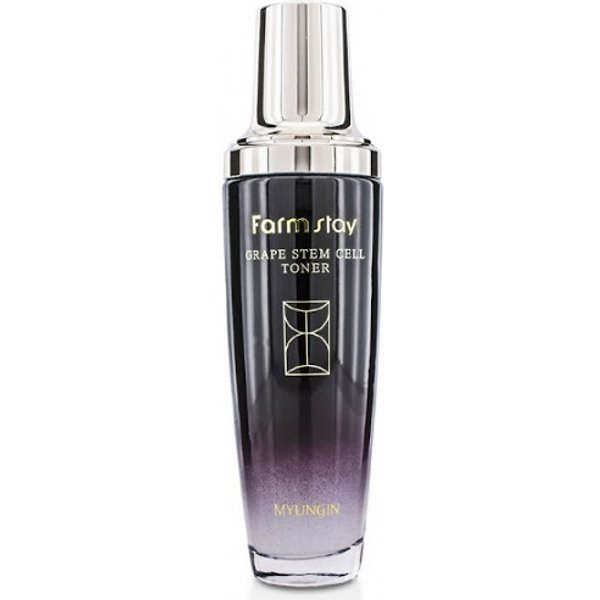
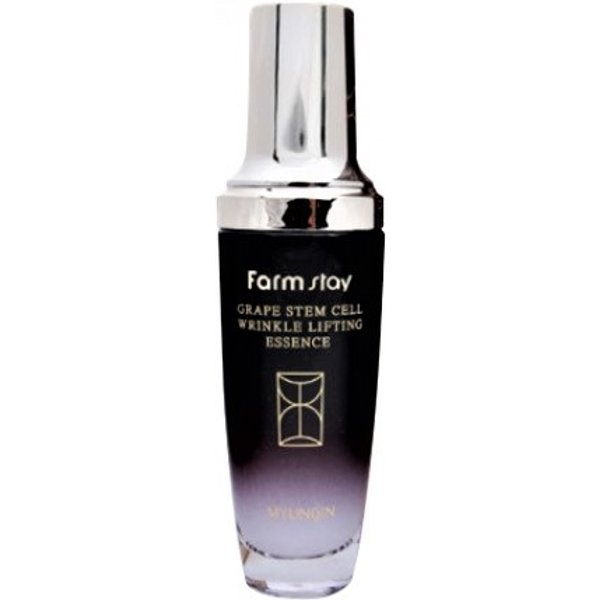
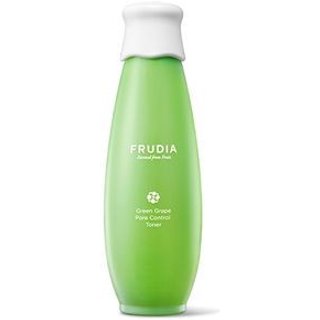
Already have one? Check how it fits your skin with Pick.
Common questions about Grape Water#
What is Grape Water?
- The watery distillate of grapes, used in the water phase of toners and mists — a carrier ingredient rather than an active, and not the same thing as grape seed extract.
What else is Grape Water called?
- On a label you may see Vitis vinifera fruit water and Vitis vinifera (grape) fruit water.
When should you apply Grape Water?
- Morning or evening. Morning or evening. It isn't one of the ingredients we flag for extra sun care.
How often can you use Grape Water?
- Daily.
Where do you apply Grape Water?
- All over the face. Keep it away from your eyes and lips.
Can you use Grape Water around the eyes?
- Yes. Grape Water goes all over the face, the skin around the eyes included — keep it out of your eyes and off your lips.
Does Grape Water make skin more sensitive to the sun?
- Grape Water isn't one of the actives we flag for extra sun care, but that's not a promise about your skin. Wear sunscreen every morning regardless.
What should you not use with Grape Water?
- Nothing flagged. None of the ingredients this wiki covers needs to be kept apart from Grape Water — check the label of anything not covered here.
Is there a cosmetic limit for Grape Water?
- No. No cosmetic regulator in the United States, Canada, the European Union or Great Britain sets a maximum strength for it. That is a limit on the rules, not a signal to use more.
Related ingredients#
How we check this#
Everything on this page traces to the sources listed below — regulators' own publications and published studies. Where the evidence does not answer a question, it is left unanswered.
Our review is AI-assisted and is not a named expert's opinion. Last reviewed September 3, 2026.
Think something here is out of date or wrong? Email us at wiki@skinintelligence.ai with your reasoning and where you read it. We read what people send, and we update the page when the sources support it.
Regulators and official bodies · 11
- S1Cosmetic Ingredient Review Expert Panel. Safety Assessment of Vitis Vinifera (Grape)-Derived Ingredients as Used in Cosmetics. Final Report for public distribution, released 5 October 2012; panel meeting 10–11 September 2012. Report prepared by Monice M. Fiume.
- S3European Commission, CosIng. Ingredient: VITIS VINIFERA FRUIT WATER, reference 60117. Description, CAS/EC numbers, function SKIN CONDITIONING; no Cosmetics Regulation provisions, no other restrictions, no SCCS opinion. (new).
- S4Regulation (EC) No 1223/2009 of the European Parliament and of the Council of 30 November 2009 on cosmetic products (recast), consolidated text 02009R1223-20260518 (in force 18 May 2026), Annexes I–X. EUR-Lex.
- S5GB retained Regulation (EC) No 1223/2009, Annexes II–VI as published by legislation.gov.uk; and Schedule 34 to The Product Safety and Metrology etc. (Amendment etc.) (EU Exit) Regulations 2019 (SI 2019/696). No Vitis or grape entry in either (direct grep: 0 occurrences). · vault/ssi/www-legislation-gov-uk-eur-2009-1223-annex-{ii,iii,iv,v}.md.
- S6Health Canada. Cosmetic Ingredient Hotlist: Prohibited and Restricted Ingredients. Captured 2026-09-01. No Vitis or grape entry (direct grep: 0 occurrences).
- S721 CFR part 700, subpart B — Requirements for Specific Cosmetic Products (§§ 700.11–700.35), eCFR current text. No Vitis or grape entry (direct grep: 0 occurrences).
- S15European Medicines Agency, Committee on Herbal Medicinal Products. European Union herbal monograph on Vitis vinifera L., folium, Revision 1, EMA/HMPC/464684/2016. Out of scope for this active — grapevine leaf, oral and cutaneous medicinal preparations; recorded in §2 for the adjacent wording that was considered and not transferred. (new).
- S16Cosmetic Ingredient Review Expert Panel. Safety Assessment of Vitis Vinifera (Grape)-Derived Ingredients as Used in Cosmetics. Final Report, release date 5 October 2012; panel meeting 10–11 September 2012. cir-safety.org/sites/default/files/vitis092012rep.pdf.
- S17Regulation (EC) No 1223/2009 on cosmetic products as assimilated in Great Britain, Annexes II, III, IV and V. legislation.gov.uk/eur/2009/1223.
- S18Health Canada. Cosmetic Ingredient Hotlist: List of Ingredients that are Prohibited for Use in Cosmetic Products..
- S1921 CFR 73.170 — Grape skin extract (enocianina). eCFR, current. Cited to show it does not apply.
Studies and references · 13
- S2Fiume MM, Bergfeld WF, Belsito DV, Hill RA, Klaassen CD, Liebler DC, Marks JG Jr, Shank RC, Slaga TJ, Snyder PW, Andersen FA. Safety assessment of Vitis vinifera (grape)-derived ingredients as used in cosmetics. Int J Toxicol. 2014;33(3 Suppl):48S–83S. PMID 25297908. DOI 10.1177/1091581814545247. (Peer-reviewed publication of S1; author string verified against the PMID record.) (new).
- S8Sharafan M, Malinowska MA, Ekiert H, Kwaśniak B, Sikora E, Szopa A. Vitis vinifera (Vine Grape) as a Valuable Cosmetic Raw Material. Pharmaceutics. 2023;15(5):1372. PMID 37242614. Cited only for the mis-transcription documented in §0 and for its confirmation that the cosmetic literature is on seed, fruit-extract and leaf materials. (new).
- S9Georgiev V, Ananga A, Dincheva I, Badjakov I, Gochev V, Tsolova V. Chemical Composition, In Vitro Antioxidant Potential, and Antimicrobial Activities of Essential Oils and Hydrosols from Native American Muscadine Grapes. Molecules. 2019;24(18):3355. PMID 31540154. (Muscadinia rotundifolia, not V. vinifera — cited for hydrosol chemistry and the hydrosol-vs-EO antioxidant comparison, never for a V. vinifera claim.) (new).
- S10Šilha D, Švarcová K, Bajer T, Královec K, Tesařová E, Moučková K, Pejchalová M, Bajerová P. Chemical Composition of Natural Hydrolates and Their Antimicrobial Activity on Arcobacter-Like Cells in Comparison with Other Microorganisms. Molecules. 2020;25(23). PMID 33266263. (Cited for hydrolate composition generally.) (new).
- S11Albergamo A, Costa R, Bartolomeo G, Rando R, Vadalà R, Nava V, Gervasi T, Toscano G, Germanò MP, D'Angelo V, Ditta F, Dugo G. Grape water: reclaim and valorization of a by-product from the industrial cryoconcentration of grape (Vitis vinifera) must. J Sci Food Agric. 2020;100(7):2971–2981. PMID 32048295. (A cryoconcentration by-product, not a steam distillate — cited only where that distinction is the point.) (new).
- S12Minciullo PL, Calapai G, Miroddi M, Mannucci C, Chinou I, Gangemi S, Schmidt RJ. Contact dermatitis as an adverse reaction to some topically used European herbal medicinal products — part 4: Solidago virgaurea–Vitis vinifera. Contact Dermatitis. 2017;77(2):67–87. PMID 28543097. (Reviews topically used herbal medicinal products with EU herbal monographs; the Vitis material in scope is the leaf medicinal product, not a cosmetic fruit distillate.) (new).
- S13Kalogeromitros D, Rigopoulos D, Gregoriou S, Mousatou V, Lyris N, Papaioannou D, Katsarou-Katsari A. Asymptomatic sensitisation to grapes in a sample of workers in the wine industry. Occup Environ Med. 2004;61(8):709–711. PMID 15258279. (new).
- S14Yamasaki R, Dekio S, Jidoi J. Contact dermatitis from grape bud. Contact Dermatitis. 1985;12(4):226–227. PMID 3160535. (Case report; the UVA/UVB aggravation detail is read from the CIR summary of this paper S1.) (new).
- S20Sharafan M, Malinowska MA, Ekiert H, Kwaśniak B, Sikora E, Szopa A. Vitis vinifera (Vine Grape) as a Valuable Cosmetic Raw Material. Pharmaceutics. 2023;15(5):1372. doi:10.3390/pharmaceutics15051372. PMID 37242614.
- S21Schad SG, Trcka J, Vieths S, Scheurer S, Conti A, Bröcker EB, Trautmann A. Wine anaphylaxis in a German patient: IgE-mediated allergy against a lipid transfer protein of grapes. Int Arch Allergy Immunol. 2005;136(2):159–64. doi:10.1159/000083324. PMID 15650314.
- S22National Center for Biotechnology Information. PubChem Compound Summary for CID 445154, Resveratrol — Experimental Properties → Melting Point (253–255 °C; 261 °C dec.). Retrieved 2026-09-03.
- S23Güder S, Güder H. Investigation of the Chemical Content and User Comments on Facial Cleansing Products. Cureus. 2023;15(5):e38673. doi:10.7759/cureus.38673. PMID 37288177. Cited only as the false-positive phrase match ("grapefruit water").
- S24Abramovits W, Boguniewicz M; Adult Atopiclair Study Group. A multicenter, randomized, vehicle-controlled clinical study to examine the efficacy and safety of MAS063DP (Atopiclair) in the management of mild to moderate atopic dermatitis in adults. J Drugs Dermatol. 2006;5(3):236–44. PMID 16573256. Cited only as an excluded search hit.