What does Kaolin Clay do?#
A rinse-off clay mask with kaolin, a soft white clay that takes up excess oil from the skin's surface. Left on for a few minutes and rinsed away, it leaves a matte, fresh finish and a less shiny look — an oil-absorbing step for skin that is oily or prone to blemishes.
Benefits
- Takes up excess surface oil for a matte finish and a less shiny look
- Rinsed away after a few minutes rather than left on the skin
- Gentle — no acid and no retinoid, the two things that usually call for easing in
- Not an exfoliant, so it adds no extra exfoliation to stack with acids or retinol
How it works
Kaolin is a naturally occurring white clay — a hydrated aluminium silicate — milled to a fine powder. Its particles do not dissolve and are not known to pass into the skin; they sit on the surface and draw oil and water into the clay, which is why a mask dulls shine as it dries. Rinsing lifts the clay away together with the oil it has taken up. Everything it is shown to do comes from that surface absorption: it is not an exfoliant, and it is not known to act inside the skin.
What to expect
A matte finish straight away that wears off between uses, with no break-in phase — it is not known to cause purging or dryness that builds up. In the one clinical study of a clay mask carrying kaolin, tightness and itching fell over four weeks rather than rose. That study used the mask twice a week; repeated human patch testing at higher strengths showed no irritation building up, so how often you use it is a matter of preference.
How to use Kaolin Clay#
Before you start
In patch testing of clay masks carrying kaolin, one person in about two hundred reacted. Do not put it on broken skin — keep it off any cut, crack or graze until it has healed.
Where it goes
On clean, dry skin straight after cleansing, before anything else — it needs bare skin to sit on and does not grip over oils or balms.
Where to apply
Keep it away from the eyes, and if it gets in, rinse thoroughly with water. If it comes as a dry powder, mix it with water first and keep the dust away from your face.
How to apply
A thin, even layer. Leave it five to ten minutes — the only timing that has been studied — then rinse off with water. If it feels tight or stings before then, rinse it off early.
Sun
Wear sunscreen in the morning as you would anyway. Kaolin is not known to make skin more sensitive to sunlight, so this is general advice rather than a rule the ingredient adds.
Alongside others
A clay mask is rinsed away before anything else goes on, so it does not sit under another product, and it is not an exfoliant, so it adds no extra exfoliation to stack with acids or retinol. Put it on before oils and balms, never over them.
What to expect
A matte finish straight away that wears off between uses, and no break-in phase — it is not known to cause purging or dryness that builds up. In the one clinical study of a clay mask carrying kaolin, tightness and itching fell over four weeks rather than rose. That study used the mask twice a week; repeated human patch testing at higher strengths showed no irritation building up, so how often you use it is a matter of preference.
What to look for
On a label it reads Kaolin, sometimes Kaolin Clay or White Kaolin on the front. Clay masks often blend it with bentonite or other clays, which have records of their own — the one clinical study was of such a blend — and its purity depends on the deposit it came from and how it was refined, so two masks naming it are not necessarily carrying the same thing.
If it doesn't suit
Rarely, a clay mask brings on redness or a rash — if skin reddens and does not settle within a few minutes of rinsing, stop using it. If anything else in your routine stings or stays red, pause that product, let skin settle, and reintroduce it on its own.
Discontinue use if unexpected discomfort occurs.
The form you will see it in
Kaolin clay mask
- Where it goes
- Before moisturizer
Using Kaolin Clay with other ingredients
What not to use with Kaolin Clay
Nothing flagged. None of the ingredients this wiki covers needs to be kept apart from Kaolin Clay — check the label of anything not covered here.
Who should avoid Kaolin Clay?#
Six situations change whether Kaolin Clay suits your skin right now. Each one is either a reason to skip it, a reason to go slowly, or nothing to watch for.
- Fragile or Sensitive
- Skip it
- Recent Facial or Laser
- Go slowly
- Maternity & Nursing
- No caution
- Prone to Redness
- No caution
- Dry or Itchy Patches
- No caution
- Recent Shave or Wax
- No caution
Recent Facial or Laser — Wait until your skin feels settled before reintroducing — typically 7 to 14 days after a facial or laser appointment.
Cosmetic strength limits for Kaolin Clay where you live#
| Region | Most a cosmetic may contain | |
|---|---|---|
 United States United States | No explicit cap | |
The FDA restricts a short list of ingredients and sets no general strength ceiling on the rest. A figure marked "guidance, not law" is the Cosmetic Ingredient Review panel's recommendation. 21 CFR part 700, subpart B — Requirements for Specific Cosmetic Products (FDA) | ||
 Canada Canada | No explicit cap | |
One list does the work — Health Canada's Hotlist of prohibited and restricted cosmetic ingredients. | ||
 European Union European Union | No explicit cap | |
The Cosmetics Regulation's annexes, consolidated to 1 May 2026. A figure marked "guidance, not law" comes from the EU's cosmetic safety committee rather than from the annexes. | ||
 Great Britain Great Britain | No explicit cap | |
Great Britain kept the annexes as its own law and updates them only when it chooses; Northern Ireland follows the live EU Regulation, which is why some rows read differently for each. Regulation (EC) No 1223/2009 as it applies in Great Britain · Regulation (EC) No 1223/2009, Annexes II–VI | ||
 India India | No explicit cap | |
India writes its own standard, aligned to the European rules as they stood in 2012. Mandatory since 9 February 2026. IS 4707 (Part 2):2025 — restricted and prohibited cosmetic ingredients · IS 4707 (Part 3):2025 — preservatives · Cosmetics Rules, 2020, Ninth Schedule | ||
 Brazil Brazil | No explicit cap | |
ANVISA rewrote its restricted list in June 2026, and a companion act amended the prohibited list at the same time. RDC 1.029/2026 — restricted ingredients · RDC 529/2021 — prohibited ingredients, as amended by RDC 1.030/2026 · RDC 528/2021 — preservatives | ||
 Japan Japan | No explicit cap | |
Japan's cosmetics standard keeps drug ingredients out of cosmetics, so most of its figures sit in the ministry's list of the ones a cosmetic may still contain. Cosmetics Standards (化粧品基準), Ministry of Health, Labour and Welfare · Cosmetics Standards — the ministry's own English translation · Drug ingredients permitted in cosmetics — 2007 notification | ||
 South Korea South Korea | No explicit cap | |
One MFDS regulation carries both the prohibited list and the restricted list, in force 18 March 2026. Sunscreens and a few other categories are cleared product by product instead. Regulation on Safety Standards for Cosmetics (MFDS Notification 2026-19) · Regulation on the Review of Functional Cosmetics (MFDS Notification 2025-88) | ||
 Kenya Kenya | No explicit cap | |
Kenya's standard applies the EU annexes as they stand rather than copying them, so its ingredient limits are the EU's — including the 2024 additions. A figure marked "guidance, not law" sits outside the annexes and does not carry over. KS EAS 377-1, -2 and -3:2022 — cosmetics safety requirements, published by KEBS · Regulation (EC) No 1223/2009, Annexes II–VI | ||
 Namibia Namibia | No explicit cap | |
Namibia sets no ingredient limits at all. Its cosmetic rule is a single line requiring a product to be free of any harmful ingredient. Foodstuffs, Cosmetics and Disinfectants Ordinance 18 of 1979, and the regulations under it | ||
 Ukraine Ukraine | No explicit cap | |
Ukraine's own transposition of the EU annexes, as they stood before the 2024 additions, fully in force since 3 August 2026. A further revision is due on 1 February 2027. Technical Regulation on cosmetic products — Cabinet Resolution No. 65 of 20 January 2021 | ||
 Georgia Georgia | No explicit cap | |
Georgia has no cosmetics rulebook — its register of technical regulations carries no cosmetics entry — so only the general product-safety duty applies. | ||
 Australia Australia | No explicit cap | |
Australia writes no cosmetic ingredient list. A figure here is the point at which a substance becomes a medicine or a scheduled substance carrying Caution labelling, so its numbers sit well above other markets'. Poisons Standard — June 2026 · Therapeutic Goods (Excluded Goods) Determination 2018 | ||
 United Arab Emirates United Arab Emirates | No explicit cap | |
The Gulf standard points at the EU annexes as amended, so its ingredient limits are the EU's. A figure marked "guidance, not law" sits outside the annexes and does not carry over. GSO 1943:2024 — Cosmetic products: safety requirements (Gulf technical regulation) · Regulation (EC) No 1223/2009, Annexes II–VI | ||
 Kuwait Kuwait | No explicit cap | |
The Gulf standard points at the EU annexes as amended, so its ingredient limits are the EU's. A figure marked "guidance, not law" sits outside the annexes and does not carry over. GSO 1943:2024 — Cosmetic products: safety requirements (Gulf technical regulation) · Regulation (EC) No 1223/2009, Annexes II–VI | ||
 Hong Kong Hong Kong | No explicit cap | |
Hong Kong writes no cosmetics rulebook. Its Poisons List (Cap. 138A, Schedule 10) decides which substances may be sold only as medicines, and general safety is judged case by case against whichever overseas standard the enforcer considers reasonable. Pharmacy and Poisons Regulations (Cap. 138A), Schedule 10 — the poisons list · Pharmacy and Poisons Board — Guidance Notes on classifying pharmaceutical products, April 2026 | ||
 Singapore Singapore | No explicit cap | |
Singapore writes the ASEAN annexes into its own schedule, and its regulator tells companies to check the current ASEAN release as well — which is why a figure here can read "guidance, not law". Health Products (Cosmetic Products — ASEAN Cosmetic Directive) Regulations 2007, Third Schedule · ASEAN Cosmetic Directive annexes — release 2026-1, 22 June 2026 | ||
 Brunei Brunei | No explicit cap | |
Brunei carries the 2007 ASEAN annexes in its own schedule and has not updated them since, so it reads differently from Singapore on several ingredients. Medicines (Cosmetic Products) Regulations (Cap. 285 Rg 1), Schedule 1 — revised edition 2024 | ||
 Jordan Jordan | No explicit cap | |
Jordan's cosmetic rules defer to "the approved references" and name none of them, so there is no Jordanian figure to read. The only number in the instrument governs the ingredient list on the pack. JFDA instructions on cosmetics and pharmaceutical cosmetics, 2026 | ||
 Trinidad & Tobago Trinidad & Tobago | No explicit cap | |
Trinidad and Tobago has had the power to set cosmetic standards since 1960 and has never used it. The regulations made under the Act cover food and drugs, with no cosmetics part; what binds is the Act's general rule against selling a cosmetic that may injure the user. Food and Drugs Act, Chap. 30:01 · Food and Drugs Regulations | ||
No cosmetic regulator in the 20 markets above sets a maximum strength for kaolin clay. That is the state of the rules, not a signal to use more: how much goes into a product is the formulator's decision.
Open a market to see the rulebook its figure comes from. Those notes describe each market's own rules as we read them, current to August 24, 2026; the linked documents are the authority, and nothing here is legal advice.
Sample products with Kaolin Clay#
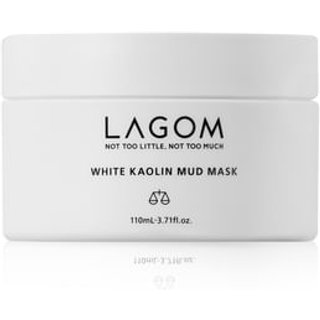
A few well-known products, not a full list — product names are each brand's own. We don't sell them — the shop prices them in US dollars and ships from Hong Kong, so delivery and duties come on top. It may not ship everywhere.
We may earn a small commission when you buy through these links.
Common questions about Kaolin Clay#
What is Kaolin Clay?
- A soft white clay used in rinse-off masks to take up excess surface oil, for a matte finish and a less shiny look.
What else is Kaolin Clay called?
- On a label you may see Kaolin and White kaolin.
When should you apply Kaolin Clay?
- Morning or evening.
How often can you use Kaolin Clay?
- Daily.
Where do you apply Kaolin Clay?
- All over the face. Keep it away from your eyes and lips.
Can you use Kaolin Clay around the eyes?
- Yes. Kaolin Clay goes all over the face, the skin around the eyes included — keep it out of your eyes and off your lips.
Does Kaolin Clay make skin more sensitive to the sun?
- No. Kaolin Clay is not flagged as increasing sun sensitivity.
What should you not use with Kaolin Clay?
- Nothing flagged. None of the ingredients this wiki covers needs to be kept apart from Kaolin Clay — check the label of anything not covered here.
Who should avoid Kaolin Clay?
- Skip it if any of these apply: Fragile or Sensitive. Go slowly with Recent Facial or Laser.
Is there a cosmetic limit for Kaolin Clay?
- No. No cosmetic regulator in the United States, Canada, the European Union or Great Britain sets a maximum strength for it. That is a limit on the rules, not a signal to use more.
Related ingredients#
How we check this#
Everything on this page traces to the sources listed below — regulators' own publications and published studies. Where the evidence does not answer a question, it is left unanswered.
Some sources below are medical studies. This ingredient has been studied in conditions a doctor treats, and the record cited here includes findings that did not favour it. We use those studies for their safety and handling detail only. A cosmetic product is not a medicine and is not intended to treat, cure or prevent any condition.
Some sources below are the official product information for prescription medicines, cited for how they interact with this ingredient. We use them for their safety and handling detail only. A cosmetic product is not one of those medicines and is not intended to treat any condition.
Our review is AI-assisted and is not a named expert's opinion. Last reviewed September 11, 2026.
Think something here is out of date or wrong? Email us at wiki@skinintelligence.ai with your reasoning and where you read it. We read what people send, and we update the page when the sources support it.
Regulators and official bodies · 13
- S1Burnett CL, Bergfeld WF, Belsito DV, Cohen DE, Klaassen CD, Liebler DC, Rettie AE, Ross D, Shank RC, Slaga TJ, Snyder PW, Tilton SC, Fiume MM, Heldreth B; Cosmetic Ingredient Review Expert Panel for Cosmetic Ingredient Safety. Amended Safety Assessment of Naturally-Sourced Clays as Used in Cosmetics. Int J Toxicol. 2026;45(3_suppl):65S-107S — the final amended report. The quotations and line references in this check were read in the panel-review PDF it supersedes (the clays-1 capture in the vault, Feb 2023 release, with the 2003 silicates report in its appendix), kept off the public citation list at's ruling of 2026-09-11 · PMID 42313106 · doi:10.1177/10915818261455355.
- S3US FDA. OTC Monograph M016 — Skin Protectant Drug Products for Over-the-Counter Human Use, 24 Sep 2021 (the operative final administrative order).
- S4Fullers Earth Cream — Summary of Product Characteristics. Thornton & Ross Ltd; emc, UK. Heavy Kaolin 20.76% w/w + Zinc oxide 4.5% w/w.
- S5Health Canada, Natural and Non-prescription Health Products Directorate. Medicated Skin Care Products Monograph (NHPID).
- S9Kaolin and Morphine Mixture BP — Summary of Product Characteristics. Thornton & Ross Ltd; emc, UK. Oral dosage form.
- S1121 CFR part 73 subpart C — Color additives exempt from certification (cosmetics), ultramarines entry.
- S13Roaccutane 10 mg soft capsules — Summary of Product Characteristics (oral isotretinoin); emc, UK.
- S14Differin Gel — Summary of Product Characteristics (adapalene 0.1%); emc, UK.
- S15Epiduo 0.1%/2.5% Gel — Summary of Product Characteristics (adapalene + benzoyl peroxide); emc, UK.
- S1621 CFR 347.50 — Labeling of skin protectant drug products.
- S19Regulation (EC) No 1223/2009 on cosmetic products, Annex IV — List of colorants allowed in cosmetic products, entry 119 (CI 77004), as retained in UK law.
- S2121 CFR part 700 subpart B — Requirements for specific cosmetic products (the US restricted/prohibited cosmetic ingredient sections; kaolin absent).
- S2221 CFR 347.10 — Skin protectant active ingredients.
Studies and references · 11
- S2Zhang X, Zhang Z, Tao H, He X, Hsu K, Wang W, Fang X, Steel A. Comprehensive assessment of the efficacy and safety of a clay mask in oily and acne skin. Skin Res Technol. 2023 Nov;29(11):e13513 · PMID 38009030 · doi:10.1111/srt.13513.
- S6Ruiz-Hitzky et al. authorship not asserted — cited by title: Theoretical Study of Retinol, Niacinamide and Glycolic Acid with Halloysite Clay Mineral as Active Ingredients for Topical Skin Care Formulations. Appl Sci / PMC8347384 (2021).
- S7Juch RD, Rufli T, Surber C. Pastes: what do they contain? How do they work? Dermatology. 1994;189(4):373-7 · PMID 7873823 · doi:10.1159/000246882.
- S8Meier L, Stange R, Michalsen A, Uehleke B. Clay jojoba oil facial mask for lesioned skin and mild acne — results of a prospective, observational pilot study. Forsch Komplementmed. 2012;19(2):75-9 · PMID 22585103 · doi:10.1159/000338076.
- S10Elmore AR; Cosmetic Ingredient Review Expert Panel. Final report on the safety assessment of aluminum silicate… kaolin… and zeolite. Int J Toxicol. 2003;22 Suppl 1:37-102 · PMID 12851164.
- S12Armitage G, Smith I. Granuloma silicoticum caused by kaolin poultice. Br J Surg. 1954 Nov;42(173):263-5. Title-level record only — no abstract exists; nothing beyond the title is claimed · PMID 13219309 · doi:10.1002/bjs.18004217307.
- S17Awad ME, López-Galindo A, Setti M, El-Rahmany MM, Iborra CV. Kaolinite in pharmaceutics and biomedicine. Int J Pharm. 2017 Nov 25;533(1):34-48 · PMID 28943206 · doi:10.1016/j.ijpharm.2017.09.056.
- S18Kang S, Xing B. Adsorption of dicarboxylic acids by clay minerals as examined by in situ ATR-FTIR and ex situ DRIFT. Langmuir. 2007 Jun 19;23(13):7024-31 · PMID 17508766 · doi:10.1021/la700543f.
- S20Efficacious biosorption of crystal violet pollutant dye from aqueous solutions via Padina pavonica derived alginate. PMC12255697 (2025). Cited only for its biosorbent comparison table.
- S23Kawanishi M, Yoneda R, Totsuka Y, Yagi T. Genotoxicity of micro- and nano-particles of kaolin in human primary dermal keratinocytes and fibroblasts. Genes Environ. 2020;42:16 · PMID 32322315 · doi:10.1186/s41021-020-00155-1.
- S24Moraes JDD, Bertolino SRA, Cuffini SL, Ducart DF, Bretzke PE, Leonardi GR. Clay minerals: Properties and applications to dermocosmetic products and perspectives of natural raw materials for therapeutic purposes — A review. Int J Pharm. 2017 Dec 20;534(1-2):213-219 · PMID 29038067 · doi:10.1016/j.ijpharm.2017.10.031.