What does Zinc Oxide do?#
A mineral cream with zinc oxide that sits on the surface of the skin and leaves a soft, slightly opaque, matte finish.
Benefits
- Leaves a soft matte finish that keeps skin looking less shiny
- Sits on the surface rather than sinking in, so the finish stays where you put it
- A gentle, comfortable texture
- Comfortable enough for everyday use
How it works
Zinc oxide is a fine mineral powder that does not dissolve into the base it is blended with. It stays as fine particles on the skin's surface, and that surface layer is what gives the finish its soft, slightly opaque, matte character.
How to use Zinc Oxide#
Before you start
Expect a pale cast as you apply it; this comes from the mineral itself.
Where it goes
A zinc oxide cream replaces your moisturizer in the morning. Apply it after your other steps; sunscreen still goes on last.
Where to apply
All over the face. Keep it off broken or irritated skin, keep it out of your eyes, and rinse with water if it gets in.
How to apply
Massage it in fully and let it settle for a minute.
Sun
A zinc oxide cream is not a sunscreen, even though zinc oxide is one of the minerals sunscreens are made with. What counts is a tested SPF number printed on the label. If your product does not carry one, treat it as a moisturizer and wear your usual sunscreen over it.
Alongside others
It goes on after your other steps, before sunscreen.
What to look for
The cast is most noticeable on deeper skin tones; a tinted or shade-matched version reduces it.
If it doesn't suit
If it feels too heavy, choose a lighter formula. Stop using it if it causes irritation.
A zinc oxide cream is not a sunscreen, even though zinc oxide is one of the minerals sunscreens are made with. What counts is a tested SPF number printed on the label — if your product does not carry one, wear your usual sunscreen over it. Discontinue use if unexpected discomfort occurs.
The form you will see it in
Zinc oxide mineral cream
- Where it goes
- As your moisturizer
Using Zinc Oxide with other ingredients
Pairs well with Zinc Oxide
Hyaluronic Acid
Works well togetherA hydrating layer underneath keeps skin comfortable under a mineral texture.
Glycerin
Works well togetherCan be combined in mineral formulas.
What not to use with Zinc Oxide
Nothing flagged. None of the ingredients this wiki covers needs to be kept apart from Zinc Oxide — check the label of anything not covered here.
Who should avoid Zinc Oxide?#
Six situations change whether Zinc Oxide suits your skin right now. Each one is either a reason to skip it, a reason to go slowly, or nothing to watch for.
- Fragile or Sensitive
- Skip it
- Maternity & Nursing
- No caution
- Recent Facial or Laser
- No caution
- Prone to Redness
- No caution
- Dry or Itchy Patches
- No caution
- Recent Shave or Wax
- No caution
Cosmetic strength limits for Zinc Oxide where you live#
| Region | Most a cosmetic may contain | |
|---|---|---|
 United States United States | No explicit cap | |
The FDA restricts a short list of ingredients and sets no general strength ceiling on the rest. A figure marked "guidance, not law" is the Cosmetic Ingredient Review panel's recommendation. 21 CFR part 700, subpart B — Requirements for Specific Cosmetic Products (FDA) | ||
 Canada Canada | No explicit cap | |
One list does the work — Health Canada's Hotlist of prohibited and restricted cosmetic ingredients. | ||
 European Union European Union | 25% (sum of nano and non-nano) | |
The Cosmetics Regulation's annexes, consolidated to 1 May 2026. A figure marked "guidance, not law" comes from the EU's cosmetic safety committee rather than from the annexes. | ||
 Great Britain Great Britain | 25% (sum of nano and non-nano) | |
Great Britain kept the annexes as its own law and updates them only when it chooses; Northern Ireland follows the live EU Regulation, which is why some rows read differently for each. Regulation (EC) No 1223/2009 as it applies in Great Britain · Regulation (EC) No 1223/2009, Annexes II–VI | ||
 India India | No explicit cap | |
India writes its own standard, aligned to the European rules as they stood in 2012. Mandatory since 9 February 2026. IS 4707 (Part 2):2025 — restricted and prohibited cosmetic ingredients · IS 4707 (Part 3):2025 — preservatives · Cosmetics Rules, 2020, Ninth Schedule | ||
 Brazil Brazil | 25% | |
ANVISA rewrote its restricted list in June 2026, and a companion act amended the prohibited list at the same time. RDC 1.029/2026 — restricted ingredients · RDC 529/2021 — prohibited ingredients, as amended by RDC 1.030/2026 · RDC 528/2021 — preservatives | ||
 Japan Japan | No explicit cap | |
Japan's cosmetics standard keeps drug ingredients out of cosmetics, so most of its figures sit in the ministry's list of the ones a cosmetic may still contain. Cosmetics Standards (化粧品基準), Ministry of Health, Labour and Welfare · Cosmetics Standards — the ministry's own English translation · Drug ingredients permitted in cosmetics — 2007 notification | ||
 South Korea South Korea | 25% | |
One MFDS regulation carries both the prohibited list and the restricted list, in force 18 March 2026. Sunscreens and a few other categories are cleared product by product instead. Regulation on Safety Standards for Cosmetics (MFDS Notification 2026-19) · Regulation on the Review of Functional Cosmetics (MFDS Notification 2025-88) | ||
 Kenya Kenya | 25% (sum of nano and non-nano) | |
Kenya's standard applies the EU annexes as they stand rather than copying them, so its ingredient limits are the EU's — including the 2024 additions. A figure marked "guidance, not law" sits outside the annexes and does not carry over. KS EAS 377-1, -2 and -3:2022 — cosmetics safety requirements, published by KEBS · Regulation (EC) No 1223/2009, Annexes II–VI | ||
 Namibia Namibia | No explicit cap | |
Namibia sets no ingredient limits at all. Its cosmetic rule is a single line requiring a product to be free of any harmful ingredient. Foodstuffs, Cosmetics and Disinfectants Ordinance 18 of 1979, and the regulations under it | ||
 Ukraine Ukraine | 25% (sum of nano and non-nano) | |
Ukraine's own transposition of the EU annexes, as they stood before the 2024 additions, fully in force since 3 August 2026. A further revision is due on 1 February 2027. Technical Regulation on cosmetic products — Cabinet Resolution No. 65 of 20 January 2021 | ||
 Georgia Georgia | No explicit cap | |
Georgia has no cosmetics rulebook — its register of technical regulations carries no cosmetics entry — so only the general product-safety duty applies. | ||
 Australia Australia | No explicit cap | |
Australia writes no cosmetic ingredient list. A figure here is the point at which a substance becomes a medicine or a scheduled substance carrying Caution labeling, so its numbers sit well above other markets'. Poisons Standard — June 2026 · Therapeutic Goods (Excluded Goods) Determination 2018 | ||
 United Arab Emirates United Arab Emirates | 25% (sum of nano and non-nano) | |
The Gulf standard points at the EU annexes as amended, so its ingredient limits are the EU's. A figure marked "guidance, not law" sits outside the annexes and does not carry over. GSO 1943:2024 — Cosmetic products: safety requirements (Gulf technical regulation) · Regulation (EC) No 1223/2009, Annexes II–VI | ||
 Kuwait Kuwait | 25% (sum of nano and non-nano) | |
The Gulf standard points at the EU annexes as amended, so its ingredient limits are the EU's. A figure marked "guidance, not law" sits outside the annexes and does not carry over. GSO 1943:2024 — Cosmetic products: safety requirements (Gulf technical regulation) · Regulation (EC) No 1223/2009, Annexes II–VI | ||
 Hong Kong Hong Kong | No explicit cap | |
Hong Kong writes no cosmetics rulebook. Its Poisons List (Cap. 138A, Schedule 10) decides which substances may be sold only as medicines, and general safety is judged case by case against whichever overseas standard the enforcer considers reasonable. Pharmacy and Poisons Regulations (Cap. 138A), Schedule 10 — the poisons list · Pharmacy and Poisons Board — Guidance Notes on classifying pharmaceutical products, April 2026 | ||
 Singapore Singapore | 25% (sum of nano and non-nano) | |
Singapore writes the ASEAN annexes into its own schedule, and its regulator tells companies to check the current ASEAN release as well — which is why a figure here can read "guidance, not law". Health Products (Cosmetic Products — ASEAN Cosmetic Directive) Regulations 2007, Third Schedule · ASEAN Cosmetic Directive annexes — release 2026-1, 22 June 2026 | ||
 Brunei Brunei | 25% | |
Brunei carries the 2007 ASEAN annexes in its own schedule and has not updated them since, so it reads differently from Singapore on several ingredients. Medicines (Cosmetic Products) Regulations (Cap. 285 Rg 1), Schedule 1 — revised edition 2024 | ||
 Jordan Jordan | No explicit cap | |
Jordan's cosmetic rules defer to "the approved references" and name none of them, so there is no Jordanian figure to read. The only number in the instrument governs the ingredient list on the pack. JFDA instructions on cosmetics and pharmaceutical cosmetics, 2026 | ||
 Trinidad & Tobago Trinidad & Tobago | No explicit cap | |
Trinidad and Tobago has had the power to set cosmetic standards since 1960 and has never used it. The regulations made under the Act cover food and drugs, with no cosmetics part; what binds is the Act's general rule against selling a cosmetic that may injure the user. Food and Drugs Act, Chap. 30:01 · Food and Drugs Regulations | ||
Where a figure appears, that is the maximum strength allowed or advised for zinc oxide in that market — some are set in cosmetics regulation, others are the ceiling a cosmetic safety panel recommends. Where no figure appears, the market either sets no cosmetic maximum or handles this ingredient outside its cosmetic rules. These are limits, not targets — the right strength for a formula is the formulator's decision.
Open a market to see the rulebook its figure comes from. Those notes describe each market's own rules as we read them, current to August 24, 2026; the linked documents are the authority, and nothing here is legal advice.
Sample products with Zinc Oxide#
A few well-known products, not a full list — product names are each brand's own. We don't sell them — the shop prices them in US dollars and ships from Hong Kong, so delivery and duties come on top. It may not ship everywhere.
We may earn a small commission when you buy through these links.
Sunscreen · 10
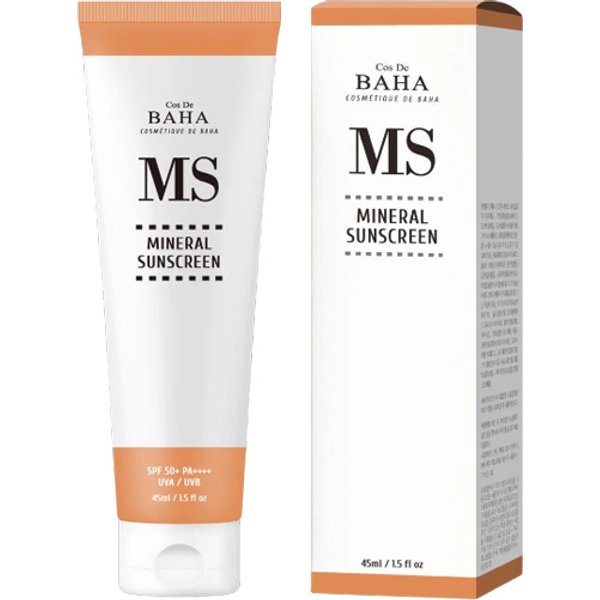 Cos De BAHAMineral Sunscreen SPF50+ PA++++ (MS) - 45ml$7.39
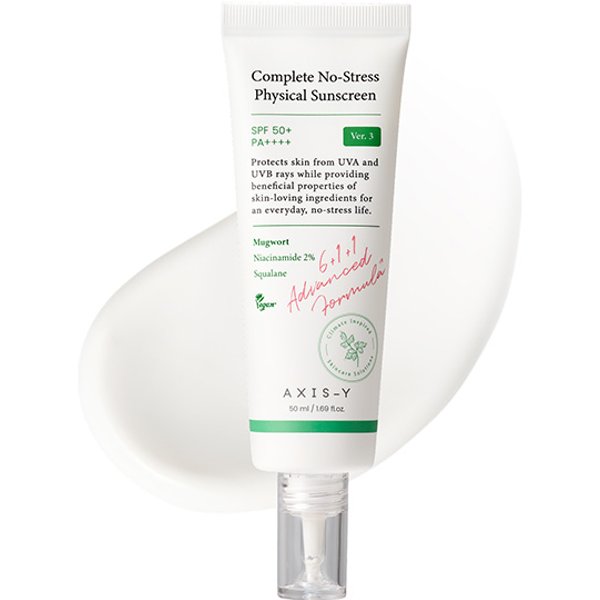 AXIS-YComplete No Stress Physical Sunscreen SPF50+ PA++++ - 50ml$16.25Also on YesStyle
 beplainSunmuse Mineral Sunscreen SPF50+ PA++++ - 50ml$19.50Also on YesStyle
 BentonSkin Fit Mineral Sun Cream 50ml$19.80
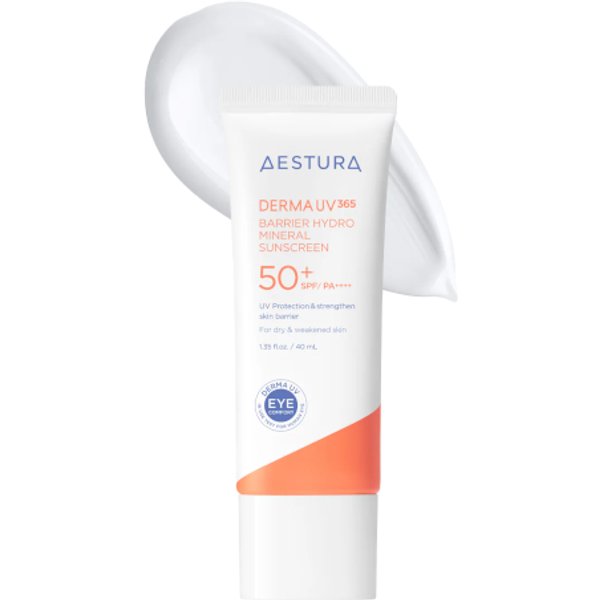 AesturaDerma UV 365 Barrier Hydro Mineral Sunscreen SPF50+ PA++++ - 25ml$20.99
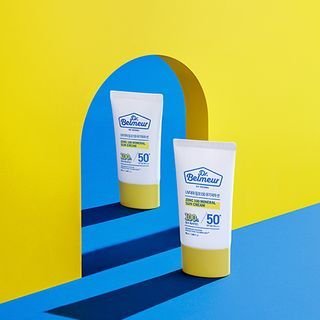 THE FACE SHOPDr. Belmeur UV Derma Zinc 100 Mineral Sun Cream 50ml$21.60
 BentonMineral Sun Stick 15g$22.50
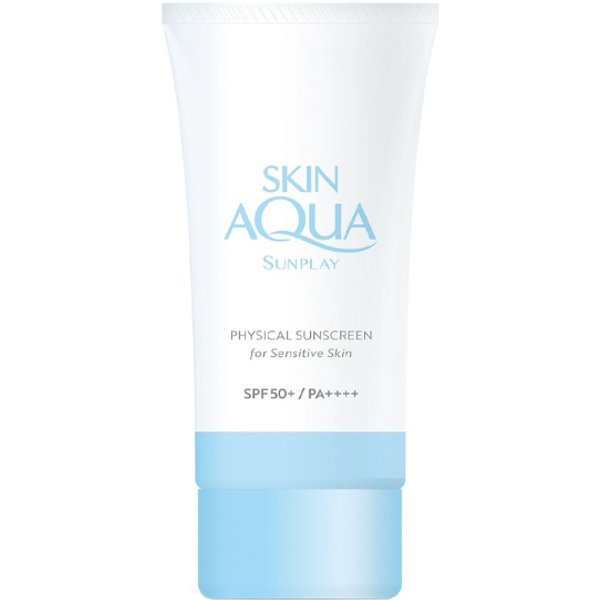 Rohto MentholatumSunplay - Skin Aqua Physical Sunscreen for Sensitive Skin SPF50+ PA++++ - 50ml$26.99
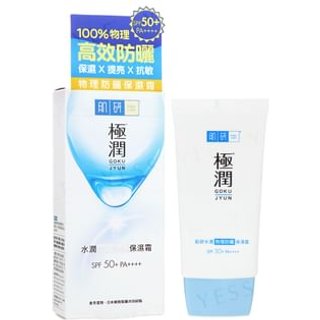 Rohto MentholatumHada Labo Gokujyun Physical Sunscreen Cream SPF 50+ PA++++ 50g$29.07
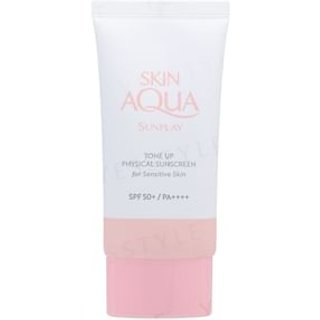 Rohto MentholatumSunplay Skin Aqua Tone Up Physical Sunscreen For Sensitive Skin SPF 50+ PA++++ 50ml$30.15
Common questions about Zinc Oxide#
What is Zinc Oxide?
- A fine white mineral that stays on the surface of the skin rather than sinking in, leaving a soft, slightly opaque, matte finish.
What else is Zinc Oxide called?
- On a label you may see Non-nano zinc oxide and CI 77947.
When should you apply Zinc Oxide?
- Morning.
How often can you use Zinc Oxide?
- Daily.
Where do you apply Zinc Oxide?
- All over the face. Keep it away from your eyes and lips.
Can you use Zinc Oxide around the eyes?
- Yes. Zinc Oxide goes all over the face, the skin around the eyes included — keep it out of your eyes and off your lips.
Does Zinc Oxide make skin more sensitive to the sun?
- Zinc Oxide isn't one of the actives we flag for extra sun care, but that's not a promise about your skin. Wear sunscreen every morning regardless. It is also not a sunscreen — only a tested SPF number on the label makes a product one.
What should you not use with Zinc Oxide?
- Nothing flagged. None of the ingredients this wiki covers needs to be kept apart from Zinc Oxide — check the label of anything not covered here.
Who should avoid Zinc Oxide?
- Skip it if any of these apply: Fragile or Sensitive.
Is there a cosmetic limit for Zinc Oxide?
- Only some regions set one. The maximum strength for Zinc Oxide in a cosmetic is 25% (sum of nano and non-nano) in the European Union and 25% (sum of nano and non-nano) in Great Britain. No maximum is set in the United States and Canada. A cap is a limit on the rules, not a signal to use more.
Related ingredients#
How we check this#
Everything on this page traces to the sources listed below — regulators' own publications and published studies. Where the evidence does not answer a question, it is left unanswered.
Some sources below are medical studies. This ingredient has been studied in conditions a doctor treats, and the record cited here includes findings that did not favor it. We use those studies for their safety and handling detail only. A cosmetic product is not a medicine and is not intended to treat, cure or prevent any condition.
Some sources below are the official product information for prescription medicines, cited for how they interact with this ingredient. We use them for their safety and handling detail only. A cosmetic product is not one of those medicines and is not intended to treat any condition.
Our review is AI-assisted and is not a named expert's opinion. Last reviewed September 1, 2026.
Think something here is out of date or wrong? Email us at wiki@skinintelligence.ai with your reasoning and where you read it. We read what people send, and we update the page when the sources support it.
Regulators and official bodies · 21
- S1FDA, Over-the-Counter Monograph M020: Sunscreen Drug Products for Over-the-Counter Human Use (deemed final order, 24 Sep 2021) — §§M020.10(p), M020.20(a), M020.50.
- S221 CFR 347.10 — Skin protectant active ingredients (eCFR, title 21 current to 22 Apr 2026).
- S3Commission Regulation (EU) 2016/621 of 21 Apr 2016, recitals 1–5 (SCCP 2003, SCCP clarifications, SCCS 18 Sep 2012 opinion + 23 Jul 2013 addendum + 23 Sep 2014 spray opinion).
- S4Health Canada, Primary Sunscreen Monograph (Health Products and Food Branch, version 2026-02-27).
- S5Sudocrem Antiseptic Healing Cream SmPC (zinc oxide 15.29% w/w), PL 00289/2299, rev. 04/04/2023, emc.
- S6Zinc and Castor Oil Ointment BP SmPC (zinc oxide 7.5% w/w), PL 12965/0038, rev. 24/09/2019, emc.
- S7Roaccutane 10 mg soft capsules (isotretinoin) — SmPC §4.4.
- S8Differin Cream SmPC (adapalene 0.1%), emc.
- S9Efracea 40 mg Modified Release Hard Capsules (doxycycline) — SmPC §4.4, §4.5.
- S10SCCNFP/0799/04, Updated position paper concerning consumer safety of alpha-hydroxy acids.
- S24FDA OTC Monograph M016, Skin Protectant Drug Products for Over-the-Counter Human Use, 24 Sep 2021.
- S2521 CFR 73.2991 — Zinc oxide (colour additive exempt from certification), 42 FR 37538 (eCFR) — newly fetched.
- S26Regulation (EC) No 1223/2009, consolidated 01.05.2026 — Annex VI Nos 30 & 30a; Annex IV No 144.
- S27Assimilated Regulation (EC) No 1223/2009 as it applies in GB, Annexes IV & VI; EUR 2016/621 Annex — legislation.gov.uk.
- S28Health Canada, Medicated Skin Care Products Monograph (NHPID).
- S29Health Canada, Cosmetic Ingredient Hotlist — zinc oxide absent (checked in full, fetched 2026-09-01).
- S39National Rosacea Society, Rosacea Review Spring 2023 — "Prescription and OTC Products Can Work Together to Repair Skin Barrier Damage".
- S43Aklief 50 microgram/g cream (trifarotene) — SmPC §4.4, §4.5.
- S44Tetralysal 300 mg Hard Capsules (lymecycline) — SmPC §4.4.
- S45Methotrexate 2.5 mg Tablets BP — SmPC §4.4.
- S46Deximune 25 mg soft capsules (ciclosporin) — SmPC §4.4.
Studies and references · 31
- S11Mitchnick MA, Fairhurst D, Pinnell SR. Microfine zinc oxide (Z-cote) as a photostable UVA/UVB sunblock agent. J Am Acad Dermatol 1999;40(1):85–90. PMID 9922017.
- S12Smijs TG, Pavel S. Titanium dioxide and zinc oxide nanoparticles in sunscreens: focus on their safety and effectiveness. Nanotechnol Sci Appl 2011;4:95-112. PMID 24198489.
- S13Kryczyk-Poprawa A, Kwiecień A, Opoka W. Photostability of Topical Agents Applied to the Skin: A Review. Pharmaceutics 2020;12(1):10. PMID 31861803.
- S14Gupta M, Mahajan VK, Mehta KS, Chauhan PS. Zinc therapy in dermatology: a review. Dermatol Res Pract 2014:709152. PMID 25120566.
- S15Hughes MC, Williams GM, Baker P, Green AC. Sunscreen and prevention of skin aging: a randomized trial. Ann Intern Med 2013;158(11):781-90. PMID 23732711.
- S16Licari A, Ruffinazzi G, DE Filippo M, Castagnoli R, Marseglia A, Agostinis F, Puviani M, Milani M, Marseglia GL. A starch, glycyrretinic, zinc oxide and bisabolol based cream in the treatment of chronic mild-to-moderate atopic dermatitis in children. Minerva Pediatr 2017;69(6):470-475. PMID 29181960.
- S17Nowicka D, Chilicka K, Dzieńdziora-Urbińska I, Szyguła R. Skincare in Rosacea from the Cosmetologist's Perspective: A Narrative Review. J Clin Med 2023;12(1):115. PMID 36614915.
- S18Visser WI, Kannenberg SM, Prevost A, Khoza N, Pillay L, Wiid KJ, Heydenrych IR. Dermocosmetics in Acne Vulgaris: South African Consensus Recommendations With a Focus on Skin of Color. PMID 41689191.
- S19Nikolis A, Nestor MS, Czuwara J, Depfenhart M, Fluhr JW, Addor FASA, Piotrowski K, Zielinski Y, Lachmann N, Prygova I, Berlin I, Pellacani G. Concomitant Use of Dermo-Cosmetic Skin Care in Aesthetic Procedures: Systematic Review with Expert Panel Recommendations. Clin Cosmet Investig Dermatol. PMID 41773167.
- S20Hanson KM, Clegg RM. Bioconvertible vitamin antioxidants improve sunscreen photoprotection against UV-induced reactive oxygen species. J Cosmet Sci 2003;54(6):589-98. PMID 14730375.
- S21Bozzo P, Chua-Gocheco A, Einarson A. Safety of skin care products during pregnancy. Can Fam Physician 2011;57(6):665-7. PMID 21673209 (abstract-only capture).
- S22Puaratanaarunkon T, Asawanonda P. A Randomized, Double Blinded, Split-Face Study of the Efficacy of Using a Broad Spectrum Sunscreen with Anti-Inflammatory Agent to Reduce Post Inflammatory Hyperpigmentation After Picosecond Laser. Clin Cosmet Investig Dermatol 2022. PMID 35250287.
- S23ASCP, "What To Do Before Waxing, What To Expect & After Care" — qualitative context only per Tier 3 rule.
- S30Gupta M et al. Zinc Therapy in Dermatology: A Review. Dermatol Res Pract 2014. PMID 25120566 · PMC4120804.
- S31Zhu J et al. Biomimetic hyaluronic acid-stabilized zinc oxide nanoparticles in acne treatment: A preclinical and clinical approach. J Control Release 2025;382:113754. PMID 40254135.
- S32Titanium dioxide and zinc oxide nanoparticles in sunscreens: focus on their safety and effectiveness. Nanotechnol Sci Appl 2013. PMID 24198489 · PMC3781714 (authors not present in capture).
- S33Pirot F et al. In vitro study of percutaneous absorption, cutaneous bioavailability and bioequivalence of zinc and copper from five topical formulations. Skin Pharmacol 1996;9(4):259–69. PMID 8896117.
- S34Ahn H-J et al. Zinc penetration through the skin barrier in atopic dermatitis and rosacea using reflectance confocal microscopy. Exp Dermatol 2024;33(1):e14971. PMID 37909707.
- S35Recommendations on Periprocedural Skincare for Energy-Based Dermatologic Procedures. Aesthet Surg J Open Forum 2025. PMID 40575009 · PMC12198435 (authors not present in capture).
- S36Prevention of Complications in Chemical Peeling. J Cutan Aesthet Surg 2010. PMID 21430836 · PMC3047741 (authors not present in capture).
- S37Sobkowska et al. The Role of Cosmetology in an Effective Treatment of Rosacea: A Narrative Review. Clin Cosmet Investig Dermatol 2023. PMID 37303984 · PMC10252991.
- S38Skincare in Rosacea from the Cosmetologist's Perspective: A Narrative Review. J Clin Med 2022. PMID 36614915 · PMC9821000 (authors not present in capture).
- S40Dermocosmetics in Acne Vulgaris: South African Consensus Recommendations With a Focus on Skin of Color. J Cosmet Dermatol 2026. PMID 41689191 · PMC12905471 (authors not present in capture).
- S41Photostability of Topical Agents Applied to the Skin: A Review. Pharmaceutics 2020;12(1):10 (authors not present in capture).
- S42CIR, Safety Assessment of Zinc Salts as Used in Cosmetics, Draft Final Report for Panel Review, 9 Feb 2018 — zinc oxide is expressly outside this report's scope; cited only for its statements about zinc oxide's acid reaction chemistry.
- S47DermNet — Rosacea.
- S48DermNet — Barrier cream.
- S49Cangul IT, Gul NY, Topal A, Yilmaz R. Evaluation of the effects of topical tripeptide-copper complex and zinc oxide on open-wound healing in rabbits. Vet Dermatol 2006;17(6):417–23. PMID 17083573 — newly fetched.
- S50Inhibitory zinc sites in enzymes. PMID 23456096 · PMC7087665 (authors not present in capture).
- S51Size Dependent Uptake and Hemolytic Effect of Zinc Oxide Nanoparticles on Erythrocytes and Biomedical Potential of ZnO-Ferulic acid Conjugates. PMC5482866 (authors not present in capture).
- S52Liu H et al. Evidence-based topical treatments (azelaic acid, salicylic acid, nicotinamide, sulfur, zinc, and fruit acid) for acne: an abridged version of a Cochrane systematic review. J Evid Based Med 2020;13(4):275–83. PMID 33034949.