What does Petrolatum do?#
A rich barrier balm is a great way to seal a routine, helping reduce moisture loss from the skin. Built on occlusives like petrolatum or on barrier lipids such as ceramides, it forms a rich occlusive layer that locks in the hydration from your other skincare steps.
Benefits
- Provides a rich moisture-sealing layer to finish a routine
- Locks in hydration from previous skincare steps for lasting comfort
- Helps maintain a healthy-looking, well-conditioned skin surface
How it works
A rich barrier balm works by forming a thin, occlusive layer on the surface of the skin that seals in moisture from your other skincare steps. Classic occlusives like petrolatum and modern balms rich in ceramides and skin lipids both help slow water loss, leaving skin feeling deeply hydrated and comfortable. Used consistently as a final step, it helps support a healthier-looking, more resilient skin surface over time, making it a long-standing staple for a rich, comforting finish to a moisture routine.
How to use Petrolatum#
Best time
The evening is the easier time — it is a heavy texture, and it sits on the surface rather than sinking in.
How often
There is nothing to build up to and no reason to space it out.
Where it goes
Last, over everything else. Nothing goes on top of it.
Where to apply
Dry, flaky patches are exactly where it belongs — use more of it there, not less. Keep it out of your eyes, and rinse with plenty of water if any gets in.
Focus on dry or uncomfortable areas rather than the entire face if you prefer a lighter feel.
How much
A thin layer does the whole job.
Sun
It isn't one of the actives we flag for extra sun care, so a morning layer needs nothing beyond your usual sunscreen.
What to expect
Expect some of it to transfer to pillowcases and collars.
It is one of the least reactive things you can put on skin, which is why it suits sensitive skin well.
Rich barrier balms are well-tolerated occlusives that work on the skin's surface. Cosmetic-grade petrolatum, the classic example, has been used in skincare for over 150 years. Discontinue use if irritation or a rash occurs.
The form you will see it in
Rich barrier balm
- Where it goes
- Last, over everything
Using Petrolatum with other ingredients
Pairs well with Petrolatum
Glycerin
Works well togetherGlycerin attracts moisture into the skin and a rich barrier balm seals it in.
Hyaluronic acid
Works well togetherHyaluronic acid binds water in the skin and a barrier balm prevents that water from evaporating.
Ceramides
Works well togetherCeramides help support the look and feel of the skin's moisture barrier while a barrier balm seals in moisture from the surface.
What not to use with Petrolatum
Nothing flagged. None of the ingredients this wiki covers needs to be kept apart from Petrolatum — check the label of anything not covered here.
Who should avoid Petrolatum?#
Six situations change whether Petrolatum suits your skin right now. Each one is either a reason to skip it, a reason to go slowly, or nothing to watch for.
- Prone to Redness
- Go slowly
- Maternity & Nursing
- No caution
- Fragile or Sensitive
- No caution
- Recent Facial or Laser
- No caution
- Dry or Itchy Patches
- No caution
- Recent Shave or Wax
- No caution
Prone to Redness — Try it on a small area first, and use it less often — or stop — if you notice stinging or extra redness.
Cosmetic strength limits for Petrolatum where you live#
| Region | Most a cosmetic may contain | |
|---|---|---|
 United States United States | No explicit cap | |
The FDA restricts a short list of ingredients and sets no general strength ceiling on the rest. A figure marked "guidance, not law" is the Cosmetic Ingredient Review panel's recommendation. 21 CFR part 700, subpart B — Requirements for Specific Cosmetic Products (FDA) | ||
 Canada Canada | No explicit cap | |
One list does the work — Health Canada's Hotlist of prohibited and restricted cosmetic ingredients. | ||
 European Union European Union | No cap (refining-history required) | |
The Cosmetics Regulation's annexes, consolidated to 1 May 2026. A figure marked "guidance, not law" comes from the EU's cosmetic safety committee rather than from the annexes. | ||
 Great Britain Great Britain | No cap (refining-history required) | |
Great Britain kept the annexes as its own law and updates them only when it chooses; Northern Ireland follows the live EU Regulation, which is why some rows read differently for each. Regulation (EC) No 1223/2009 as it applies in Great Britain · Regulation (EC) No 1223/2009, Annexes II–VI | ||
 India India | No cap (refining-history required) | |
India writes its own standard, aligned to the European rules as they stood in 2012. Mandatory since 9 February 2026. IS 4707 (Part 2):2025 — restricted and prohibited cosmetic ingredients · IS 4707 (Part 3):2025 — preservatives · Cosmetics Rules, 2020, Ninth Schedule | ||
 Brazil Brazil | No cap (refining-history required) | |
ANVISA rewrote its restricted list in June 2026, and a companion act amended the prohibited list at the same time. RDC 1.029/2026 — restricted ingredients · RDC 529/2021 — prohibited ingredients, as amended by RDC 1.030/2026 · RDC 528/2021 — preservatives | ||
 Japan Japan | No explicit cap | |
Japan's cosmetics standard keeps drug ingredients out of cosmetics, so most of its figures sit in the ministry's list of the ones a cosmetic may still contain. Cosmetics Standards (化粧品基準), Ministry of Health, Labour and Welfare · Cosmetics Standards — the ministry's own English translation · Drug ingredients permitted in cosmetics — 2007 notification | ||
 South Korea South Korea | No cap (white petrolatum, or full refining history required) | |
One MFDS regulation carries both the prohibited list and the restricted list, in force 18 March 2026. Sunscreens and a few other categories are cleared product by product instead. Regulation on Safety Standards for Cosmetics (MFDS Notification 2026-19) · Regulation on the Review of Functional Cosmetics (MFDS Notification 2025-88) | ||
 Kenya Kenya | No cap (refining-history required) | |
Kenya's standard applies the EU annexes as they stand rather than copying them, so its ingredient limits are the EU's — including the 2024 additions. A figure marked "guidance, not law" sits outside the annexes and does not carry over. KS EAS 377-1, -2 and -3:2022 — cosmetics safety requirements, published by KEBS · Regulation (EC) No 1223/2009, Annexes II–VI | ||
 Namibia Namibia | No explicit cap | |
Namibia sets no ingredient limits at all. Its cosmetic rule is a single line requiring a product to be free of any harmful ingredient. Foodstuffs, Cosmetics and Disinfectants Ordinance 18 of 1979, and the regulations under it | ||
 Ukraine Ukraine | No cap (refining-history required) | |
Ukraine's own transposition of the EU annexes, as they stood before the 2024 additions, fully in force since 3 August 2026. A further revision is due on 1 February 2027. Technical Regulation on cosmetic products — Cabinet Resolution No. 65 of 20 January 2021 | ||
 Georgia Georgia | No explicit cap | |
Georgia has no cosmetics rulebook — its register of technical regulations carries no cosmetics entry — so only the general product-safety duty applies. | ||
 Australia Australia | No explicit cap | |
Australia writes no cosmetic ingredient list. A figure here is the point at which a substance becomes a medicine or a scheduled substance carrying Caution labeling, so its numbers sit well above other markets'. Poisons Standard — June 2026 · Therapeutic Goods (Excluded Goods) Determination 2018 | ||
 United Arab Emirates United Arab Emirates | No cap (refining-history required) | |
The Gulf standard points at the EU annexes as amended, so its ingredient limits are the EU's. A figure marked "guidance, not law" sits outside the annexes and does not carry over. GSO 1943:2024 — Cosmetic products: safety requirements (Gulf technical regulation) · Regulation (EC) No 1223/2009, Annexes II–VI | ||
 Kuwait Kuwait | No cap (refining-history required) | |
The Gulf standard points at the EU annexes as amended, so its ingredient limits are the EU's. A figure marked "guidance, not law" sits outside the annexes and does not carry over. GSO 1943:2024 — Cosmetic products: safety requirements (Gulf technical regulation) · Regulation (EC) No 1223/2009, Annexes II–VI | ||
 Hong Kong Hong Kong | No explicit cap | |
Hong Kong writes no cosmetics rulebook. Its Poisons List (Cap. 138A, Schedule 10) decides which substances may be sold only as medicines, and general safety is judged case by case against whichever overseas standard the enforcer considers reasonable. Pharmacy and Poisons Regulations (Cap. 138A), Schedule 10 — the poisons list · Pharmacy and Poisons Board — Guidance Notes on classifying pharmaceutical products, April 2026 | ||
 Singapore Singapore | No cap (refining-history required) | |
Singapore writes the ASEAN annexes into its own schedule, and its regulator tells companies to check the current ASEAN release as well — which is why a figure here can read "guidance, not law". Health Products (Cosmetic Products — ASEAN Cosmetic Directive) Regulations 2007, Third Schedule · ASEAN Cosmetic Directive annexes — release 2026-1, 22 June 2026 | ||
 Brunei Brunei | No cap (refining-history required) | |
Brunei carries the 2007 ASEAN annexes in its own schedule and has not updated them since, so it reads differently from Singapore on several ingredients. Medicines (Cosmetic Products) Regulations (Cap. 285 Rg 1), Schedule 1 — revised edition 2024 | ||
 Jordan Jordan | No explicit cap | |
Jordan's cosmetic rules defer to "the approved references" and name none of them, so there is no Jordanian figure to read. The only number in the instrument governs the ingredient list on the pack. JFDA instructions on cosmetics and pharmaceutical cosmetics, 2026 | ||
 Trinidad & Tobago Trinidad & Tobago | No explicit cap | |
Trinidad and Tobago has had the power to set cosmetic standards since 1960 and has never used it. The regulations made under the Act cover food and drugs, with no cosmetics part; what binds is the Act's general rule against selling a cosmetic that may injure the user. Food and Drugs Act, Chap. 30:01 · Food and Drugs Regulations | ||
Where a figure appears, that is the maximum strength allowed or advised for petrolatum in that market — some are set in cosmetics regulation, others are the ceiling a cosmetic safety panel recommends. Where no figure appears, the market either sets no cosmetic maximum or handles this ingredient outside its cosmetic rules. These are limits, not targets — the right strength for a formula is the formulator's decision.
Open a market to see the rulebook its figure comes from. Those notes describe each market's own rules as we read them, current to August 24, 2026; the linked documents are the authority, and nothing here is legal advice.
Sample products with Petrolatum#
A few well-known products, not a full list — product names are each brand's own. We don't sell them — the shop prices them in US dollars and ships from Hong Kong, so delivery and duties come on top. It may not ship everywhere.
We may earn a small commission when you buy through these links.
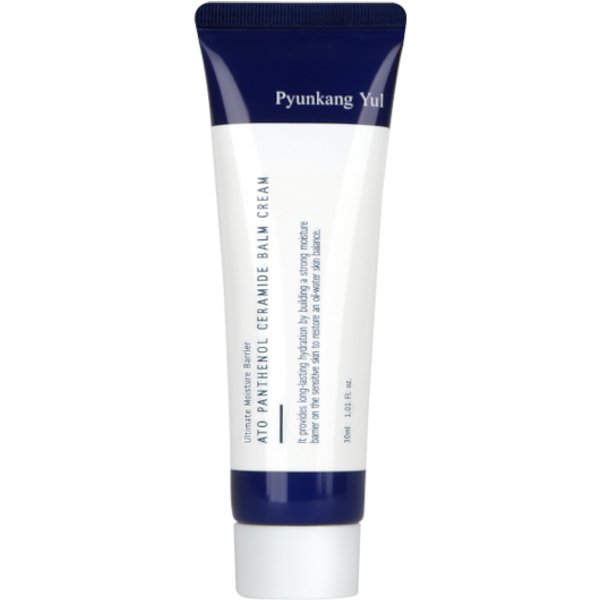
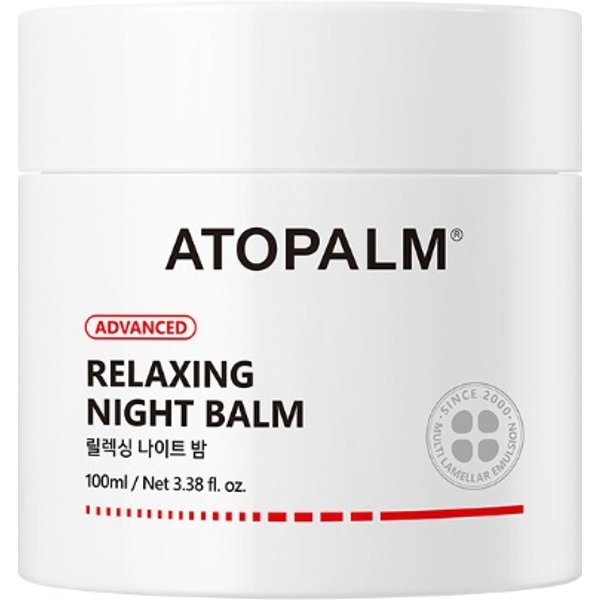
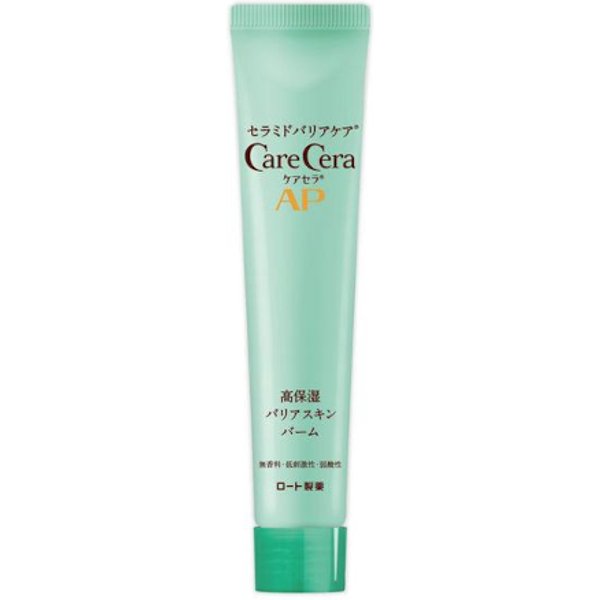
Already have one? Check how it fits your skin with Pick.
Common questions about Petrolatum#
What is Petrolatum?
- The plainest occlusive there is — it slows the water leaving skin, so dry, tight, flaky-looking skin looks smoother and stays comfortable for longer.
What else is Petrolatum called?
- On a label you may see Petroleum jelly and White soft paraffin.
When should you apply Petrolatum?
- Morning or evening. The evening is the easier time — it is a heavy texture, and it sits on the surface rather than sinking in.
How often can you use Petrolatum?
- Daily.
Where do you apply Petrolatum?
- All over the face. Keep it away from your eyes and lips.
Can you use Petrolatum around the eyes?
- Yes. Petrolatum goes all over the face, the skin around the eyes included — keep it out of your eyes and off your lips.
Does Petrolatum make skin more sensitive to the sun?
- No. Petrolatum is not flagged as increasing sun sensitivity.
What should you not use with Petrolatum?
- Nothing flagged. None of the ingredients this wiki covers needs to be kept apart from Petrolatum — check the label of anything not covered here.
Who should avoid Petrolatum?
- Go slowly with Prone to Redness.
Is there a cosmetic limit for Petrolatum?
- No. No cosmetic regulator in the United States, Canada, the European Union or Great Britain sets a maximum strength for it. That is a limit on the rules, not a signal to use more.
Related ingredients#
How we check this#
Everything on this page traces to the sources listed below — regulators' own publications and published studies. Where the evidence does not answer a question, it is left unanswered.
Some sources below are the official product information for prescription medicines, cited for how they interact with this ingredient. We use them for their safety and handling detail only. A cosmetic product is not one of those medicines and is not intended to treat any condition.
Our review is AI-assisted and is not a named expert's opinion. Last reviewed August 8, 2026.
Think something here is out of date or wrong? Email us at wiki@skinintelligence.ai with your reasoning and where you read it. We read what people send, and we update the page when the sources support it.
Regulators and official bodies · 16
- S221 CFR Part 347 — Skin Protectant Drug Products for Over-the-Counter Human Use (§347.10, §347.50). eCFR.
- S3Skin Protectant Drug Products for Over-the-Counter Human Use; Final Monograph. 68 FR 33362, 4 June 2003. Federal Register.
- S4Regulation (EC) No 1223/2009 on cosmetic products, Annex II entry 904 (consolidated). EUR-Lex CELEX 02009R1223.
- S5Regulation (EC) No 1223/2009 as retained in UK law, Annex II entry 904. legislation.gov.uk/eur/2009/1223/annex/II.
- S6Screening Assessment — Petrolatum and Waxes (Petroleum and Refinery Gases, Stream 4). Environment Canada / Health Canada.
- S7Cosmetic Ingredient Hotlist — List of Prohibited and Restricted Cosmetic Ingredients. Health Canada, 2025. (Petrolatum absent — verified against the list itself.).
- S8PROTOPIC (tacrolimus) ointment — full prescribing information. DailyMed SPL setid 3b7f0fed-9046-4094-a131-29d560733e47.
- S9Salicylic Acid 6% (Rx) — WARNINGS and DOSAGE AND ADMINISTRATION. FDA SPL set id 129ccc6e-4eb2-495d-8583-427cb223b783 (openFDA drug label API).
- S10KERALYT (salicylic acid) Gel — CLINICAL PHARMACOLOGY, DOSAGE AND ADMINISTRATION. DailyMed SPL setid 8195e4e0-b812-11de-81b4-0002a5d5c51b.
- S11FINACEA (azelaic acid) Gel 15% — §2 Dosage and Administration. FDA label 021470s015s016.
- S12AKLIEF (trifarotene) Cream — full prescribing information. DailyMed SPL setid 62d910db-85a6-4696-b69b-4bd2f3080cfc.
- S13FABIOR (tazarotene) Foam — full prescribing information. DailyMed SPL setid ae0afed7-1d60-45fd-a08b-8db094618521.
- S14Tretinoin Gel / Tretinoin Cream — full prescribing information. DailyMed SPL setid 4889c7f8-37d0-4f1a-9829-bca107806586.
- S15DIFFERIN (adapalene) Gel — full prescribing information. DailyMed SPL setid a0031324-92a6-4c11-90e2-c2818f7278ec.
- S16Atopic eczema in under 12s: diagnosis and management. NICE CG57, §1.5 Treatment.
- S17Sidbury R, Alikhan A, Bercovitch L, Cohen DE, Darr JM, Drucker AM, Eichenfield LF, Frazer-Green L, Paller AS, Schwarzenberger K, Silverberg JI, Singh AM, Wu PA, Davis DMR. Guidelines of care for the management of atopic dermatitis in adults with topical therapies. J Am Acad Dermatol. 2023;89(1):e1-e20. PMID 36641009.
Studies and references · 20
- S1Ghadially R, Halkier-Sorensen L, Elias PM. Effects of petrolatum on stratum corneum structure and function. J Am Acad Dermatol. 1992;26(3 Pt 2):387-96. PMID 1564142. doi:10.1016/0190-9622(92)70060-s.
- S18Czarnowicki T, Malajian D, Khattri S, Correa da Rosa J, Dutt R, Finney R, Dhingra N, Xiangyu P, Xu H, Estrada YD, Zheng X, Gilleaudeau P, Sullivan-Whalen M, Suaréz-Fariñas M, Shemer A, Krueger JG, Guttman-Yassky E. Petrolatum: Barrier repair and antimicrobial responses underlying this "inert" moisturizer. J Allergy Clin Immunol. 2016;137(4):1091-1102.e7. PMID 26431582.
- S19Smack DP, Harrington AC, Dunn C, Howard RS, Szkutnik AJ, Krivda SJ, Caldwell JB, James WD. Infection and allergy incidence in ambulatory surgery patients using white petrolatum vs bacitracin ointment. A randomized controlled trial. JAMA. 1996;276(12):972-7. PMID 8805732.
- S20Nguyen SH, Dang TP, Maibach HI. Comedogenicity in rabbit: some cosmetic ingredients/vehicles. Cutan Ocul Toxicol. 2007;26(4):287-92. PMID 18058303.
- S21Frank SB. Is the rabbit ear model, in its present state, prophetic of acnegenicity? J Am Acad Dermatol. 1982;6(3):373-7. PMID 6461674.
- S22Kamrani P, Hedrick J, Marks JG, Zaenglein AL. Petroleum jelly: A comprehensive review of its history, uses, and safety. J Am Acad Dermatol. 2024;90(4):807-813. PMID 37315800.
- S23Albusair M, Shadid A, Altalhab S. Labial comedones induced by petroleum jelly: a florid example. Dermatol Online J. 2021;27(9). PMID 34755991.
- S24Akarsu S, Fetil E, Ozbagcivan O, Gunes AT. Blocking or enhancing effects of some basic emollients in UVA penetration. An Bras Dermatol. 2018;93(2):238-241. PMID 29723354.
- S25Rost DL, Barbalho GN, Andrade JFM, Cunha-Filho M, Gelfuso GM, Gratieri T. The Influence of Moisturizer Co-Application Protocols on In Vitro Penetration of Betamethasone in Porcine Skin. Pharmaceutics. 2025. PMID 40733083.
- S26Olson KA, West K, McCarthy PL. Toxic tacrolimus levels after application of topical tacrolimus and use of occlusive dressings in two bone marrow transplant recipients with cutaneous graft-versus-host disease. Pharmacotherapy. 2014;34(6):e60-4. PMID 24700567.
- S27Intarakumhaeng R, Shi Z, Wanasathop A, Stella QC, Wei KS, Styczynski PB, Li C, Smith ED, Li SK. In vitro skin penetration of petrolatum and soybean oil and effects of glyceryl monooleate. Int J Cosmet Sci. 2018;40(4):367-376. PMID 29876949.
- S28Marini L. Advanced film-forming gel formula vs spring thermal water and white petrolatum as primary dressings after full-face ablative fractional CO₂ laser resurfacing: a comparative split-face pilot study. J Eur Acad Dermatol Venereol. 2018;32(1):113-116. PMID 28662298.
- S29Vaillant L, Georgescou G, Rivollier C, Delarue A. Combined effects of glycerol and petrolatum in an emollient cream: A randomized, double-blind, crossover study in healthy volunteers with dry skin. J Cosmet Dermatol. 2020;19(6):1399-1403. PMID 31532576.
- S30Agner T. An experimental study of irritant effects of urea in different vehicles. Acta Derm Venereol Suppl (Stockh). 1992. PMID 1466185.
- S31Ashraf DC, Idowu OO, Wang Q, YeEun T, Copperman TS, Tanaboonyawat S, Arnold BF, Oldenburg CE, Vagefi MR, Kersten RC. The Role of Topical Antibiotic Prophylaxis in Oculofacial Plastic Surgery: A Randomized Controlled Study. Ophthalmology. 2020;127(12):1747-1754. PMID 32698033.
- S32Pagani K, Lukac D, Martinez R, Jablon K, McGee JS. Slugging: TikTok™ as a source of a viral "harmless" beauty trend. Clin Dermatol. 2022;40(6):810-812. PMID 35961481.
- S33Kang H, Choi J, Lee AY. Allergic contact dermatitis to white petrolatum. J Dermatol. 2004;31(5):428-430. PMID 15187314.
- S34Moisturizers. StatPearls / NCBI Bookshelf NBK545171.
- S35Rubio-Santoyo A, Sanabria-de la Torre R, Montero-Vílchez T, Girón-Prieto MS, Gómez-Farto A, Arias-Santiago S. Effects of Extra Virgin Olive Oil and Petrolatum on Skin Barrier Function and Microtopography. J Clin Med. 2025. PMID 40649050.
- S36Gujjar M, Banga AK. Vehicle influence on permeation through intact and compromised skin. Int J Pharm. 2014;472(1-2):362-368. PMID 24979534.