What does Squalane do?#
Squalane is a lightweight, non-greasy oil that closely mimics your skin's own natural moisturizing lipids. It integrates seamlessly into the skin's surface to help reduce moisture loss and leave skin feeling soft and smooth.
Benefits
- Mimics your skin's own natural oils for a lightweight, non-greasy feel
- Helps reduce moisture loss through the skin's surface for lasting hydration
- Well tolerated by most skin types, including oily and breakout-prone skin
How it works
Squalane is a lightweight, stable oil that feels remarkably comfortable on the skin and absorbs without heaviness or greasiness. It helps skin feel softer and look more supple by supporting surface hydration with a thin, non-occlusive layer. The result is a smooth, nourished-looking complexion that stays comfortable throughout the day without a shiny or oily appearance.
How to use Squalane#
Best time
Neither time of day is better for it, so use whichever suits the rest of your routine.
How often
There is nothing to build up to — a full amount is fine from the first day.
Where it goes
It goes on near the end, after anything water-based has settled, because an oil sits over water rather than under it.
Where to apply
It suits the area around the eyes as well as the rest of the face.
How to apply
Warm a little between your fingertips first, then press it onto the face rather than rubbing it in.
Can be mixed with a heavier cream for very dry skin, or used alone for oily skin types.
How much
A small amount covers the whole face. If it feels slick afterwards, the answer is less of it, not a different product.
Sun
It isn't one of the actives we flag for extra sun care.
Alongside others
It shares a routine comfortably with everything else, exfoliants and retinoids included, so it never needs an evening to itself.
Squalane is a lightweight moisturizing ingredient and is well tolerated by most skin types. Discontinue use if irritation or a rash occurs.
The form you will see it in
Squalane facial oil
- Where it goes
- As your moisturizer
Using Squalane with other ingredients
Pairs well with Squalane
Hyaluronic acid
Works well togetherHyaluronic acid draws water in and squalane sits over it as a light surface film — a humectant paired with an emollient.
Ceramides
Works well togetherCeramides help reinforce the look and feel of a healthy moisture barrier while squalane tops up the surface lipid film.
Retinol
Works well togetherUsing a moisturizer alongside your retinoid helps offset dryness during the adjustment period.
What not to use with Squalane
Nothing flagged. None of the ingredients this wiki covers needs to be kept apart from Squalane — check the label of anything not covered here.
Who should avoid Squalane?#
Six situations change whether Squalane suits your skin right now. Each one is either a reason to skip it, a reason to go slowly, or nothing to watch for.
- Maternity & Nursing
- No caution
- Fragile or Sensitive
- No caution
- Recent Facial or Laser
- No caution
- Prone to Redness
- No caution
- Dry or Itchy Patches
- No caution
- Recent Shave or Wax
- No caution
Cosmetic strength limits for Squalane where you live#
| Region | Most a cosmetic may contain | |
|---|---|---|
 United States United States | No explicit cap | |
The FDA restricts a short list of ingredients and sets no general strength ceiling on the rest. A figure marked "guidance, not law" is the Cosmetic Ingredient Review panel's recommendation. 21 CFR part 700, subpart B — Requirements for Specific Cosmetic Products (FDA) | ||
 Canada Canada | No explicit cap | |
One list does the work — Health Canada's Hotlist of prohibited and restricted cosmetic ingredients. | ||
 European Union European Union | No explicit cap | |
The Cosmetics Regulation's annexes, consolidated to 1 May 2026. A figure marked "guidance, not law" comes from the EU's cosmetic safety committee rather than from the annexes. | ||
 Great Britain Great Britain | No explicit cap | |
Great Britain kept the annexes as its own law and updates them only when it chooses; Northern Ireland follows the live EU Regulation, which is why some rows read differently for each. Regulation (EC) No 1223/2009 as it applies in Great Britain · Regulation (EC) No 1223/2009, Annexes II–VI | ||
 India India | No explicit cap | |
India writes its own standard, aligned to the European rules as they stood in 2012. Mandatory since 9 February 2026. IS 4707 (Part 2):2025 — restricted and prohibited cosmetic ingredients · IS 4707 (Part 3):2025 — preservatives · Cosmetics Rules, 2020, Ninth Schedule | ||
 Brazil Brazil | No explicit cap | |
ANVISA rewrote its restricted list in June 2026, and a companion act amended the prohibited list at the same time. RDC 1.029/2026 — restricted ingredients · RDC 529/2021 — prohibited ingredients, as amended by RDC 1.030/2026 · RDC 528/2021 — preservatives | ||
 Japan Japan | No explicit cap | |
Japan's cosmetics standard keeps drug ingredients out of cosmetics, so most of its figures sit in the ministry's list of the ones a cosmetic may still contain. Cosmetics Standards (化粧品基準), Ministry of Health, Labour and Welfare · Cosmetics Standards — the ministry's own English translation · Drug ingredients permitted in cosmetics — 2007 notification | ||
 South Korea South Korea | No explicit cap | |
One MFDS regulation carries both the prohibited list and the restricted list, in force 18 March 2026. Sunscreens and a few other categories are cleared product by product instead. Regulation on Safety Standards for Cosmetics (MFDS Notification 2026-19) · Regulation on the Review of Functional Cosmetics (MFDS Notification 2025-88) | ||
 Kenya Kenya | No explicit cap | |
Kenya's standard applies the EU annexes as they stand rather than copying them, so its ingredient limits are the EU's — including the 2024 additions. A figure marked "guidance, not law" sits outside the annexes and does not carry over. KS EAS 377-1, -2 and -3:2022 — cosmetics safety requirements, published by KEBS · Regulation (EC) No 1223/2009, Annexes II–VI | ||
 Namibia Namibia | No explicit cap | |
Namibia sets no ingredient limits at all. Its cosmetic rule is a single line requiring a product to be free of any harmful ingredient. Foodstuffs, Cosmetics and Disinfectants Ordinance 18 of 1979, and the regulations under it | ||
 Ukraine Ukraine | No explicit cap | |
Ukraine's own transposition of the EU annexes, as they stood before the 2024 additions, fully in force since 3 August 2026. A further revision is due on 1 February 2027. Technical Regulation on cosmetic products — Cabinet Resolution No. 65 of 20 January 2021 | ||
 Georgia Georgia | No explicit cap | |
Georgia has no cosmetics rulebook — its register of technical regulations carries no cosmetics entry — so only the general product-safety duty applies. | ||
 Australia Australia | No explicit cap | |
Australia writes no cosmetic ingredient list. A figure here is the point at which a substance becomes a medicine or a scheduled substance carrying Caution labeling, so its numbers sit well above other markets'. Poisons Standard — June 2026 · Therapeutic Goods (Excluded Goods) Determination 2018 | ||
 United Arab Emirates United Arab Emirates | No explicit cap | |
The Gulf standard points at the EU annexes as amended, so its ingredient limits are the EU's. A figure marked "guidance, not law" sits outside the annexes and does not carry over. GSO 1943:2024 — Cosmetic products: safety requirements (Gulf technical regulation) · Regulation (EC) No 1223/2009, Annexes II–VI | ||
 Kuwait Kuwait | No explicit cap | |
The Gulf standard points at the EU annexes as amended, so its ingredient limits are the EU's. A figure marked "guidance, not law" sits outside the annexes and does not carry over. GSO 1943:2024 — Cosmetic products: safety requirements (Gulf technical regulation) · Regulation (EC) No 1223/2009, Annexes II–VI | ||
 Hong Kong Hong Kong | No explicit cap | |
Hong Kong writes no cosmetics rulebook. Its Poisons List (Cap. 138A, Schedule 10) decides which substances may be sold only as medicines, and general safety is judged case by case against whichever overseas standard the enforcer considers reasonable. Pharmacy and Poisons Regulations (Cap. 138A), Schedule 10 — the poisons list · Pharmacy and Poisons Board — Guidance Notes on classifying pharmaceutical products, April 2026 | ||
 Singapore Singapore | No explicit cap | |
Singapore writes the ASEAN annexes into its own schedule, and its regulator tells companies to check the current ASEAN release as well — which is why a figure here can read "guidance, not law". Health Products (Cosmetic Products — ASEAN Cosmetic Directive) Regulations 2007, Third Schedule · ASEAN Cosmetic Directive annexes — release 2026-1, 22 June 2026 | ||
 Brunei Brunei | No explicit cap | |
Brunei carries the 2007 ASEAN annexes in its own schedule and has not updated them since, so it reads differently from Singapore on several ingredients. Medicines (Cosmetic Products) Regulations (Cap. 285 Rg 1), Schedule 1 — revised edition 2024 | ||
 Jordan Jordan | No explicit cap | |
Jordan's cosmetic rules defer to "the approved references" and name none of them, so there is no Jordanian figure to read. The only number in the instrument governs the ingredient list on the pack. JFDA instructions on cosmetics and pharmaceutical cosmetics, 2026 | ||
 Trinidad & Tobago Trinidad & Tobago | No explicit cap | |
Trinidad and Tobago has had the power to set cosmetic standards since 1960 and has never used it. The regulations made under the Act cover food and drugs, with no cosmetics part; what binds is the Act's general rule against selling a cosmetic that may injure the user. Food and Drugs Act, Chap. 30:01 · Food and Drugs Regulations | ||
No cosmetic regulator in the 20 markets above sets a maximum strength for squalane. That is the state of the rules, not a signal to use more: how much goes into a product is the formulator's decision.
Open a market to see the rulebook its figure comes from. Those notes describe each market's own rules as we read them, current to August 24, 2026; the linked documents are the authority, and nothing here is legal advice.
Sample products with Squalane#
A few well-known products, not a full list — product names are each brand's own. We don't sell them — the shop prices them in US dollars and ships from Hong Kong, so delivery and duties come on top. It may not ship everywhere.
We may earn a small commission when you buy through these links.
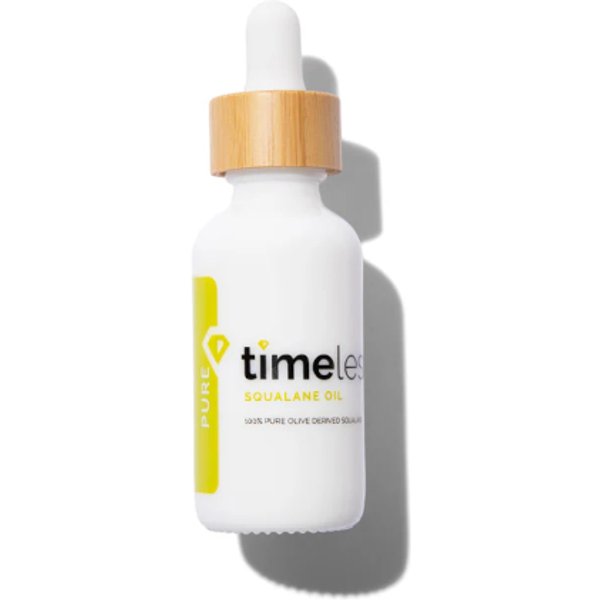
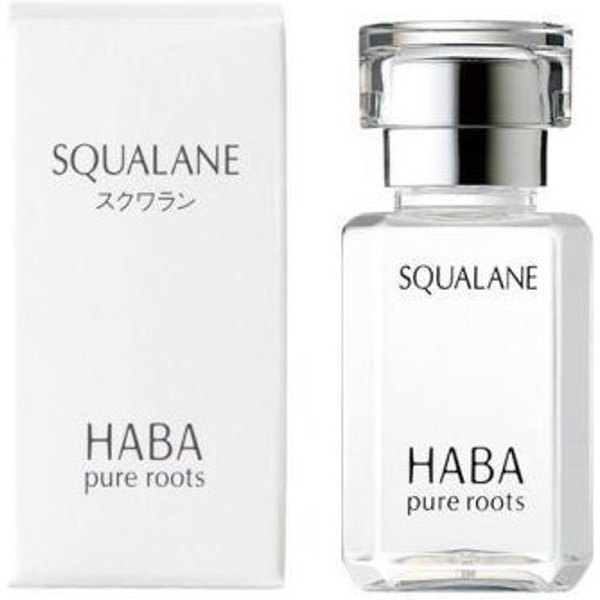
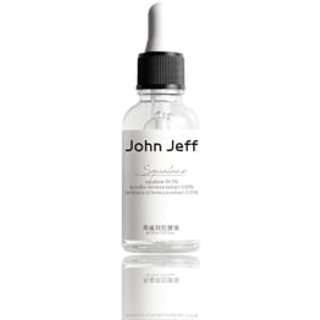
Already have one? Check how it fits your skin with Pick.
Common questions about Squalane#
What is Squalane?
- A light, stable oil that skin already makes a little of for itself — it softens the surface and leaves skin looking smoother and more supple.
What else is Squalane called?
- On a label you may see Olive squalane and Sugarcane squalane.
When should you apply Squalane?
- Morning or evening. Neither time of day is better for it, so use whichever suits the rest of your routine.
How often can you use Squalane?
- Daily.
Where do you apply Squalane?
- All over the face. Keep it away from your eyes and lips.
Can you use Squalane around the eyes?
- Yes. Squalane goes all over the face, the skin around the eyes included — keep it out of your eyes and off your lips.
Does Squalane make skin more sensitive to the sun?
- No. Squalane is not flagged as increasing sun sensitivity.
What should you not use with Squalane?
- Nothing flagged. None of the ingredients this wiki covers needs to be kept apart from Squalane — check the label of anything not covered here.
Is there a cosmetic limit for Squalane?
- No. No cosmetic regulator in the United States, Canada, the European Union or Great Britain sets a maximum strength for it. That is a limit on the rules, not a signal to use more.
Related ingredients#
How we check this#
Everything on this page traces to the sources listed below — regulators' own publications and published studies. Where the evidence does not answer a question, it is left unanswered.
Our review is AI-assisted and is not a named expert's opinion. Last reviewed August 8, 2026.
Think something here is out of date or wrong? Email us at wiki@skinintelligence.ai with your reasoning and where you read it. We read what people send, and we update the page when the sources support it.
Regulators and official bodies · 7
- S1Cosmetic Ingredient Review Expert Panel. Final Report on the Safety Assessment of Squalane and Squalene. J Am Coll Toxicol 1982;1(2):37–56 (Elder RL, ed.). Retrieved as the CIR re-review package PDF, Includes the 2019 "New Data" section.
- S2Cosmetic Ingredient Review Expert Panel. Squalane and Squalene — 2019 re-review summary.
- S3Fiume M, Bergfeld WF, Belsito DV, Hill RA, Klaassen CD, Liebler DC, Marks JG, Shank RC, Slaga TJ, Snyder PW, Heldreth B. Squalane and Squalene. Int J Toxicol 2023;42(3_suppl):107S–109S. PMID 37752766. doi:10.1177/10915818231204276.
- S4Regulation (EC) No 1223/2009 of the European Parliament and of the Council of 30 November 2009 on cosmetic products, consolidated text, Annexes II–VI (EUR-Lex).
- S5Regulation (EC) No 1223/2009 as retained in UK law, Annex II and Annex III (legislation.gov.uk).
- S621 CFR Part 700, Subpart B — Requirements for Specific Cosmetic Products (eCFR, current).
- S7Health Canada. Cosmetic Ingredient Hotlist: prohibited and restricted ingredients (canada.ca, current).
Studies and references · 14
- S8Chiba K, Yoshizawa K, Makino I, Kawakami K, Onoue M. Comedogenicity of squalene monohydroperoxide in the skin after topical application. J Toxicol Sci 2000;25(2):77–83. PMID 10845185. doi:10.2131/jts.25.77. [SQUALENE].
- S9Zhang W, Zhang Q, Zhou Z, Zhang Y, Li X, Shen H, Tang L, Xiang Q. Oxidative-Inflammatory Modulation of Skin Lipid Metabolism by Squalane, Oleic Acid, and Linoleic Acid. Cosmetics 2025;12(4):130. doi:10.3390/cosmetics12040130.
- S10Wolosik K, Chalecka M, Gasiewska G, Palka J, Surazynski A. Squalane as a Promising Agent Protecting UV-Induced Inhibition of Collagen Biosynthesis and Wound Healing in Human Dermal Fibroblast. Molecules 2025;30(9):1964. PMID 40363772. doi:10.3390/molecules30091964.
- S11Wolosik K, Chalecka M, Gasiewska G, Palka J, Surazynski A. The Mechanism of Protective Action of Plant-Derived Squalane (2,6,10,15,19,23-Hexamethyltetracosane) Against UVA Radiation-Induced Apoptosis in Human Dermal Fibroblasts. Antioxidants 2025;14(7):853. PMID 40722956. doi:10.3390/antiox14070853.
- S12Oliveira ALS, Valente D, Moreira HR, Pintado M, Costa P. Effect of squalane-based emulsion on polyphenols skin penetration: Ex vivo skin study. Colloids Surf B Biointerfaces 2022. PMID 35994992. doi:10.1016/j.colsurfb.2022.112779.
- S13de Souza AC, Sipoli CC, Samulewski RB, Raimundini Aranha AC, Defendi RO, Suzuki RM. Effect of Squalane as a Carrier in O/W Nanoemulsions for Dermal Delivery of Vitamin E. ACS Omega 2025. PMID 41427219. doi:10.1021/acsomega.5c08561.
- S14Kato S, Taira H, Aoshima H, Saitoh Y, Miwa N. Clinical evaluation of fullerene-C60 dissolved in squalane for anti-wrinkle cosmetics. J Nanosci Nanotechnol 2010;10(10):6769–74. PMID 21137794. doi:10.1166/jnn.2010.3053.
- S15Martínez de Murguía Fernández L, Puig Algora G, Bajona Roig M, Bacchini G. Effectiveness and tolerability of a squalane and dimethicone-based treatment for head lice. Parasitol Res 2021. PMID 33797611. doi:10.1007/s00436-021-07113-y.
- S16Wollenberg A, Barbarot S, Torrelo A. Basic Emollients for Xerosis Cutis in Atopic Dermatitis: A Review of Clinical Studies. Int J Dermatol 2025. PMID 40265493. doi:10.1111/ijd.17793.
- S17Rageh MA, Seoudy WM, Abozeid MF, Elkholy AM, Moubasher AEA, Abdel-Latif AM, Attallah DAA, Mohamed EM, Assaf HA, Sabry H, Nasr MM, Hegazy MS, Hunter N, Zuelfakkar N, Bedair NI, Mohammed NE, Abdelkodous SF, Gohary YM, Mohy SM. Egyptian National Consensus on Dermocosmetic Ingredient Selection Across Common Dermatology Scenarios: A RAND/UCLA Appropriateness Study. Dermatol Ther (Heidelb) 2026. PMID 41537948. doi:10.1007/s13555-025-01650-5.
- S18Huang ZR, Lin YK, Fang JY. Biological and pharmacological activities of squalene and related compounds: potential uses in cosmetic dermatology. Molecules 2009;14(1):540–54. PMID 19169201. doi:10.3390/molecules14010540. [predominantly SQUALENE].
- S19NCATS Inxight Drugs, SQUALANE record (archived copy).
- S20National Eczema Association, Can Squalane Help Eczema?, Interview-based patient education; used for nothing in this derivation.
- S21CosmoDerma, Daily use of a bakuchiol and squalane-containing face serum impacts skin esthetics. Whole-formula; not load-bearing for any answer here.