What does Rice Bran Water do?#
A toner with rice bran water — the watery distillate of the bran milled off brown rice — or the bran extract, which is where the skin evidence sits. Used daily, the extract helps skin look and feel more hydrated and smoother.
Benefits
- Helps skin feel more hydrated and look smoother — in a four-week study of a rice bran extract, hydration rose and roughness fell
- Extracts standardised on rice bran's own ferulic acid also helped the look of uneven tone in the trials that measured it
- Gentle enough for morning and night, every day, with no easing-in period
- Rated safe as used in cosmetics by the independent safety review, which assessed rice bran extract and its relatives — not the water — and reported no irritation or sensitisation in its clinical tests
How it works
Rice bran is the outer layer milled off brown rice, and the cosmetic materials come from it two ways. Steam-distil it and the water and aromatic compounds come over as rice bran water; extract it and you keep the compounds that do not travel with steam — ferulic acid, gamma-oryzanol, phytic acid and vitamin E — which give the extract its antioxidant character. On skin the evidence is for the extract: in a four-week study hydration rose and roughness fell, and in a laboratory skin model it cut UV-driven oxidation by 44%. The water, being a distillate, carries little of those compounds, which is why the EU ingredient database lists it as a fragrance-type ingredient rather than a conditioning one.
What to expect
Most people have no break-in phase, and nothing in its record describes one. Any change in how hydrated or smooth skin looks showed up by the fourth week in the study that measured it.
How to use Rice Bran Water#
Best time
Nothing in the record ties it to one end of the day, and it is not known to make skin more sensitive to daylight.
Where it goes
In the watery layer — a toner or essence after cleansing, before serum. It also turns up in serums, creams and cleansers, where it goes wherever that product goes.
Where to apply
All over the face. No published study has looked at the eye area, so it is not an ingredient to seek out in an eye product.
How to apply
However the product is designed to be used. A thin layer is enough, and daily use is fine from the first day — the four-week study applied the extract twice a day without a ramp.
Alongside others
Nothing in the catalog is flagged against it, so there is no clash to plan around — and no published study supports recommending a particular pairing either.
What to expect
Most people have no break-in phase, and nothing in its record describes one. Any change in how hydrated or smooth skin looks showed up by the fourth week in the study that measured it.
What to look for
On a label it appears as Oryza Sativa (Rice) Bran Water or Oryza Sativa (Rice) Bran Extract, sometimes as Hydrolyzed Rice Bran Extract. The two are not the same thing: the water is a steam distillate the EU ingredient database lists as a fragrance-type ingredient, and the extract is the one carrying the skin-conditioning function and the trial evidence — including the even-tone results, which come from extracts standardised on rice bran's own ferulic acid and are not shown for a plain rice bran water. Rice bran oil, rice starch, rice protein, the rinse-water sold as rice water and the sake-type rice ferments are different ingredients with their own records, and the water often sits first on a list in place of plain water, doing the job of the base rather than starring.
If it doesn't suit
If you know you are allergic to rice or rice bran, skip products that contain it. If you are unsure, test on the inner arm for 24 hours first. If it stings, itches or brings up redness, rinse it off and stop using it.
Discontinue use if unexpected discomfort occurs.
The form you will see it in
Rice bran water toner
- Where it goes
- After cleansing
Using Rice Bran Water with other ingredients
What not to use with Rice Bran Water
Nothing flagged. None of the ingredients this wiki covers needs to be kept apart from Rice Bran Water — check the label of anything not covered here.
Who should avoid Rice Bran Water?#
Six situations change whether Rice Bran Water suits your skin right now. Each one is either a reason to skip it, a reason to go slowly, or nothing to watch for.
- Maternity & Nursing
- No caution
- Fragile or Sensitive
- No caution
- Recent Facial or Laser
- No caution
- Prone to Redness
- No caution
- Dry or Itchy Patches
- No caution
- Recent Shave or Wax
- No caution
Cosmetic strength limits for Rice Bran Water where you live#
| Region | Most a cosmetic may contain | |
|---|---|---|
 United States United States | No explicit cap | |
The FDA restricts a short list of ingredients and sets no general strength ceiling on the rest. A figure marked "guidance, not law" is the Cosmetic Ingredient Review panel's recommendation. 21 CFR part 700, subpart B — Requirements for Specific Cosmetic Products (FDA) | ||
 Canada Canada | No explicit cap | |
One list does the work — Health Canada's Hotlist of prohibited and restricted cosmetic ingredients. | ||
 European Union European Union | No explicit cap | |
The Cosmetics Regulation's annexes, consolidated to 1 May 2026. A figure marked "guidance, not law" comes from the EU's cosmetic safety committee rather than from the annexes. | ||
 Great Britain Great Britain | No explicit cap | |
Great Britain kept the annexes as its own law and updates them only when it chooses; Northern Ireland follows the live EU Regulation, which is why some rows read differently for each. Regulation (EC) No 1223/2009 as it applies in Great Britain · Regulation (EC) No 1223/2009, Annexes II–VI | ||
 India India | No explicit cap | |
India writes its own standard, aligned to the European rules as they stood in 2012. Mandatory since 9 February 2026. IS 4707 (Part 2):2025 — restricted and prohibited cosmetic ingredients · IS 4707 (Part 3):2025 — preservatives · Cosmetics Rules, 2020, Ninth Schedule | ||
 Brazil Brazil | No explicit cap | |
ANVISA rewrote its restricted list in June 2026, and a companion act amended the prohibited list at the same time. RDC 1.029/2026 — restricted ingredients · RDC 529/2021 — prohibited ingredients, as amended by RDC 1.030/2026 · RDC 528/2021 — preservatives | ||
 Japan Japan | No explicit cap | |
Japan's cosmetics standard keeps drug ingredients out of cosmetics, so most of its figures sit in the ministry's list of the ones a cosmetic may still contain. Cosmetics Standards (化粧品基準), Ministry of Health, Labour and Welfare · Cosmetics Standards — the ministry's own English translation · Drug ingredients permitted in cosmetics — 2007 notification | ||
 South Korea South Korea | No explicit cap | |
One MFDS regulation carries both the prohibited list and the restricted list, in force 18 March 2026. Sunscreens and a few other categories are cleared product by product instead. Regulation on Safety Standards for Cosmetics (MFDS Notification 2026-19) · Regulation on the Review of Functional Cosmetics (MFDS Notification 2025-88) | ||
 Kenya Kenya | No explicit cap | |
Kenya's standard applies the EU annexes as they stand rather than copying them, so its ingredient limits are the EU's — including the 2024 additions. A figure marked "guidance, not law" sits outside the annexes and does not carry over. KS EAS 377-1, -2 and -3:2022 — cosmetics safety requirements, published by KEBS · Regulation (EC) No 1223/2009, Annexes II–VI | ||
 Namibia Namibia | No explicit cap | |
Namibia sets no ingredient limits at all. Its cosmetic rule is a single line requiring a product to be free of any harmful ingredient. Foodstuffs, Cosmetics and Disinfectants Ordinance 18 of 1979, and the regulations under it | ||
 Ukraine Ukraine | No explicit cap | |
Ukraine's own transposition of the EU annexes, as they stood before the 2024 additions, fully in force since 3 August 2026. A further revision is due on 1 February 2027. Technical Regulation on cosmetic products — Cabinet Resolution No. 65 of 20 January 2021 | ||
 Georgia Georgia | No explicit cap | |
Georgia has no cosmetics rulebook — its register of technical regulations carries no cosmetics entry — so only the general product-safety duty applies. | ||
 Australia Australia | No explicit cap | |
Australia writes no cosmetic ingredient list. A figure here is the point at which a substance becomes a medicine or a scheduled substance carrying Caution labelling, so its numbers sit well above other markets'. Poisons Standard — June 2026 · Therapeutic Goods (Excluded Goods) Determination 2018 | ||
 United Arab Emirates United Arab Emirates | No explicit cap | |
The Gulf standard points at the EU annexes as amended, so its ingredient limits are the EU's. A figure marked "guidance, not law" sits outside the annexes and does not carry over. GSO 1943:2024 — Cosmetic products: safety requirements (Gulf technical regulation) · Regulation (EC) No 1223/2009, Annexes II–VI | ||
 Kuwait Kuwait | No explicit cap | |
The Gulf standard points at the EU annexes as amended, so its ingredient limits are the EU's. A figure marked "guidance, not law" sits outside the annexes and does not carry over. GSO 1943:2024 — Cosmetic products: safety requirements (Gulf technical regulation) · Regulation (EC) No 1223/2009, Annexes II–VI | ||
 Hong Kong Hong Kong | No explicit cap | |
Hong Kong writes no cosmetics rulebook. Its Poisons List (Cap. 138A, Schedule 10) decides which substances may be sold only as medicines, and general safety is judged case by case against whichever overseas standard the enforcer considers reasonable. Pharmacy and Poisons Regulations (Cap. 138A), Schedule 10 — the poisons list · Pharmacy and Poisons Board — Guidance Notes on classifying pharmaceutical products, April 2026 | ||
 Singapore Singapore | No explicit cap | |
Singapore writes the ASEAN annexes into its own schedule, and its regulator tells companies to check the current ASEAN release as well — which is why a figure here can read "guidance, not law". Health Products (Cosmetic Products — ASEAN Cosmetic Directive) Regulations 2007, Third Schedule · ASEAN Cosmetic Directive annexes — release 2026-1, 22 June 2026 | ||
 Brunei Brunei | No explicit cap | |
Brunei carries the 2007 ASEAN annexes in its own schedule and has not updated them since, so it reads differently from Singapore on several ingredients. Medicines (Cosmetic Products) Regulations (Cap. 285 Rg 1), Schedule 1 — revised edition 2024 | ||
 Jordan Jordan | No explicit cap | |
Jordan's cosmetic rules defer to "the approved references" and name none of them, so there is no Jordanian figure to read. The only number in the instrument governs the ingredient list on the pack. JFDA instructions on cosmetics and pharmaceutical cosmetics, 2026 | ||
 Trinidad & Tobago Trinidad & Tobago | No explicit cap | |
Trinidad and Tobago has had the power to set cosmetic standards since 1960 and has never used it. The regulations made under the Act cover food and drugs, with no cosmetics part; what binds is the Act's general rule against selling a cosmetic that may injure the user. Food and Drugs Act, Chap. 30:01 · Food and Drugs Regulations | ||
No cosmetic regulator in the 20 markets above sets a maximum strength for rice bran water. That is the state of the rules, not a signal to use more: how much goes into a product is the formulator's decision.
Open a market to see the rulebook its figure comes from. Those notes describe each market's own rules as we read them, current to August 24, 2026; the linked documents are the authority, and nothing here is legal advice.
Sample products with Rice Bran Water#
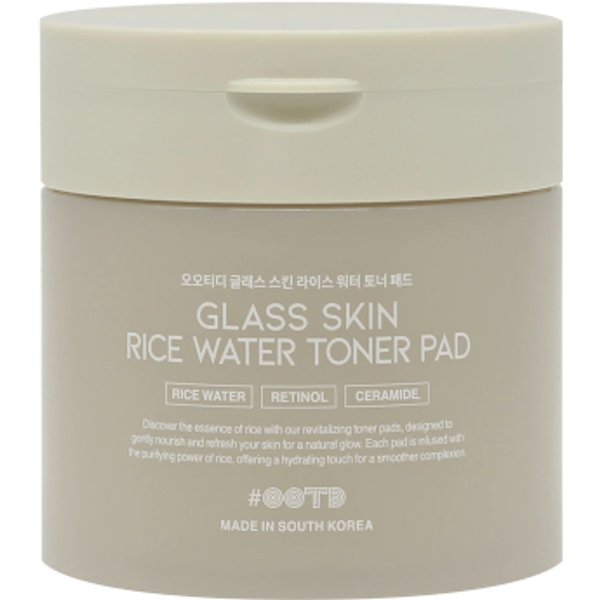
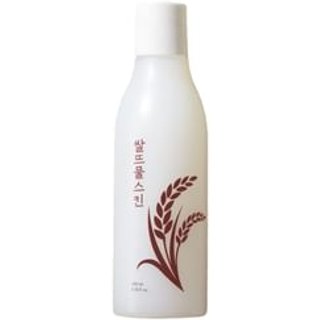
A few well-known products, not a full list — product names are each brand's own. We don't sell them — the shop prices them in US dollars and ships from Hong Kong, so delivery and duties come on top. It may not ship everywhere.
We may earn a small commission when you buy through these links.
Common questions about Rice Bran Water#
What is Rice Bran Water?
- The watery distillate and the extract of rice bran, the layer milled off brown rice — used in toners, essences and creams, with the hydration and smoothness evidence sitting on the extract.
What else is Rice Bran Water called?
- On a label you may see Oryza sativa bran water, Oryza sativa (rice) bran water, Oryza sativa bran extract, Oryza sativa (rice) bran extract, Rice bran extract and Hydrolyzed rice bran extract.
When should you apply Rice Bran Water?
- Morning or evening. Nothing in the record ties it to one end of the day, and it is not known to make skin more sensitive to daylight.
How often can you use Rice Bran Water?
- Daily.
Where do you apply Rice Bran Water?
- All over the face. Keep it away from your eyes and lips.
Can you use Rice Bran Water around the eyes?
- Yes. Rice Bran Water goes all over the face, the skin around the eyes included — keep it out of your eyes and off your lips.
Does Rice Bran Water make skin more sensitive to the sun?
- No. Rice Bran Water is not flagged as increasing sun sensitivity.
What should you not use with Rice Bran Water?
- Nothing flagged. None of the ingredients this wiki covers needs to be kept apart from Rice Bran Water — check the label of anything not covered here.
Is there a cosmetic limit for Rice Bran Water?
- No. No cosmetic regulator in the United States, Canada, the European Union or Great Britain sets a maximum strength for it. That is a limit on the rules, not a signal to use more.
Related ingredients#
How we check this#
Everything on this page traces to the sources listed below — regulators' own publications and published studies. Where the evidence does not answer a question, it is left unanswered.
Some sources below are medical studies. This ingredient has been studied in conditions a doctor treats, and the record cited here includes findings that did not favour it. We use those studies for their safety and handling detail only. A cosmetic product is not a medicine and is not intended to treat, cure or prevent any condition.
Some sources below are the official product information for prescription medicines, cited for how they interact with this ingredient. We use them for their safety and handling detail only. A cosmetic product is not one of those medicines and is not intended to treat any condition.
Our review is AI-assisted and is not a named expert's opinion. Last reviewed September 10, 2026.
Think something here is out of date or wrong? Email us at wiki@skinintelligence.ai with your reasoning and where you read it. We read what people send, and we update the page when the sources support it.
Regulators and official bodies · 10
- S1Amended Final Report on the Safety Assessment of Oryza Sativa (Rice) Bran Oil, Oryza Sativa (Rice) Germ Oil, Rice Bran Acid, Oryza Sativa (Rice) Bran Wax, Hydrogenated Rice Bran Wax, Oryza Sativa (Rice) Bran Extract, Oryza Sativa (Rice) Extract, Oryza Sativa (Rice) Germ Powder, Oryza Sativa (Rice) Starch, Oryza Sativa (Rice) Bran, Hydrolyzed Rice Bran Extract, Hydrolyzed Rice Bran Protein, Hydrolyzed Rice Extract, and Hydrolyzed Rice Protein. Cosmetic Ingredient Review Expert Panel. Int J Toxicol 2006. DOI 10.1080/10915810600964626; PMID 17090480. Tier 1 (CIR report).
- S2CosIng — ORYZA SATIVA BRAN WATER (ingredient 84820), European Commission, under Regulation (EC) No 1223/2009. Tier 1..
- S3CosIng — ORYZA SATIVA BRAN EXTRACT (ingredient 35751), European Commission, under Regulation (EC) No 1223/2009. Tier 1..
- S18Roaccutane 10 mg soft capsules — Summary of Product Characteristics, sections 4.4 and 4.5. electronic medicines compendium, product 100633. Tier 1..
- S19Differin Gel (adapalene 0.1%) — Summary of Product Characteristics, sections 4.4 and 4.5. electronic medicines compendium, product 921. Tier 1..
- S20Regulation (EC) No 1223/2009 on cosmetic products, Annex II (list of substances prohibited in cosmetic products), as assimilated into UK law. legislation.gov.uk. Tier 1..
- S21Regulation (EC) No 1223/2009 on cosmetic products, Annex III (list of substances which cosmetic products must not contain except subject to the restrictions laid down), as assimilated into UK law. legislation.gov.uk. Tier 1..
- S2221 CFR part 700 subpart B — Requirements for Specific Cosmetic Products (§§ 700.11–700.35), eCFR. Tier 1..
- S23Cosmetic Ingredient Hotlist: list of ingredients that are prohibited or restricted for use in cosmetic products. Health Canada. Tier 1..
- S24Johnson W Jr, Bergfeld WF, Belsito DV, Hill RA, Klaassen CD, Liebler DC, Marks JG Jr, Shank RC, Slaga TJ, Snyder PW, Fiume M, Heldreth B. Safety Assessment of Polyol Phosphates as Used in Cosmetics. Int J Toxicol 2024;43(4_suppl):78–107. DOI 10.1177/10915818241259699; PMID 39046084. Tier 1 (CIR report). Cited for phytic acid's chelating-agent function and safety conclusion.
Studies and references · 21
- S4Manosroi A, Chutoprapat R, Abe M, Manosroi W, Manosroi J. Anti-aging efficacy of topical formulations containing niosomes entrapped with rice bran bioactive compounds. Pharm Biol 2012;50(2):208–24. DOI 10.3109/13880209.2011.596206; PMID 22235888. Tier 2. (full text).
- S5Fujiwaki T, Furusho K. The effects of rice bran broth bathing in patients with atopic dermatitis. Acta Paediatr Jpn 1992;34(5):505–10. DOI 10.1111/j.1442-200x.1992.tb00997.x; PMID 1442022. Tier 2..
- S6Santa-María C, Revilla E, Miramontes E, Bautista J, García-Martínez A, Romero E, Carballo M, Parrado J. Protection against free radicals (UVB irradiation) of a water-soluble enzymatic extract from rice bran. Food Chem Toxicol 2010;48(1):83–8. DOI 10.1016/j.fct.2009.09.019; PMID 19766689. Tier 2..
- S7Zamil DH, Khan RM, Braun TL, Nawas ZY. Dermatological uses of rice products: Trend or true? J Cosmet Dermatol 2022;21(11):6056–60. DOI 10.1111/jocd.15099; PMID 35587098. Tier 2..
- S8Satoh R, Tsuge I, Tokuda R, Teshima R. Analysis of the distribution of rice allergens in brown rice grains and of the allergenicity of products containing rice bran. Food Chem 2019;276:761–7. DOI 10.1016/j.foodchem.2018.10.080; PMID 30409659. Tier 2..
- S9Takeda S, Yoneda A, Miyasaka K, Manse Y, Morikawa T, Shimoda H. Comparative Study on Epidermal Moisturizing Effects and Hydration Mechanisms of Rice-Derived Glucosylceramides and Ceramides. Int J Mol Sci 2022. PMID 36613524; PMCID PMC9820297. Tier 2..
- S10Yan X, Yang M, Cai X, Shen Y, Jiang R, Huang R, Shi HK, Cheng G, Wang Y, Tan Q, Cheng YY, Xue N. Fermented rice bran extract delays skin aging by increasing the synthesis of collagen and elastin. Front Pharmacol 2025. PMID 41333021; PMCID PMC12665672. Tier 2..
- S11Miyazawa M, Oshima T, Koshio K, Itsuzaki Y, Anzai J. Tyrosinase inhibitor from black rice bran. J Agric Food Chem 2003;51(24):6953–6. DOI 10.1021/jf030388s; PMID 14611153. Tier 2..
- S12Chung SY, Seo YK, Park JM, Seo MJ, Park JK, Kim JW, Park CS. Fermented rice bran downregulates MITF expression and leads to inhibition of alpha-MSH-induced melanogenesis in B16F1 melanoma. Biosci Biotechnol Biochem 2009;73(8):1704–10. DOI 10.1271/bbb.80766; PMID 19661697. Tier 2..
- S13Jang HJ, Seo YK. Pigmentation Effect of Rice Bran Extracted Minerals Comprising Soluble Silicic Acids. Evid Based Complement Alternat Med 2016. PMID 27882071; PMCID PMC5108869. Tier 2. Out-of-scope material (rice bran ash).
- S14Kwon SJ, Kim YM, Jang HJ, Seo YK. Synergistic effect of rice bran extract and extremely low-frequency electromagnetic fields on dermal papilla/melanocytes in melanogenesis. Bioelectromagnetics 2018;39(8):595–603. PMID 30371954; PMCID PMC6283238. Tier 2. Out-of-scope material (same ash extract as 13).
- S15Zhou J, Kobayashi M, Kimura H, Inoue Y, Oguro T, Nakamura T, Tsuno T, Mure K, Jinnin M, Shigeri Y. Exploratory study on the effect of ferulic acid derived from rice bran on dull skin. Drug Discov Ther 2026;20(3):245–53. DOI 10.5582/ddt.2026.01024; PMID 42324157. Tier 2. Isolated constituent.
- S16Kuan CH, Hideki T, Wu CH, Kung PJ, Wang WH, Lin SJ, Perng CK. Rice Bran Extract Alleviates Inflammation and Promotes Wound Healing in Radiation Dermatitis. Exp Dermatol 2025;34(9):e70162. DOI 10.1111/exd.70162; PMID 40922545. Tier 2..
- S17Manosroi J, Chankhampan C, Kitdamrongtham W, Zhang J, Abe M, Akihisa T, Manosroi W, Manosroi A. In vivo anti-ageing activity of cream containing niosomes loaded with purple glutinous rice (Oryza sativa Linn.) extract. Int J Cosmet Sci 2020. PMID 32812663. Tier 2. Adjacent material (rice extract, not bran).
- S25Lin FH, Lin JY, Gupta RD, Tournas JA, Burch JA, Selim MA, Monteiro-Riviere NA, Grichnik JM, Zielinski J, Pinnell SR. Ferulic acid stabilizes a solution of vitamins C and E and doubles its photoprotection of skin. J Invest Dermatol 2005;125(4):826–32. PMID 16185284. Tier 2. Read-across from an isolated constituent.
- S26Murray JC, Burch JA, Streilein RD, Iannacchione MA, Hall RP, Pinnell SR. A topical antioxidant solution containing vitamins C and E stabilized by ferulic acid provides protection for human skin against damage caused by ultraviolet irradiation. J Am Acad Dermatol 2008;59(3):418–25. DOI 10.1016/j.jaad.2008.05.004; PMID 18603326. Tier 2. Read-across from an isolated constituent.
- S27Hu S, Wolfe S, Laughter MR, Sadeghpour M. The Use of Botanical Extracts in East Asia for Treatment of Hyperpigmentation: An Evidenced-Based Review. J Drugs Dermatol 2020;19(7):758–63. DOI 10.36849/JDD.2020.4776; PMID 32726104. Tier 2. Context on rice water (out-of-scope material); records that rice water is supported by in vitro studies only.
- S28Liu F, Cheng L, Yang J, Li T, Li J, Zhang X, Qi F, Li Y, Yang Y, Zhang Y, Meng H. An Innovative Formula for Keratosis Pilaris Treatment — A Randomized Controlled Study Based on the "Exfoliation-Dissolution-Repair" Concept. J Cosmet Dermatol 2026;25(1):e70605. DOI 10.1111/jocd.70605; PMID 41439609; PMCID PMC12729505. Tier 2. Cited only for where it places rice bran within its own exfoliation/repair design.
- S29Hwang JA, Goh MJ, Kim EJ, Lee MR, Park NH, Na YJ, Cho JC, Lee HK. Identification of sake extract as a new anti-melanogenic ingredient by in vitro and clinical trials. Nat Prod Commun 2013;8(11):1605–8. PMID 24427952. Tier 2. Out-of-scope material (rice ferment); cited only in the Materials ruling.
- S30Axler E, Hawkins K, Lipner SR. Rice Water for Hair and Skin on TikTok: A Cross-Sectional Analysis. J Cutan Med Surg 2025;29(1):74–5. DOI 10.1177/12034754241287550; PMID 39367800. Tier 2. Out-of-scope material; carries no safety or efficacy data and backs no value here.
- S31Ueda H, Hayakawa R, Hoshino S, Kobayashi M. The effect of topically applied gamma-Oryzanol on sebaceous glands. J Dermatol 1976;3(1):19–24. DOI 10.1111/j.1346-8138.1976.tb00965.x; PMID 45714. Tier 2. Isolated constituent; the PubMed record carries no abstract, so no claim rests on it — listed because it was found and read, and rejected as unusable.