What does Turmeric do?#
A leave-on serum with turmeric — the root of Curcuma longa, the same plant as the kitchen spice. On skin it acts as an antioxidant, and it belongs in an evening routine because it can leave a faint yellow tint.
Benefits
- An antioxidant step, the role green tea or vitamin E plays in a routine
- Gentle enough to use every night, with no easing-in period
- Skin measured slightly better hydrated in the studies that tracked it
- Not an exfoliant, so it adds no extra exfoliation alongside acids or retinol
How it works
Turmeric is the root of Curcuma longa, and antioxidant activity is the property shared by every form of it, including the yellow compounds and the aromatic oil, which contains none of them. Most published work studies turmeric taken as a supplement rather than applied to skin, and the topical studies mostly test formulas with several active ingredients, so turmeric's own contribution is hard to separate.
What to expect
On the first application you will notice a faint yellow cast that fades over hours but does not wash off completely. An allergic reaction can appear at any point, including after weeks of use, and does not settle with continued use; stop and do not restart if one appears.
How to use Turmeric#
Before you start
Put a small amount on a patch of skin, then look at that patch again over the next two or three days rather than only on the first evening. Turmeric is a recognized cause of delayed skin reactions, which a single-day patch test can miss.
Best time
In the evening, because of the color it leaves behind.
Where it goes
A serum carrying it goes on after cleansing and before your moisturizer.
Where to apply
All over the face. Keep it out of the eyes and off broken or irritated skin.
How to apply
A thin, even layer over the whole face. Wash your hands afterwards, and let it settle for a few minutes before contact with pillowcases or pale fabric.
Alongside others
It is not an exfoliant, so it adds no extra exfoliation alongside acids or retinol. Let a thinner product settle before applying it over the top.
What to expect
On the first application you will notice color. In the study that measured it, a single application left a yellow cast still visible after washing with soap and water. Colorless versions of the ingredient exist for that reason.
What to look for
Several different materials are sold under this name and they are not interchangeable — whole root extract, the isolated yellow compound, a colorless hydrogenated version, and the root oil, which contains none of the yellow compounds at all. What is known about one does not carry across to another.
If it doesn't suit
If itching, a rash, small blisters or hives appear where you put it, stop and do not restart. Using it less often does not lower that risk.
May leave a yellow tint on skin and can stain fabric. Stop use if itching, rash or hives develop.
The form you will see it in
Turmeric antioxidant serum
- Where it goes
- Before moisturizer
Using Turmeric with other ingredients
What not to use with Turmeric
Nothing flagged. None of the ingredients this wiki covers needs to be kept apart from Turmeric — check the label of anything not covered here.
Who should avoid Turmeric?#
Six situations change whether Turmeric suits your skin right now. Each one is either a reason to skip it, a reason to go slowly, or nothing to watch for.
- Maternity & Nursing
- Go slowly
- Fragile or Sensitive
- Go slowly
- Dry or Itchy Patches
- Go slowly
- Recent Facial or Laser
- No caution
- Prone to Redness
- No caution
- Recent Shave or Wax
- No caution
Maternity & Nursing — If you are pregnant or nursing, you may prefer to check with your healthcare provider before use.
Fragile or Sensitive — Use it less often — or stop — if it feels uncomfortable, and keep it off skin that’s broken, cut or sunburned.
Dry or Itchy Patches — Keep the rest of your routine well moisturized, and use it less often — or stop — if you notice tightness or itching.
Cosmetic strength limits for Turmeric where you live#
| Region | Most a cosmetic may contain | |
|---|---|---|
 United States United States | No explicit cap | |
The FDA restricts a short list of ingredients and sets no general strength ceiling on the rest. A figure marked "guidance, not law" is the Cosmetic Ingredient Review panel's recommendation. 21 CFR part 700, subpart B — Requirements for Specific Cosmetic Products (FDA) | ||
 Canada Canada | No explicit cap | |
One list does the work — Health Canada's Hotlist of prohibited and restricted cosmetic ingredients. | ||
 European Union European Union | No explicit cap | |
The Cosmetics Regulation's annexes, consolidated to 1 May 2026. A figure marked "guidance, not law" comes from the EU's cosmetic safety committee rather than from the annexes. | ||
 Great Britain Great Britain | No explicit cap | |
Great Britain kept the annexes as its own law and updates them only when it chooses; Northern Ireland follows the live EU Regulation, which is why some rows read differently for each. Regulation (EC) No 1223/2009 as it applies in Great Britain · Regulation (EC) No 1223/2009, Annexes II–VI | ||
 India India | No explicit cap | |
India writes its own standard, aligned to the European rules as they stood in 2012. Mandatory since 9 February 2026. IS 4707 (Part 2):2025 — restricted and prohibited cosmetic ingredients · IS 4707 (Part 3):2025 — preservatives · Cosmetics Rules, 2020, Ninth Schedule | ||
 Brazil Brazil | No explicit cap | |
ANVISA rewrote its restricted list in June 2026, and a companion act amended the prohibited list at the same time. RDC 1.029/2026 — restricted ingredients · RDC 529/2021 — prohibited ingredients, as amended by RDC 1.030/2026 · RDC 528/2021 — preservatives | ||
 Japan Japan | No explicit cap | |
Japan's cosmetics standard keeps drug ingredients out of cosmetics, so most of its figures sit in the ministry's list of the ones a cosmetic may still contain. Cosmetics Standards (化粧品基準), Ministry of Health, Labour and Welfare · Cosmetics Standards — the ministry's own English translation · Drug ingredients permitted in cosmetics — 2007 notification | ||
 South Korea South Korea | No explicit cap | |
One MFDS regulation carries both the prohibited list and the restricted list, in force 18 March 2026. Sunscreens and a few other categories are cleared product by product instead. Regulation on Safety Standards for Cosmetics (MFDS Notification 2026-19) · Regulation on the Review of Functional Cosmetics (MFDS Notification 2025-88) | ||
 Kenya Kenya | No explicit cap | |
Kenya's standard applies the EU annexes as they stand rather than copying them, so its ingredient limits are the EU's — including the 2024 additions. A figure marked "guidance, not law" sits outside the annexes and does not carry over. KS EAS 377-1, -2 and -3:2022 — cosmetics safety requirements, published by KEBS · Regulation (EC) No 1223/2009, Annexes II–VI | ||
 Namibia Namibia | No explicit cap | |
Namibia sets no ingredient limits at all. Its cosmetic rule is a single line requiring a product to be free of any harmful ingredient. Foodstuffs, Cosmetics and Disinfectants Ordinance 18 of 1979, and the regulations under it | ||
 Ukraine Ukraine | No explicit cap | |
Ukraine's own transposition of the EU annexes, as they stood before the 2024 additions, fully in force since 3 August 2026. A further revision is due on 1 February 2027. Technical Regulation on cosmetic products — Cabinet Resolution No. 65 of 20 January 2021 | ||
 Georgia Georgia | No explicit cap | |
Georgia has no cosmetics rulebook — its register of technical regulations carries no cosmetics entry — so only the general product-safety duty applies. | ||
 Australia Australia | No explicit cap | |
Australia writes no cosmetic ingredient list. A figure here is the point at which a substance becomes a medicine or a scheduled substance carrying Caution labeling, so its numbers sit well above other markets'. Poisons Standard — June 2026 · Therapeutic Goods (Excluded Goods) Determination 2018 | ||
 United Arab Emirates United Arab Emirates | No explicit cap | |
The Gulf standard points at the EU annexes as amended, so its ingredient limits are the EU's. A figure marked "guidance, not law" sits outside the annexes and does not carry over. GSO 1943:2024 — Cosmetic products: safety requirements (Gulf technical regulation) · Regulation (EC) No 1223/2009, Annexes II–VI | ||
 Kuwait Kuwait | No explicit cap | |
The Gulf standard points at the EU annexes as amended, so its ingredient limits are the EU's. A figure marked "guidance, not law" sits outside the annexes and does not carry over. GSO 1943:2024 — Cosmetic products: safety requirements (Gulf technical regulation) · Regulation (EC) No 1223/2009, Annexes II–VI | ||
 Hong Kong Hong Kong | No explicit cap | |
Hong Kong writes no cosmetics rulebook. Its Poisons List (Cap. 138A, Schedule 10) decides which substances may be sold only as medicines, and general safety is judged case by case against whichever overseas standard the enforcer considers reasonable. Pharmacy and Poisons Regulations (Cap. 138A), Schedule 10 — the poisons list · Pharmacy and Poisons Board — Guidance Notes on classifying pharmaceutical products, April 2026 | ||
 Singapore Singapore | No explicit cap | |
Singapore writes the ASEAN annexes into its own schedule, and its regulator tells companies to check the current ASEAN release as well — which is why a figure here can read "guidance, not law". Health Products (Cosmetic Products — ASEAN Cosmetic Directive) Regulations 2007, Third Schedule · ASEAN Cosmetic Directive annexes — release 2026-1, 22 June 2026 | ||
 Brunei Brunei | No explicit cap | |
Brunei carries the 2007 ASEAN annexes in its own schedule and has not updated them since, so it reads differently from Singapore on several ingredients. Medicines (Cosmetic Products) Regulations (Cap. 285 Rg 1), Schedule 1 — revised edition 2024 | ||
 Jordan Jordan | No explicit cap | |
Jordan's cosmetic rules defer to "the approved references" and name none of them, so there is no Jordanian figure to read. The only number in the instrument governs the ingredient list on the pack. JFDA instructions on cosmetics and pharmaceutical cosmetics, 2026 | ||
 Trinidad & Tobago Trinidad & Tobago | No explicit cap | |
Trinidad and Tobago has had the power to set cosmetic standards since 1960 and has never used it. The regulations made under the Act cover food and drugs, with no cosmetics part; what binds is the Act's general rule against selling a cosmetic that may injure the user. Food and Drugs Act, Chap. 30:01 · Food and Drugs Regulations | ||
No cosmetic regulator in the 20 markets above sets a maximum strength for turmeric. That is the state of the rules, not a signal to use more: how much goes into a product is the formulator's decision.
Open a market to see the rulebook its figure comes from. Those notes describe each market's own rules as we read them, current to August 24, 2026; the linked documents are the authority, and nothing here is legal advice.
Sample products with Turmeric#
A few well-known products, not a full list — product names are each brand's own. We don't sell them — the shop prices them in US dollars and ships from Hong Kong, so delivery and duties come on top. It may not ship everywhere.
We may earn a small commission when you buy through these links.
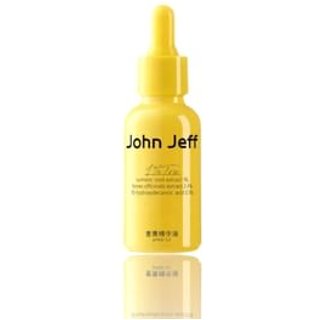
Already have one? Check how it fits your skin with Pick.
Common questions about Turmeric#
What is Turmeric?
- The root of a ginger-family plant, used in leave-on products as an antioxidant. It can leave a visible yellow tint.
What else is Turmeric called?
- On a label you may see Curcuma longa root extract, Curcuma longa rhizome extract, Curcuma longa leaf extract, Curcuma longa root oil, Turmeric extract, Curcumin, Curcuminoids and Tetrahydrocurcumin.
When should you apply Turmeric?
- Evening. In the evening, because of the color it leaves behind.
How often can you use Turmeric?
- Daily.
Where do you apply Turmeric?
- All over the face. Keep it away from your eyes and lips.
Can you use Turmeric around the eyes?
- Yes. Turmeric goes all over the face, the skin around the eyes included — keep it out of your eyes and off your lips.
Does Turmeric make skin more sensitive to the sun?
- Turmeric isn't one of the actives we flag for extra sun care, but that's not a promise about your skin. Wear sunscreen every morning regardless.
What should you not use with Turmeric?
- Nothing flagged. None of the ingredients this wiki covers needs to be kept apart from Turmeric — check the label of anything not covered here.
Who should avoid Turmeric?
- Go slowly with Maternity & Nursing, Fragile or Sensitive and Dry or Itchy Patches.
Is there a cosmetic limit for Turmeric?
- No. No cosmetic regulator in the United States, Canada, the European Union or Great Britain sets a maximum strength for it. That is a limit on the rules, not a signal to use more.
Related ingredients#
How we check this#
Everything on this page traces to the sources listed below — regulators' own publications and published studies. Where the evidence does not answer a question, it is left unanswered.
Some sources below are medical studies. This ingredient has been studied in conditions a doctor treats, and the record cited here includes findings that did not favor it. We use those studies for their safety and handling detail only. A cosmetic product is not a medicine and is not intended to treat, cure or prevent any condition.
Some sources below are the official product information for prescription medicines, cited for how they interact with this ingredient. We use them for their safety and handling detail only. A cosmetic product is not one of those medicines and is not intended to treat any condition.
Our review is AI-assisted and is not a named expert's opinion. Last reviewed September 3, 2026.
Think something here is out of date or wrong? Email us at wiki@skinintelligence.ai with your reasoning and where you read it. We read what people send, and we update the page when the sources support it.
Regulators and official bodies · 13
- S1European Medicines Agency, Committee on Herbal Medicinal Products. European Union herbal monograph on Curcuma longa L., rhizoma. EMA/HMPC/329755/2017, adopted 25 September 2018. Oral route only (§4.2).
- S2European Medicines Agency, Committee on Herbal Medicinal Products. Assessment report on Curcuma longa L., rhizoma. EMA/HMPC/329745/2017.
- S3Regulation (EC) No 1223/2009 of the European Parliament and of the Council on cosmetic products, consolidated text of 1 September 2025 — Annex IV entry 114 and Article 14(1)(c).
- S4Regulation (EC) No 1223/2009 as retained in Great Britain — Annex IV entry 114 (legislation.gov.uk).
- S521 CFR § 73.600 Turmeric (eCFR, current).
- S621 CFR part 73 Subpart C — Cosmetics (eCFR, current) — negative finding: no turmeric, turmeric oleoresin or curcumin entry.
- S7Health Canada. Cosmetic Ingredient Hotlist — prohibited and restricted ingredients — negative finding: no Curcuma, curcumin, curcuminoid or tetrahydrocurcumin entry.
- S5221 CFR part 700 subpart B — Requirements for specific cosmetic products (prohibited/restricted ingredients), eCFR current.
- S53Health Canada, Cosmetic Ingredient Hotlist — prohibited and restricted ingredients.
- S54Regulation (EC) No 1223/2009 on cosmetic products, consolidated 18.05.2026, Annex IV entry 114 (CELEX 02009R1223-20260518; verified against original CELEX 32009R1223).
- S57Roaccutane 20 mg soft capsules (isotretinoin) SmPC, emc product 100633, §§4.3–4.6.
- S58Adawell 0.1 %/2.5 % gel (adapalene/benzoyl peroxide) SmPC, emc product 101660, §4.5.
- S59CIR, 2024 Final Priority List, cir-safety.org.
Studies and references · 46
- S8Vaughn AR, Branum A, Sivamani RK. Effects of Turmeric (Curcuma longa) on Skin Health: A Systematic Review of the Clinical Evidence. Phytother Res 2016;30(8):1243–64. PMID 27213821. doi:10.1002/ptr.5640.
- S9Di Lorenzo R, Forgione F, Bernardi A, Sacchi A, Laneri S, Greco G. Clinical Studies on Topical Curcumin. Skin Pharmacol Physiol 2023;36(5):235–248. PMID 38008088. doi:10.1159/000535100.
- S10Barbalho SM, de Sousa Gonzaga HF, de Souza GA, de Alvares Goulart R, de Sousa Gonzaga ML, de Alvarez Rezende B. Dermatological effects of Curcuma species: a systematic review. Clin Exp Dermatol 2021;46(5):825–833. PMID 33522006. doi:10.1111/ced.14584.
- S11Palaniappan V, Karthikeyan K. Turmeric: The Yellow Allergen. Indian Dermatol Online J 2023. PMID 37521239 · PMC10373802. doi:10.4103/idoj.idoj_340_22.
- S12Wolnicka-Glubisz A, Olchawa M, Duda M, Pabisz P, Wisniewska-Becker A. The Role of Singlet Oxygen in Photoreactivity and Phototoxicity of Curcumin. Photochem Photobiol 2023;99(1):57–67. PMID 35713484. doi:10.1111/php.13666.
- S13Wolnicka-Glubisz A, Wisniewska-Becker A. Dual Action of Curcumin as an Anti- and Pro-Oxidant from a Biophysical Perspective. Antioxidants (Basel) 2023;12. PMID 37760028 · PMC10525529. doi:10.3390/antiox12091725.
- S14Arct J, Ratz-Łyko A, Mieloch M, Witulska M. Evaluation of Skin Colouring Properties of Curcuma Longa Extract. Indian J Pharm Sci 2014;76(4):374–8. PMID 25284937 · PMC4171876.
- S15Wattanakrai P, Suwanachote S, Kulkollakarn S, Rajatanavin N. The study of human skin irritation of a novel herbal skin care product and ingredients by human single closed patch testing. J Med Assoc Thai 2007;90(6):1116–22. PMID 17624205.
- S16Jalalmanesh S, Mansouri P, Rajabi M, Monji F. Therapeutic effects of turmeric topical cream in vitiligo: A randomized, double-blind, placebo-controlled pilot study. J Cosmet Dermatol 2022;21(10):4454–4461. PMID 35104042. doi:10.1111/jocd.14814.
- S17Asawanonda P, Klahan SO. Tetrahydrocurcuminoid cream plus targeted narrowband UVB phototherapy for vitiligo: a preliminary randomized controlled study. Photomed Laser Surg 2010;28(5):679–84. PMID 20961233. doi:10.1089/pho.2009.2637.
- S18Heydari B, Sheikhalishahi S, Hoseinzade F, Shabani M, Ramezani V, Saghafi F. Topical Curcumin for Prevention of Radiation-Induced Dermatitis: A Pilot Double-Blind, Placebo-Controlled Trial. Cancer Invest 2025;43(3):173–182. PMID 40145664. doi:10.1080/07357907.2025.2479542.
- S19Afshariani R, Farhadi P, Ghaffarpasand F, Roozbeh J. Effectiveness of topical curcumin for treatment of mastitis in breastfeeding women: a randomized, double-blind, placebo-controlled clinical trial. Oman Med J 2014;29(5):330–4. PMID 25337308 · PMC4202229. doi:10.5001/omj.2014.89.
- S20Tang X, Dong Q, Li J, Li F, Michniak-Kohn BB, Zhao D, Ho CT, Huang Q. Anti-Melanogenic Mechanism of Tetrahydrocurcumin and Enhancing Its Topical Delivery Efficacy Using a Lecithin-Based Nanoemulsion. Pharmaceutics 2021;13. PMID 34452146 · PMC8397971. doi:10.3390/pharmaceutics13081185.
- S21Park SY, Jin ML, Kim YH, Kim Y, Lee SJ. Aromatic-turmerone inhibits α-MSH and IBMX-induced melanogenesis by inactivating CREB and MITF signaling pathways. Arch Dermatol Res 2011;303(10):737–44. PMID 21660443. doi:10.1007/s00403-011-1155-7.
- S22Li YL, Du ZY, Li PH, Yan L, Zhou W, Tang YD, Liu GR, Fang YX, Zhang K, Dong CZ, Chen HX. Aromatic-turmerone ameliorates imiquimod-induced psoriasis-like inflammation of BALB/c mice. Int Immunopharmacol 2018;64:319–325. PMID 30243067. doi:10.1016/j.intimp.2018.09.015.
- S23Wang Q, Zhong Y, Li N, Du L, Ye R, Xie Y, Hu F. Combination of dimethylmethoxy chromanol and turmeric root extract synergically attenuates ultraviolet-induced oxidative damage by increasing endogenous antioxidants in HaCaT cells. Skin Res Technol 2023;29:e13539. PMID 38115632 · PMC10730978. doi:10.1111/srt.13539 — clinical arm is explicitly "without the placebo", n=24, whole finished serum.
- S24Konisky H, Bowe WP, Yang P, Kobets K. A clinical evaluation of the efficacy and tolerability of a novel topical antioxidant formulation featuring vitamin C, astaxanthin, and fermented turmeric. J Cosmet Dermatol 2023;22(11):3088–3094. PMID 37608511. doi:10.1111/jocd.15967 — prospective open-label, no control, four-active formula.
- S25Balasubramanian S, Eckert RL. Curcumin suppresses AP1 transcription factor-dependent differentiation and activates apoptosis in human epidermal keratinocytes. J Biol Chem 2007;282(9):6707–15. PMID 17148446. doi:10.1074/jbc.M606003200.
- S26Balasubramanian S, Eckert RL. Green tea polyphenol and curcumin inversely regulate human involucrin promoter activity via opposing effects on CCAAT/enhancer-binding protein function. J Biol Chem 2004;279(23):24007–14. PMID 15044435. doi:10.1074/jbc.M314331200.
- S27Eckert RL, Crish JF, Efimova T, Balasubramanian S. Opposing action of curcumin and green tea polyphenol in human keratinocytes. Mol Nutr Food Res 2006;50(2):123–9. PMID 16404707. doi:10.1002/mnfr.200500125.
- S28Asada K, Ohara T, Muroyama K, Yamamoto Y, Murosaki S. Effects of hot water extract of Curcuma longa on human epidermal keratinocytes in vitro and skin conditions in healthy participants: A randomized, double-blind, placebo-controlled trial. J Cosmet Dermatol 2019;18(6):1866–1874. PMID 30809971. doi:10.1111/jocd.12890 — human arm is [ORAL] (daily intake); company R&D authorship.
- S29Vaughn AR, Pourang A, Clark AK, Burney W, Sivamani RK. Dietary supplementation with turmeric polyherbal formulation decreases facial redness: a randomized double-blind controlled pilot study. J Integr Med 2019;17(1):20–23. PMID 30527287. doi:10.1016/j.joim.2018.11.004 — [ORAL]; the turmeric-alone arm showed no significant change..
- S30Srivilai J, Phimnuan P, Jaisabai J, Luangtoomma N, Waranuch N, Khorana N, Wisuitiprot W, Scholfield CN, Champachaisri K, Ingkaninan K. Curcuma aeruginosa Roxb. essential oil slows hair-growth and lightens skin in axillae; a randomised, double blinded trial. Phytomedicine 2017;25:29–38. PMID 28190468. — different species..
- S31Srivilai J, Nontakhot K, Nutuan T, Waranuch N, Khorana N, Wisuthiprot W, Scholfield CN, Champachaisri K, Ingkaninan K. Sesquiterpene-Enriched Extract of Curcuma aeruginosa Roxb. Retards Axillary Hair Growth. Skin Pharmacol Physiol 2018;31(2):99–106. PMID 29428960. — different species..
- S32Hata M, Sasaki E, Ota M, Fujimoto K, Yajima J, Shichida T, Honda M. Allergic contact dermatitis from curcumin (turmeric). Contact Dermatitis 1997;36(2):107–8. PMID 9062750.
- S33Goh CL, Ng SK. Allergic contact dermatitis to Curcuma longa (turmeric). Contact Dermatitis 1987;17(3):186. PMID 2960490.
- S34Lamb SR, Wilkinson SM. Contact allergy to tetrahydrocurcumin. Contact Dermatitis 2003;48(4):227. PMID 12786734.
- S35Thompson DA, Tan BB. Tetrahydracurcumin-related allergic contact dermatitis. Contact Dermatitis 2006;55(4):254–5. PMID 16958931.
- S36Liddle M, Hull C, Liu C, Powell D. Contact urticaria from curcumin. Dermatitis 2006;17(4):196–7. PMID 17150169.
- S37Huber J, deShazo R, Powell D, Duffy K, Hull C. Erythema Multiforme-Like Allergic Contact Dermatitis to Turmeric Essential Oil. Dermatitis 2016;27(6):385–386. PMID 27775965.
- S38Babu D, Rai R. Allergic and photoaggravated contact dermatitis from turmeric in mangalsutra: A cultural dermatosis. Contact Dermatitis 2023;89(5):396–397. PMID 37586702. doi:10.1111/cod.14401.
- S39Chan S, Kantham S, Rao VM, Palanivelu MK, Pham HL, Shaw PN, McGeary RP, Ross BP. Metal chelation, radical scavenging and inhibition of Aβ₄₂ fibrillation by food constituents in relation to Alzheimer's disease. Food Chem 2016;199:185–94. PMID 26775960.
- S40Rabinovich L, Kazlouskaya V. Herbal sun protection agents: Human studies. Clin Dermatol 2018;36(3):369–375. PMID 29908579. doi:10.1016/j.clindermatol.2018.03.014 — turmeric is absent from the list of herbals with demonstrated human photoprotection..
- S41Topical turmeric extract in a moisturizing cream formula reduces the appearance of facial spots and fine lines and wrinkles on human facial skin. J Am Acad Dermatol 2010;62(3 Suppl 1):AB19. — AAD conference abstract, not peer-reviewed; author byline not confirmable from any PMID/DOI record, so cited without names. Content available only as reported in S42.
- S42Are Natural Ingredients Effective in the Management of Hyperpigmentation? A Systematic Review. J Clin Aesthet Dermatol, February 2018. — author byline not exposed in the retrievable record, so cited without names..
- S43Goenka S. Novel Hydrogenated Derivatives of Chemically Modified Curcumin CMC2.24 Are Potent Inhibitors of Melanogenesis in an In Vitro Model: Influence of Degree of Hydrogenation. Life (Basel) 2023;13. PMID 37374155 · PMC10304319. doi:10.3390/life13061373.
- S44Wang YJ, Pan MH, Cheng AL, Lin LI, Ho YS, Hsieh CY, Lin JK. Stability of curcumin in buffer solutions and characterization of its degradation products. J Pharm Biomed Anal 1997;15(12):1867–76. PMID 9278892.
- S45An Integrative Approach to Treating Hyperpigmentation in Pregnancy: Kojic acid, liposomal aloe vera, topical nicotinamide, turmeric, glycolic acid, and ascorbic acid can be safely used to treat hyperpigmentation during pregnancy. J Integr Dermatol 2024. doi:10.64550/joid.97jp5737 — author byline not exposed in the retrievable record, so cited without names..
- S46Pan N, Xia Y, Hou W, Zhu G, Zhang J, Lai W, Zheng Y. Assessment of skin photoallergy risk in cosmetics containing herbal extract ingredients. Skin Pharmacol Physiol 2021;34(5):253-61. PMID 34198300.
- S47Draelos ZD. The efficacy and tolerability of turmeric and salicylic acid in psoriasis treatment. Psoriasis (Auckl) 2022;12. PMID 35516971 / PMC9064175.
- S48Yan FS, … Ji HF. Neuroprotective effects and mechanisms of curcumin–Cu(II) and –Zn(II) complexes systems. Nutrients 2017;9(12). PMID 29283372.
- S49Sainakham M, … Ruksiriwanich W. Preparation and stability investigation of ultrasound-assisted W/O/W multiple nanoemulsions co-loaded with hydrophobic curcumin and hydrophilic arbutin for tyrosinase inhibition. Heliyon 2024;10(15). PMID 39130479.
- S50Muta K, Inomata S, Fukuhara T, Nomura J, Nishiyama T, Tagawa YI, Amano S. Inhibitory effect of the extract of rhizome of Curcuma longa L in gelatinase activity and its effect on human skin. J Biosci Bioeng 2018;125(3):353-8. PMID 29146529.
- S51Kolahdooz H, … Memarian A. Niosomal curcumin suppresses IL17/IL23 immunopathogenic axis in skin lesions of psoriatic patients: a pilot randomized controlled trial. Life (Basel) 2023;13(5). PMID 37240721 / PMC10224439.
- S55Balasubramanian S, Eckert RL. Keratinocyte proliferation, differentiation, and apoptosis — differential mechanisms of regulation by curcumin, EGCG and apigenin. Toxicol Appl Pharmacol 2007;224(3). PMID 17493651 / PMC2698294.
- S56Tu CX, Lin M, Lu SS, Qi XY, Zhang RX, Zhang YY. Curcumin inhibits melanogenesis in human melanocytes. Phytother Res 2012;26(2):174-9. PMID 21584871.