What does Azulene do?#
A calming moisturizer built around azulene, the deep blue compound that gives these creams their color. It helps soothe the appearance of redness and supports a more comfortable-looking complexion.
Benefits
- Helps calm the appearance of redness and visible flushing
- Supports a more comfortable, soothed-looking complexion
- The deep blue tint is azulene's own color
How it works
Azulene is the deep blue compound that gives these creams their color. It occurs in chamomile and yarrow oils, but the azulene used in skincare is made in the lab, and the form used most often comes from guaiac wood rather than a flower. It helps skin look calmer and less irritated for a healthier-looking complexion. Its gentle soothing properties make it well-suited for a daily moisturizer, contributing to a more comfortable and even-looking complexion.
How to use Azulene#
Before you start
Contact allergy to azulene is uncommon but has been reported, so patch test before first use. Azulene itself is not a daisy-family botanical — the form used in most creams comes from guaiac wood or is made in the lab — but some blue creams also carry chamomile extract, so check the full ingredient list if you react to daisy-family plants.
Best time
Daylight fades the blue, so it keeps best overnight.
How often
Gentle enough for daily use from the start, with no build-up period needed.
Where it goes
A cream goes on last, after anything thinner.
Where to apply
Keep it off the eye area and off the lips. Azulene creams are made for the face and body, and neither of those areas is a use the evidence covers.
Alongside others
It layers with the rest of a routine without needing an evening of its own.
Storing it
A blue formula that has drifted toward green or yellow has simply had light on it. That is the color changing, not the product turning.
Discontinue use if irritation occurs. Contact allergy to azulene is uncommon but has been reported, so patch test before first use. Azulene itself is not a daisy-family botanical, but some blue creams also contain chamomile extract — if you react to daisy-family plants, check the full ingredient list.
The form you will see it in
Azulene soothing cream
- Where it goes
- As your moisturizer
Using Azulene with other ingredients
Pairs well with Azulene
Ceramides
Works well togetherAzulene soothes while ceramides support the skin's lipid barrier.
What not to use with Azulene
Nothing flagged. None of the ingredients this wiki covers needs to be kept apart from Azulene — check the label of anything not covered here.
Who should avoid Azulene?#
Six situations change whether Azulene suits your skin right now. Each one is either a reason to skip it, a reason to go slowly, or nothing to watch for.
- Maternity & Nursing
- Go slowly
- Fragile or Sensitive
- No caution
- Recent Facial or Laser
- No caution
- Prone to Redness
- No caution
- Dry or Itchy Patches
- No caution
- Recent Shave or Wax
- No caution
Maternity & Nursing — If you are pregnant or nursing, you may prefer to check with your healthcare provider before use.
Cosmetic strength limits for Azulene where you live#
| Region | Most a cosmetic may contain | |
|---|---|---|
 United States United States | No explicit cap | |
The FDA restricts a short list of ingredients and sets no general strength ceiling on the rest. A figure marked "guidance, not law" is the Cosmetic Ingredient Review panel's recommendation. 21 CFR part 700, subpart B — Requirements for Specific Cosmetic Products (FDA) | ||
 Canada Canada | No explicit cap | |
One list does the work — Health Canada's Hotlist of prohibited and restricted cosmetic ingredients. | ||
 European Union European Union | No explicit cap | |
The Cosmetics Regulation's annexes, consolidated to 1 May 2026. A figure marked "guidance, not law" comes from the EU's cosmetic safety committee rather than from the annexes. | ||
 Great Britain Great Britain | No explicit cap | |
Great Britain kept the annexes as its own law and updates them only when it chooses; Northern Ireland follows the live EU Regulation, which is why some rows read differently for each. Regulation (EC) No 1223/2009 as it applies in Great Britain · Regulation (EC) No 1223/2009, Annexes II–VI | ||
 India India | No explicit cap | |
India writes its own standard, aligned to the European rules as they stood in 2012. Mandatory since 9 February 2026. IS 4707 (Part 2):2025 — restricted and prohibited cosmetic ingredients · IS 4707 (Part 3):2025 — preservatives · Cosmetics Rules, 2020, Ninth Schedule | ||
 Brazil Brazil | No explicit cap | |
ANVISA rewrote its restricted list in June 2026, and a companion act amended the prohibited list at the same time. RDC 1.029/2026 — restricted ingredients · RDC 529/2021 — prohibited ingredients, as amended by RDC 1.030/2026 · RDC 528/2021 — preservatives | ||
 Japan Japan | 0.1% (as sodium guaiazulene sulfonate) | |
Japan's cosmetics standard keeps drug ingredients out of cosmetics, so most of its figures sit in the ministry's list of the ones a cosmetic may still contain. Cosmetics Standards (化粧品基準), Ministry of Health, Labour and Welfare · Cosmetics Standards — the ministry's own English translation · Drug ingredients permitted in cosmetics — 2007 notification | ||
 South Korea South Korea | No explicit cap | |
One MFDS regulation carries both the prohibited list and the restricted list, in force 18 March 2026. Sunscreens and a few other categories are cleared product by product instead. Regulation on Safety Standards for Cosmetics (MFDS Notification 2026-19) · Regulation on the Review of Functional Cosmetics (MFDS Notification 2025-88) | ||
 Kenya Kenya | No explicit cap | |
Kenya's standard applies the EU annexes as they stand rather than copying them, so its ingredient limits are the EU's — including the 2024 additions. A figure marked "guidance, not law" sits outside the annexes and does not carry over. KS EAS 377-1, -2 and -3:2022 — cosmetics safety requirements, published by KEBS · Regulation (EC) No 1223/2009, Annexes II–VI | ||
 Namibia Namibia | No explicit cap | |
Namibia sets no ingredient limits at all. Its cosmetic rule is a single line requiring a product to be free of any harmful ingredient. Foodstuffs, Cosmetics and Disinfectants Ordinance 18 of 1979, and the regulations under it | ||
 Ukraine Ukraine | No explicit cap | |
Ukraine's own transposition of the EU annexes, as they stood before the 2024 additions, fully in force since 3 August 2026. A further revision is due on 1 February 2027. Technical Regulation on cosmetic products — Cabinet Resolution No. 65 of 20 January 2021 | ||
 Georgia Georgia | No explicit cap | |
Georgia has no cosmetics rulebook — its register of technical regulations carries no cosmetics entry — so only the general product-safety duty applies. | ||
 Australia Australia | No explicit cap | |
Australia writes no cosmetic ingredient list. A figure here is the point at which a substance becomes a medicine or a scheduled substance carrying Caution labeling, so its numbers sit well above other markets'. Poisons Standard — June 2026 · Therapeutic Goods (Excluded Goods) Determination 2018 | ||
 United Arab Emirates United Arab Emirates | No explicit cap | |
The Gulf standard points at the EU annexes as amended, so its ingredient limits are the EU's. A figure marked "guidance, not law" sits outside the annexes and does not carry over. GSO 1943:2024 — Cosmetic products: safety requirements (Gulf technical regulation) · Regulation (EC) No 1223/2009, Annexes II–VI | ||
 Kuwait Kuwait | No explicit cap | |
The Gulf standard points at the EU annexes as amended, so its ingredient limits are the EU's. A figure marked "guidance, not law" sits outside the annexes and does not carry over. GSO 1943:2024 — Cosmetic products: safety requirements (Gulf technical regulation) · Regulation (EC) No 1223/2009, Annexes II–VI | ||
 Hong Kong Hong Kong | No explicit cap | |
Hong Kong writes no cosmetics rulebook. Its Poisons List (Cap. 138A, Schedule 10) decides which substances may be sold only as medicines, and general safety is judged case by case against whichever overseas standard the enforcer considers reasonable. Pharmacy and Poisons Regulations (Cap. 138A), Schedule 10 — the poisons list · Pharmacy and Poisons Board — Guidance Notes on classifying pharmaceutical products, April 2026 | ||
 Singapore Singapore | No explicit cap | |
Singapore writes the ASEAN annexes into its own schedule, and its regulator tells companies to check the current ASEAN release as well — which is why a figure here can read "guidance, not law". Health Products (Cosmetic Products — ASEAN Cosmetic Directive) Regulations 2007, Third Schedule · ASEAN Cosmetic Directive annexes — release 2026-1, 22 June 2026 | ||
 Brunei Brunei | No explicit cap | |
Brunei carries the 2007 ASEAN annexes in its own schedule and has not updated them since, so it reads differently from Singapore on several ingredients. Medicines (Cosmetic Products) Regulations (Cap. 285 Rg 1), Schedule 1 — revised edition 2024 | ||
 Jordan Jordan | No explicit cap | |
Jordan's cosmetic rules defer to "the approved references" and name none of them, so there is no Jordanian figure to read. The only number in the instrument governs the ingredient list on the pack. JFDA instructions on cosmetics and pharmaceutical cosmetics, 2026 | ||
 Trinidad & Tobago Trinidad & Tobago | No explicit cap | |
Trinidad and Tobago has had the power to set cosmetic standards since 1960 and has never used it. The regulations made under the Act cover food and drugs, with no cosmetics part; what binds is the Act's general rule against selling a cosmetic that may injure the user. Food and Drugs Act, Chap. 30:01 · Food and Drugs Regulations | ||
Where a figure appears, that is the maximum strength allowed or advised for azulene in that market — some are set in cosmetics regulation, others are the ceiling a cosmetic safety panel recommends. Where no figure appears, the market either sets no cosmetic maximum or handles this ingredient outside its cosmetic rules. These are limits, not targets — the right strength for a formula is the formulator's decision.
Open a market to see the rulebook its figure comes from. Those notes describe each market's own rules as we read them, current to August 24, 2026; the linked documents are the authority, and nothing here is legal advice.
Sample products with Azulene#
A few well-known products, not a full list — product names are each brand's own. We don't sell them — the shop prices them in US dollars and ships from Hong Kong, so delivery and duties come on top. It may not ship everywhere.
We may earn a small commission when you buy through these links.
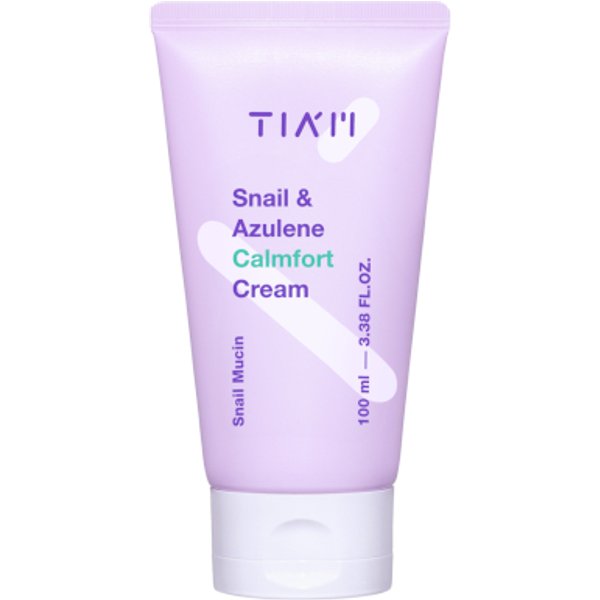
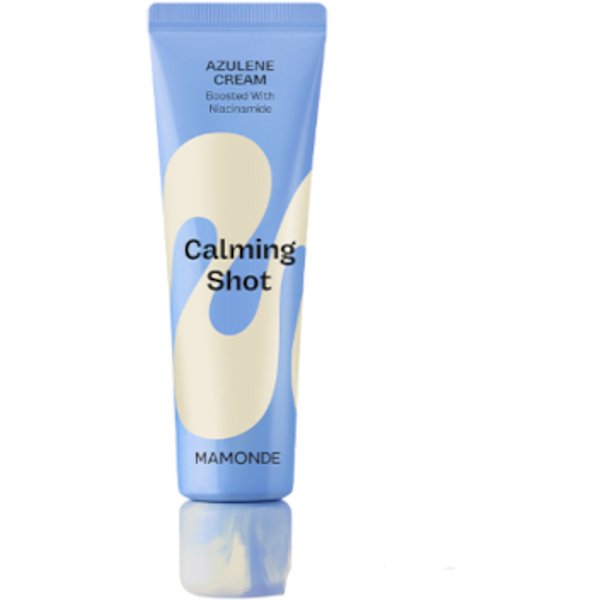
Already have one? Check how it fits your skin with Pick.
Common questions about Azulene#
What is Azulene?
- The deep blue compound that gives calming creams their color, used to soften the look of redness.
What else is Azulene called?
- On a label you may see Guaiazulene and Chamazulene.
When should you apply Azulene?
- Evening. Daylight fades the blue, so it keeps best overnight.
How often can you use Azulene?
- Daily, all over the face, not the eye area.
Where do you apply Azulene?
- All over the face, not the eye area. Keep it off your lips too.
Can you use Azulene around the eyes?
- No. Azulene goes all over the face, not the eye area.
Does Azulene make skin more sensitive to the sun?
- No. Azulene is not flagged as increasing sun sensitivity.
What should you not use with Azulene?
- Nothing flagged. None of the ingredients this wiki covers needs to be kept apart from Azulene — check the label of anything not covered here.
Who should avoid Azulene?
- Go slowly with Maternity & Nursing.
Is there a cosmetic limit for Azulene?
- No. No cosmetic regulator in the United States, Canada, the European Union or Great Britain sets a maximum strength for it. That is a limit on the rules, not a signal to use more.
Related ingredients#
How we check this#
Everything on this page traces to the sources listed below — regulators' own publications and published studies. Where the evidence does not answer a question, it is left unanswered.
Some sources below are the official product information for prescription medicines, cited for how they interact with this ingredient. We use them for their safety and handling detail only. A cosmetic product is not one of those medicines and is not intended to treat any condition.
Our review is AI-assisted and is not a named expert's opinion. Last reviewed August 7, 2026.
Think something here is out of date or wrong? Email us at wiki@skinintelligence.ai with your reasoning and where you read it. We read what people send, and we update the page when the sources support it.
Regulators and official bodies · 11
- S121 CFR § 73.2180 — Guaiazulene. Cornell LII text of the Code of Federal Regulations.
- S2US FDA. Regulatory Status of Color Additives — Guaiazulene, CAS 489-84-9, with End Note 6; and the Color Additive Status List index used to verify the absence of an azulene entry.
- S6Cosmetic Ingredient Review Expert Panel. Chamomilla Recutita-Derived Ingredients as Used in Cosmetics. Final report, released 9 January 2014, Panel date 9–10 December 2013.
- S1721 CFR § 70.3 — Definitions, subsections (f), (g) and (v). Cornell LII text.
- S20Isotretinoin 10 mg soft capsules — Summary of Product Characteristics, UK electronic medicines compendium.
- S21Adapalene/Benzoyl Peroxide 0.1%/2.5% gel — Summary of Product Characteristics, UK electronic medicines compendium.
- S22Methotrexate 2.5 mg Tablets BP — Summary of Product Characteristics, UK electronic medicines compendium.
- S24Final report on the safety assessment of azulene. International Journal of Toxicology. 1999;18(3):27-32. · Cited as it appears in the reference list of S6, reference [2] — the article itself was not retrieved, and it is not indexed in PubMed. S6 attributes it to Andersen FA; because that attribution could not be checked against a PMID or DOI record, the work is cited here without an author name.
- S25Health Canada. Cosmetic Ingredient Hotlist — "About the Hotlist" / "How to read the Hotlist" landing page, including the section 16 Food and Drugs Act general prohibition.
- S26European Commission, DG GROW. Cosmetics — Legislation, listing the amending regulations to Regulation (EC) No 1223/2009.
- S27Regulation (EC) No 1223/2009 as retained in UK law — Annexes II, III, IV, V and VI, legislation.gov.uk, current text plus the Annex IV text as adopted.
Studies and references · 17
- S3Gabbanini S, Neba JN, Matera R, Valgimigli L. Photochemical and Oxidative Degradation of Chamazulene Contained in Artemisia, Matricaria and Achillea Essential Oils and Setup of Protection Strategies. Molecules. 2024 Jun 1. PMID 38893479, PMC11173868. · Authors confirmed against PMID 38893479.
- S4Safayhi H, Sabieraj J, Sailer ER, Ammon HP. Chamazulene: an antioxidant-type inhibitor of leukotriene B4 formation. Planta Med. 1994 Oct;60(5):410-3. PMID 7997466. DOI 10.1055/s-2006-959520. · Authors confirmed against PMID 7997466.
- S5Slon E, Slon B, Kowalczuk D. Azulene and Its Derivatives as Potential Compounds in the Therapy of Dermatological and Anticancer Diseases: New Perspectives against the Backdrop of Current Research. Molecules. 2024 Apr 27. PMID 38731510, PMC11085646. · Authors confirmed against PMID 38731510.
- S7COSMILE Europe (Cosmetics Europe). INCI entries for AZULENE and GUAIAZULENE.
- S8Wang L, Yan J, Fu PP, Parekh KA, Yu H. Photomutagenicity of cosmetic ingredient chemicals azulene and guaiazulene. Mutat Res. 2003 Sep 29. PMID 14563527, PMC3767376. · Authors confirmed against PMID 14563527.
- S9Chiang HM, Yin JJ, Xia Q, Zhao Y, Fu PP, Wen KC, Yu H. Photoirradiation of azulene and guaiazulene — Formation of reactive oxygen species and induction of lipid peroxidation. J Photochem Photobiol A Chem. 2010 Apr. DOI 10.1016/j.jphotochem.2010.02.007.
- S10Fiori J, Gotti R, Valgimigli L, Cavrini V. Guaiazulene in health care products: determination by GC-MS and HPLC-DAD and photostability test. J Pharm Biomed Anal. 2008 Aug 5;47(4-5):710-5. PMID 18395389. · Authors confirmed against PMID 18395389.
- S11Gunes T, Akin MA, Sarici D, Hallac K, Kurtoglu S, Hashimoto T. Guaiazulene: a new treatment option for recalcitrant diaper dermatitis in NICU patients. J Matern Fetal Neonatal Med. 2013 Jan;26(2):197-200. PMID 22928495. · Authors confirmed against PMID 22928495.
- S12Wang L, Yan J, Wang S, Cohly H, Fu PP, Hwang HM, Yu H. Phototoxicity and DNA damage induced by the cosmetic ingredient chemical azulene in human Jurkat T-cells. Mutat Res. 2004 Aug 8;562(1-2):143-50. PMID 15279837. · Authors confirmed against PMID 15279837.
- S13Yan H, Cai S, Wang F. Efficacy and feasibility analysis of compound fluocinolone acetonide cream combined with guaiazulene in the treatment of neurodermatitis. Arch Dermatol Res. 2024 Aug 20;316(8):546. PMID 39162834. · Authors confirmed against PMID 39162834.
- S14Angelini G, Vena GA. Allergic contact cheilitis to guaiazulene. Contact Dermatitis. 1984 May;10(5):311. PMID 6734192. · Authors confirmed against PMID 6734192.
- S15Balato N, Lembo G, Nappa P, Ayala F. Allergic cheilitis to azulene. Contact Dermatitis. 1985 Jul;13(1):39-40. PMID 2931244. · Authors confirmed against PMID 2931244.
- S16Paulsen E. The sesquiterpene lactone mix: A review of past, present and future aspects. Contact Dermatitis. 2023 Dec;89(6):434-441. PMID 37820718. · Author confirmed against PMID 37820718.
- S18Meneses AG, Ferreira EB, Vieira LAC, Bontempo PSM, Guerra ENS, Ciol MA, Reis PEDD. Comparison of liposomal gel with and without chamomile to prevent radiation dermatitis in breast cancer patients: a randomized controlled trial. Strahlenther Onkol. 2025 Feb;201(2):115-125. PMID 39283344. · Authors confirmed against PMID 39283344.
- S19Menêses AG, Ferreira EB, Vieira LAC, Bontempo PSM, Guerra ENS, Ciol MA, Reis PED. Comparison of liposomal gel with and without addition of chamomile for prevention of radiation dermatitis in head and neck cancer patients: A randomized controlled trial. Radiother Oncol. 2024 Oct;199:110440. PMID 39032836. · Authors confirmed against PMID 39032836.
- S23Jensen MB, Kursawe Larsen C, Hamann CR, Johansen JD, Quaade AS. Association Between Atopic Dermatitis and Contact Sensitization: An Updated Systematic Review and Meta-Analysis. Contact Dermatitis. 2026 Mar;94(3):201-225. PMID 41423749. · Authors confirmed against PMID 41423749.
- S28KEGG DRUG entries D01037 (guaiazulene, JAN, Azunol, ATC S01XA01), D02706 (sodium gualenate hydrate, JAN), D09768 (azulene, JAN), D04344, D04363.