What does Glutathione do?#
A leave-on serum with glutathione, a small molecule made of three amino acids that the body also makes. On skin it helps areas of darker pigment look more even.
Benefits
- Helps the look of dark spots and uneven tone even out with steady use
- Gentle enough for morning and night, with no easing-in period
- Can be worn under sunscreen in a morning routine
- The trial that measured it also found skin slightly better hydrated and the look of crow's-feet lines a little softer
How it works
Glutathione is a tripeptide — three amino acids joined together — and the body makes its own, where it acts as an antioxidant. On skin it helps areas of darker pigment look more even over time. The clearest evidence is a ten-week trial in which each participant used glutathione on one side of the face and a placebo on the other, and the glutathione side looked more even from the early weeks onward. The change is gradual, appearing over weeks, and lasts only with continued use.
What to expect
Some people feel a light tingle for a minute or so after applying, and a few notice mild redness in the first few days; stop using it if either does not settle. Tone changes are gradual — in the trial that measured it, most of the visible change appeared between weeks six and ten, so give it that long before judging.
How to use Glutathione#
Where it goes
A serum or lotion carrying it goes on after cleansing and before your moisturizer; a cream with it replaces your moisturizer. Use it morning and night.
Where to apply
All over the face. Keep it out of the eyes.
How to apply
A thin, even layer over the whole face rather than dabbed onto individual marks.
How long
The effect lasts only with continued use; tone returns to its previous look if you stop.
Sun
In the morning, apply sunscreen over it every day.
Alongside others
It has been formulated with vitamin C, niacinamide and tranexamic acid. Let a thinner product settle before applying it over the top.
What to expect
Change is gradual. In the trial that measured it, most of the visible difference appeared between weeks six and ten, so give it that long before judging. Some people feel a light tingle for a minute after applying, and a few notice mild redness in the first few days; stop using it if either does not settle. Introduce it on its own, without other new products.
What to look for
Ingredient lists carry modified versions under other names, such as palmitoyl, butyroyl or S-acyl glutathione. Those are different molecules, and what is known about glutathione does not carry across to them.
If it doesn't suit
If it stings or redness persists, stop using it.
Storing it
Ingredients of this type can pick up a faint sulfur note as they age. Keep the bottle closed, cool and out of direct light, and replace it if the smell becomes strong.
Mild tingling on application, or brief redness in the first few days, may occur. Discontinue use if irritation persists.
The form you will see it in
Glutathione even-tone serum
- Where it goes
- Before moisturizer
Using Glutathione with other ingredients
Pairs well with Glutathione
Vitamin C
Works well togetherEach helps keep the other in its active form when they share a formula.
Niacinamide
Works well togetherBoth are used for the look of uneven tone and can share one formula.
Tranexamic acid
Works well togetherTogether they support a more even-looking tone.
What not to use with Glutathione
Nothing flagged. None of the ingredients this wiki covers needs to be kept apart from Glutathione — check the label of anything not covered here.
Who should avoid Glutathione?#
Six situations change whether Glutathione suits your skin right now. Each one is either a reason to skip it, a reason to go slowly, or nothing to watch for.
- Maternity & Nursing
- Go slowly
- Fragile or Sensitive
- No caution
- Recent Facial or Laser
- No caution
- Prone to Redness
- No caution
- Dry or Itchy Patches
- No caution
- Recent Shave or Wax
- No caution
Maternity & Nursing — If you are pregnant or nursing, you may prefer to check with your healthcare provider before use.
Cosmetic strength limits for Glutathione where you live#
| Region | Most a cosmetic may contain | |
|---|---|---|
 United States United States | No explicit cap | |
The FDA restricts a short list of ingredients and sets no general strength ceiling on the rest. A figure marked "guidance, not law" is the Cosmetic Ingredient Review panel's recommendation. 21 CFR part 700, subpart B — Requirements for Specific Cosmetic Products (FDA) | ||
 Canada Canada | No explicit cap | |
One list does the work — Health Canada's Hotlist of prohibited and restricted cosmetic ingredients. | ||
 European Union European Union | No explicit cap | |
The Cosmetics Regulation's annexes, consolidated to 1 May 2026. A figure marked "guidance, not law" comes from the EU's cosmetic safety committee rather than from the annexes. | ||
 Great Britain Great Britain | No explicit cap | |
Great Britain kept the annexes as its own law and updates them only when it chooses; Northern Ireland follows the live EU Regulation, which is why some rows read differently for each. Regulation (EC) No 1223/2009 as it applies in Great Britain · Regulation (EC) No 1223/2009, Annexes II–VI | ||
 India India | No explicit cap | |
India writes its own standard, aligned to the European rules as they stood in 2012. Mandatory since 9 February 2026. IS 4707 (Part 2):2025 — restricted and prohibited cosmetic ingredients · IS 4707 (Part 3):2025 — preservatives · Cosmetics Rules, 2020, Ninth Schedule | ||
 Brazil Brazil | No explicit cap | |
ANVISA rewrote its restricted list in June 2026, and a companion act amended the prohibited list at the same time. RDC 1.029/2026 — restricted ingredients · RDC 529/2021 — prohibited ingredients, as amended by RDC 1.030/2026 · RDC 528/2021 — preservatives | ||
 Japan Japan | No explicit cap | |
Japan's cosmetics standard keeps drug ingredients out of cosmetics, so most of its figures sit in the ministry's list of the ones a cosmetic may still contain. Cosmetics Standards (化粧品基準), Ministry of Health, Labour and Welfare · Cosmetics Standards — the ministry's own English translation · Drug ingredients permitted in cosmetics — 2007 notification | ||
 South Korea South Korea | No explicit cap | |
One MFDS regulation carries both the prohibited list and the restricted list, in force 18 March 2026. Sunscreens and a few other categories are cleared product by product instead. Regulation on Safety Standards for Cosmetics (MFDS Notification 2026-19) · Regulation on the Review of Functional Cosmetics (MFDS Notification 2025-88) | ||
 Kenya Kenya | No explicit cap | |
Kenya's standard applies the EU annexes as they stand rather than copying them, so its ingredient limits are the EU's — including the 2024 additions. A figure marked "guidance, not law" sits outside the annexes and does not carry over. KS EAS 377-1, -2 and -3:2022 — cosmetics safety requirements, published by KEBS · Regulation (EC) No 1223/2009, Annexes II–VI | ||
 Namibia Namibia | No explicit cap | |
Namibia sets no ingredient limits at all. Its cosmetic rule is a single line requiring a product to be free of any harmful ingredient. Foodstuffs, Cosmetics and Disinfectants Ordinance 18 of 1979, and the regulations under it | ||
 Ukraine Ukraine | No explicit cap | |
Ukraine's own transposition of the EU annexes, as they stood before the 2024 additions, fully in force since 3 August 2026. A further revision is due on 1 February 2027. Technical Regulation on cosmetic products — Cabinet Resolution No. 65 of 20 January 2021 | ||
 Georgia Georgia | No explicit cap | |
Georgia has no cosmetics rulebook — its register of technical regulations carries no cosmetics entry — so only the general product-safety duty applies. | ||
 Australia Australia | No explicit cap | |
Australia writes no cosmetic ingredient list. A figure here is the point at which a substance becomes a medicine or a scheduled substance carrying Caution labeling, so its numbers sit well above other markets'. Poisons Standard — June 2026 · Therapeutic Goods (Excluded Goods) Determination 2018 | ||
 United Arab Emirates United Arab Emirates | No explicit cap | |
The Gulf standard points at the EU annexes as amended, so its ingredient limits are the EU's. A figure marked "guidance, not law" sits outside the annexes and does not carry over. GSO 1943:2024 — Cosmetic products: safety requirements (Gulf technical regulation) · Regulation (EC) No 1223/2009, Annexes II–VI | ||
 Kuwait Kuwait | No explicit cap | |
The Gulf standard points at the EU annexes as amended, so its ingredient limits are the EU's. A figure marked "guidance, not law" sits outside the annexes and does not carry over. GSO 1943:2024 — Cosmetic products: safety requirements (Gulf technical regulation) · Regulation (EC) No 1223/2009, Annexes II–VI | ||
 Hong Kong Hong Kong | No explicit cap | |
Hong Kong writes no cosmetics rulebook. Its Poisons List (Cap. 138A, Schedule 10) decides which substances may be sold only as medicines, and general safety is judged case by case against whichever overseas standard the enforcer considers reasonable. Pharmacy and Poisons Regulations (Cap. 138A), Schedule 10 — the poisons list · Pharmacy and Poisons Board — Guidance Notes on classifying pharmaceutical products, April 2026 | ||
 Singapore Singapore | No explicit cap | |
Singapore writes the ASEAN annexes into its own schedule, and its regulator tells companies to check the current ASEAN release as well — which is why a figure here can read "guidance, not law". Health Products (Cosmetic Products — ASEAN Cosmetic Directive) Regulations 2007, Third Schedule · ASEAN Cosmetic Directive annexes — release 2026-1, 22 June 2026 | ||
 Brunei Brunei | No explicit cap | |
Brunei carries the 2007 ASEAN annexes in its own schedule and has not updated them since, so it reads differently from Singapore on several ingredients. Medicines (Cosmetic Products) Regulations (Cap. 285 Rg 1), Schedule 1 — revised edition 2024 | ||
 Jordan Jordan | No explicit cap | |
Jordan's cosmetic rules defer to "the approved references" and name none of them, so there is no Jordanian figure to read. The only number in the instrument governs the ingredient list on the pack. JFDA instructions on cosmetics and pharmaceutical cosmetics, 2026 | ||
 Trinidad & Tobago Trinidad & Tobago | No explicit cap | |
Trinidad and Tobago has had the power to set cosmetic standards since 1960 and has never used it. The regulations made under the Act cover food and drugs, with no cosmetics part; what binds is the Act's general rule against selling a cosmetic that may injure the user. Food and Drugs Act, Chap. 30:01 · Food and Drugs Regulations | ||
No cosmetic regulator in the 20 markets above sets a maximum strength for glutathione. That is the state of the rules, not a signal to use more: how much goes into a product is the formulator's decision.
Open a market to see the rulebook its figure comes from. Those notes describe each market's own rules as we read them, current to August 24, 2026; the linked documents are the authority, and nothing here is legal advice.
Sample products with Glutathione#
A few well-known products, not a full list — product names are each brand's own. We don't sell them — the shop prices them in US dollars and ships from Hong Kong, so delivery and duties come on top. It may not ship everywhere.
We may earn a small commission when you buy through these links.
Serums · 13
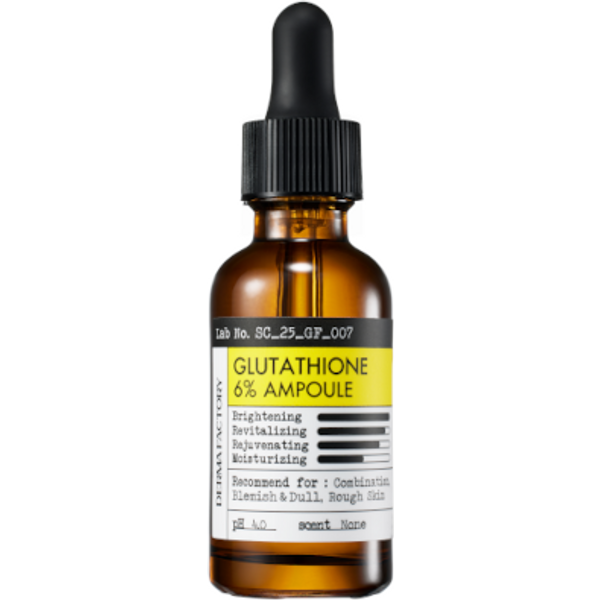 DERMA FACTORYGlutathione 6% Ampoule - 30ml$7.50
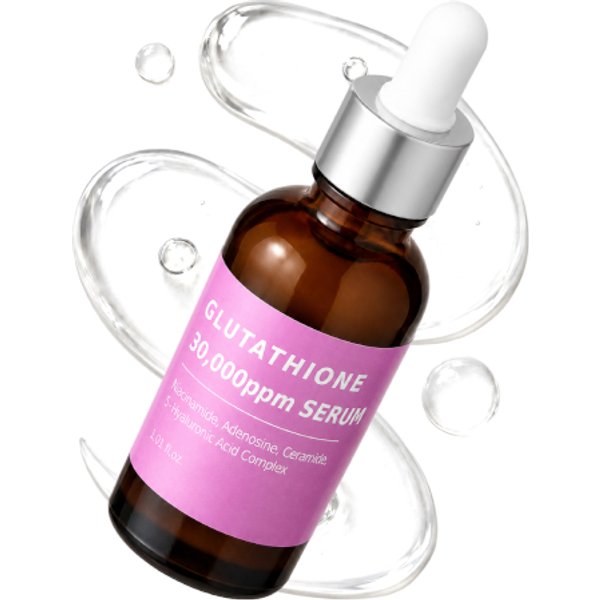 CELDYQUEGlutathione 30,000 ppm Serum - 30ml$11.29
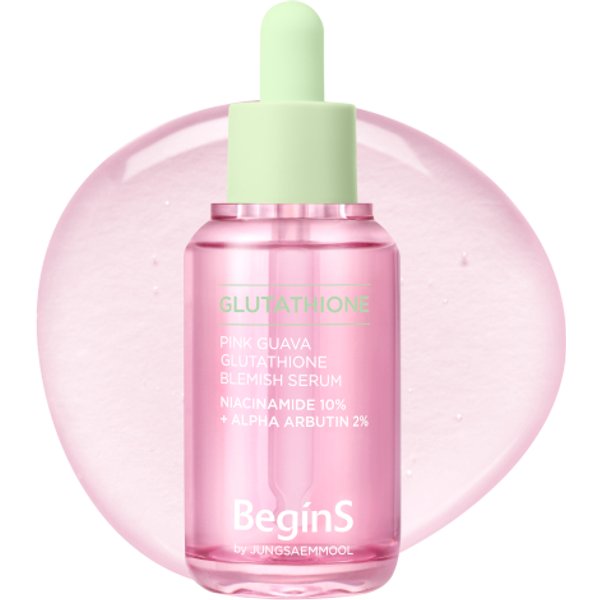 BeginSPink Guava Glutathione Blemish Serum - 30ml$11.63Also on YesStyle
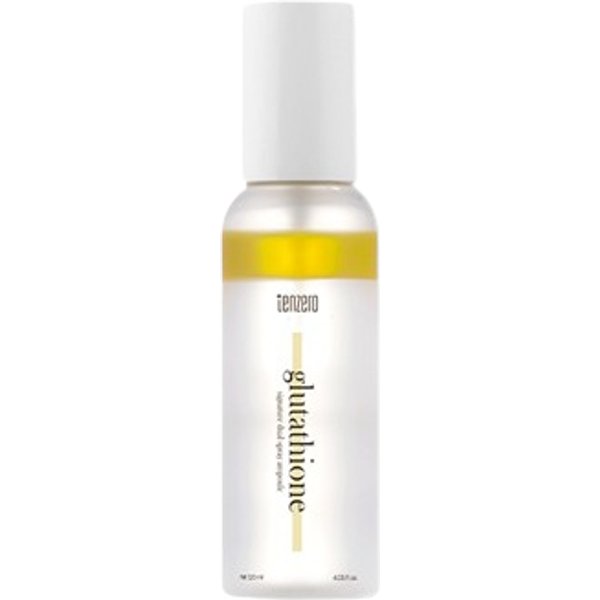 tenzeroSignature Dual Spray Ampoule Glutathione - 120ml$12.18
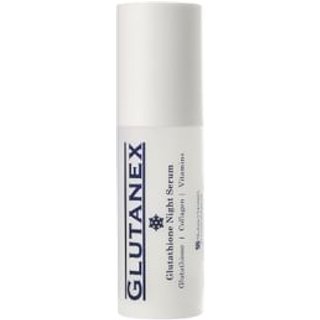 GLUTANEXGlutathione Night Serum 30ml$12.55
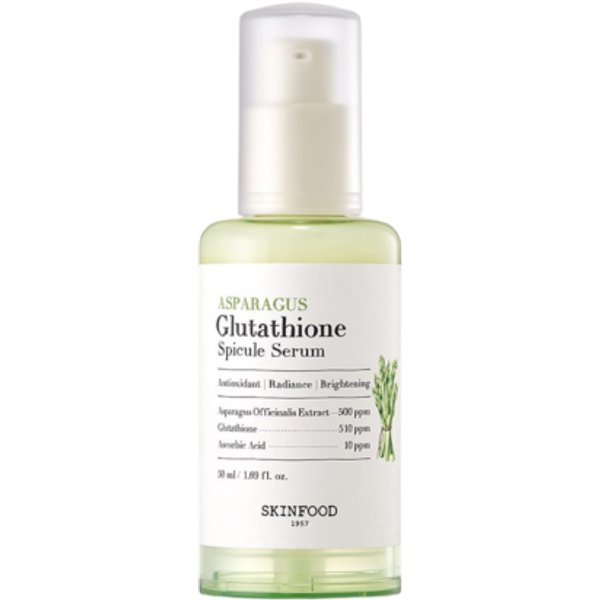 SKINFOODAsparagus Glutathione Spicule Serum - 50ml$16.49
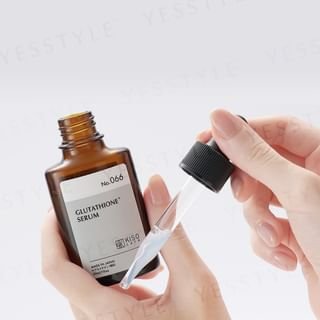 KisocareGlutathione Serum 30ml$17.96
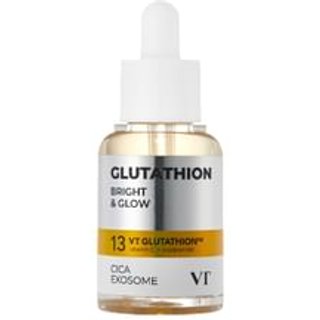 VTGlutathione G2 Brightening Ampoule 30ml$18.00
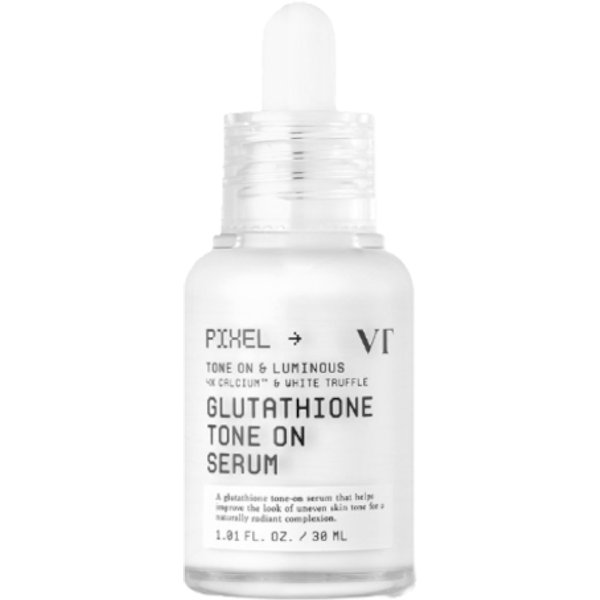 VTGlutathione Tone On Serum - 30ml$23.71Also on Stylevana
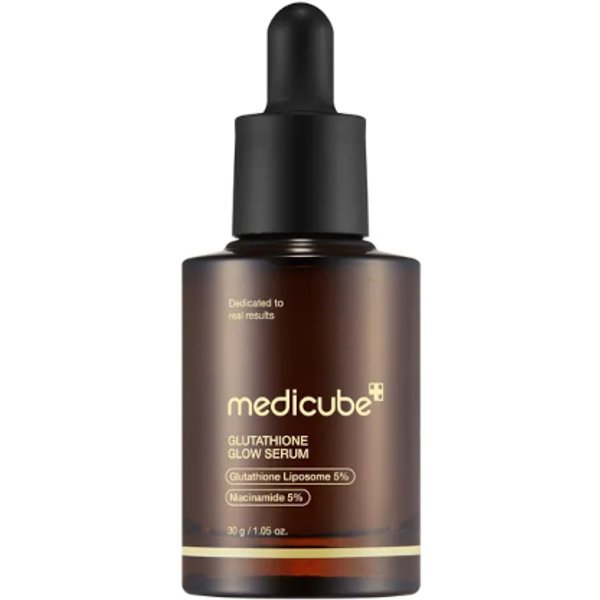 medicubeAge-R Glutathione Glow Serum - 30g$23.90
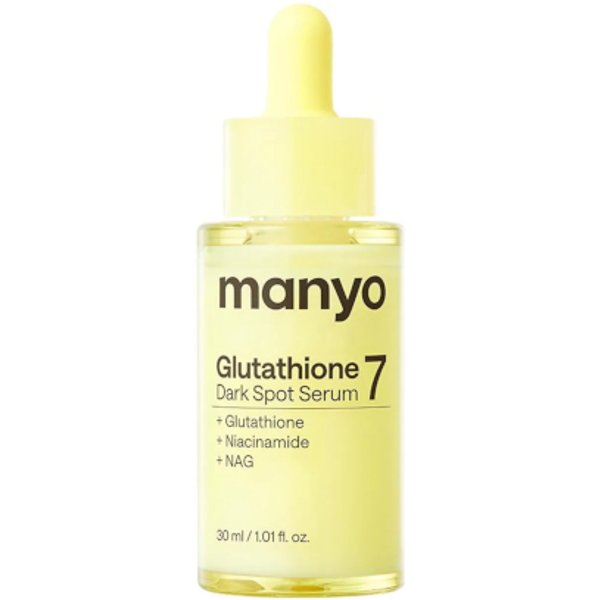 Ma:nyoGlutathione 7 Dark Spot Serum - 30ml$25.20Also on Stylevana
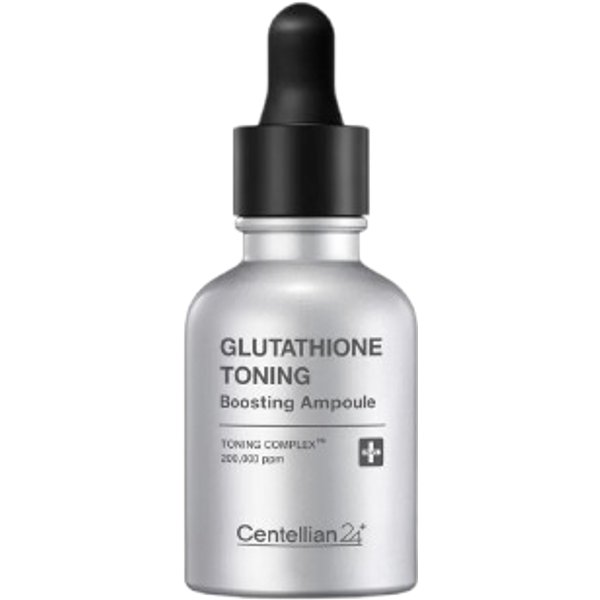 CENTELLIAN 24Glutathione Toning Boosting Ampoule - 30ml$30.60Also on Stylevana
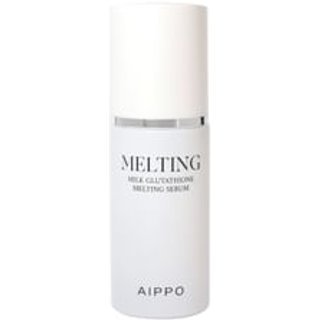 AIPPOMilk Glutathione Melting Serum 30ml$34.00
Already have one? Check how it fits your skin with Pick.
Common questions about Glutathione#
What is Glutathione?
- A small molecule of three amino acids that the body makes for itself, used in leave-on products to help areas of darker pigment look more even.
What else is Glutathione called?
- On a label you may see L-glutathione, Reduced glutathione, Oxidized glutathione, Glutathione disulfide and GSH.
When should you apply Glutathione?
- Morning or evening.
How often can you use Glutathione?
- Daily.
Where do you apply Glutathione?
- All over the face. Keep it away from your eyes and lips.
Can you use Glutathione around the eyes?
- Yes. Glutathione goes all over the face, the skin around the eyes included — keep it out of your eyes and off your lips.
Does Glutathione make skin more sensitive to the sun?
- Glutathione isn't one of the actives we flag for extra sun care, but that's not a promise about your skin. Wear sunscreen every morning regardless.
What should you not use with Glutathione?
- Nothing flagged. None of the ingredients this wiki covers needs to be kept apart from Glutathione — check the label of anything not covered here.
Who should avoid Glutathione?
- Go slowly with Maternity & Nursing.
Is there a cosmetic limit for Glutathione?
- No. No cosmetic regulator in the United States, Canada, the European Union or Great Britain sets a maximum strength for it. That is a limit on the rules, not a signal to use more.
Related ingredients#
How we check this#
Everything on this page traces to the sources listed below — regulators' own publications and published studies. Where the evidence does not answer a question, it is left unanswered.
Some sources below are medical studies. This ingredient has been studied in conditions a doctor treats, and the record cited here includes findings that did not favor it. We use those studies for their safety and handling detail only. A cosmetic product is not a medicine and is not intended to treat, cure or prevent any condition.
Some sources below are the official product information for prescription medicines, cited for how they interact with this ingredient. We use them for their safety and handling detail only. A cosmetic product is not one of those medicines and is not intended to treat any condition.
Our review is AI-assisted and is not a named expert's opinion. Last reviewed September 2, 2026.
Think something here is out of date or wrong? Email us at wiki@skinintelligence.ai with your reasoning and where you read it. We read what people send, and we update the page when the sources support it.
Regulators and official bodies · 20
- S20European Commission, CosIng ingredient record GLUTATHIONE (Ref 34021; CAS 70-18-8; EC 200-725-4) — function REDUCING; no Cosmetics Regulation provisions; no SCCS opinion.
- S21European Commission, CosIng ingredient record OXIDIZED GLUTATHIONE (Ref 85102; CAS 27025-41-8; EC 248-170-7) — functions SKIN CONDITIONING and SKIN CONDITIONING – EMOLLIENT; no provisions; no SCCS opinion.
- S22Regulation (EC) No 1223/2009 on cosmetic products, consolidated text (CELEX 02009R1223) — no glutathione or oxidized glutathione entry in Annexes II–VI.
- S23Regulation (EC) No 1223/2009 as retained in Great Britain, Annex II (prohibited) and Annex III (restricted), as amended — no glutathione entry.
- S24Health Canada, Cosmetic Ingredient Hotlist — List of Prohibited and Restricted Cosmetic Ingredients — no glutathione entry.
- S25US FDA, Cosmetic Ingredients (Federal Food, Drug, and Cosmetic Act) — no premarket approval required for cosmetic ingredients other than colour additives.
- S26US FDA, FDA reminds compounders not to use dietary supplement grade glutathione for injectables. Injectable route only.
- S27Health Canada / Recalls & Safety Alerts, Unauthorized skin lightening and skin treatment products may pose serious health risks. Unauthorised oral/injectable products only.
- S30US FDA, Skin Facts! What you need to know about skin lightening products — names hydroquinone and mercury; no glutathione.
- S32Cisplatin 1 mg/ml Injection BP — Summary of Product Characteristics (emc), §4.5.
- S40ClinicalTrials.gov API v2 registry sweep, glutathione + skin/melasma/pigmentation, 29 interventional records, retrieved 2026-09-02.
- S4521 CFR part 700 subpart B — Requirements for Specific Cosmetic Products (eCFR, current).
- S46Commission Decision (EU) 2019/701 establishing a glossary of common ingredient names (CELEX 32019D0701) — GLUTATHIONE (9668), OXIDIZED GLUTATHIONE (16248).
- S47Regulation (EC) No 1223/2009 on cosmetic products, consolidated text as at 2025-09-01, Annexes I–VI.
- S48Retained UK Cosmetics Regulation EUR 2009/1223, Annexes I–V (legislation.gov.uk) · vault/ssi/www-legislation-gov-uk-eur-2009-1223-annex{-i,-ii,-iii,-iv,-v,es}.md.
- S49Riassunto delle Caratteristiche del Prodotto — Tationil (glutathione sodium 600 mg, powder + solvent for IM/IV injection), MA holder Teofarma S.r.l., AIC 026185049, text revised June 2010 (new).
- S50Roaccutane 10 mg soft capsules — SmPC (emc).
- S51Differin Cream — SmPC (emc).
- S52Aklief 50 microgram/g cream — SmPC (emc).
- S53Efracea 40 mg modified-release capsules — SmPC (emc).
Studies and references · 35
- S1Watanabe F, Hashizume E, Chan GP, Kamimura A. Skin-whitening and skin-condition-improving effects of topical oxidized glutathione: a double-blind and placebo-controlled clinical trial in healthy women. Clin Cosmet Investig Dermatol 2014;7:267–274. PMID 25378941.
- S2Khanna R, Rambhia P, Chapas A. Systematic Review of the Efficacy and Safety of Topical Glutathione in Dermatology. J Clin Aesthet Dermatol 2025;18(9):51–54. PMID 41416233.
- S3Sarkar R, Yadav V, Yadav T, P J, Mandal I. Glutathione as a skin-lightening agent and in melasma: a systematic review. Int J Dermatol 2025;64(6):992–1004. PMID 39444151.
- S4Sonthalia S, Daulatabad D, Sarkar R. Glutathione as a skin whitening agent: facts, myths, evidence and controversies. Indian J Dermatol Venereol Leprol 2016;82(3):262–272. PMID 27088927.
- S5Sonthalia S, Jha AK, Lallas A, Jain G, Jakhar D. Glutathione for skin lightening: a regnant myth or evidence-based verity? Dermatol Pract Concept 2018;8(1):15–21. PMID 29445569.
- S6Dilokthornsakul W, Dhippayom T, Dilokthornsakul P. The clinical effect of glutathione on skin color and other related skin conditions: a systematic review. J Cosmet Dermatol 2019;18(3):728–737. PMID 30895708.
- S7Grandi V, Milanesi N, Sessa M, Gola M, Cappugi P, Pimpinelli N. Efficacy and safety of S-acyl glutathione 2% cream vs. placebo against UVB-induced erythema: a randomized, double-blinded clinical trial. G Ital Dermatol Venereol 2019;154(6):632–637. PMID 28399620.
- S8Cui X, Mi T, Xiao X, Zhang H, Dong Y, Huang N, Gao P, Lee J, Guelakis M, Gu X. Topical glutathione amino acid precursors protect skin against environmental and oxidative stress. J Eur Acad Dermatol Venereol 2024;38(Suppl 3):3–11. PMID 38189670.
- S9Wahab S, Anwar AI, Zainuddin AN, Hutabarat EN, Anwar AA, Kurniadi I. Combination of topical and oral glutathione as a skin-whitening agent: a double-blind randomized controlled clinical trial. Int J Dermatol 2021;60(8):1013–1018. PMID 33871071, full text.
- S10Jung YS, Lee JH, Bae JM, Lee DW, Kim GM. Assessment of the efficacy and safety of a new complex skin cream in Asian women: a controlled clinical trial. J Cosmet Dermatol 2017;16(2):253–257. PMID 28512843.
- S11Dall'Oglio F, Puviani M, Milani M, Micali G. Efficacy and tolerability of a cream containing modified glutathione (GSH-C4), beta-glycyrrhetic, and azelaic acids in mild-to-moderate rosacea (the "Rosazel" trial). J Cosmet Dermatol 2021;20(4):1197–1203. PMID 32885541.
- S12Mohamed M, Beshay YMA, Assaf HM. Microneedling with glutathione versus microneedling alone in treatment of facial melasma: split-face comparative study. J Cosmet Dermatol 2023;22(12):3379–3386. PMID 37313658.
- S13Iraji F, Nasimi M, Asilian A, Faghihi G, Mozafarpoor S, Hafezi H. Efficacy of mesotherapy with tranexamic acid and ascorbic acid with and without glutathione in treatment of melasma: a split face comparative trial. J Cosmet Dermatol 2019;18(5):1416–1421. PMID 30735611.
- S14Bijalwan S, Randhawa GK, Kaur T. A prospective, randomized and open label study to compare efficacy, safety and quality of life impact of topical glutathione (2%) in comparison to topical tranexamic acid (3%) in adult melasma patients. JK Science 2024;26(3):149–154. No PMID or DOI → Tier 3; may not carry a quantitative claim alone..
- S15Alzahrani TF; Alotaibi SM; Alzahrani AA; Alzahrani AF; Alturki LE; Alshammari MM; Alharbi RA; Alanazi SI; Alshammari WZ; Algarni AS. Exploring the Safety and Efficacy of Glutathione Supplementation for Skin Lightening: A Narrative Review. Cureus 2025;17(1):e78045. PMID 40013212.
- S16Boo YC. Metabolic basis and clinical evidence for skin lightening effects of thiol compounds. Antioxidants (Basel) 2022;11(3):503. PMID 35326153.
- S17Ufnalska I, Drew SC, Zhukov I, Szutkowski K, Wawrzyniak UE, Wróblewski W, Frączyk T, Bal W. Intermediate Cu(II)-thiolate species in the reduction of Cu(II)GHK by glutathione: a handy chelate for biological Cu(II) reduction. Inorg Chem 2021. PMID 34781677.
- S18Weschawalit S; Thongthip S; Phutrakool P; Asawanonda P. Glutathione and its antiaging and antimelanogenic effects. Clin Cosmet Investig Dermatol 2017;10:147–153. PMID 28490897 — ORAL route; cited only to mark what it is not evidence for.
- S19Arjinpathana N, Asawanonda P. Glutathione as an oral whitening agent: a randomized, double-blind, placebo-controlled study. J Dermatolog Treat 2012;23(2):97–102. PMID 20524875. Oral route — background only.
- S28PubChem CID 124886 (glutathione, C10H17N3O6S, 307.33 g/mol) and CID 65359 (glutathione disulfide, C20H32N6O12S2, 612.6 g/mol).
- S29TAD 600 mg/4 ml, glutathione sodium, powder and solvent for solution for injection — Riassunto delle Caratteristiche del Prodotto (SmPC), §§4.3–4.8. AIFA-hosted PDF unreachable (Jina 422 on both AIFA hosts); cited from Torrinomedica's verbatim reproduction.
- S31Cosmetic Ingredient Review, report/ingredient index — no glutathione safety assessment published.
- S33Sarkar R; Sahu A. Role of Antioxidants in Melasma: A Systematic Review. Indian J Dermatol 2025;70(3):125–134. PMID 40487500.
- S34Anti-aging and depigmentation effect of a hyaluronic acid mechanically stabilized complex on human skin explants. Polymers 2023;15:2438 (authors not confirmed against the record — cited without).
- S35Rinnerthaler M, Bischof J, Streubel MK, Trost A, Richter K. Oxidative stress in aging human skin. Biomolecules 2015;5(2):545–589. PMID 25906193.
- S36Therapeutic potential of cysteine and its derivatives in dermatology. Molecules 2026;31(8):1277 (authors not confirmed against the record — cited without).
- S37Etnawati K; Adiwinarni DR; Susetiati DA; Sauchi Y; Ito H. The efficacy of skin care products containing glutathione in delivering skin lightening in Indonesian women. Dermatology Reports 2019;11(s1). doi 10.4081/dr.2019.8013 (new).
- S38Bijalwan S; Randhawa GK; Kaur T. Topical Glutathione (2%) vs Topical Tranexamic Acid (3%) in Adult Melasma Patients. JK Science 2024;26(3):149–154 (new).
- S39Assaf HA; Ahmed D; Abdelhamed A. Carboxytherapy versus Combined Microneedling with Topical Glutathione … Periorbital Hyperpigmentation. Indian J Dermatol 2022;67(5):504–511. PMID 36865870 (NCT04389788) (new).
- S41Skin whitening agents: medicinal chemistry perspective of tyrosinase inhibitors (author line not confirmed against the record; cited without one).
- S42Stanescu C; Chiscop I; Boev M; Stanescu GD; Matei MN. Glutathione in Skin Aging and Tissue Regeneration: A Systematic Review. Molecules 2026;31(6). PMID 41900080 (new).
- S43Contreras-Agudelo C; Ariza-Donado A; Villegas-Gallego M; Villa-Sierra A; Naranjo-Narvaez J; Martinez-Meza I. A Chronocosmetic Approach to Treating Signs of Aging with Glutathione. Life (Basel) 2025;15(10). PMID 41157295 (new).
- S44Duval C; Qiu J; Warrick E; Sextius P; Castiel-Higounenc I; Xiang L; Bernerd F; Passeron T. Decoding Hyperpigmentation from Biological Mechanisms to Actives with Clinically Proven Topical Efficacy. Dermatol Ther (Heidelb) 2026;16(7):3385–3414. PMID 42234321.
- S54Ezzat RZ; Stirrat T; Nichols E; Ehrlich A. Nutritional Supplements and Cosmetic Formulations: A Review of Emerging Allergens. Dermatitis 2026;37(2):184–194. PMID 41101984.
- S55Oxidative Stress in Aging Human Skin (author line not confirmed against the record; cited without one).